
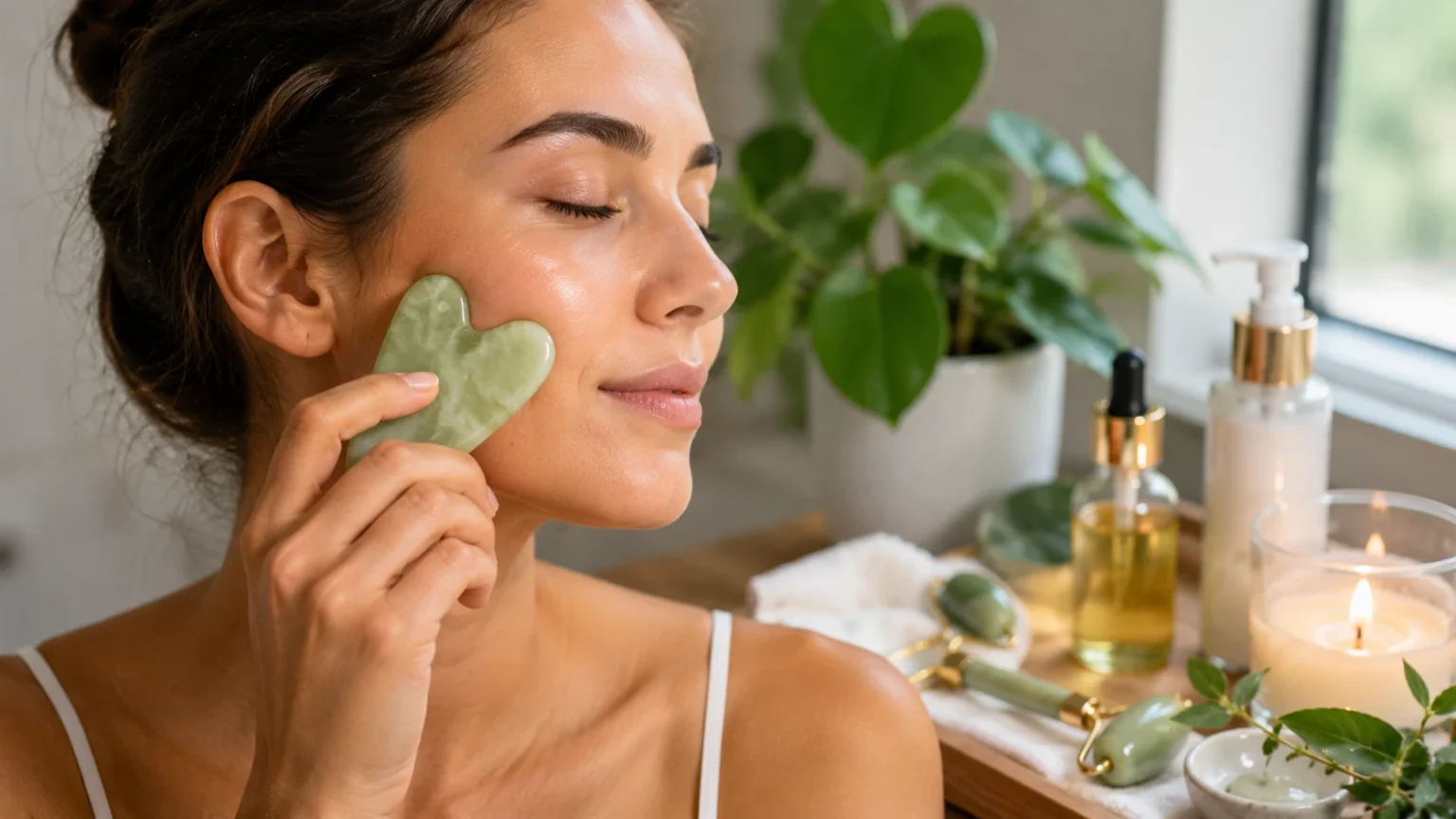

Gua Sha Benefits: Does It Really Work?
Gua sha has moved from a centuries-old traditional healing practice to one of the most recognizable beauty and wellness trends on social media. Smooth jade, rose quartz, stainless-steel, and stone tools are now commonly used across the face, neck, shoulders, and other areas of the body. Supporters often claim that gua sha can improve circulation, reduce puffiness, relax tense muscles, sculpt the jawline, improve skin appearance, and ease certain types of physical discomfort.
Some of these gua sha benefits are biologically plausible and have received scientific attention, but others are promoted far beyond the evidence currently available. Research has shown that traditional body gua sha can temporarily increase local microcirculation, while several small clinical studies suggest possible short-term improvements in certain musculoskeletal pain conditions. Facial gua sha has received much less rigorous research, although emerging studies have begun examining facial contour, muscle tone, and skin-related outcomes.
It is also important to distinguish traditional therapeutic gua sha from the much gentler facial technique commonly seen in skincare routines. Traditional body gua sha can involve repeated firm strokes that intentionally create temporary red or purple marks called petechiae or “sha.” Facial gua sha, in contrast, generally uses lighter pressure over lubricated skin and should not normally produce significant bruising or broken skin.
So, does gua sha really work? The answer depends on what you expect it to do. It may temporarily reduce facial puffiness, create a relaxing massage effect, increase surface blood flow, and ease certain types of muscle tension. However, claims that it permanently reshapes the face, removes fat, eliminates wrinkles, cures disease, or “detoxifies” the body are not supported by strong clinical evidence.
What Is Gua Sha?
Gua sha is a traditional East Asian bodywork technique involving repeated strokes over the skin using a smooth-edged tool. The practice has long been used in traditional Chinese medicine and related healing traditions, particularly for muscular discomfort, stiffness, and other physical complaints. Modern facial gua sha adapts the technique using substantially gentler pressure for cosmetic and relaxation purposes.
Traditional tools have been made from materials such as horn, stone, ceramic, metal, or other smooth objects. Modern cosmetic versions are commonly made from jade, rose quartz, stainless steel, or manufactured stone. Despite marketing claims, the material itself is usually less important than the tool’s smooth edges, cleanliness, shape, and how safely it is used.
During traditional body gua sha, a practitioner lubricates the skin and repeatedly strokes a specific area using firm pressure. This can create visible red or purple marks beneath the skin caused by tiny superficial blood vessels responding to the mechanical pressure. These marks usually fade gradually and are not the same as cuts or open wounds.
Facial gua sha is significantly gentler. A facial oil, serum, or moisturizer is typically used to provide enough slip for the tool to move comfortably across the skin. The goal is generally massage, relaxation, temporary reduction in puffiness, and cosmetic enhancement rather than deliberately producing the visible marks associated with traditional body gua sha.
How Does Gua Sha Work?
The most clearly demonstrated physiological effect of gua sha is a temporary change in local microcirculation. Mechanical pressure and repeated movement across the skin can increase superficial blood flow in the treated area. This may contribute to the feeling of warmth and relaxation that people experience immediately after treatment.
Massage-like mechanical stimulation can also influence muscles and surrounding soft tissues. When gua sha is applied carefully to tense areas such as the neck, shoulders, or upper back, the pressure may temporarily reduce perceived tightness or discomfort in much the same way that other manual therapies can provide short-term relief.
Facial gua sha uses much lighter pressure, so its effects are likely related to gentle massage, temporary movement of superficial fluid, changes in muscle tension, and increased skin blood flow. These processes may make the face appear temporarily less puffy or more defined, particularly in the morning or after fluid retention.
None of these mechanisms means the tool permanently changes facial bone structure or removes fat. A sharper-looking jawline immediately after massage is more likely to reflect temporary changes in fluid distribution, muscle tension, lighting, or skin appearance than a permanent structural transformation.
Gua Sha Benefits for Facial Puffiness
One of the most believable facial gua sha benefits is temporary reduction in puffiness. The face can appear swollen after sleeping, consuming a high-sodium meal, crying, experiencing allergies, drinking alcohol, or simply retaining fluid. Gentle massage may help redistribute some superficial fluid and make facial contours look slightly more defined for a period.
This effect can be especially noticeable around the cheeks, jawline, and lower face. Because the change involves fluid rather than fat loss, results are generally temporary. The face may gradually return to its usual appearance as normal fluid balance changes throughout the day.
Using a cool gua sha tool may also make the skin feel refreshed and temporarily reduce the sensation of swelling. Cooling can constrict superficial blood vessels and create a soothing effect, although extremely cold tools should not be pressed aggressively against sensitive skin.
Persistent or unexplained facial swelling should not simply be treated with massage. Allergic reactions, dental infections, sinus problems, thyroid disorders, kidney disease, medication effects, and other medical conditions can cause swelling. New, severe, or one-sided swelling deserves appropriate evaluation.
Does Gua Sha Sculpt the Jawline?
Gua sha is frequently marketed as a way to sculpt the jawline, and many before-and-after videos appear to show dramatic changes. Some people do notice that their jaw looks temporarily sharper after facial massage, especially when their face was initially puffy.
The effect is most likely caused by a combination of fluid movement, temporary reduction in muscle tension, subtle changes in surface blood flow, and the physical positioning of the skin during massage. These changes can alter the way light reflects across the face and make contours appear more prominent.
Recent small studies investigating facial gua sha have reported measurable changes in certain facial contour measurements and muscle-related parameters after repeated use. These findings are interesting, but the research is still limited in size and does not establish that gua sha permanently remodels facial anatomy.
Gua sha cannot shrink the jawbone, remove significant facial fat, or permanently tighten loose skin simply through scraping or massage. Anyone considering it for facial sculpting should therefore view it as a temporary cosmetic technique rather than a non-surgical replacement for procedures that physically change tissue structure.
Can Gua Sha Reduce a Double Chin?
A double chin usually results from a combination of genetics, submental fat, skin laxity, age-related changes, and facial structure. Gua sha does not destroy fat cells, so it should not be expected to permanently remove a double chin.
Someone with temporary swelling around the jaw and upper neck may notice improved definition after gentle massage. This can make the area appear slimmer for a short time, particularly in photographs or immediately after treatment.
If the appearance is mainly caused by fat beneath the chin, gua sha will not produce meaningful fat loss. Fat reduction requires changes in overall body fat or medical and cosmetic treatments specifically designed to reduce or remove adipose tissue.
This does not make gua sha useless for the lower face. Gentle massage can still feel relaxing and may help with temporary puffiness or muscle tension around the jaw. The key is separating these modest effects from claims of permanent fat reduction.
Gua Sha Benefits for Blood Circulation
One of the better-supported physiological effects of traditional gua sha is an increase in surface microcirculation. Research measuring blood flow after treatment has demonstrated a noticeable temporary rise in circulation within the treated skin.
This increase may partly explain why an area can feel warmer after gua sha. Increased superficial blood flow delivers more blood through tiny vessels close to the skin, creating a temporary change that may contribute to the sensation of relaxation.
Better surface circulation should not be confused with treating cardiovascular disease or major circulatory disorders. Gua sha does not unclog arteries, cure blood clots, treat deep vein thrombosis, or replace medical treatments prescribed for vascular disease.
For healthy people using facial gua sha, the temporary increase in blood flow may contribute to a fresher-looking complexion shortly after massage. However, claims that gua sha permanently “boosts circulation throughout the body” go beyond what current evidence demonstrates.
Gua Sha for Muscle Tension
Muscle tension is another area where gua sha may offer practical benefits. Tight muscles in the neck, shoulders, jaw, and upper back can become uncomfortable after prolonged sitting, computer work, exercise, stress, or poor posture.
Mechanical pressure from a gua sha tool may provide a massage-like effect that temporarily reduces the sensation of tightness. Many people find the repetitive strokes relaxing, particularly when combined with warmth or gentle stretching.
Clinical research into traditional body gua sha has explored its effects on several musculoskeletal pain conditions. Some small randomized trials have reported short-term improvements, although the overall evidence base is limited and additional high-quality research is needed.
People with persistent muscle pain should avoid assuming the problem is simply tension. Nerve compression, arthritis, injury, inflammatory conditions, disc problems, or other disorders can produce similar discomfort and may require professional evaluation.
Gua Sha for Neck Pain
Neck pain is one of the more researched therapeutic applications of traditional gua sha. Some small clinical trials have found that people receiving gua sha reported short-term reductions in pain compared with control treatments.
The proposed benefits may involve increased local circulation, changes in muscle tension, sensory stimulation, and other mechanisms associated with manual therapy. These effects may temporarily make movement feel easier or reduce discomfort.
However, studies have generally been relatively small, and systematic reviews have noted limitations in study quality. This means gua sha can reasonably be viewed as a complementary approach rather than a proven standalone treatment for chronic neck pain.
Neck pain accompanied by weakness, numbness, severe headache, loss of coordination, fever, trauma, or pain radiating strongly into the arms needs appropriate medical evaluation. Gua sha should never replace assessment when neurological or other serious symptoms are present.
Gua Sha for Back Pain
Traditional gua sha is sometimes used for lower and upper back discomfort. A randomized study involving people with chronic low back pain reported improvements in pain intensity following treatment, although researchers emphasized the need for further rigorous studies.
Manual pressure may help people feel temporarily looser or more comfortable, particularly when muscular tension contributes to symptoms. The experience may resemble other forms of massage or instrument-assisted soft-tissue therapy.
Back pain, however, has many possible causes. Muscle strain, disc problems, arthritis, nerve irritation, osteoporosis, inflammatory disorders, kidney problems, and other conditions can produce pain in similar locations.
People using gua sha for occasional uncomplicated muscular discomfort should use reasonable pressure and avoid striking directly over the spine or injured tissues. Persistent or severe pain deserves assessment rather than increasingly aggressive self-treatment.
Can Gua Sha Help With Jaw Tension?
Many people unconsciously clench their jaw during periods of stress or grind their teeth during sleep. This can make muscles around the jaw, temples, and cheeks feel tight or tender. Gentle facial gua sha may provide a relaxing massage effect over these areas.
Using light pressure over the masseter muscles can sometimes make the jaw feel temporarily less tense. This may be especially noticeable after a long day of clenching or concentrating intensely.
Gua sha does not correct the underlying causes of bruxism or temporomandibular disorders (TMD). Persistent jaw pain, clicking, locking, headaches, damaged teeth, or difficulty opening the mouth may require evaluation by a dentist or another healthcare professional.
Avoid extremely hard pressure along the jaw joint. The temporomandibular joint is sensitive, and aggressive scraping can increase soreness rather than improve it. Facial gua sha should feel comfortable rather than painful.
Does Gua Sha Help With Lymphatic Drainage?
“Lymphatic drainage” is one of the most popular phrases used in gua sha marketing. Gentle massage can help move superficial fluid and may temporarily reduce facial puffiness, which is often described informally as improving lymphatic drainage.
The lymphatic system normally moves fluid through a network of vessels and lymph nodes without requiring gua sha. Healthy people do not need to manually “drain toxins” from their face for the lymphatic system to function.
Professional manual lymphatic drainage is a specific therapeutic technique sometimes used in healthcare, particularly for certain people with lymphedema. Facial gua sha performed at home is not equivalent to professional lymphedema treatment.
Anyone with diagnosed lymphedema, lymph-node removal, cancer treatment history, unexplained swelling, infection, or significant vascular disease should obtain medical guidance before attempting strong lymphatic-style massage.
Does Gua Sha Detox the Body?
No convincing evidence shows that gua sha “detoxes” the body in the way the term is often used online. Human detoxification is primarily handled by organs such as the liver and kidneys, along with the lungs, digestive tract, and other physiological systems.
The temporary red marks produced by traditional body gua sha are not toxins being pulled through the skin. They result from mechanical pressure affecting small superficial blood vessels.
Similarly, facial massage may move some superficial fluid, but that does not mean harmful substances are being scraped out of the body. The language of detoxification often turns a normal physiological process into a dramatic marketing claim.
People can still enjoy gua sha as a relaxation or massage practice without accepting unsupported detox claims. Its legitimate potential benefits do not need to be exaggerated to make the practice worthwhile.
Can Gua Sha Improve Skin Appearance?
Facial gua sha can temporarily make the skin look brighter or more refreshed because massage increases superficial blood flow and may reduce puffiness. The application of facial oil or moisturizer during treatment can also improve hydration and surface smoothness.
Consistent massage may potentially influence certain muscle and skin parameters, and emerging research has begun investigating these changes. However, the evidence remains much smaller than the amount of cosmetic marketing surrounding gua sha.
The largest improvements people see in photographs may also reflect lighting, angle, facial expression, reduced swelling, or skincare products applied during the routine. These factors make dramatic social-media comparisons difficult to interpret scientifically.
Gua sha can be a pleasant addition to a skincare routine, but established practices such as sunscreen, appropriate moisturization, gentle cleansing, and evidence-based active ingredients play a much greater role in long-term skin health.
Can Gua Sha Reduce Wrinkles?
Gua sha does not erase wrinkles or permanently stretch them away. Fine lines can temporarily look less noticeable after massage because moisturizing products hydrate the skin and increased circulation may create a smoother, plumper appearance.
Repeated gentle massage could potentially influence skin or underlying muscle properties, but strong evidence showing meaningful long-term wrinkle reduction from gua sha alone is lacking.
Wrinkles develop through a combination of age-related collagen loss, sun exposure, repeated facial movement, genetics, smoking, and other factors. A smooth stone moving over the surface cannot completely reverse these biological changes.
For long-term wrinkle prevention, consistent sun protection remains considerably more important. People seeking substantial wrinkle treatment can discuss options such as retinoids, procedures, injectables, lasers, or other dermatologist-directed approaches where appropriate.
Does Gua Sha Increase Collagen?
Online claims frequently suggest that gua sha boosts collagen production, but direct clinical evidence demonstrating meaningful increases in facial collagen from routine home gua sha remains limited.
Mechanical stimulation can influence biological tissues, and massage-related research raises interesting questions about how skin responds to repeated physical pressure. However, theoretical effects should not be described as proven collagen rebuilding.
A person’s collagen levels are influenced by aging, ultraviolet exposure, genetics, smoking, nutrition, hormones, and other biological factors. The natural decline associated with aging cannot simply be reversed with a few minutes of facial scraping.
Gua sha may improve the temporary appearance and feel of the skin, but consumers should be cautious with products or influencers promising dramatic collagen regeneration without clinical evidence.
Does Gua Sha Help Acne?
Gua sha is not a treatment for acne, and aggressively scraping over active pimples can irritate already inflamed skin. Pressure may rupture lesions, increase redness, or spread bacteria and inflammatory material across nearby areas.
People with active inflammatory acne should avoid running the tool directly over painful pustules, cysts, or open lesions. If facial massage is desired, it can be limited to unaffected areas using extremely light pressure.
Claims that gua sha “drains acne toxins” or pushes impurities out of pores are unsupported. Acne develops through processes involving oil production, clogged follicles, bacteria, inflammation, and hormonal influences.
Evidence-based acne treatments include ingredients such as benzoyl peroxide, retinoids, salicylic acid, and prescription therapies depending on severity. Persistent or scarring acne deserves professional dermatological care.
Can Gua Sha Help Sinus Pressure?
Some people find gentle facial massage around the cheeks, forehead, and sides of the nose temporarily soothing when they feel congested. The relaxation and pressure may provide subjective comfort during mild sinus or nasal symptoms.
However, gua sha does not eliminate a bacterial or viral infection, cure allergies, or physically remove mucus trapped deep inside the sinuses.
People with severe facial pain, prolonged fever, swelling around the eyes, vision changes, or symptoms that continue worsening should seek medical attention rather than relying on massage.
When using gua sha around the face during mild congestion, pressure should remain gentle. Avoid scraping heavily over sensitive sinuses or irritated skin, particularly when the area is already painful.
Facial Gua Sha vs Body Gua Sha
Facial gua sha and traditional body gua sha are not performed the same way. Facial techniques generally use light pressure, slow strokes, and a lubricating skincare product so the tool glides comfortably.
Body gua sha often uses substantially firmer pressure. Traditional treatment may intentionally create red or purple petechiae, particularly over larger muscle groups such as the back, shoulders, or neck.
Using body-level pressure on the face can cause bruising, capillary damage, prolonged redness, or skin irritation. Facial skin is thinner and more delicate, especially around the eyes.
Anyone learning gua sha from online tutorials should make sure the instructor clearly distinguishes between these approaches. A technique appropriate for a muscular shoulder is not necessarily safe for the cheek or under-eye area.
How to Use a Gua Sha Tool Safely
Start with clean skin and a clean gua sha tool. Apply enough facial oil, serum, or moisturizer to create good slip so that the tool does not drag or tug aggressively against the skin.
Hold the tool relatively flat rather than pressing a sharp edge directly downward. Use gentle, controlled strokes and reduce pressure immediately if the movement feels painful.
For facial use, people often work from the center of the face outward across the cheeks and from the jaw toward the ears. The exact sequence matters less than maintaining comfortable pressure and avoiding sensitive or injured areas.
After use, wash or disinfect the tool according to its material and manufacturer’s instructions. A tool that repeatedly touches skin, skincare products, and bathroom surfaces can accumulate microorganisms if it is never cleaned.
How Often Should You Use Gua Sha?
There is no scientifically established perfect frequency for facial gua sha. Some people use it for a few minutes several times per week, while others enjoy a short daily routine.
More frequent or harder treatment does not automatically create better results. Excessive pressure or repeated scraping can irritate the skin, particularly when strong exfoliating products or retinoids are already part of the skincare routine.
Start gradually and pay attention to how your skin responds. If redness persists, tenderness develops, or the skin becomes more reactive, reducing frequency or pressure is sensible.
Consistency may matter more than intensity when the goal is relaxation or temporary reduction in puffiness. A gentle routine that feels comfortable is preferable to aggressive sessions performed in pursuit of dramatic facial changes.
Should Gua Sha Hurt?
Facial gua sha should generally not be painful. Mild pressure and a sensation of massage are expected, but sharp pain, strong burning, significant tenderness, or immediate bruising usually means too much pressure is being applied.
Traditional therapeutic body gua sha may feel more intense and can deliberately produce temporary petechiae. Ideally, it is performed by someone trained in the technique rather than copied aggressively from a video.
Pain is not evidence that toxins are leaving the body or that treatment is working more effectively. This misconception can lead people to damage their skin unnecessarily.
If an area already hurts before treatment, particularly after an injury, do not assume deeper scraping is helpful. Acute inflammation, fractures, blood clots, infections, and other conditions can be worsened or overlooked when pain is treated without understanding its cause.
Possible Side Effects of Gua Sha
The most common side effects include temporary redness, tenderness, bruising, and petechiae, particularly after traditional body gua sha. These marks generally fade but may remain visible for several days.
Facial gua sha performed too aggressively can also irritate the skin or worsen conditions such as rosacea, eczema, active acne, or dermatitis. Friction becomes more problematic when the skin barrier is already damaged.
An unclean tool can potentially transfer bacteria or other microorganisms. Never share a facial gua sha tool without thoroughly cleaning it, and avoid using it over open wounds or infected skin.
Rare but more serious complications become possible when aggressive techniques are used on people with bleeding disorders or other medical vulnerabilities. This is why medical history matters even for treatments marketed as simple natural wellness practices.
Who Should Avoid Gua Sha?
People taking blood-thinning or anticoagulant medication should be particularly cautious because gua sha can cause bruising and small-vessel bleeding. Medical guidance may be appropriate before using firm body techniques.
People with bleeding disorders, very fragile skin, active skin infections, open wounds, severe eczema, burns, or recent surgical incisions should avoid scraping affected areas.
Caution may also be appropriate after cosmetic injections, fillers, facial surgery, laser procedures, or strong chemical peels. Manipulating recently treated tissue could increase swelling, irritation, or other complications.
Anyone with major health conditions affecting circulation, lymphatic function, or skin integrity should discuss manual therapies with a healthcare professional. The fact that gua sha is non-drug therapy does not automatically make it appropriate in every medical situation.
Gua Sha After Botox or Fillers
It is generally sensible to avoid strong facial massage immediately after Botox, dermal fillers, or other injectable treatments. The treated tissue may be swollen or sensitive and usually needs time to settle.
Specific waiting periods depend on the procedure, injection location, product, and clinician’s instructions. Following the recommendations of the professional who performed the treatment is more appropriate than relying on a universal online timeframe.
Aggressive pressure over fresh filler may increase irritation or potentially affect recently treated tissues. Similarly, strong massage after certain other cosmetic procedures can aggravate inflammation.
Tell your injector if gua sha is a regular part of your routine. They can explain when it is appropriate to restart based on the exact procedure you received.
Jade vs Rose Quartz Gua Sha
Jade and rose quartz gua sha tools are popular largely because of appearance, tradition, texture, and marketing. There is little evidence that one stone produces substantially different physiological effects from another simply because of its mineral composition.
The effectiveness of massage depends much more on smoothness, pressure, technique, lubrication, cleanliness, and consistency than whether the tool is green jade or pink quartz.
Stainless steel has also become popular because it is durable, smooth, easy to clean, and naturally cool to the touch. Again, cooling can feel pleasant but does not create unique detoxification or anti-aging effects.
Choose a tool that feels comfortable in your hand and has smooth, well-finished edges. Avoid chipped or cracked stones because damaged edges may scratch the skin.
Gua Sha vs Facial Roller
Both gua sha tools and facial rollers provide mechanical facial massage. Rollers are usually easier for beginners because the moving surface naturally glides across the skin and tends to limit how much pressure is applied.
Gua sha offers more control over angle and pressure, which may make it better suited to people who specifically enjoy working around facial muscles and contours.
A recent small comparative study found measurable changes after repeated use of both facial rollers and gua sha, although different parameters appeared to respond differently. Larger and longer studies are still needed before strong conclusions can be drawn.
For most people, the choice can come down to preference. Neither tool is essential for healthy skin, and neither should replace sunscreen, moisturization, appropriate cleansing, or clinically proven treatment of skin disease.
Does the Material of a Gua Sha Tool Matter?
From a practical standpoint, the ideal tool should be smooth, non-damaged, easy to clean, and comfortable to hold. Those qualities matter more than spiritual or medical claims attached to a particular stone.
Some natural stones can be porous or develop microscopic cracks, making proper cleaning more difficult. Stainless steel and certain manufactured materials may be easier to disinfect consistently.
Claims that rose quartz transfers specific healing energy or that jade directly changes cellular metabolism have not been established through clinical science. People may still value stones for cultural, personal, or aesthetic reasons without treating those beliefs as proven medical effects.
Avoid spending large amounts of money because a tool claims to contain unique detoxifying or anti-aging properties. Technique and safe use are far more important than luxury branding.
How Long Do Gua Sha Results Last?
Some facial gua sha results can appear immediately, particularly a reduction in temporary puffiness or a slightly more defined appearance. These effects may last for several hours but are not permanent.
Relaxation of tense facial muscles may also make someone feel different immediately after treatment. The sensation can last longer in some people depending on how much tension was present initially.
Changes observed after repeated use require more research. Small studies suggest that consistent massage may influence facial contour measurements or muscle properties, but strong evidence for permanent aesthetic remodeling is not available.
Anyone expecting dramatic permanent changes is likely to be disappointed. Gua sha works best when viewed as a massage and wellness tool rather than a replacement for medical or cosmetic procedures.
Does Gua Sha Really Work?
Gua sha does have measurable physiological effects, including temporary increases in local blood flow. Small clinical trials also suggest that traditional body gua sha may reduce certain types of musculoskeletal pain over the short term.
For facial use, gentle gua sha can plausibly reduce temporary puffiness, relax facial muscles, and improve the immediate appearance of the skin. Emerging research has identified measurable changes after regular facial massage, but the evidence remains preliminary.
Claims become much weaker when gua sha is promoted for permanent facial lifting, fat removal, major wrinkle reversal, detoxification, or curing internal diseases. These promises are not supported by strong scientific evidence.
The most realistic conclusion is that gua sha can work for massage, relaxation, temporary puffiness, surface circulation, and possibly certain pain symptoms, but its benefits should be kept in proportion to the research available.
The Bottom Line on Gua Sha Benefits
Gua sha is a traditional manual therapy that has developed into both a therapeutic body treatment and a popular facial skincare practice. Research shows that it can temporarily increase microcirculation and suggests possible short-term benefits for certain musculoskeletal pain conditions.
Facial gua sha is gentler and primarily functions as massage. It may help temporarily reduce puffiness, relax facial muscles, and create a fresher or more defined appearance after use.
What it cannot reliably do is permanently reshape facial bones, melt facial fat, remove a double chin, eliminate wrinkles, or detoxify the body. Marketing claims making those promises go beyond current evidence.
Used gently and appropriately, gua sha can be an enjoyable part of a self-care or skincare routine. The best results come from maintaining realistic expectations, light pressure, good hygiene, appropriate lubrication, and awareness of situations where gua sha should be avoided.
Frequently Asked Questions
Does gua sha actually work?
Yes, for certain limited purposes. It can temporarily increase surface circulation, reduce puffiness, provide massage and relaxation, and may help some musculoskeletal pain, but dramatic permanent facial changes are not well supported.
Can gua sha permanently change your face shape?
No strong evidence shows that gua sha permanently changes facial bone structure or removes facial fat. Temporary reduction in puffiness can make the face look more defined.
How often should you use gua sha?
There is no medically established ideal schedule. Many people use facial gua sha a few times per week or daily with gentle pressure, provided their skin remains comfortable and irritation-free.
Does gua sha help with wrinkles?
It may temporarily make skin appear smoother after massage and moisturization, but strong evidence that gua sha permanently removes wrinkles or substantially rebuilds collagen is lacking.
Can gua sha cause side effects?
Yes. Excessive pressure can cause redness, bruising, tenderness, petechiae, or skin irritation. People with bleeding disorders, active skin problems, or certain medical conditions should use extra caution.