
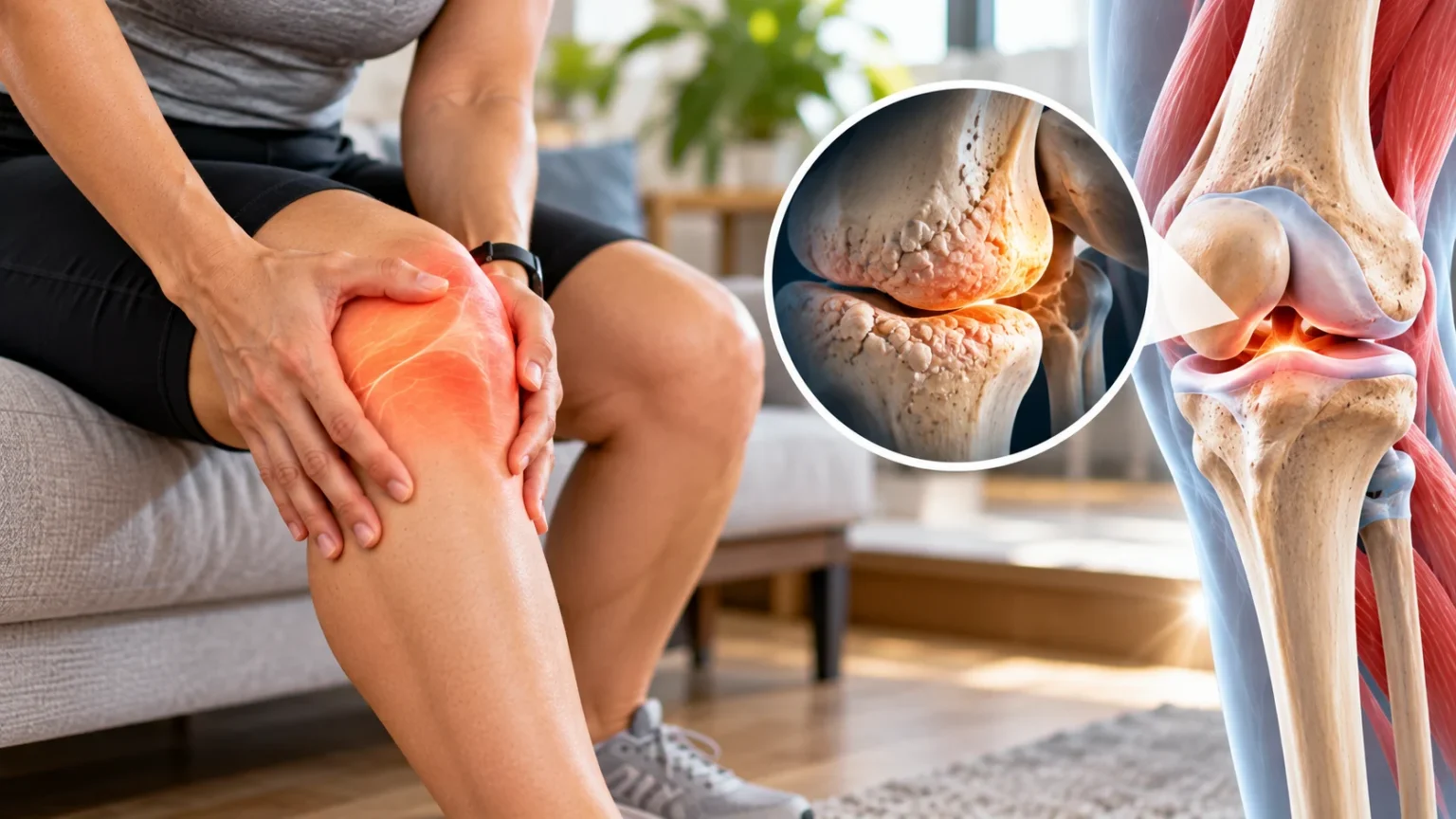

What Does Crepitus Mean?
Crepitus is a medical term used to describe a crackling, popping, grinding, clicking, or crunching sensation that may occur in or around a joint. Some people hear the sound clearly, while others mainly feel it beneath the skin during movement. Crepitus can affect the knees, shoulders, neck, ankles, fingers, jaw, or other parts of the body.
The sensation may happen when joint surfaces move, tendons shift over nearby tissues, or small gas bubbles form and change within joint fluid. In many cases, crepitus is painless and simply reflects normal movement inside the body. Hearing occasional joint noises does not automatically mean that cartilage or bone is being damaged.
However, crepitus can also appear alongside pain, swelling, stiffness, weakness, or reduced movement. When additional symptoms are present, the sound may be associated with irritation, injury, arthritis, or another musculoskeletal condition. The meaning therefore depends less on the sound itself and more on when it occurs and what other symptoms accompany it.
What Does Crepitus Feel and Sound Like?
Crepitus can sound different from person to person. Some describe a soft clicking sound, while others notice loud popping, grinding, snapping, or crunching during movement. The sensation may occur every time a joint moves or only occasionally, such as when standing from a chair, climbing stairs, bending the knee, or rotating the shoulder.
Sometimes crepitus is easier to feel than hear. You may notice a subtle vibration or rough sensation when placing your hand over a moving joint. This can happen when tendons, ligaments, cartilage, or other structures move against nearby tissues, although the exact source cannot always be identified from sensation alone.
The intensity of the sound does not necessarily tell you how serious the underlying issue is. A loud painless pop may be harmless, while a quieter grinding sensation accompanied by persistent pain may deserve closer attention. Symptoms such as swelling, instability, locking, weakness, or reduced range of motion are generally more informative than volume alone.
Why Does Crepitus Happen?
One common reason for crepitus is the movement of gas within synovial fluid, which lubricates many joints. Pressure changes inside the joint can cause tiny gas bubbles to form or change, sometimes producing a popping sound. This mechanism is often associated with harmless joint cracking, particularly when no pain or swelling is present.
Tendons and ligaments can also create sounds as they move over bones or other tissues. During bending, straightening, or rotation, these structures may shift slightly and create a snapping or clicking sensation. This is relatively common around the knees, hips, shoulders, and ankles and does not always indicate injury.
Crepitus may also occur when joint surfaces become rougher or irritated. Cartilage changes, inflammation, previous injuries, or degenerative joint conditions can alter how smoothly structures move against one another. In these situations, the sound may be accompanied by pain, stiffness, swelling, or decreased function, which makes further assessment more important.
Is Crepitus Normal?
Painless crepitus is extremely common and may occur in otherwise healthy joints. Many people notice clicking in their knees, ankles, shoulders, or fingers without experiencing any pain or limitation. When the joint feels strong, moves normally, and shows no swelling, occasional sounds are often simply part of normal body movement.
Joint noise can become more noticeable after periods of inactivity. You might hear more clicking when first getting out of bed, standing after sitting for a long time, or beginning exercise. As tissues warm up and movement becomes smoother, the noises may become less noticeable even though nothing harmful has happened.
Normal crepitus should generally be distinguished from sounds that appear after an injury or alongside worsening symptoms. If a new grinding or popping sensation develops with pain, swelling, bruising, instability, or difficulty moving the joint, the situation deserves more attention. The overall symptom pattern matters more than crepitus by itself.
Crepitus in the Knee
The knee is one of the most common places where people notice crepitus. Clicking, popping, or grinding may occur when bending the knee, squatting, climbing stairs, or standing up from a seated position. The sound can come from several structures, including the kneecap, tendons, joint surfaces, or tissues surrounding the knee.
Painless knee crepitus is often harmless, especially when strength and mobility remain normal. However, knee sounds accompanied by pain around the kneecap, swelling, stiffness, or difficulty with weight-bearing activities may indicate that nearby tissues are irritated. Previous injuries, training changes, or arthritis can also influence how the knee feels and sounds.
Understanding lower-leg anatomy can make knee symptoms easier to discuss because the knee connects the femur with the tibia and other surrounding structures. Still, a sound alone cannot determine which tissue is responsible. Persistent painful crepitus should be evaluated based on symptoms, movement, injury history, and physical examination.
Crepitus in the Shoulder
Shoulder crepitus may sound like clicking, popping, grinding, or snapping when the arm is raised or rotated. The shoulder is a highly mobile joint supported by muscles, tendons, ligaments, and a shoulder blade that moves across the rib cage. Because so many structures move together, occasional sounds are relatively common.
Some shoulder noises occur when tendons move across nearby structures or when the shoulder blade glides over the ribs. If this happens without pain, weakness, or reduced movement, it may not be concerning. Many active people notice occasional shoulder clicking during exercise even when the joint functions normally.
Painful shoulder crepitus deserves more attention, particularly when it follows an injury or is associated with weakness and limited movement. Rotator cuff problems, inflammation, joint irritation, or previous trauma may sometimes contribute. A clinician can assess strength, movement patterns, tenderness, and injury history to determine whether further treatment or testing is appropriate.
Crepitus in the Neck and Spine
Crepitus can also occur in the neck or back when the spine moves. People may hear clicking or cracking while turning the head, stretching, standing upright, or changing posture. These sounds can come from small joints, tendons, ligaments, or pressure changes around the spine and are often harmless when no pain is present.
Neck cracking sometimes feels relieving because movement may temporarily reduce stiffness. However, repeatedly forcing the neck into extreme positions just to produce a crack is not necessary. Gentle mobility is generally preferable because aggressive manipulation can irritate sensitive tissues, especially when the neck is already painful or recovering from an injury.
Medical evaluation may be appropriate when spinal crepitus occurs with persistent pain, numbness, tingling, weakness, balance problems, or symptoms traveling into the arms or legs. These signs suggest that more than ordinary joint noise may be involved. The sound itself is usually less important than neurological symptoms or significant movement limitations.
Can Arthritis Cause Crepitus?
Arthritis can sometimes cause crepitus because changes in cartilage and joint surfaces can make movement feel rougher. Osteoarthritis, in particular, may be associated with grinding or crackling sensations in weight-bearing joints such as the knees and hips. People may also experience stiffness, aching, reduced mobility, or swelling depending on the severity.
Crepitus does not mean that arthritis is definitely present. Plenty of people without arthritis have noisy joints, and some individuals with arthritis may not notice much noise at all. Diagnosis depends on the combination of symptoms, examination findings, medical history, and sometimes imaging rather than on the presence of cracking sounds alone.
If joint pain and stiffness continue for several weeks, particularly when everyday activities are becoming harder, medical advice may be useful. A healthcare professional can help identify whether arthritis, tendon irritation, muscle weakness, previous injury, or another factor is contributing. Appropriate management can then focus on maintaining strength, movement, and daily function.
Can Exercise Cause Crepitus?
Exercise can make joint sounds more noticeable because repeated movement places tendons, ligaments, and joint surfaces through a larger range of motion. Squats, lunges, push-ups, running, and overhead exercises commonly produce clicking or popping in some people. If the movement is comfortable and there is no swelling or instability, the sound alone may not require stopping.
Changes in training can also temporarily alter how joints feel. A sudden increase in running distance, resistance, repetitions, or exercise frequency may create muscle fatigue and irritation around a joint. This can make normal sounds more noticeable or produce discomfort that signals the need to reduce training load and allow better recovery.
Good technique and gradual progression are generally more important than trying to eliminate every joint sound. Focus on whether the exercise feels controlled and whether symptoms remain manageable during and after training. If crepitus begins with sharp pain or causes the joint to feel unstable, modify the activity and consider professional assessment.
Can Crepitus Go Away?
Crepitus may become less noticeable over time, particularly when it is related to temporary stiffness, changes in activity, or minor tissue irritation. Improving strength, mobility, and movement tolerance can sometimes reduce the frequency of clicking or grinding. However, eliminating every joint sound is not always necessary when the joint is otherwise healthy and painless.
If crepitus is associated with an irritated tendon or joint, addressing the underlying cause may improve both symptoms and sound. This might involve temporarily adjusting exercise, gradually rebuilding strength, improving mobility, or following a rehabilitation program. Improvement is usually measured by reduced pain and better function rather than by complete silence during movement.
Some forms of crepitus may continue even after pain improves, particularly when they are related to normal anatomy or longstanding joint changes. Persistent sound without pain does not automatically mean treatment has failed. A joint can remain noisy while functioning comfortably and supporting normal exercise and everyday activity.
What Can You Do About Painless Crepitus?
If crepitus is painless and the joint functions normally, you often do not need to do anything specific. Regular physical activity, strength training, and comfortable mobility work can help maintain joint health. Avoid becoming overly focused on every click or pop because normal joints can make sounds without being injured.
A gradual warm-up may make movement feel smoother before exercise. Walking, light cycling, controlled joint movements, or lower-intensity versions of your planned exercises can prepare muscles and joints for greater loads. Proper recovery, sleep, hydration, and sensible increases in training intensity can also support overall musculoskeletal health.
You generally do not need to stop a safe exercise solely because it produces painless noise. Instead, pay attention to whether pain, swelling, instability, or movement restrictions develop. If those symptoms appear or worsen, adjusting the activity and seeking guidance may be more useful than attempting to repeatedly crack or manipulate the joint.
When Is Crepitus a Cause for Concern?
Crepitus becomes more important when it develops with persistent or worsening pain. Swelling, warmth, redness, significant stiffness, or difficulty moving the affected joint can suggest inflammation or injury. Symptoms that continue despite reasonable rest and activity modification should be assessed rather than repeatedly pushed through.
A sudden pop during an injury deserves attention when it is followed by immediate pain, swelling, weakness, or inability to bear weight. In this situation, the sound may reflect an injured ligament, tendon, cartilage structure, or bone rather than ordinary crepitus. Prompt evaluation can help determine whether imaging or specific treatment is needed.
Seek urgent medical attention if joint symptoms follow major trauma, the joint appears visibly deformed, or you cannot use the limb normally. Fever combined with a hot, red, severely painful joint also needs prompt assessment. These signs are different from routine painless clicking and should not be managed simply by waiting for the crepitus to stop.
How Is Painful Crepitus Evaluated?
A healthcare professional will usually begin by asking where the sound occurs, when it started, and whether pain or injury is involved. They may also ask about swelling, stiffness, exercise, previous injuries, and activities that trigger symptoms. These details help distinguish common joint noise from problems that may require more specific assessment.
Physical examination may include checking joint movement, strength, tenderness, swelling, stability, and functional activities. A clinician may listen or feel for crepitus while the joint moves, but the sound itself rarely provides the full diagnosis. The surrounding muscles, tendons, ligaments, and nearby joints may also be examined because symptoms can overlap.
Imaging such as X-rays, ultrasound, or MRI may be considered when the clinical picture suggests structural injury, arthritis, or another condition requiring investigation. Not everyone with crepitus needs imaging. Testing decisions usually depend on pain severity, injury history, functional limitations, examination findings, and whether symptoms are improving with conservative care.
Conclusion
Crepitus means a clicking, popping, crackling, grinding, or crunching sensation that occurs in or around a joint. It is commonly noticed in areas such as the knees, shoulders, neck, hips, and ankles. When crepitus occurs without pain, swelling, weakness, or reduced movement, it is often simply a normal feature of joint movement.
The meaning of crepitus changes when other symptoms are present. Painful grinding, new swelling, instability, significant stiffness, or symptoms developing after an injury may indicate irritation or damage that requires assessment. Rather than focusing only on the sound, consider how the joint feels and whether normal activities are becoming more difficult.
Regular movement, strengthening, and gradual exercise progression can support healthy joints even when occasional sounds remain. You do not need to eliminate every click or pop from your body. If crepitus becomes painful, persistent, or associated with concerning symptoms, a qualified healthcare professional can help determine the underlying cause.
FAQs
What is crepitus in simple terms?
Crepitus is a clicking, popping, grinding, crackling, or crunching sensation that occurs when a joint or nearby tissue moves. It can be painless and normal or occur alongside an underlying joint problem.
Is crepitus always a sign of arthritis?
No. Crepitus commonly occurs in healthy joints and does not automatically indicate arthritis. Arthritis becomes more likely when joint sounds occur alongside ongoing pain, stiffness, swelling, or reduced function.
Why do my knees crack when I squat?
Knee cracking during squats may result from normal joint movement, gas pressure changes, or tendons moving over nearby tissues. If the cracking is painless and movement feels stable, it is often not concerning.
Can crepitus be treated?
Treatment is usually aimed at the underlying cause rather than the sound itself. When pain is present, activity modification, strengthening, rehabilitation, or medical treatment may help depending on what is causing the symptoms.
When should I see a doctor for crepitus?
Seek medical advice when crepitus occurs with persistent pain, swelling, instability, weakness, limited movement, or after an injury. Severe pain, deformity, inability to bear weight, or a hot swollen joint needs prompt evaluation.