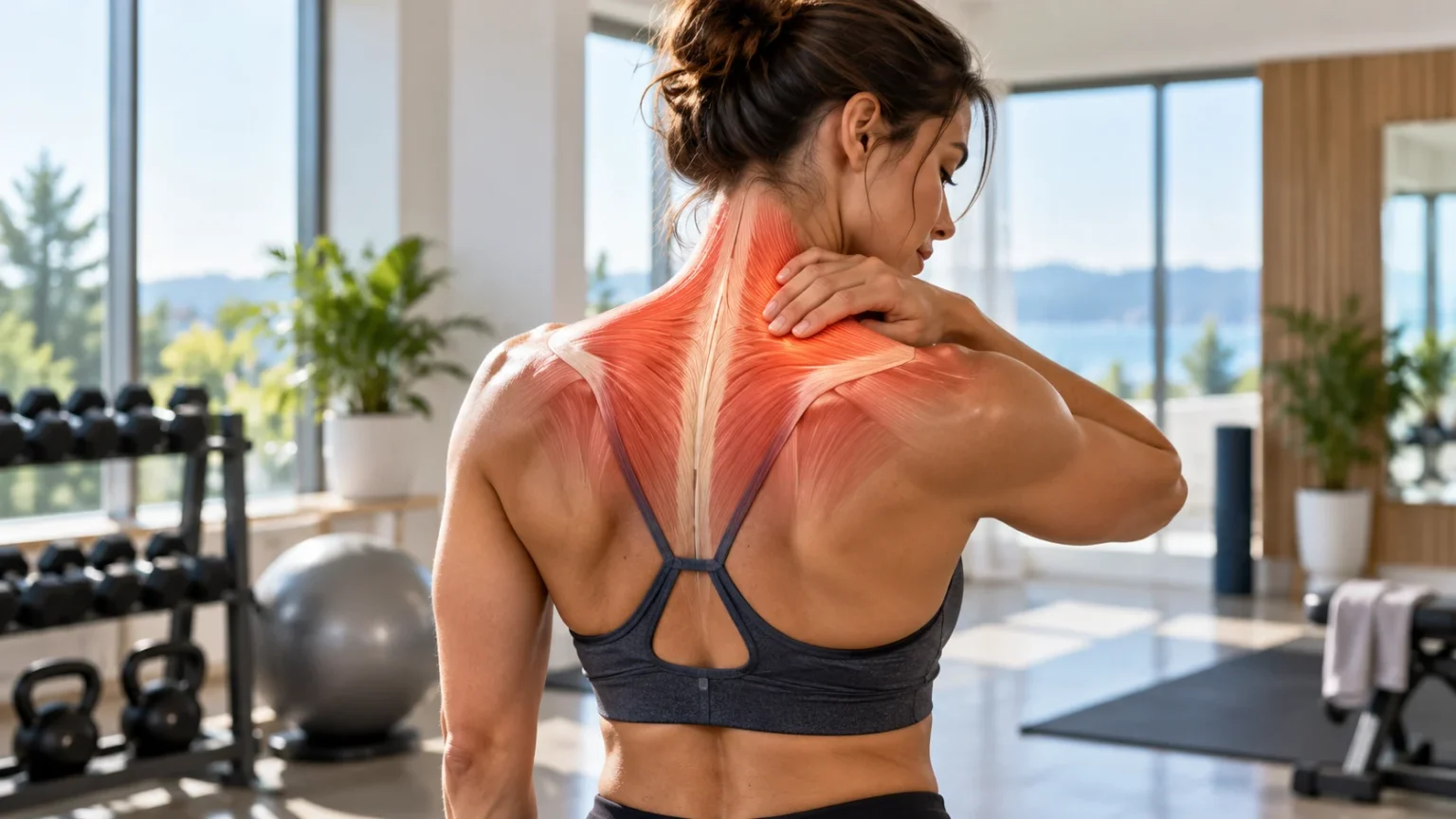

Your trapezius muscles, commonly called traps, are large muscles that extend across your upper back, shoulders, and neck. They play an essential role in shoulder movement, maintaining good posture, and supporting everyday activities. Whether you’re lifting something, turning your head, or reaching overhead, your traps help keep your upper body stable and coordinated.
Understanding where your traps are located can help you recognize how these muscles work and why they sometimes become tight or uncomfortable. Many people associate traps only with the area between the neck and shoulders, but these muscles actually extend much farther down the back. Their different sections work together to control several important movements.
In this guide, you’ll learn about trapezius muscle anatomy, location, functions, common causes of discomfort, and ways to maintain healthy muscles. We’ll also explore simple exercises, stretching techniques, and posture habits that support comfortable shoulder movement. By understanding your traps, you can make informed decisions about caring for your neck, shoulders, and upper back.
Where Are Your Traps Located in the Body?
Your traps are located across the upper portion of your back, extending from the base of your skull toward the middle of your spine. These broad muscles also stretch outward toward your shoulders, creating a large, roughly diamond-shaped structure when viewed together. The trapezius muscle location includes parts of your neck, shoulders, and upper back.
Each trapezius muscle lies on one side of your spine, forming a symmetrical pair that supports upper-body movement. The muscles attach to structures including the skull, cervical and thoracic vertebrae, collarbone, and shoulder blade. Because of their wide attachment points, they help coordinate several movements involving your neck and shoulders.
You can feel part of your upper trapezius by gently placing your hand between your neck and shoulder. When you shrug your shoulders, the muscle beneath your fingers becomes more noticeable. However, the trapezius extends beyond this area, covering a significant portion of your upper and middle back and contributing to shoulder stability.
What Is the Trapezius Muscle?
The trapezius is a large, superficial skeletal muscle responsible for moving and stabilizing the shoulder blades. It belongs to the group of muscles that connect the shoulder girdle with the neck and trunk. Its name comes from its trapezoid-like appearance, which becomes especially noticeable when both left and right muscles are viewed together.
Unlike smaller muscles that perform only a limited range of movements, the trapezius has several functional responsibilities. It helps elevate, retract, depress, and rotate the shoulder blades, depending on which muscle fibers are active. These actions are essential for lifting your arms, maintaining shoulder alignment, and supporting many ordinary movements.
The trapezius receives its primary motor nerve supply from the spinal accessory nerve, also known as cranial nerve XI. Sensory and proprioceptive contributions come from cervical spinal nerves, particularly C3 and C4. This nerve supply allows the muscle to respond to movement demands while contributing to coordinated shoulder and upper-back function.
Understanding the Three Parts of Your Traps
The trapezius muscle contains three functional regions known as the upper, middle, and lower trapezius. Although these sections form one continuous muscle, each contributes differently to shoulder blade movement and stability. Understanding the three parts of the trapezius helps explain why different exercises and daily activities engage different areas of your upper back.
The upper trapezius extends from the back of the skull and neck toward the outer collarbone. Its main functions include elevating the shoulder blade and assisting with upward rotation during arm movements. This section also contributes to certain head and neck movements when the shoulder girdle remains stable.
The middle trapezius runs across the upper back and attaches to the shoulder blade, helping pull it toward the spine. The lower trapezius extends farther down the back and assists with shoulder blade depression and upward rotation. Together, all three sections coordinate smooth shoulder movement and help maintain stability during reaching, pulling, and lifting activities.
What Do Your Traps Do?
One of the most important trapezius muscle functions is controlling the position and movement of your shoulder blades. Whenever you raise your arms, reach overhead, or pull something toward your body, different trapezius fibers become active. These coordinated contractions help the shoulder blades move effectively while providing a stable foundation for the shoulder joints.
Your traps also contribute to maintaining upright posture by supporting the position of your shoulders and upper back. They work alongside other muscles, including the serratus anterior, rhomboids, and neck stabilizers. Rather than functioning independently, these muscles share responsibility for keeping your shoulder girdle appropriately positioned during movement and rest.
Another important role involves assisting head and neck movements under specific conditions. Certain trapezius fibers can help extend, laterally flex, or rotate the neck when the shoulders remain stabilized. These functions make your trapezius muscles important for activities ranging from carrying a backpack to turning your head and working at a desk.
Why Are Your Traps Important for Posture?
Your trapezius muscles contribute to posture by helping control shoulder blade positioning throughout the day. When working at a computer, reading, or using a phone, these muscles cooperate with surrounding tissues to support your upper body. Comfortable posture depends on balanced muscular activity, regular movement, and appropriate support rather than maintaining one rigid position.
Spending long periods in the same position may contribute to stiffness, fatigue, or discomfort around the neck and shoulders. Your traps can become sensitive when they remain active for extended periods without sufficient changes in movement. This doesn’t necessarily mean your posture is incorrect, but it may indicate that your muscles need variety.
Improving upper back posture often involves strengthening supportive muscles, adjusting your workspace, and taking regular movement breaks. Keeping frequently used items within comfortable reach can also reduce unnecessary shoulder tension. Developing these habits helps distribute physical demands across different muscles instead of repeatedly loading the same areas throughout the day.
Common Causes of Trapezius Muscle Pain
Trapezius discomfort can develop from several factors, including muscular strain, repetitive movements, and prolonged positioning. Activities such as carrying heavy bags, performing unfamiliar exercises, or spending extended periods at a desk may contribute to symptoms. Trapezius muscle pain often feels like aching, tightness, tenderness, or stiffness around the neck and upper shoulders.
Physical and emotional stress may also influence trapezius discomfort because stress can increase muscular tension. Some people unconsciously raise or tighten their shoulders when concentrating, feeling anxious, or working under pressure. Over time, sustained tension may contribute to fatigue or soreness, although stress is rarely the only possible explanation for discomfort.
Not every painful sensation near the trapezius originates from the muscle itself. Neck joints, irritated nerves, shoulder conditions, and other medical problems can sometimes produce similar symptoms. Persistent pain, worsening weakness, numbness, or discomfort following a significant injury should be evaluated by a qualified healthcare professional to determine the underlying cause.
Signs Your Trapezius Muscles May Be Tight
Tight trapezius muscles may cause a pulling sensation between your neck and shoulders, especially after prolonged sitting. You might also notice reduced comfort when turning your head, raising your arms, or looking downward. These symptoms can vary depending on your daily activities, existing muscle sensitivity, and the involvement of nearby tissues.
Some people experience localized tenderness when gently pressing the upper trapezius area. Others describe a feeling of heaviness across the shoulders or discomfort extending toward the upper back. Tension around the neck and shoulders can occasionally accompany headaches, although headaches have many causes and shouldn’t automatically be attributed to tight traps.
Muscle tightness isn’t always evidence that a muscle is shortened or weak. Sometimes the sensation results from fatigue, increased sensitivity, or sustained muscular activity rather than an actual loss of flexibility. If symptoms persist, interfere with normal movement, or repeatedly return, a healthcare professional can help identify contributing factors and suitable treatment options.
How to Stretch Your Trapezius Muscles Safely
Gentle stretching can help improve movement comfort and temporarily reduce feelings of tension around your trapezius muscles. One common technique is the upper trapezius stretch, performed while sitting or standing comfortably. Relax your shoulders, slowly tilt one ear toward the same-side shoulder, and stop when you feel a mild stretch on the opposite side.
Hold the position for approximately 15 to 30 seconds while breathing normally and avoiding sudden movements. Return your head to the center before repeating on the opposite side. You should feel a gentle pulling sensation rather than sharp pain, dizziness, tingling, or increasing discomfort, which are signs to stop the movement.
Another helpful approach involves slow shoulder rolls and comfortable neck movements throughout the day. These activities encourage movement without requiring aggressive stretching or extensive preparation. Remember that stretching is only one component of muscle care, and lasting improvements often depend on combining movement variety, strengthening, adequate recovery, and appropriate activity modifications.
Best Exercises to Strengthen Your Traps
Strengthening your trapezius muscles can support shoulder stability, comfortable movement, and everyday physical activities. Trapezius exercises should address the upper, middle, and lower sections rather than concentrating exclusively on shoulder shrugs. A balanced approach helps improve coordination between the trapezius and other muscles that control the shoulder blades.
Shoulder shrugs primarily challenge the upper trapezius when performed with controlled movement. Rows can engage the middle trapezius and surrounding upper-back muscles, while carefully performed prone Y raises may emphasize lower trapezius activity. Start with manageable resistance, use comfortable movement ranges, and prioritize technique before gradually increasing difficulty.
Resistance bands, light dumbbells, and bodyweight movements can all provide useful strengthening options depending on individual needs. Exercises don’t need to produce intense soreness to be effective, and sufficient recovery helps muscles adapt to training. If you have shoulder injuries, significant pain, or movement limitations, seek guidance before beginning unfamiliar exercises.
How Your Traps Work With Other Shoulder Muscles
Your trapezius muscles rarely act alone because shoulder movement requires cooperation between multiple muscle groups. The serratus anterior, rhomboids, levator scapulae, and rotator cuff muscles all contribute to shoulder blade positioning or shoulder joint control. Their combined activity helps maintain smooth movement during reaching, lifting, pushing, and pulling tasks.
The serratus anterior is particularly important for upward rotation of the shoulder blade during overhead arm movements. It works with the upper and lower trapezius to support effective shoulder mechanics. Meanwhile, the rhomboids assist with shoulder blade retraction, although their overall roles differ from those of the trapezius.
Balanced shoulder function depends on coordination rather than making every surrounding muscle equally strong. Different activities place different demands on the upper back, shoulders, and chest muscles. Including a variety of pulling, reaching, and controlled overhead movements in a suitable exercise program can help develop useful strength and movement capacity.
Everyday Habits That Support Healthy Trapezius Muscles
Maintaining comfortable trapezius muscles doesn’t require complicated routines or expensive equipment. Regular movement, appropriate exercise, and practical workstation adjustments can make a meaningful difference in managing everyday muscular demands. Small changes, such as alternating tasks or changing your sitting position, may help reduce prolonged tension across your neck and shoulders.
When using a computer, position your screen at a comfortable viewing height and keep frequently used equipment within easy reach. Allow your shoulders to rest naturally rather than deliberately pulling them backward throughout the day. Taking short movement breaks gives your muscles opportunities to change activity and helps prevent prolonged static positioning.
Sleep comfort, stress management, and sufficient recovery also contribute to overall musculoskeletal well-being. Choose sleeping arrangements that support a comfortable neck position, and consider relaxation techniques if stress increases shoulder tension. Consistent habits are generally more useful than trying to maintain a supposedly perfect posture or relying on one exercise.
Can Weak or Overworked Traps Affect Shoulder Movement?
Your trapezius muscles influence how your shoulder blades move during everyday tasks and physical activity. Reduced strength, poor coordination, fatigue, or discomfort may affect how efficiently the shoulder girdle functions. However, observing an unusual shoulder movement pattern doesn’t automatically establish that the trapezius is weak or responsible for someone’s symptoms.
During overhead reaching, the upper and lower trapezius work with the serratus anterior to rotate the shoulder blade upward. When these muscles aren’t coordinating effectively, some movements may become less comfortable or efficient. Shoulder pain can also involve joints, tendons, nerves, and other tissues, so muscle imbalance isn’t always the explanation.
A carefully selected exercise program can improve muscular capacity and movement confidence over time. Healthcare professionals may assess shoulder strength, range of motion, and functional limitations before recommending specific activities. This individualized approach is particularly useful when pain persists or when symptoms make ordinary tasks difficult despite reasonable changes in activity.
Conclusion
Your trapezius muscles are broad, important muscles located across your neck, shoulders, and upper back. Their upper, middle, and lower sections perform different but coordinated functions that support shoulder blade movement, neck motion, and upper-body stability. Understanding where your traps are makes it easier to appreciate their contribution to everyday activities.
Keeping your traps comfortable involves regular movement, appropriate strengthening, gentle stretching, and practical daily habits. Muscle tightness and discomfort can arise for many reasons, so focusing only on posture or one particular exercise may not address every concern. A balanced approach supports strength, flexibility, recovery, and comfortable movement without unnecessary strain.
Pay attention to how your neck and shoulders respond to work, exercise, and daily activities. If discomfort becomes persistent, worsens, or occurs alongside neurological symptoms, professional assessment can help clarify the cause. With an understanding of trapezius anatomy and sensible muscle-care habits, you can support healthier and more confident upper-body movement.
Frequently Asked Questions (FAQs)
Where exactly are your traps located?
Your traps extend from the back of your head and neck across your shoulders and down to the middle of your upper back. Each trapezius muscle connects the spine with parts of the shoulder girdle.
Are your traps part of your neck or shoulders?
Your trapezius muscles are part of both regions. They extend across your neck, shoulders, and upper back, helping control shoulder blade movement while also contributing to certain head and neck movements.
What causes tight trapezius muscles?
Trapezius tightness may result from prolonged positioning, repetitive activities, muscular fatigue, stress, or unfamiliar exercise. Persistent discomfort can have other causes, including neck and shoulder conditions, and may require professional evaluation.
What exercises work your trapezius muscles?
Shoulder shrugs, rows, and prone Y raises engage different portions of your trapezius. Controlled resistance exercises can help develop strength and shoulder stability when performed with appropriate technique and manageable resistance.
How do you relieve trapezius muscle pain?
Gentle movement, temporary activity modifications, stretching, and suitable strengthening may help with mild muscular discomfort. Persistent or worsening symptoms, especially those involving weakness or numbness, should be assessed by a healthcare professional.