

Dry Brushing Explained: Benefits, Method and Safety
Dry brushing has become a popular addition to modern body-care routines, appearing in wellness videos, spas and beauty guides. The practice involves moving a dry, firm-bristled brush across dry skin before bathing. Supporters often claim it can exfoliate the body, stimulate circulation, reduce cellulite and support lymphatic drainage. Some of these claims are reasonable, while others extend beyond the available scientific evidence.
The most dependable benefit of dry skin brushing is physical exfoliation. As the bristles move over the body, they loosen dead skin cells sitting on the skin’s surface. This may temporarily leave rough areas feeling smoother and help body moisturizer spread more evenly. However, brushing too firmly or too frequently can damage the protective skin barrier instead of improving it.
Dry brushing may also create a temporary flushed or invigorated feeling because rubbing the skin increases local blood flow. That effect does not necessarily mean the practice is removing toxins, treating swelling or changing the lymphatic system in a medically significant way. Research has not confirmed many of the wider wellness promises associated with the technique. Realistic expectations are therefore important when deciding whether it belongs in your skincare routine.
For people whose skin tolerates mechanical exfoliation, gentle body brushing can be an enjoyable self-care ritual. The key is to use an appropriate brush, apply light pressure and avoid sensitive or damaged areas. It should complement basic skincare habits rather than replace cleansing, moisturizing, sun protection or professional medical treatment. This guide explains how dry brushing works, how to perform it safely and which popular claims deserve caution.
What Is Dry Brushing?
Dry brushing is a form of mechanical exfoliation performed with a body brush on clean, completely dry skin. Unlike scrubs that use grains or acids, this method relies on the movement of bristles to loosen surface buildup. The brush is usually passed over the arms, legs and torso using long strokes. Most people complete the routine immediately before showering so loose skin cells can be rinsed away.
The technique is sometimes associated with traditional wellness practices, including forms of Ayurvedic body care. Its current popularity, however, is strongly connected to social media, beauty spas and interest in home-based self-care. Modern instructions frequently recommend brushing toward the heart or nearby lymph nodes. These directions may make the routine easier to organize, but they do not prove that it provides medical lymphatic treatment.
A dry brushing session usually lasts between a few minutes and approximately 10 minutes. The process should feel stimulating without causing pain, scratches or persistent redness. A person may notice some temporary pinkness because the skin has been rubbed, especially after brushing the legs or arms. Strong burning, intense itching or marked redness suggests that the pressure or brush texture is too aggressive.
Body brushing is different from facial exfoliation because facial skin is generally more delicate. A standard body brush should not be used on the face, around the eyes or on other thin and sensitive areas. Facial dry brushing products exist, but even softer tools may irritate reactive skin. People interested in facial exfoliation should generally choose a method suited to their skin type and follow professional dermatology guidance.
What Are the Real Benefits of Dry Brushing?
The clearest dry brushing benefit is the removal of loose, dead skin cells from the body’s outer surface. This can make areas such as the elbows, knees, lower legs and upper arms feel temporarily softer. Regular but gentle exfoliation may also reduce the dull or flaky appearance caused by surface buildup. The result is cosmetic rather than a permanent change in the skin’s structure.
Body brushing can help prepare the skin for moisturizer by clearing some loose surface flakes. Applying a fragrance-free body lotion after showering can then help restore hydration and support the skin barrier. This aftercare is particularly important because physical exfoliation can make already dry skin feel tighter. Dry brushing without moisturizing may worsen roughness in people who naturally have low skin moisture.
The physical sensation may also feel energizing or relaxing, depending on the person and the pressure used. Some people enjoy the structured routine and find that it encourages them to pay closer attention to their skin. They may notice new irritation, unusual marks or areas that need more moisture while brushing. These personal wellness benefits are subjective but can still make the habit enjoyable.
Brushing may produce temporary skin redness because friction increases blood flow near the treated surface. This can briefly make the skin look brighter, fuller or more even. The effect usually fades and should not be confused with long-term circulation treatment. Dry brushing may improve the immediate appearance and feel of the skin, but it cannot correct underlying vascular or circulatory conditions.
Does Dry Brushing Detox the Body?
Detoxification is one of the most common marketing claims connected with dry brushing. The idea is that brushing stimulates lymph movement, helping the body remove waste products and toxins. However, the body already uses organs such as the liver, kidneys, lungs and digestive system to process and eliminate substances. There is no strong clinical evidence showing that ordinary body brushing significantly improves this internal detoxification process.
The lymphatic system plays an important role in fluid balance and immune function. It moves lymph through a network of vessels and lymph nodes, supported by muscle activity, breathing and normal body movement. Dry brushing may create surface stimulation, but that does not establish it as an effective treatment for lymphatic disorders. Claims that visible skin redness proves toxins are leaving the body are scientifically misleading.
Medical lymphatic drainage is a specialized technique used in carefully managed treatment plans for conditions such as lymphoedema. These plans can involve compression garments, exercise, skin care and manual lymphatic drainage performed or taught by trained professionals. A commercial dry brush is not an equivalent replacement for this treatment. Anyone experiencing persistent swelling should seek medical assessment instead of attempting to brush the swelling away.
It is reasonable to enjoy dry brushing as an exfoliation practice without describing it as a detox cure. Drinking excessive water or combining brushing with restrictive detox diets will not make the technique scientifically stronger. A balanced diet, adequate hydration, regular movement and appropriate medical care offer more meaningful support for general health. Honest expectations make it easier to use dry brushing safely and sensibly.
Can Dry Brushing Reduce Cellulite?
Cellulite is the dimpled or uneven appearance that commonly develops on the thighs, hips, buttocks and abdomen. It forms when underlying fat pushes against connective tissue beneath the skin. Cellulite is extremely common and is not a sign that someone is unhealthy or failing to care for their body. Its appearance can be influenced by genetics, skin structure, hormones, age and body composition.
Dry brushing may make cellulite look temporarily less noticeable immediately after a session. Friction can increase local blood flow and create slight temporary swelling, which may make the skin surface appear smoother. Exfoliation can also improve texture by removing visible dryness. These short-lived effects do not mean that brushing has removed fat deposits or permanently changed the connective tissue.
There is not enough reliable evidence to support dry brushing as a lasting cellulite treatment. Before-and-after photographs may be affected by lighting, body position, moisture, camera angle and temporary redness. Repeated brushing cannot selectively burn fat from one area of the body. Aggressive brushing in pursuit of faster results is more likely to cause irritation, bruising or broken skin.
People may continue dry brushing because they enjoy how their skin feels afterward, but the goal should remain realistic. Cellulite does not require treatment unless a person personally wants to address its appearance. A dermatologist can explain evidence-based cosmetic options and their limitations. No home technique can guarantee permanently smooth or cellulite-free skin, regardless of how strongly it is marketed.
How to Dry Brush Your Body Correctly
Begin with clean, completely dry skin and a clean body brush. Many people find it convenient to stand in the shower before turning on the water because loose skin cells will be easier to rinse away. Remove clothing and make sure the floor is dry enough to prevent slipping. Do not apply oil or lotion before brushing because the traditional technique depends on dry contact.
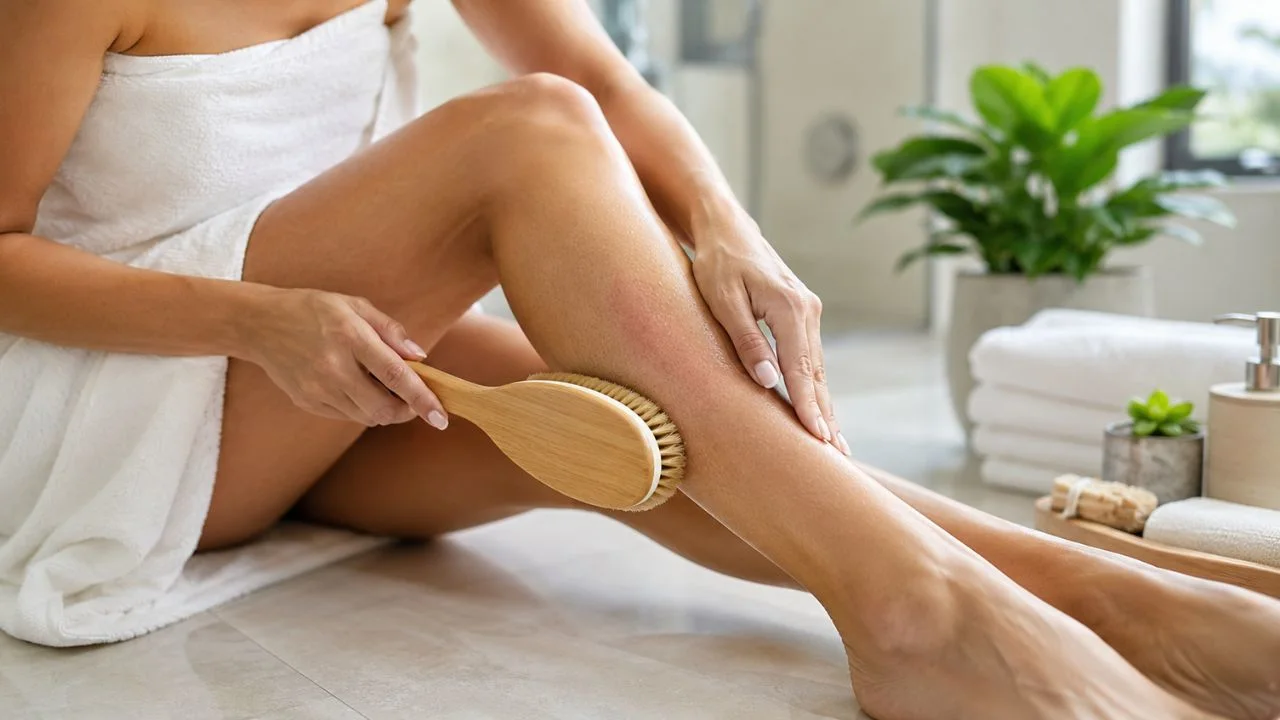
Start at the feet and use long, gentle strokes upward over the lower legs. Continue toward the thighs without repeatedly scrubbing the same patch. Move to the hands and brush upward along the arms toward the shoulders. Use lighter pressure over thin skin and slightly firmer pressure only where the skin is naturally thicker and comfortable.
When brushing the stomach and torso, use gentle movements rather than forceful scrubbing. Avoid the breasts, nipples, genitals, face and any area that feels unusually sensitive. The brush should move smoothly without pulling painfully at body hair. A complete routine can be brief; there is no need to continue until the skin becomes intensely red.
After brushing, shower with lukewarm water and use a mild cleanser where necessary. Hot water may increase dryness and irritation, particularly after physical exfoliation. Pat the skin dry instead of rubbing it with a towel, then apply a gentle body moisturizer. Stop the routine if the skin develops burning, persistent itching, soreness or a rash.
How Much Pressure Should You Use?
Dry brushing should feel noticeable but never painful. The correct pressure is usually lighter than beginners expect, especially when using a new brush with firm bristles. Skin may become mildly pink for a short period, but it should not appear scraped, bruised or intensely red. Pain is a warning that the brush is too rough, the pressure is excessive or the area should be avoided.
Use the lightest pressure on the chest, abdomen, inner arms and other delicate areas. The soles of the feet, knees and elbows may tolerate slightly firmer strokes because their outer skin is thicker. Even on these areas, aggressive scrubbing does not improve results. The purpose is to lift loose surface cells, not to forcefully remove several layers of skin.
People with pale or reactive skin may notice redness more quickly than others. Skin tone can also affect how visible irritation appears, so discomfort and texture changes should be monitored alongside color. On deeper skin tones, inflammation may look purple, grey or darker than the surrounding area rather than bright red. Tenderness and burning remain important warning signs regardless of skin color.
Perform a small patch test when trying dry brushing for the first time. Brush a limited area gently, then observe it for the rest of the day. Do not continue over the entire body if the test area becomes itchy, painful or inflamed. Starting cautiously is safer than attempting to copy an intense routine shown in a promotional video.
How Often Should You Dry Brush?
There is no medically established schedule that everyone needs to follow. Beginners can start once a week and observe how their skin responds before increasing the frequency. Some people with resilient skin may tolerate two or three gentle sessions weekly. Daily brushing is unnecessary for exfoliation and may be too irritating for dry, sensitive or mature skin.
The right frequency depends on the brush, pressure, body area and individual skin barrier. A softer brush used lightly will generally be less irritating than stiff bristles applied with force. Seasonal changes also matter because skin often becomes drier during cold weather or in air-conditioned environments. A routine that feels comfortable in summer may become excessive during winter.
Reduce the frequency when the skin begins feeling tight, shiny, tender or unusually itchy. These changes can indicate over-exfoliation and disruption of the protective barrier. Take a break until the area feels normal, then restart more gently if desired. Continuing to brush damaged skin can prolong irritation and increase vulnerability to infection.
Dry brushing should not be combined carelessly with several other exfoliating treatments. Using a body scrub, exfoliating acid, retinoid and dry brush on the same area may create cumulative irritation. Space stronger treatments apart and monitor the skin between them. A simpler routine is often more effective than repeatedly stripping the skin in an effort to make it smoother.
How to Choose the Best Dry Brushing Brush
Look for a body brush with bristles that feel firm enough to exfoliate but flexible enough to move without scratching. Natural-fibre brushes are popular, although synthetic options can also work when they are well made and easy to clean. The label “natural” does not automatically make a brush safer or more effective. Comfort and hygiene are more important than marketing language.
A long handle can make it easier to reach the back, shoulders and lower legs. Handheld brushes with a fabric strap may provide greater control over pressure. Some products include removable handles, allowing the user to switch between both styles. Choose a design that feels secure because dropping a brush in the shower area can create a slipping hazard.
Examine the bristles before each use and replace the brush when they become bent, sharp or uneven. Rough edges can scratch the skin and turn a gentle routine into an irritating one. Do not share a body brush with another person because it comes into direct contact with dead skin cells and body oils. Each household member should have a separate, clearly identified tool.
A dry brush does not need to be expensive to perform basic exfoliation. Luxury claims about special bristle patterns, energy release or dramatic detoxification should be viewed cautiously. A simple brush that can be used gently and kept clean is usually sufficient. Spending more money does not create benefits that have not been supported by evidence.
How to Clean and Store a Dry Brush
A body brush collects dead skin cells, oil and product residue during use. Tap it over a washable surface or bin after every session to remove loose material. Depending on the manufacturer’s instructions, wash the bristles periodically using mild soap and lukewarm water. Avoid soaking wooden parts for long periods because moisture can cause cracking, swelling or mould.
Rinse away all soap and shake out excess water after cleaning. Place the brush bristle-side down or in a position that allows air to circulate freely. It must dry completely before the next use because persistent moisture can encourage microbial growth. Do not store a damp brush inside a closed drawer, plastic bag or unventilated shower cabinet.
Keep the brush away from the toilet and areas where it may be exposed to dirty water. A cool, dry storage location is preferable to a constantly humid bathroom corner. If the brush develops an unusual smell, visible mould or a sticky texture, discard it rather than attempting to continue using it. Damaged wooden handles should also be replaced to avoid splinters.
Follow the cleaning directions supplied with the specific product because materials differ. Some brushes cannot be fully submerged, while others are designed for more thorough washing. Replace the tool periodically based on its condition rather than relying on an arbitrary date. A clean, intact brush is essential for keeping mechanical exfoliation hygienic.
Who Should Avoid Dry Brushing?
Avoid brushing over cuts, grazes, sunburn, blisters, infections or recently shaved skin. Friction can reopen healing tissue, introduce irritation and increase discomfort. Tattoos should be fully healed before the area is exfoliated, and recent surgical sites require professional guidance. Never brush over a changing mole or unexplained skin growth in an attempt to smooth it.
People with eczema, psoriasis, rosacea or highly reactive skin should be particularly cautious. Mechanical exfoliation may trigger irritation or worsen an active flare. Even areas that appear unaffected can react when the skin barrier is already vulnerable. A dermatologist can advise whether a gentler exfoliation method would be more appropriate.
Individuals who bruise easily, take blood-thinning medication or have reduced skin sensation should ask a healthcare professional before starting. Reduced sensation can make it difficult to recognize excessive pressure and tissue damage. Diabetes, nerve disorders and circulation problems may also affect wound healing. Personalized advice is safer than following a standard online routine in these situations.
Dry brushing should not be used to treat unexplained swelling, pain, numbness or skin discoloration. These symptoms may require diagnosis rather than exfoliation. Stop immediately if brushing causes bleeding, hives, severe burning or prolonged inflammation. Seek medical advice when the reaction is significant, continues to worsen or does not settle after the practice is discontinued.
Common Dry Brushing Mistakes to Avoid
The most common mistake is believing that stronger pressure produces better results. Excessive force can create micro-injuries, remove too much surface protection and leave the skin painful. Gentle, controlled contact is enough to loosen flaky cells. A session should never be treated as a test of how much discomfort someone can tolerate.
Another mistake is brushing too often because the skin initially feels smoother. The immediate result may encourage daily or twice-daily sessions, but repeated friction can gradually cause dryness. The effects of over-exfoliation may not appear after the first use. Pay attention to how the skin feels over several days rather than judging the routine only immediately afterward.
Skipping moisturizer can also leave the skin feeling dry and tight. Physical exfoliation removes loose cells but does not replace the water and oils needed for a healthy barrier. Apply a gentle moisturizer shortly after showering while the skin is still slightly damp. Fragrance-free products may be more suitable for people who are prone to irritation.
Finally, avoid treating promotional claims as established medical facts. Dry brushing cannot cure illness, permanently eliminate cellulite or replace professional lymphoedema care. Its most credible role is as an optional body-exfoliation technique. Understanding that limitation allows people to enjoy the ritual without delaying treatment or damaging their skin in pursuit of unrealistic results.
How to Build a Skin-Friendly Dry Brushing Routine
Start with one gentle session each week using a soft or medium-firm brush. Keep the first session brief and focus on a small number of areas, such as the lower legs and arms. Observe the skin for irritation over the following 24 hours. Increase the coverage or frequency only when the skin remains comfortable and healthy.
Pair dry brushing with a lukewarm shower and mild body cleanser. Strong soaps, very hot water and fragranced products may add unnecessary irritation immediately after exfoliation. Clean only as much as needed instead of scrubbing the skin again with a rough washcloth. One form of physical exfoliation per session is generally enough.
Moisturize after bathing with a product suited to your skin type. Ingredients such as glycerin, ceramides or petrolatum can help support hydration, depending on the formulation and individual needs. Apply sunscreen to exposed body areas during the day because exfoliation does not protect against ultraviolet radiation. Sun protection remains essential even when the skin appears smoother or brighter.
Review the routine whenever the weather, medications or condition of the skin changes. Pause during eczema flares, after sunburn or whenever the body feels unusually sensitive. A successful skincare routine should adapt rather than follow an inflexible schedule. Dry brushing is worthwhile only when it feels comfortable and does not compromise skin health.
Is Dry Brushing Worth Trying?
Dry brushing may be worth trying when your goal is gentle body exfoliation and you enjoy tactile self-care routines. It can temporarily improve the feel of rough, flaky skin and may create an invigorating sensation before showering. The technique is inexpensive once you own a suitable brush. It can also encourage consistent moisturizing and greater awareness of the skin.
It is less valuable when expectations are based on dramatic detoxification or body-transformation promises. Evidence does not show that a brush removes internal toxins, burns fat or permanently erases cellulite. Claims of major medical benefits should therefore be treated with skepticism. A product demonstration or personal testimonial cannot replace controlled scientific research.
The practice is not essential for healthy skin. A gentle washcloth, properly formulated body exfoliant or consistent moisturizing routine may provide similar or better results for some people. Those with sensitive skin may benefit more from avoiding friction altogether. Skincare should be selected according to personal tolerance rather than pressure to follow a wellness trend.
Use a soft brush, begin slowly and stop when the skin becomes uncomfortable. Avoid damaged or inflamed areas and keep the tool clean between uses. Seek professional advice when you have a chronic skin condition, unexplained swelling or difficulty healing wounds. With sensible expectations, dry brushing can remain a simple cosmetic ritual rather than an unsafe health experiment.
Frequently Asked Questions
What does dry brushing do?
Dry brushing primarily provides mechanical exfoliation by loosening dead surface skin cells. It may temporarily make the skin feel smoother and appear brighter, but wider detox and medical claims remain unproven.
Should you dry brush before or after showering?
Dry brushing is normally performed before showering on completely dry skin. Showering afterward helps rinse away loose skin cells, and applying moisturizer can reduce post-exfoliation dryness.
Can I dry brush every day?
Daily brushing may irritate or over-exfoliate the skin, especially when the bristles are firm. Start once weekly and increase cautiously only when your skin remains comfortable.
Does dry brushing help lymphatic drainage?
There is insufficient clinical evidence that ordinary dry brushing significantly improves lymphatic drainage. It should not replace professionally recommended treatment for lymphoedema or persistent swelling.
How long does it take to see dry brushing results?
Smoother texture may be noticeable immediately because loose surface cells are removed. Claims involving permanent cellulite reduction, weight loss or detoxification do not have reliable supporting evidence.