
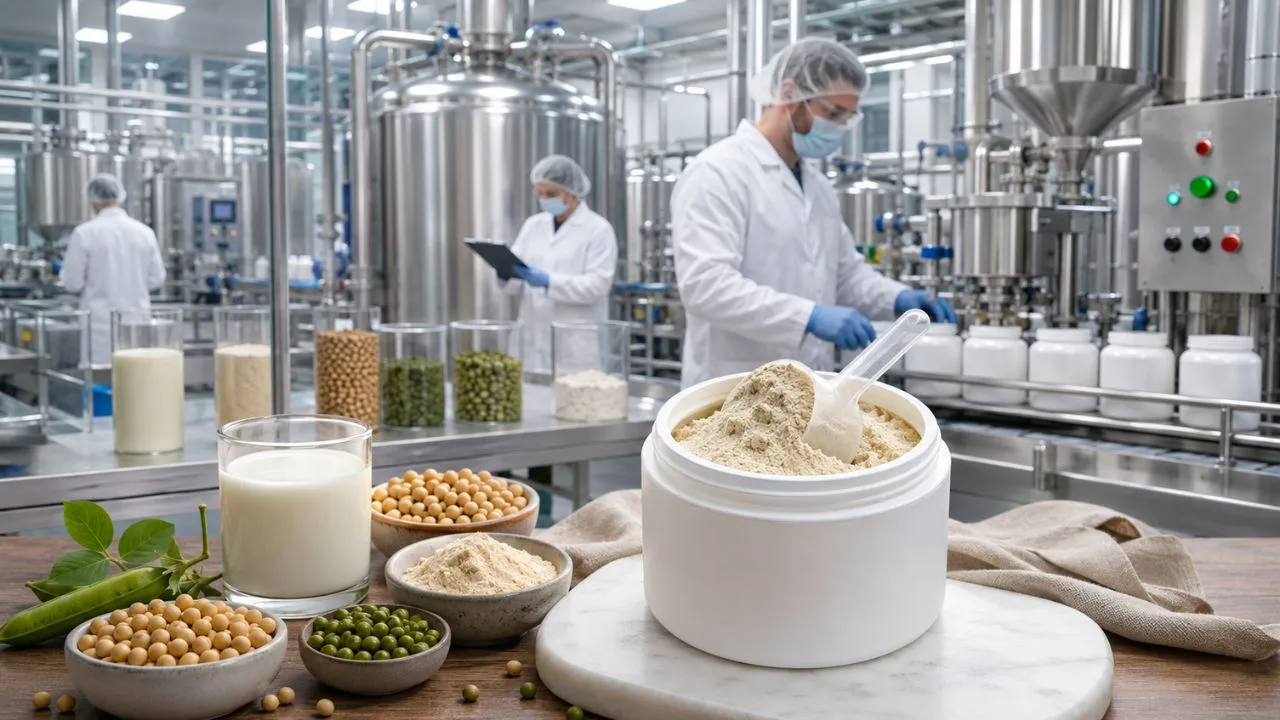

Protein powder is made by separating protein from a food source, concentrating it and removing most of the water. The starting ingredient may be milk, whey, peas, soybeans, ric concentrated material into a fine, shelf-stable powder.
The exact production method depends on the source and the type of product being created. Whey protein usually begins as liquid whey left after cheesemaking, while pea protein begins with cleaned and milled yellow peas. Egg white protein is produced from separated liquid egg whites, and casein is obtained from milk.
Most commercial protein powders pass through several stages, including cleaning, separation, filtration, concentration, drying, blending and quality testing. These steps remove water, carbohydrates, fat and unwanted plant material while preserving as much useful protein as possible. The finished ingredient can then be flavoured, packaged and sold as a dietary supplement.
Protein powder is therefore not created from artificial protein in a laboratory. It is usually a concentrated form of protein that already exists in food. Processing makes that protein easier to store, transport, measure and add to shakes, smoothies and recipes.
What Is Protein Powder?
Protein powder is a concentrated food or dietary supplement that provides a large amount of protein in a small serving. It is commonly mixed with water, milk or smoothies, but it can also be added to porridge, yoghurt, baked goods and other foods.
Manufacturers make protein powder from animal-based or plant-based ingredients. Common animal proteins include whey, casein and egg white, while popular plant options include pea, soy, rice, hemp and pumpkin seed protein. Some products combine several sources to create a more balanced amino acid profile.
The amount of protein varies by product. A protein concentrate may contain more carbohydrate and fat, while a protein isolate is processed further to increase its percentage of protein. Hydrolysed powders go through an additional stage that breaks some protein chains into smaller peptides.
Protein powder is designed to supplement a normal diet rather than replace all protein-rich foods. Meat, fish, eggs, dairy products, beans, lentils, nuts and seeds provide protein alongside other nutrients. Powder mainly offers convenience when meeting protein needs through regular meals is difficult.
The Basic Protein Powder Manufacturing Process
The general manufacturing process begins with selecting a protein-rich raw material. Manufacturers inspect the milk, whey, peas, soybeans, rice or eggs before processing. Ingredients that fail safety, quality or composition requirements should not enter the production line.
The next stage separates the protein from water, fat, starch, fibre or other components. Dairy manufacturers commonly use membrane filtration, while plant-protein producers may use milling, air classification or water-based extraction. The aim is to create a more protein-rich ingredient.
The concentrated material is then dried to remove most of its remaining moisture. Spray drying is the most common industrial method because it can rapidly transform a liquid protein concentrate into a fine powder. Other methods, including freeze drying, may be used in specialised products.
Finally, the dried protein is milled, blended and tested. Manufacturers may add flavours, sweeteners, emulsifiers, digestive enzymes, vitamins or other ingredients. The finished powder is placed in tubs, bags or single-serving packets designed to protect it from moisture and contamination.
How Raw Ingredients Are Selected
The quality of protein powder begins with the quality of its raw ingredients. Dairy processors may test milk or whey for composition, microbial quality and signs of contamination. Plant-protein producers inspect crops for moisture, damage, foreign material and suitable protein content.
The source can affect taste, texture, digestibility and nutritional composition. Whey from cheesemaking behaves differently from pea flour, while rice and hemp contain different levels of fibre and starch. Manufacturers select ingredients based on the type of powder they want to create.
Traceability is also important. Responsible manufacturers keep records showing where ingredients came from, when they arrived and which production batch used them. This information helps the company investigate a quality problem or organise a recall when necessary.
Raw materials may also need to meet allergen, organic, non-GMO, kosher, halal or sustainability requirements. These claims require separate controls and documentation. A finished powder cannot reliably meet a certification standard when the original ingredients were not properly verified.
How Whey Protein Powder Is Made
Whey protein begins with milk used during cheese production. Cheesemakers add cultures, acids or enzymes that cause milk proteins called casein to form solid curds. The remaining yellowish liquid is whey, which contains water, lactose, minerals and whey proteins.
Fresh whey contains only a relatively small percentage of protein, so it cannot simply be dried and sold as a high-protein supplement. It must first be clarified and filtered. These stages remove curd particles, some fat and other materials left from cheese production.
The liquid then passes through membrane-filtration systems. The membranes allow smaller components, including much of the water, lactose and minerals, to pass through while retaining larger protein molecules. Repeated filtration increases the concentration of protein in the remaining liquid.
After concentration, the whey protein liquid is pasteurised or otherwise treated according to the manufacturer’s process. It is then dried, usually through spray drying, to create whey protein powder. The powder may be sold as an ingredient or blended into a flavoured consumer product.
Whey Protein Concentrate vs Whey Protein Isolate
Whey protein concentrate is produced by filtering liquid whey to remove part of its water, lactose, minerals and fat. The finished ingredient can contain different protein percentages, although sports-nutrition products often use a concentrate containing about 80% protein by dry weight.
Because it receives less extensive filtration, whey concentrate generally retains more lactose and milk fat than whey isolate. This can give it a creamier flavour and texture. It may also make it less suitable for someone who is sensitive to lactose.
Whey protein isolate goes through additional filtration or separation steps. These processes remove more lactose, fat and non-protein material, creating an ingredient with a higher percentage of protein. Many isolates contain approximately 90% protein by dry weight.
The more extensive processing does not automatically make isolate better for everyone. Concentrate is often less expensive and may taste richer, while isolate provides more protein with less lactose and fat. The right choice depends on digestion, budget and personal preference.
How Hydrolysed Whey Protein Is Made
Hydrolysed whey begins as whey concentrate or whey isolate. Manufacturers add specific enzymes that cut long protein chains into smaller sections called peptides. The process is similar to part of the protein digestion that normally occurs inside the digestive system.
The amount of breakdown is described as the degree of hydrolysis. A lightly hydrolysed powder still contains many larger protein structures, while a more extensively hydrolysed product contains a higher proportion of small peptides. Manufacturers control time, temperature, enzyme type and acidity during this process.
After hydrolysis, the enzymes are deactivated and the liquid may be filtered again. It is then concentrated and dried into powder. The final ingredient can mix differently and may be absorbed more rapidly than an intact protein, although practical benefits depend on the person and purpose.
Hydrolysis can create a bitter taste because smaller peptides interact differently with taste receptors. Manufacturers may use flavour systems and sweeteners to make the powder more pleasant. Hydrolysed whey is usually more expensive because it requires additional processing and quality control.
How Casein Protein Powder Is Made
Casein is the main group of proteins found in cow’s milk. It forms the curds during traditional cheesemaking, while whey remains in the liquid. Manufacturers can separate casein directly from skimmed milk using acid, enzymes or specialised membrane-filtration systems.
Micellar casein is commonly produced by microfiltering skimmed milk. The membranes retain the naturally occurring casein micelles while allowing much of the whey protein, lactose and minerals to pass through. This creates a concentrated liquid rich in casein protein.
The casein concentrate is then dried into powder. Because casein absorbs water and forms a thicker mixture, the final powder usually creates a creamier shake than whey. Its digestion is often slower because it can form a gel-like structure in the stomach.
Another product, calcium caseinate, is made by separating casein and treating it with calcium-containing compounds. This improves its solubility and functionality for certain food uses. Micellar casein and calcium caseinate are related, but their processing and behaviour are not identical.
How Pea Protein Powder Is Made
Pea protein is usually made from yellow field peas rather than the green garden peas commonly served with meals. The peas are cleaned to remove stones, soil, damaged seeds and other foreign material. They are then split, dehulled and milled into flour.
One production method uses dry fractionation. The pea flour is separated by air classification, which sorts particles according to their size and density. Protein-rich particles move into one fraction, while more starch-rich material moves into another.
Dry fractionation uses less water and produces a pea protein concentrate rather than an extremely pure isolate. The resulting ingredient may retain more starch, fibre and natural pea flavour. It can be suitable for products that do not require the highest possible protein percentage.
Pea protein isolate is usually produced through wet extraction. Water and controlled acidity or alkalinity help separate the protein from starch and fibre. The recovered protein is washed, concentrated, neutralised and spray dried into a fine powder.
How Soy Protein Powder Is Made
Soy protein begins with cleaned soybeans. The beans are cracked, dehulled and rolled into flakes. Manufacturers typically remove much of the oil, leaving defatted soybean flakes that contain protein, carbohydrates and fibre.
Soy protein concentrate is made by removing a large portion of the soluble carbohydrates from the defatted flakes. Manufacturers may use water, alcohol-based washing or controlled acidic conditions. The remaining material contains a higher proportion of protein than ordinary soy flour.
Soy protein isolate requires further separation. Protein is extracted into water under controlled conditions, while much of the insoluble fibre is removed. The protein is then precipitated, washed, neutralised and dried.
The final soy isolate can contain a high percentage of protein and is used in shakes, bars and many food products. Soy is one of the major food allergens, so manufacturers must control cross-contact and label it clearly. People with a soy allergy should avoid soy-based protein powder.
How Rice, Hemp and Other Plant Proteins Are Made
Rice protein is commonly produced from brown rice or rice flour. Enzymes may be used to break down starch and release more of the protein fraction. The liquid is filtered, concentrated and dried to create a protein-rich powder.
Hemp protein is made from hemp seeds after much of their oil has been removed. The remaining seed cake is milled and sifted to concentrate the protein. Hemp powder usually retains more fibre and fat than highly refined protein isolates.
Pumpkin seed, sunflower seed and other seed proteins follow similar principles. The seeds are cleaned, pressed to remove oil and milled. Mechanical separation or water-based processing can then increase the proportion of protein.
Plant proteins differ in taste, colour, texture and amino acid composition. Manufacturers sometimes blend rice and pea protein because their amino acid profiles complement one another. A blend can also create a smoother flavour or texture than using one source alone.
How Egg White Protein Powder Is Made
Egg white protein begins with shell eggs that are cleaned and broken using commercial equipment. The yolks are separated from the whites, and the liquid egg white is collected in a controlled system. It may be filtered to remove shell fragments and other material.
The liquid egg white is pasteurised to reduce harmful microorganisms. Time and temperature must be controlled carefully because excessive heat can cause the proteins to coagulate. Manufacturers want to improve safety while preserving the egg white’s useful foaming and mixing properties.
After pasteurisation, the liquid is concentrated and spray dried. Tiny droplets enter heated air, allowing moisture to evaporate rapidly. The resulting dry particles are collected as egg white powder.
Some egg white powders receive additional heat treatment after drying. This can improve microbial safety and adjust functional properties for specific applications. The powder used in sports supplements may then be blended, flavoured and packaged like other protein products.
How Spray Drying Turns Liquid Protein Into Powder
Spray drying is one of the most important steps in commercial protein powder production. The concentrated protein liquid is pumped into a drying chamber through a nozzle or spinning device. This breaks the liquid into thousands of tiny droplets.
Hot air enters the chamber and surrounds the droplets. Because each droplet has a large surface area, water evaporates very quickly. The protein solids remain behind as small, dry particles.
The air temperature entering the dryer can be high, but the droplets cool as their water evaporates. Manufacturers carefully control inlet temperature, outlet temperature, flow rate and drying time. Poor control can affect flavour, solubility, colour and protein functionality.
The dried particles are separated from the air using collection equipment such as cyclones or filters. The powder may then be cooled and passed through a sieve. Moisture levels must remain low enough to support stability without unnecessarily damaging the ingredient.
Why Protein Powder Is Agglomerated and Lecithinated
Freshly spray-dried protein can be extremely fine and may float on water rather than mixing immediately. Manufacturers often agglomerate the powder to improve its instant mixing properties. Agglomeration joins tiny particles into larger, porous clusters.
The larger clusters allow water to enter the powder more easily. This reduces clumping and helps the protein sink rather than remain on the surface. Agglomerated powders often dissolve more quickly in a shaker bottle.
Manufacturers may also add a small amount of lecithin. Lecithin helps water spread across the surface of the powder and is commonly obtained from sunflower or soy. A lecithinated powder may be marketed as instantised protein.
Lecithin does not dramatically increase the product’s protein content. Its main role is to improve dispersibility and convenience. People with allergies or dietary preferences should check whether the lecithin comes from soy, sunflower or another source.
How Flavours and Sweeteners Are Added
Unflavoured protein ingredients often have a noticeable dairy, pea, soy, rice or egg taste. Manufacturers create flavoured protein powders by blending the base ingredient with cocoa, vanilla, coffee, fruit flavourings, spices or other permitted flavour systems.
Sweeteners are added to balance bitterness and make the product more enjoyable. Common options include sugar, stevia, sucralose, acesulfame potassium, monk fruit and sugar alcohols. Each sweetener affects taste, cost and digestive tolerance differently.
Thickeners and stabilisers may be included to improve texture. Ingredients such as xanthan gum, guar gum or cellulose gum can create a creamier drink. Too much thickener can make a shake feel slimy or difficult to mix.
Large ribbon blenders or similar industrial equipment distribute the ingredients evenly throughout the batch. Manufacturers must confirm that smaller components are not concentrated in one area. Consistent blending helps each scoop provide a similar taste and nutrient composition.
Why Some Powders Include Extra Ingredients
Some protein powders contain vitamins and minerals to support a particular nutritional claim. Others include creatine, caffeine, fibre, probiotics, digestive enzymes or powdered food ingredients. These additions turn a simple protein supplement into a more complex formula.
Added digestive enzymes are often marketed as helping break down protein or lactose. Their practical value depends on the enzyme, dose and individual user. The presence of an enzyme blend does not automatically make a product easier for everyone to digest.
Protein powders designed as meal replacements may contain carbohydrates, fats and micronutrients. A standard protein supplement usually contains fewer additional nutrients. Consumers should not assume that every powder can replace a nutritionally balanced meal.
A longer ingredient list is not necessarily good or bad. Additional ingredients can improve flavour, texture or usefulness, but they may also introduce allergens or digestive concerns. The best formula is one that matches the buyer’s needs without unnecessary additions.
How Protein Powder Is Tested for Quality
Quality testing begins before the finished powder is packaged. Manufacturers test incoming ingredients to confirm identity and composition. They may also check moisture, microbial quality, allergens and potential contaminants.
During production, staff monitor filtration, acidity, temperature, drying and blending. Batch records document what was added, which equipment was used and who completed each step. These records help demonstrate that the product followed its approved manufacturing procedure.
Finished products may be tested for protein, fat, carbohydrate, moisture and microbial safety. Manufacturers can also test for heavy metals, pesticides or other contaminants when they are relevant to the ingredients and risk assessment.
Quality control personnel review the results before releasing the batch for sale. A product that fails its specifications should be rejected, investigated or reprocessed only under controlled procedures. Strong testing is especially important because consumers cannot evaluate purity by looking at the powder.
Can Protein Powder Contain Heavy Metals?
Plants can naturally absorb small amounts of metals from soil and water. Dairy and other ingredients can also be exposed to environmental contaminants. Processing the protein may concentrate some substances along with the desired nutrients.
The presence of a detectable metal does not automatically mean the powder creates a health risk. Risk depends on the specific substance, amount consumed, frequency of use and total exposure from other sources. Modern laboratory equipment can detect extremely small quantities.
Responsible manufacturers establish specifications and test ingredients or finished products based on risk. Sourcing decisions, soil conditions and processing methods can affect results. Cocoa and certain plant ingredients may require additional attention because they can contribute to contaminant levels.
Consumers can look for transparent testing and credible independent certification. However, a certification logo should still be verified through the certifying organisation. People who use several supplement products daily should avoid unnecessary duplication and consider their total intake.
How Manufacturers Measure Protein Content
Protein content is not usually determined by counting individual protein molecules. Laboratories often measure nitrogen because protein contains nitrogen in a predictable range. The measured nitrogen is then multiplied by an appropriate conversion factor to estimate total protein.
Methods such as Kjeldahl and Dumas analysis are widely used in food laboratories. Each method prepares and measures the sample differently, but both can estimate protein from nitrogen. Proper calibration and sample handling are essential for reliable results.
Nitrogen-based testing can sometimes count nitrogen from non-protein compounds. This is one reason reputable formulation, ingredient verification and amino acid testing can be important. Manufacturers should not add cheap nitrogen-rich compounds to make a product appear higher in protein.
The protein value on the label is based on the product’s formulation and testing requirements. Natural and analytical variation can occur between batches. Quality systems are used to keep the finished powder within its established specifications.
Is Protein Powder Highly Processed?
Protein powder is processed because separating protein from milk, peas or other foods requires physical and sometimes chemical steps. Filtration, milling, extraction and drying change the original ingredient into a concentrated form. It would be impossible to create a shelf-stable isolate without processing.
The term “processed” does not automatically describe whether a food is nutritious or harmful. Washing vegetables, making yoghurt and cooking beans are also forms of processing. The more useful questions concern ingredients, nutritional value, safety and how the product fits into the overall diet.
A plain whey isolate may contain only whey protein and lecithin, while a dessert-flavoured powder may contain sweeteners, gums, colours and several flavouring ingredients. Both are processed, but their formulations differ significantly.
People who prefer fewer ingredients can choose an unflavoured powder. Others may value the convenience and taste of a flavoured product. The best choice depends on how often it is used and what other foods make up the person’s diet.
Does Manufacturing Damage the Protein?
Protein structures can change during heating, acidity adjustments, filtration and drying. This change is called denaturation. It can alter how the protein dissolves, foams or forms gels, but it does not normally remove the amino acids that provide nutritional value.
Cooking eggs and meat also denatures protein. The digestive system breaks dietary proteins into peptides and amino acids regardless of whether their original structure has changed. Denaturation is therefore not the same as destroying the protein.
Extremely harsh processing can affect flavour, solubility and certain sensitive components. Manufacturers control heat and processing time to produce a stable powder while maintaining desired functional properties. Different powders may therefore mix and taste differently.
Hydrolysed protein is intentionally broken into smaller peptides through enzymes. This is another structural change rather than the removal of protein. The finished ingredient still provides amino acids that the body can use.
Can Protein Powder Be Made at Home?
It is possible to grind dry protein-rich foods into a homemade powder, but the result will not resemble commercial protein isolate. Ground lentils, milk powder, oats, nuts or seeds still contain their natural carbohydrates, fats and fibre. They are powdered foods rather than purified protein.
Making whey isolate at home is not practical because it requires controlled filtration, concentration and industrial drying equipment. Attempting to dry liquid whey in a domestic dehydrator can create a sticky, unstable material with uncertain moisture and microbial safety.
Homemade egg white powder also requires careful pasteurisation and drying. Improper handling of raw eggs can create a food-safety risk. Commercial systems are designed to control microorganisms, moisture and temperature more reliably.
A safer homemade alternative is to blend commercially prepared dry foods, such as skimmed milk powder, ground seeds and oats. The mixture may add protein to meals, but its nutrition should be calculated from the ingredients. It should not be labelled or treated as a high-purity protein isolate.
How to Choose a Well-Made Protein Powder
Start by choosing a protein source that suits your diet and digestion. Whey isolate may suit someone wanting a low-lactose dairy option, while pea, soy or rice can support a plant-based diet. People with allergies must examine both ingredients and cross-contact warnings.
Check how much protein is provided in relation to the serving size. A 35-gram scoop containing 20 grams of protein includes more non-protein ingredients than a 25-gram scoop containing 22 grams. That difference may come from flavourings, carbohydrates, fats or added nutrients.
Review the ingredient list for sweeteners, gums, caffeine and other additions. Choose a formula that matches the intended use. A simple post-workout shake may not need the same ingredients as a meal replacement or caffeinated pre-workout product.
Look for a clearly identified manufacturer, batch information and credible third-party testing where available. Athletes subject to drug testing should select products certified by a recognised sports-testing programme. A polished label alone does not prove product quality.
Is Protein Powder Necessary?
Protein powder is not essential for most people who can meet their needs through food. Dairy products, eggs, meat, fish, legumes, tofu, nuts and seeds can provide adequate protein. Whole foods also contribute vitamins, minerals, fibre and other beneficial compounds.
Powder can still be useful for convenience. Athletes, older adults, people with low appetite and individuals following restricted diets may find it easier to add a measured serving to meals or drinks. It can also be practical during travel or busy workdays.
The appropriate amount depends on body size, activity, health and total diet. More protein is not always better, and powder should not automatically be added to every meal. The rest of the person’s food intake must be considered.
People with kidney disease, certain metabolic conditions, allergies or other medical concerns should seek individual guidance before using concentrated supplements regularly. A healthcare professional or registered dietitian can help determine whether protein powder is suitable.
Environmental Impact of Protein Powder Production
Protein powder can make use of materials that might otherwise be wasted. Whey was historically treated as a difficult by-product of cheese production, but filtration now turns its protein into valuable food ingredients. Other whey components can also be used in food, animal feed and industrial applications.
Plant-protein production uses crops that require land, water, energy and transportation. Dry fractionation can use less water than wet extraction, but it may produce a lower-purity concentrate. Wet processing creates purer isolates while requiring water, energy and wastewater management.
Spray drying consumes substantial energy because large amounts of water must be evaporated. Manufacturers can improve efficiency through heat recovery, equipment design and better concentration before drying. Packaging and transportation also contribute to the product’s environmental footprint.
No protein source has zero impact. Consumers can reduce unnecessary waste by purchasing a suitable package size, storing powder correctly and finishing it before its quality declines. Companies can improve sustainability through responsible sourcing, efficient processing and recyclable packaging.
Final Verdict
Protein powder is made by separating protein from a food source and concentrating it into a dry, stable ingredient. Whey and casein come from milk, while pea, soy, rice, hemp and egg powders begin with their respective foods. The exact extraction method depends on the original material.
Whey protein is commonly produced through membrane filtration followed by spray drying. Plant proteins may use dry air classification or water-based extraction, while egg white protein is pasteurised and dried. Additional processing creates concentrates, isolates and hydrolysed proteins.
After drying, manufacturers may agglomerate and lecithinate the powder to improve mixing. Flavours, sweeteners and other ingredients are then blended into the formula. Quality testing helps verify identity, composition, safety and consistency before packaging.
The finished product is highly convenient but does not need to replace whole-food protein sources. A good protein powder should match the user’s dietary needs, provide clear ingredient information and come from a manufacturer with reliable quality controls. Understanding how it is made can make choosing the right product much easier.
Frequently Asked Questions
Is protein powder made from real food?
Yes. Most protein powders come from foods such as milk, peas, soybeans, rice, hemp seeds or eggs. Manufacturing separates and concentrates the naturally occurring protein.
How is whey protein turned into powder?
Liquid whey from cheese production is clarified, filtered and concentrated. The protein-rich liquid is then spray dried into a fine powder.
What is the difference between protein concentrate and isolate?
A concentrate retains more carbohydrates, fat and other food components. An isolate undergoes further processing to create a higher percentage of protein.
Is protein powder chemically made?
Protein powder may use controlled acidity, enzymes or filtration during processing, but the protein usually comes from a natural food source. Many processes are physical separation methods.
Does heat destroy protein powder?
Drying can change the protein’s structure, but it does not normally remove its amino acids or nutritional value. Manufacturers control heat to protect quality and solubility.