
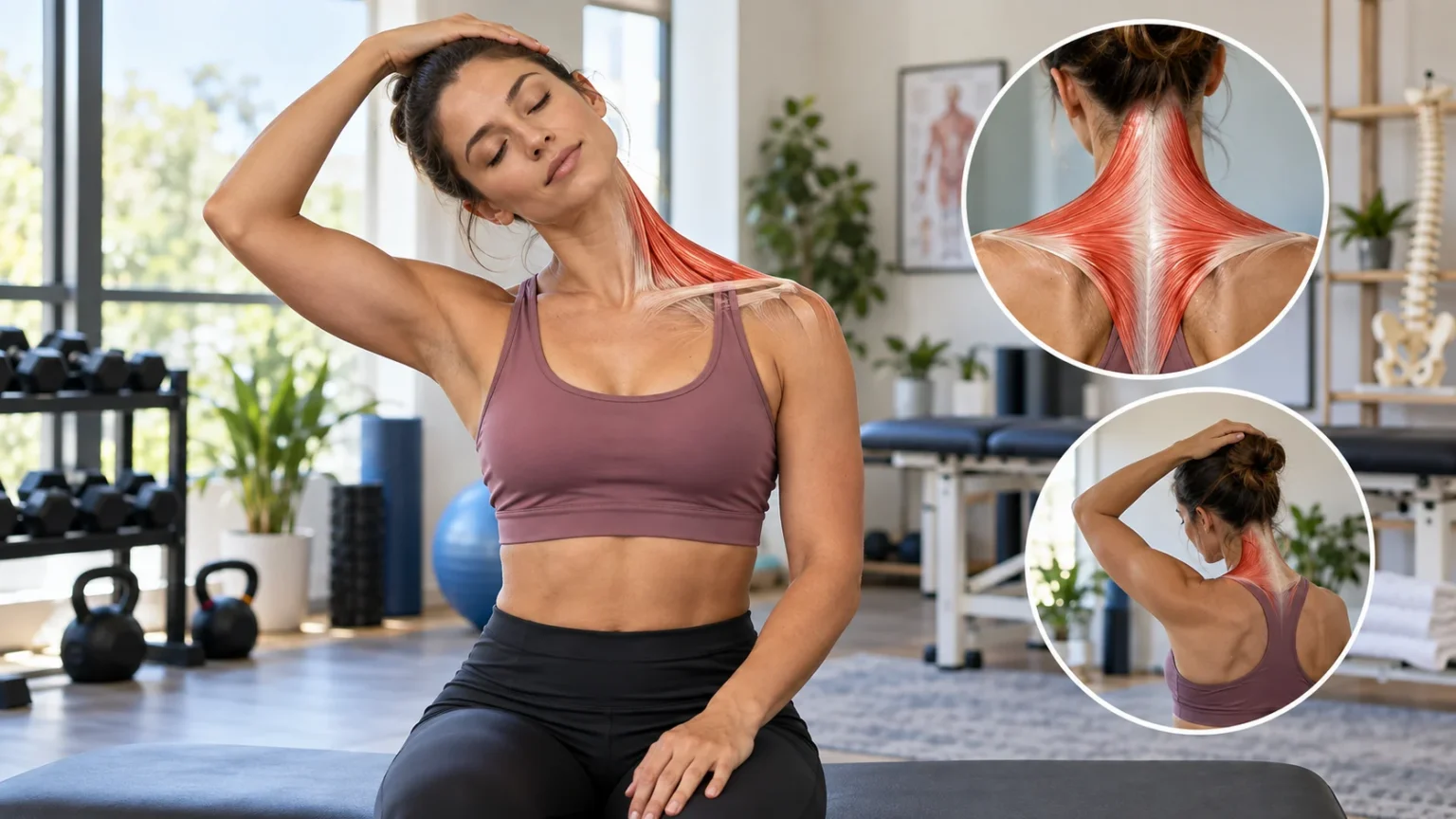

What Is a Trap Stretch?
A trap stretch is a simple mobility exercise designed to lengthen the trapezius muscles around the neck, shoulders, and upper back. These muscles help control shoulder blade movement and support the head during everyday activities. When the area feels tight after desk work, driving, lifting, or training, gentle stretching may help improve comfort and movement.
The trapezius is a large muscle extending from the base of the skull across the shoulders and down the upper back. Different sections contribute to raising, lowering, rotating, and stabilizing the shoulder blades. Because the muscle performs several jobs, tension can appear in different places, particularly near the upper shoulders and sides of the neck.
A trap stretch should feel like a gentle pulling sensation rather than sharp pain. The goal is not to force your neck into the greatest possible range. Slow breathing, relaxed shoulders, and controlled positioning usually make the stretch more comfortable and allow you to focus on the specific area that feels restricted.
Benefits of Stretching the Trapezius Muscles
One of the main benefits of trap stretching is temporary relief from feelings of muscular tightness. People who spend long periods working at computers or looking downward may notice tension around the neck and shoulders. A gentle stretch can provide a comfortable movement break and encourage the muscles to move through a slightly different range.
Trap stretches may also improve short-term flexibility around the neck and shoulder region. This can make turning the head or moving the shoulders feel easier, especially after remaining in one position for a long period. Regular mobility practice may be particularly useful when combined with strengthening, general exercise, and frequent changes in posture.
Another benefit is improved body awareness. Stretching slowly can help you notice whether one shoulder remains elevated, your head consistently tilts to one side, or certain movements feel restricted. Recognizing these habits can make it easier to adjust your workstation, exercise technique, or movement routine instead of repeatedly stretching without addressing the contributing factors.
How to Do an Upper Trap Stretch Correctly
Sit or stand comfortably with your spine in a relaxed, upright position. Allow both shoulders to drop naturally rather than pulling them forcefully downward. Slowly tilt your head so one ear moves toward the same-side shoulder, keeping your face looking generally forward instead of rotating your head toward the floor.
You should feel a mild stretch along the opposite side of your neck and upper shoulder. If you need slightly more intensity, you can place your hand gently over the side of your head and add minimal pressure. Avoid pulling hard because the neck contains sensitive joints and nerves that do not need aggressive force.
Hold the position while breathing slowly and keeping the stretched shoulder relaxed. Return your head to the center with control before repeating on the opposite side. If the stretch causes sharp pain, dizziness, tingling, numbness, or symptoms traveling into the arm, stop rather than trying to push farther into the position.
Lower and Middle Trap Mobility
The middle and lower portions of the trapezius work differently from the upper section, so traditional side-bending stretches may not target them directly. These fibers contribute heavily to shoulder blade control and posture during pulling, reaching, and overhead movements. Mobility work for this region often involves moving the upper back and shoulder blades rather than simply stretching the neck.
A gentle upper-back reach can be useful. Extend your arms in front of you, lightly clasp your hands, and allow your shoulder blades to move apart as you reach forward. Keep the movement comfortable and avoid collapsing aggressively through your lower back while trying to create a stronger stretch.
Thoracic rotation and controlled shoulder blade movements can also improve mobility around the middle and lower trapezius. Slowly rotating the upper body, performing wall slides, or practicing scapular retraction may complement stretching. These exercises encourage the surrounding muscles and joints to move together instead of treating the trapezius as an isolated structure.
Trap Stretch for Neck and Shoulder Tightness
Neck and shoulder tightness often develops after maintaining the same position for too long. Long periods of computer work, driving, reading, or phone use can leave the upper trapezius feeling fatigued. Stretching may temporarily reduce that sensation, but frequent movement breaks are often equally important for preventing stiffness from building throughout the day.
Try using a trap stretch after thirty to sixty minutes of prolonged sitting or whenever your shoulders begin feeling elevated and tense. Keep the movement gentle and combine it with shoulder rolls or a brief walk. Changing your position regularly is usually more helpful than attempting to hold one supposedly perfect posture for several hours.
Stress can also contribute to shoulder tension because some people unconsciously shrug or brace their upper body when concentrating. Slow breathing during stretching may help reduce unnecessary muscle guarding. However, persistent neck or shoulder discomfort should not automatically be blamed on tight traps, especially when weakness, injury, or nerve-related symptoms are also present.
Common Trap Stretch Mistakes
Pulling too hard on your head is one of the most common mistakes during an upper trap stretch. Using excessive hand pressure can place unnecessary force through the neck without providing additional benefit. Your hand should provide only light guidance, and many people can achieve an effective stretch without using their hand at all.
Another mistake is allowing the opposite shoulder to rise toward the ear. When that shoulder lifts, the muscle you are trying to lengthen may not stretch as effectively. Keep the shoulder relaxed and slightly heavy while tilting your head gently toward the opposite side, but avoid forcing the shoulder downward aggressively.
Holding your breath can also make the stretch feel more tense than necessary. Continue breathing slowly and allow the movement to remain comfortable. If you find yourself clenching your jaw, tightening your hands, or straining your face, reduce the intensity and focus on relaxing the rest of your body during the stretch.
How Long Should You Hold a Trap Stretch?
There is no exact holding time that works for everyone, but gentle stretches are often held long enough to allow the muscles to relax without creating discomfort. Many people find that fifteen to thirty seconds feels manageable. The appropriate duration depends on your mobility, symptoms, and how strongly you are performing the stretch.
Holding longer is not automatically better. A mild stretch maintained with controlled breathing can be more useful than an intense position that becomes painful after a few seconds. If you feel increasing discomfort, tingling, dizziness, or numbness, release the position instead of trying to meet a predetermined time target.
You can repeat the stretch on each side as needed, particularly after long periods of sitting or upper-body activity. Avoid performing dozens of repetitions simply because your shoulders feel tight. Persistent tightness may be better addressed through strengthening, workload adjustments, improved movement variety, or professional assessment rather than continually adding more stretching.
Trap Stretch Before and After Exercise
Before exercise, dynamic movements are often more practical than long static stretches. Shoulder circles, controlled neck movements, arm swings, and upper-back rotations can prepare the area for activity while keeping the body moving. If you use a trap stretch during a warm-up, keep it gentle and relatively brief rather than pushing deeply into the position.
After training, a static trap stretch may feel comfortable when the shoulders and upper back have worked hard. This is especially relevant after pulling exercises, overhead movements, carrying, or long endurance sessions. Stretching can help you wind down, although it is not required to prevent every type of post-exercise soreness.
The best mobility routine usually addresses more than one muscle group. For example, athletes may combine upper-body mobility with hip and leg work such as IT band exercises when those movements fit their needs. Balanced training helps maintain mobility throughout the body instead of focusing only on whichever area currently feels tight.
Trap Stretch vs. Strengthening Exercises
Stretching and strengthening serve different purposes. A trap stretch temporarily lengthens tissues and moves the neck or shoulder through a comfortable range, while strengthening exercises increase the capacity of muscles to handle physical demands. Someone who repeatedly experiences upper-trap fatigue may benefit from improving strength rather than relying exclusively on stretching.
Exercises such as rows, wall slides, controlled shrugs, and scapular retraction movements can strengthen muscles that support the shoulder blades. Lower-trapezius exercises may also improve control during overhead movement. The correct selection depends on your current strength, mobility, training experience, and whether particular movements reproduce symptoms.
Stretching can therefore be one part of a broader program rather than the entire solution. If your shoulders feel tight because they are repeatedly working beyond their capacity, greater strength and endurance may improve how they tolerate daily demands. Combining mobility, strengthening, and frequent movement usually creates a more balanced approach than stretching alone.
How Desk Workers Can Improve Trap Mobility
Desk work often involves prolonged sitting, repeated mouse use, and limited upper-body movement. These habits can make the neck and shoulders feel stiff even when the workstation is reasonably comfortable. Rather than relying on one major stretching session at the end of the day, introduce shorter movement breaks throughout your working hours.
During a break, stand up, walk briefly, move your shoulders, and perform a gentle trap stretch if it feels good. You can also rotate your upper back or reach your arms overhead. Frequent small changes reduce the amount of time your muscles spend holding the same position and may feel more refreshing than simply adjusting your chair.
Workstation setup still matters because constantly reaching for a mouse or looking at a poorly positioned screen may increase unnecessary muscular effort. Place frequently used items within comfortable reach and adjust screen height so you do not constantly bend or twist your neck. Ergonomics works best when combined with regular movement rather than being treated as a substitute for it.
When You Should Avoid or Modify Trap Stretches
Avoid forcing a trap stretch if you recently injured your neck or shoulder or have been advised to limit neck movement. Significant trauma, severe pain, or new neurological symptoms require more careful evaluation. Generic stretching instructions cannot account for fractures, nerve compression, recent surgery, or other medical conditions that may change what movements are appropriate.
Stop immediately if stretching causes numbness, tingling, weakness, dizziness, visual changes, or pain traveling into your arm or hand. These sensations are different from the mild muscular pull expected during a comfortable stretch. Continuing to pull harder through neurological symptoms is unlikely to improve flexibility and may increase irritation.
Persistent neck or shoulder pain should also be evaluated when it interferes with sleep, work, exercise, or normal daily activities. Stretching can be helpful for ordinary muscle tension, but it cannot diagnose the reason symptoms keep returning. A healthcare or rehabilitation professional can assess movement, strength, nerves, joints, and other factors when symptoms remain unresolved.
Mobility Tips for Healthier Traps
Change positions frequently instead of trying to maintain one perfect posture throughout the day. Your neck and shoulders are designed to move, and even a technically good sitting position may become uncomfortable when held for hours. Walking, reaching, rotating, and performing gentle shoulder movements can provide valuable variety for muscles around the upper back.
Include strengthening alongside mobility work. Rows, carries, controlled overhead exercises, and appropriate shoulder blade movements can build muscular capacity when performed correctly. Stronger muscles are often better able to tolerate work, exercise, and everyday tasks, reducing the need to constantly stretch whenever normal activity makes the shoulders feel tired.
Finally, pay attention to the overall amount of physical stress placed on the area. Sudden increases in gym training, heavy bags, prolonged computer work, poor sleep, or repetitive tasks may all influence how your neck and shoulders feel. Adjusting workload while maintaining regular movement can often be more effective than repeatedly treating every episode of tightness as a flexibility problem.
Conclusion
Trap stretches can be a useful way to improve short-term neck and shoulder mobility while reducing the feeling of muscular tightness. They are simple, require no equipment, and can easily be performed during work breaks or exercise sessions. Correct technique involves gentle movement, relaxed shoulders, controlled breathing, and avoiding excessive pulling on the neck.
Stretching works best as part of a broader mobility and strength routine. Regular movement, upper-back mobility, shoulder blade strengthening, and appropriate workstation adjustments can all support healthier movement around the trapezius. If the area repeatedly feels tight, consider whether muscular endurance, workload, or prolonged static positioning may also be contributing.
Most importantly, stretching should feel comfortable rather than painful. Stop if you experience sharp pain, numbness, tingling, weakness, or dizziness, and seek professional guidance when symptoms persist or worsen. When performed appropriately, trap stretches can be a practical addition to a balanced routine for neck, shoulder, and upper-back mobility.
FAQs
How often should I do trap stretches?
You can perform gentle trap stretches regularly, especially after prolonged sitting or activity, as long as they remain comfortable. There is usually no need for frequent aggressive stretching throughout the day.
Why are my traps always tight?
Persistent tightness may be related to prolonged sitting, repetitive tasks, stress, training load, or muscular fatigue. Weakness and limited movement variety may also contribute, so stretching alone may not fully solve the problem.
Should trap stretches hurt?
No. You should feel a mild, comfortable pulling sensation rather than sharp pain. Stop if the stretch causes numbness, tingling, dizziness, weakness, or symptoms that travel into your arm.
Can trap stretches help neck mobility?
Gentle trap stretches may temporarily improve comfortable neck movement when muscle tightness is limiting motion. For persistent restrictions, combine mobility work with strengthening and consider professional assessment if symptoms continue.
Is it better to stretch or strengthen the traps?
Both can be useful depending on your needs. Stretching may improve short-term mobility, while strengthening builds muscular capacity and endurance. A balanced program often provides more benefit than relying exclusively on either approach.


