
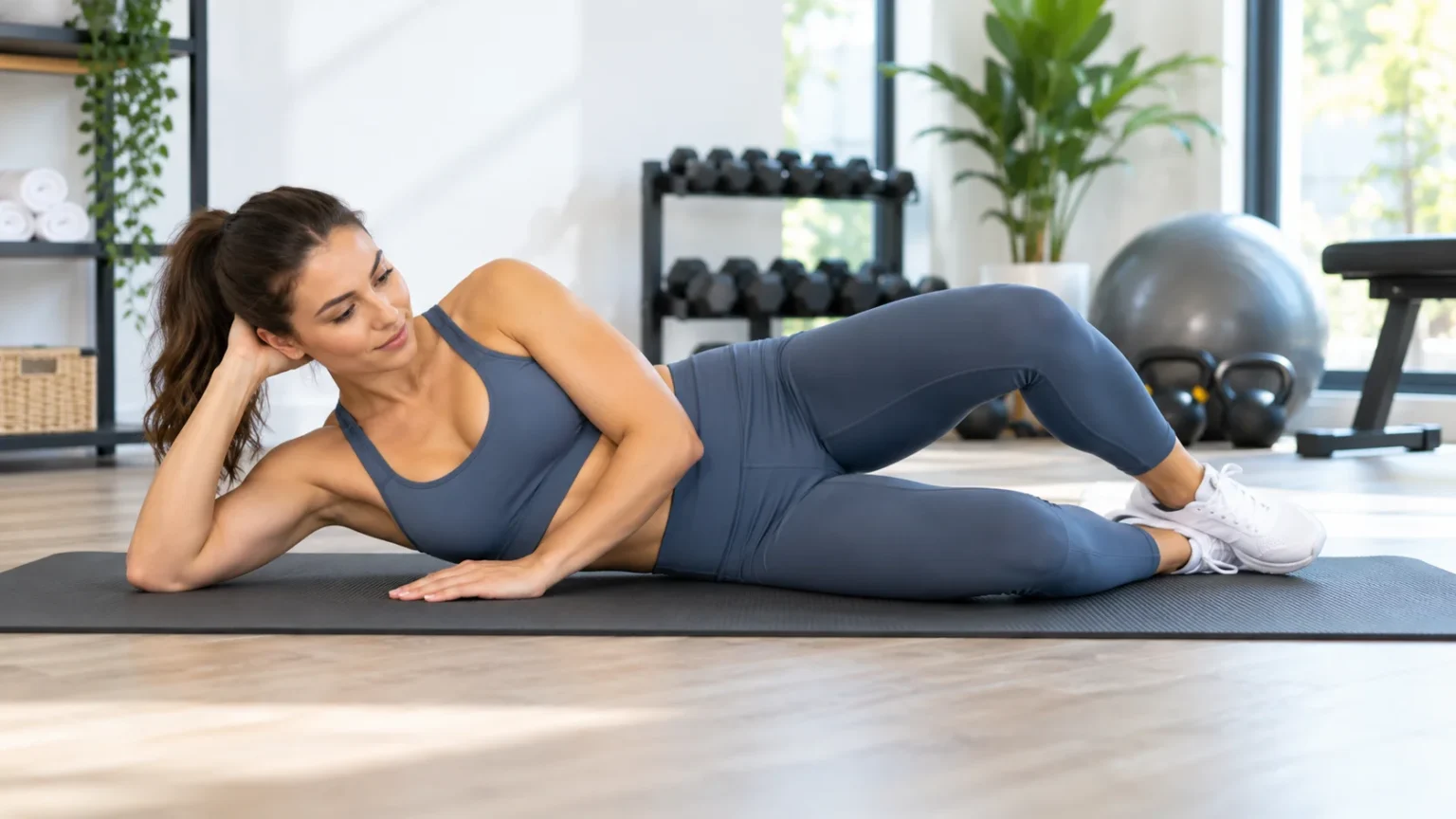

The clam shells exercise is a simple but effective movement commonly used to strengthen the muscles around the hips and glutes. It requires little space, no complicated equipment, and can be performed at home, in a gym, or as part of a rehabilitation routine. When done correctly, it helps improve hip stability and control without placing heavy pressure on the joints.
This exercise mainly targets the gluteus medius and other muscles that help move and stabilize the hip. These muscles play an important role during walking, running, climbing stairs, and balancing on one leg. Weakness in this area may affect lower-body mechanics and make other muscles work harder during everyday movement.
Although clam shells look easy, small form mistakes can reduce their effectiveness. Rotating the pelvis, lifting the knee too high, or moving too quickly can shift tension away from the intended muscles. This guide explains how to perform clam shells properly, what muscles they work, common mistakes, useful variations, and practical mobility tips.
What Is the Clam Shells Exercise?
The clam shells exercise is performed while lying on your side with the knees bent and the feet stacked together. From this position, you lift the top knee while keeping your feet in contact, creating a movement that resembles a clam shell opening. The motion primarily involves hip external rotation and controlled activation of the side glute muscles.
It is often included in beginner strength routines, physical therapy programs, warm-ups, and lower-body training sessions. Because the movement is performed on the floor and uses a relatively small range of motion, it is usually easier to control than many standing hip exercises. Resistance bands can also be added later when more challenge is needed.
The key purpose is not to lift the knee as high as possible. Instead, the goal is to move through a range where the pelvis stays stable and the target muscles remain engaged. A smaller, well-controlled repetition is usually more effective than a larger movement performed with twisting or momentum.
What Muscles Do Clam Shells Work?
Clam shells mainly work the gluteus medius, a muscle located along the outer side of the hip. This muscle helps move the leg away from the body and stabilizes the pelvis during single-leg activities. It becomes particularly important during walking because it helps prevent excessive side-to-side pelvic movement.
The gluteus minimus also contributes to the exercise, along with smaller deep hip rotators. Depending on your position and technique, the gluteus maximus may assist as well. Together, these muscles support hip control and help maintain alignment through the pelvis, knees, and lower legs during movement.
Although clam shells are often described as a glute exercise, they should be viewed as part of a larger lower-body strength routine. Strong hips work together with the thighs, hamstrings, calves, and core. Training several muscle groups generally provides better overall movement support than relying on one isolated exercise.
Benefits of Clam Shells Exercise
One of the main benefits of clam shells is improved hip stability. Stronger side glute muscles can help keep the pelvis more controlled when standing on one leg. This matters during activities such as walking, running, climbing stairs, stepping sideways, and changing direction.
Clam shells can also help improve awareness of hip movement. Because the exercise is slow and controlled, it gives you a chance to feel whether the glutes are working or whether the pelvis is rotating to compensate. Developing this control can be useful before progressing to more demanding standing exercises.
Another advantage is accessibility. The movement requires minimal equipment and can be adjusted easily by changing the range, repetitions, or resistance. Beginners may use bodyweight only, while more experienced people can add a loop resistance band around the thighs to increase the challenge.
How to Do Clam Shells Correctly
Lie on your side with your hips stacked one above the other and your knees bent comfortably. Your legs should be positioned slightly forward rather than directly in line with your torso. Rest your head on your lower arm or a pillow so your neck remains relaxed throughout the exercise.
Keep your feet together and slowly raise the top knee without allowing the pelvis to roll backward. Lift only as far as you can maintain a stable torso and stacked hips. Pause briefly at the top, then lower the knee with control until it returns to the starting position.
Complete the desired number of repetitions before switching sides. Focus on smooth movement instead of speed, and avoid forcing the knee upward. If you feel most of the effort in your lower back rather than the side of your hip, reduce the range and check your pelvic position.
Proper Clam Shells Exercise Form
Good form begins with keeping the pelvis stable. Imagine your hips are stacked directly on top of one another and should remain that way throughout the repetition. If your top hip rolls backward every time you lift the knee, the movement becomes more of a whole-body rotation than a controlled hip exercise.
Your feet should remain touching while the knee opens. Avoid separating the feet or lifting the entire top leg away from the bottom leg. Keeping the feet together encourages the hip to rotate while reducing unnecessary movement through the rest of the body.
Your core can remain lightly engaged to help stabilize the trunk. You do not need to brace as hard as possible, but maintaining gentle tension can make it easier to prevent rolling. Relax your shoulders and neck so that effort remains focused around the hips rather than creating unnecessary upper-body tension.
How Many Clam Shells Should You Do?
Beginners can start with approximately 8 to 12 repetitions on each side. One or two sets may be enough initially, especially if the exercise creates a clear muscular effort around the outer hip. The movement should remain controlled from the first repetition to the last.
As strength improves, you can increase the number of repetitions gradually. Performing 12 to 20 repetitions with good form can provide a useful challenge for many people. However, simply completing more repetitions is not always the best way to progress if the exercise has become very easy.
You can increase difficulty by adding resistance or slowing the movement. A resistance band above the knees makes the glute muscles work harder while maintaining the same basic exercise pattern. Progress only when you can control the bodyweight version without rotating the pelvis or rushing.
Clam Shells With a Resistance Band
A resistance band can make clam shells more challenging once the basic movement becomes comfortable. Place a small loop band around both thighs slightly above the knees. Lie in the same side-lying position and make sure the band has light tension before beginning.
Open the top knee slowly against the resistance while keeping your feet together. The band should increase the effort without forcing you to change your technique. If your hips rotate backward or your range becomes extremely small, the resistance may be too strong.
Choose a lighter band first and focus on consistent control. You can gradually increase resistance as your hip strength improves. Avoid choosing the strongest band simply because it feels harder, since excessive resistance can encourage compensations and reduce the quality of the exercise.
Common Clam Shells Exercise Mistakes
Rolling the pelvis backward is one of the most common mistakes. This often happens when someone tries to lift the knee higher than their hip mobility allows. Keep the movement smaller and imagine your top hip staying directly above the bottom hip throughout the repetition.
Another mistake is performing repetitions too quickly. Fast movements can rely on momentum and make it difficult to feel the glute muscles working. Slowing both the lifting and lowering phases usually increases control and makes the exercise more effective without needing extra resistance.
Incorrect leg position can also reduce the quality of the movement. If your knees are too far forward or your legs are almost straight, the exercise may feel very different. Start with the hips and knees comfortably bent and make small adjustments until you feel the outer hip muscles working.
When Should You Feel Clam Shells?
Most people should feel the exercise around the outer side of the upper hip and buttock. The sensation usually feels like muscular effort, fatigue, or a mild burning feeling during higher repetitions. It should not feel like sharp pain inside the hip joint or shooting pain down the leg.
If you mainly feel the exercise in the front of the hip, adjust your setup. Moving the knees slightly backward or reducing the opening range may shift the effort toward the glutes. Also make sure the pelvis is not rotating, because that can change which muscles contribute.
You may not feel an intense burn every time, and that does not automatically mean the exercise is ineffective. Controlled movement and proper muscle engagement matter more than chasing a strong sensation. Over time, increasing resistance or repetitions can make the exercise more challenging.
Can Clam Shells Help With Knee Stability?
Hip strength can influence how the knee moves during activities such as walking, running, squatting, and stepping. The gluteus medius helps stabilize the pelvis and contributes to controlling the position of the thigh. Better hip control may help reduce excessive inward movement of the knee in certain situations.
Clam shells alone are unlikely to solve every knee problem. Knee discomfort can come from many structures, including muscles, tendons, joints, or the area behind the knee. If you experience persistent discomfort around the back of the knee, learning about popliteal fossa pain may help you understand other possible causes.
A more complete approach usually includes hip strengthening, quadriceps work, hamstring exercises, calf strengthening, and movement practice. Clam shells can fit into that routine as one exercise rather than serving as the entire program. Persistent or worsening knee pain should be assessed professionally.
Clam Shells for Runners and Walkers
Runners rely heavily on the hip muscles to keep the pelvis stable with every stride. Because running repeatedly places the body on one leg at a time, weak or poorly controlled hips may affect lower-body mechanics. Clam shells can be used as an accessory exercise to strengthen the muscles involved in lateral stability.
Walkers can benefit for similar reasons. Each step requires the pelvis to remain controlled while weight transfers from one leg to the other. Strengthening the outer hip muscles may support more efficient movement and reduce unnecessary side-to-side motion.
Clam shells work best when combined with more functional exercises. Step-ups, side steps, bridges, squats, and single-leg balance exercises can help transfer hip strength into standing movement. A gradual progression from floor-based exercises to weight-bearing movements usually creates a more complete routine.
Clam Shells vs Side-Lying Leg Raises
Both exercises target muscles around the outer hip, but they use different movement patterns. Clam shells involve hip external rotation while the knees remain bent. Side-lying leg raises involve lifting a straighter leg away from the body, which places more emphasis on hip abduction.
Some people find clam shells easier to learn because the movement range is smaller and the body feels more supported. Side-lying leg raises can create a stronger challenge for the gluteus medius but may also make compensation easier if the leg moves too far forward or backward.
You do not necessarily need to choose one instead of the other. Including both can expose the hip muscles to different forms of resistance and movement. Proper technique remains important because simply lifting the leg higher does not guarantee better muscle activation.
How Often Should You Do Clam Shells?
Clam shells can usually be performed two to four times per week as part of a strengthening program. Beginners may prefer fewer sessions at first so they can monitor muscle soreness and recovery. More frequent light sessions may also be appropriate when the exercise is being used mainly for activation.
You do not need to perform clam shells every day to make progress. Muscles benefit from a combination of training and recovery, especially when resistance bands or higher volumes are used. Pay attention to how your hips feel before adding additional sets or sessions.
Consistency matters more than performing large numbers of repetitions occasionally. A small amount of regular, controlled work can be more useful than completing hundreds of rushed repetitions once in a while. Gradually increase the challenge as the movement becomes easier.
How to Progress Beyond Clam Shells
Once clam shells become easy, progression should involve more than simply adding endless repetitions. Resistance bands are one option, but standing exercises can provide a greater challenge because they require the body to control balance and weight-bearing movement.
Lateral band walks, step-ups, split squats, and single-leg balance exercises can build on the strength developed with clam shells. These movements require the hips to stabilize the pelvis while the body is upright. Progress gradually and choose exercises that you can perform with good alignment.
Eventually, compound lower-body exercises can become the main focus while clam shells remain part of a warm-up or accessory routine. The goal is to develop strength that supports real-world movement. Floor exercises are useful starting points, but standing strength and balance are also important.
When to Stop or Modify Clam Shells
Stop the exercise if you feel sharp pain in the hip, groin, knee, or lower back. Muscular fatigue around the outer hip is expected, but joint pain or nerve-like symptoms should not be ignored. Reducing the range or removing resistance may make the movement more comfortable.
People recovering from recent hip surgery, significant injury, or severe pain should follow professional guidance before adding new exercises. A physiotherapist can determine whether clam shells fit your current stage of recovery. They can also modify the setup based on mobility and strength limitations.
You should also modify the exercise if your technique breaks down quickly. Fewer controlled repetitions are more useful than continuing while the pelvis rolls backward or the torso twists. Quality movement should remain the priority as strength develops.
Conclusion
Clam shells are a simple exercise for strengthening the gluteus medius and other muscles that support hip stability. They require minimal equipment and can fit easily into home workouts, warm-ups, rehabilitation routines, or general lower-body training. Proper technique makes a major difference in how effectively the movement targets the hips.
Keep your pelvis stacked, feet together, and movement slow throughout every repetition. Avoid lifting the knee higher than your available hip range allows. Once bodyweight repetitions become easy, resistance bands or more advanced standing exercises can provide additional challenge.
Use clam shells as one part of a balanced lower-body program rather than relying on them alone. Strong hips work together with the thighs, hamstrings, calves, and core to support everyday movement. If the exercise causes sharp or persistent pain, stop and consider getting professional guidance before continuing.
FAQs
What muscles do clam shells work?
Clam shells mainly target the gluteus medius and other hip rotator muscles. They also recruit surrounding muscles that help stabilize the pelvis during walking, running, and single-leg movement.
How many clam shells should beginners do?
Beginners can start with 8 to 12 controlled repetitions on each side for one or two sets. Increase repetitions gradually once you can maintain stable hips and proper form.
Should I use a resistance band for clam shells?
A resistance band can be useful once the bodyweight version becomes easy. Start with light resistance and avoid bands that cause your pelvis to rotate or your technique to break down.
Why do I feel clam shells in the front of my hip?
Your positioning or range may be shifting effort toward the hip flexors. Try reducing the opening range, adjusting your knee position, and keeping the pelvis stacked throughout the movement.
Can I do clam shells every day?
Light clam shells may be tolerated frequently, but harder resistance sessions usually benefit from recovery. Two to four sessions per week is a practical starting point for many people.