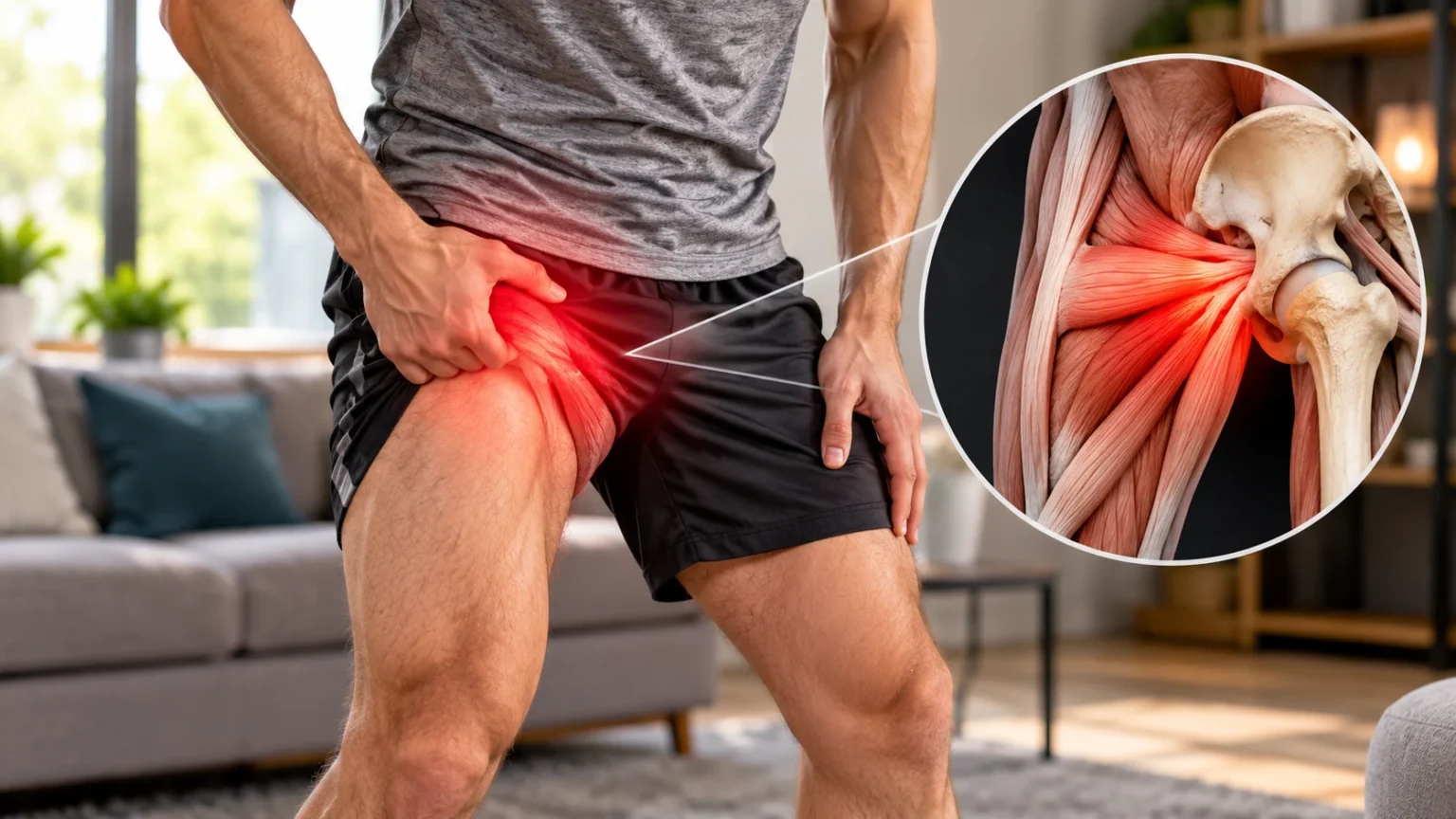

Pain in the groin area can develop suddenly during exercise or appear gradually without an obvious injury. The groin sits where the lower abdomen meets the upper inner thigh, and several muscles, tendons, joints, nerves, and internal organs are located nearby. Because so many structures share this region, groin discomfort can have several different causes.
Some cases are related to muscle strain, hip problems, or overuse and improve with activity changes and gradual recovery. Other causes, including hernias, urinary problems, or certain reproductive conditions, may need medical evaluation. Paying attention to how the pain started and whether other symptoms are present can help you decide what to do next.
What Does Pain in the Groin Area Mean?
Groin pain generally refers to discomfort where the abdomen meets the upper inner thigh. It may feel sharp, dull, aching, burning, or tight depending on the underlying cause. Some people notice pain only during walking or exercise, while others experience symptoms when sitting, coughing, bending, or resting.
The pain may come from muscles and tendons that move the hip, particularly the adductor muscles along the inner thigh. It can also originate from the hip joint, abdominal wall, nerves, urinary system, or reproductive organs. This overlap makes it difficult to identify the exact cause based on location alone.
Consider whether the symptoms began after a specific movement or appeared gradually. Sudden pain after sprinting or changing direction may suggest a strain, while a new lump with pain may point toward a hernia. Fever, urinary symptoms, significant swelling, or severe unexplained pain provide additional clues that medical assessment may be appropriate.
Groin Muscle Strain
A groin strain commonly involves the adductor muscles that run along the inner thigh. These muscles help pull the leg toward the body’s midline and contribute to stability during walking, running, and sports. A strain can happen when the muscle is stretched or loaded more forcefully than it can tolerate.
Sports involving sprinting, kicking, jumping, and rapid direction changes can increase the risk of a groin strain. Pain may begin suddenly during activity or become noticeable afterward as soreness and tightness. More significant strains can cause bruising, swelling, weakness, or difficulty bringing the legs together comfortably.
Mild muscle strains often improve with temporary activity modification and gradual return to movement. Avoid aggressive stretching during the early stages when the area feels sharply painful. As symptoms improve, progressive strengthening of the inner thigh and surrounding hip muscles may help restore normal function.
Hip Joint Problems
The hip joint can refer pain toward the front of the groin because of its position deep within the pelvis. Conditions involving the hip may therefore feel like groin pain rather than discomfort at the outer side of the hip. Pain can become more noticeable during walking, squatting, climbing stairs, or rotating the leg.
Hip osteoarthritis is one possible cause, particularly in older adults. Symptoms can include stiffness, reduced range of motion, and pain after activity or prolonged sitting. Labral problems and other joint conditions can also create groin discomfort, sometimes accompanied by clicking, catching, or a feeling that the hip is not moving smoothly.
Persistent groin pain associated with reduced hip mobility should be assessed rather than treated only as a muscle problem. A healthcare professional can examine hip motion, strength, and movement patterns. Treatment may include activity changes, strengthening, mobility work, or additional investigation depending on the suspected cause.
Sports and Overuse Injuries
Athletes commonly experience groin discomfort because the area is heavily involved in running, cutting, kicking, and stabilizing the pelvis. Repeated loading without sufficient recovery can irritate muscles and tendons even when no single injury occurs. Symptoms may begin as mild tightness and gradually become more noticeable.
Runners, football players, hockey players, and other athletes who perform frequent direction changes can be particularly vulnerable. Sudden increases in training volume, intensity, or sprint work may overload tissues that have not adapted. Fatigue can also reduce movement control and place additional stress across the inner thigh and hip.
Understanding the surrounding thigh muscles can help explain how lower-body structures work together during sport. For example, the biceps femoris contributes to hip and knee movement from the back of the thigh. Balanced strength across the hips and thighs can support more controlled athletic movement.
Could a Hernia Cause Groin Pain?
An inguinal hernia occurs when tissue pushes through a weak area in the lower abdominal wall. It can create discomfort, pressure, or a noticeable bulge in the groin. Symptoms may become more obvious when coughing, lifting, straining, standing for long periods, or performing physically demanding activities.
The lump may become smaller when lying down and more noticeable when standing. Some people have only mild discomfort, while others experience more persistent aching or heaviness. Hernias do not usually heal permanently through stretching or strengthening alone because the problem involves a weakness in the abdominal wall.
Seek medical assessment if you notice a new groin lump or persistent pain that worsens with straining. Sudden severe pain, vomiting, abdominal swelling, or a bulge that becomes firm and cannot be pushed back may require urgent medical attention. These symptoms can indicate a complication that should not be managed at home.
Nerve-Related Groin Pain
Nerves traveling through the lower back, pelvis, and upper thigh can sometimes become irritated and create groin discomfort. Nerve-related pain may feel burning, electric, tingling, or unusually sensitive rather than simply muscular. Some people also experience numbness or pain that travels into the thigh.
Problems originating from the lower spine can occasionally refer pain toward the groin, although this is less common than pain traveling down the back or side of the leg. Nerves located directly within the pelvis can also become irritated after injury, surgery, or repetitive pressure.
Persistent numbness, weakness, or spreading neurological symptoms should be professionally assessed. Sudden loss of bladder or bowel control or numbness around the groin and saddle area requires urgent medical attention. These symptoms can indicate significant nerve compression and should not be treated only with stretching.
Urinary and Kidney-Related Causes
Problems involving the urinary system can sometimes cause pain that spreads toward the groin. Kidney stones, for example, may create severe pain in the side or back that travels downward into the lower abdomen or groin. The discomfort can come in waves and may be intense.
Urinary tract infections can also cause lower abdominal or pelvic discomfort alongside burning during urination, increased urinary frequency, or urgency. Fever or back pain may indicate that an infection has moved higher into the urinary system. These symptoms require medical evaluation rather than exercise-based treatment.
Blood in the urine, severe flank pain, fever, vomiting, or difficulty urinating are important warning signs. Seek medical care promptly if these symptoms accompany groin pain. Treatment depends on the underlying urinary condition and cannot be determined reliably based on pain location alone.
Groin Pain in Women
Groin pain in women can come from muscles and joints, but reproductive conditions may also contribute. Ovarian cysts, endometriosis, pregnancy-related changes, or other pelvic conditions can cause discomfort that spreads toward the groin. Symptoms may sometimes change with the menstrual cycle.
Pain that occurs with unusual vaginal bleeding, fever, pelvic pressure, or significant menstrual changes deserves medical attention. Sudden severe one-sided pelvic or groin pain may require more urgent evaluation, particularly if it is associated with nausea, dizziness, or fainting.
Pregnancy also changes how the pelvis and surrounding muscles carry load. Mild discomfort may occur as tissues adapt, but severe or sudden pain should not simply be considered normal. Groin pain during pregnancy accompanied by bleeding, dizziness, contractions, or other concerning symptoms requires prompt assessment.
Groin Pain in Men
Men can experience muscular and joint-related groin pain just like women, but testicular and prostate-related conditions can also cause symptoms in this area. Testicular problems may produce pain that spreads upward into the groin or lower abdomen. The exact cause cannot always be determined from the location alone.
Sudden severe testicular pain requires urgent medical attention because conditions such as testicular torsion can reduce blood flow and require rapid treatment. Swelling, nausea, or a testicle sitting in an unusual position can also occur. Do not wait for these symptoms to improve on their own.
Gradual discomfort accompanied by urinary changes, pelvic pressure, or pain during ejaculation may have a different cause. A healthcare professional can evaluate these symptoms appropriately. Persistent groin pain should not automatically be blamed on exercise when urinary or reproductive symptoms are also present.
How to Relieve Mild Muscular Groin Pain
If groin discomfort appears after exercise and seems mild, temporarily reducing the aggravating activity may help. Complete inactivity is often unnecessary when there is no major injury. Gentle walking and comfortable movement can maintain mobility while the irritated muscles begin recovering.
Cold packs may feel useful after a recent strain, while gentle warmth can sometimes reduce stiffness later. Protect the skin and avoid extreme temperatures. The goal is temporary symptom relief rather than trying to force the tissue to recover immediately.
As symptoms settle, gradual strengthening can help rebuild tolerance. Exercises for the adductors, glutes, core, and surrounding hip muscles may support better lower-body control. Return to running, sprinting, or sport progressively rather than immediately performing at your previous maximum intensity.
Stretches for Groin Tightness
A gentle butterfly stretch can target the inner thighs when muscle tightness is present. Sit comfortably with the soles of your feet together and allow the knees to move outward naturally. Avoid pushing the knees toward the floor or forcing a deeper position.
A standing side-lunge stretch can also lengthen the inner thigh. Shift your weight gently toward one side while keeping the opposite leg straighter, stopping when you feel mild tension. Keep your movements controlled and avoid bouncing at the end of the range.
Stretching should not produce sharp groin pain. If symptoms started suddenly during sport, aggressive stretching may irritate a muscle strain. Significant pain, bruising, weakness, or inability to walk normally should be assessed before you attempt deeper flexibility work.
When Should You See a Healthcare Professional?
Arrange an assessment if groin pain lasts for several weeks, repeatedly returns, or interferes with normal walking, exercise, or sleep. Persistent stiffness, swelling, weakness, or reduced hip movement may also require evaluation. A clinician can examine the muscles, hip, abdomen, and other structures that may be involved.
Seek medical care sooner if pain follows a significant injury or you notice a new groin lump. Severe bruising, inability to bear weight, fever, urinary symptoms, or unexplained swelling should also be taken seriously. These features may suggest a problem beyond a simple muscle strain.
Urgent medical attention is appropriate for sudden severe testicular or pelvic pain, heavy bleeding, fainting, uncontrollable vomiting, or severe abdominal symptoms. Loss of bladder or bowel control or saddle-area numbness also requires emergency evaluation. These warning signs should not be managed with home exercises alone.
Conclusion
Pain in the groin area can come from muscle strains, hip joint problems, overuse, hernias, nerves, urinary conditions, or reproductive organs. Because many structures occupy the same small region, the exact cause is not always obvious from where the pain is felt. The symptom pattern and accompanying signs matter.
Mild exercise-related groin pain may improve with temporary activity modification, gentle movement, sensible stretching, and gradual strengthening. Avoid forcing painful movements or returning too quickly to high-intensity sport. Recovery is usually more successful when training demands increase progressively.
Persistent or unusual groin pain deserves professional assessment, especially when it occurs with swelling, a visible lump, fever, urinary changes, reproductive symptoms, or neurological signs. Sudden severe pain may require urgent attention. Recognizing these warning signs can help you choose safer and more appropriate care.
FAQs
What is the most common cause of groin pain?
Muscle strain is a common cause, particularly after running, kicking, sprinting, or sudden direction changes. Hip joint problems, hernias, and other medical conditions can also create similar symptoms.
Can tight muscles cause pain in the groin?
Yes. Tight or overloaded adductor and hip muscles can produce aching or pulling in the groin. Persistent pain, major weakness, swelling, or symptoms unrelated to movement should still be evaluated.
How long does a groin strain take to heal?
Recovery depends on the severity of the strain and individual factors. Mild strains may improve relatively quickly, while more significant injuries can require several weeks or longer of gradual rehabilitation.
Can a hernia feel like a pulled groin muscle?
Yes. A hernia can cause groin aching or pressure that resembles a strain, particularly with lifting or coughing. A visible or palpable bulge makes a hernia more likely and deserves medical assessment.
When should groin pain be considered serious?
Seek medical care for severe or persistent pain, a groin lump, fever, urinary problems, significant swelling, or reproductive symptoms. Sudden severe pelvic or testicular pain requires urgent assessment.