
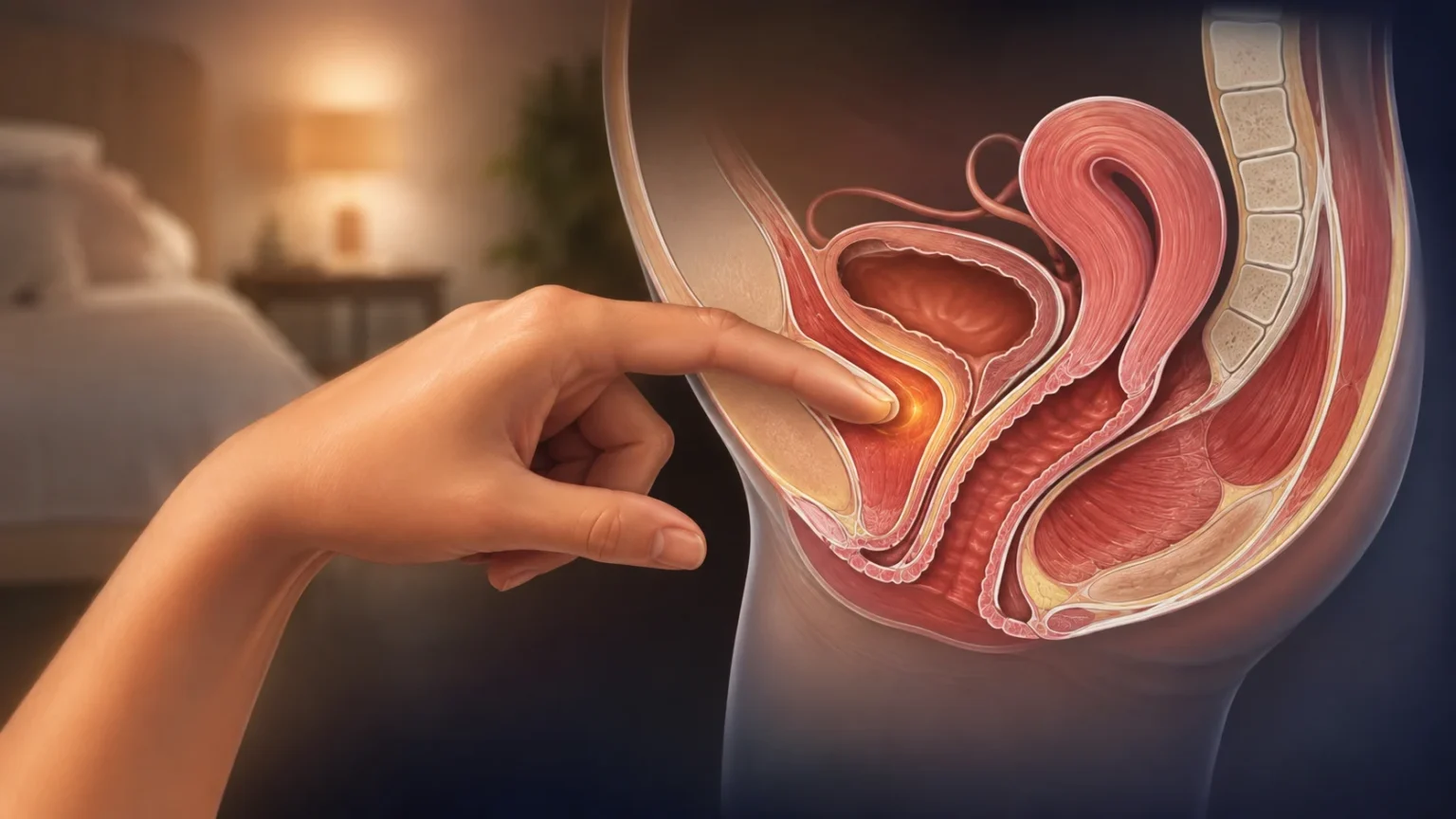

P Spot: What It Is, Where to Find It & How It Works
The P spot is a popular term used to describe the prostate gland in the context of sexual pleasure. You may also hear it called the prostate pleasure spot or “male G-spot,” although P spot is not a formal medical or anatomical name. The actual structure being discussed is the prostate, a gland that forms part of the reproductive system.
The prostate has important biological functions that have nothing to do with the nickname. It contributes fluid to semen and surrounds part of the urethra just below the bladder. Because the prostate sits directly in front of the rectum, part of the gland can be felt through the rectal wall, which is also how a clinician can examine it during a digital rectal examination.
Some people find pressure around the prostate sexually pleasurable, while others experience little sensation or simply do not enjoy it. There is no universal response, and someone should not expect a particular sensation or orgasm simply because online descriptions call the prostate a highly sensitive pleasure point.
Understanding where the P spot is located, how the prostate works, and how to approach the area safely can remove much of the confusion surrounding the topic. Anatomy, comfort, communication, lubrication, and individual preference are more useful than trying to follow a supposed formula for what pleasure should feel like.
What Is the P Spot?
The P spot generally refers to the prostate gland, a small gland located within the pelvis. In a younger adult, the prostate is commonly described as approximately walnut-sized, although its size can gradually increase with age.
The prostate sits below the bladder and immediately in front of the rectum. It also surrounds the beginning portion of the urethra, the tube that carries urine from the bladder and semen during ejaculation.
Because the rectum lies directly behind the prostate, the gland can be felt through the front wall of the rectum. Healthcare professionals sometimes use this anatomical relationship during a digital rectal examination to assess the gland’s size, shape, or unusual findings.
The word “spot” can therefore be slightly misleading. The P spot is not a tiny button or separate organ hidden inside the body. It is a real anatomical gland, and the sensations people associate with it come from pressure or stimulation involving the prostate and surrounding pelvic structures.
Where Is the P Spot Located?
To understand the P spot location, imagine the pelvis from the side. The bladder sits higher in the pelvis, the rectum runs behind it, and the prostate is positioned between these structures, just below the bladder and in front of the rectum.
This means the prostate cannot normally be touched directly from outside the body. Internally, however, its back surface can be reached indirectly through the wall of the rectum because only tissue separates the rectal canal from the gland.
When accessed through the rectum, the prostate is found toward the front of the body, meaning the direction toward the abdomen rather than toward the back or tailbone. During a medical examination, a healthcare provider uses this same route to feel the gland.
The exact depth and how noticeable the gland feels vary with anatomy, position, age, and prostate size. It should not be assumed that everyone will easily identify one perfectly defined area, especially because the pelvic floor and surrounding tissues can also create sensations in the same region.
Why Is the P Spot Called the Male G Spot?
The phrase male G-spot became popular because prostate stimulation can produce pleasurable sensations for some people. The comparison is mainly cultural rather than anatomical, since the prostate and the structures commonly associated with the G-spot are not equivalent organs.
The nickname may also create unrealistic expectations. Words such as “pleasure spot” suggest that touching one exact location will reliably produce intense pleasure, but sexual sensation is influenced by nerves, arousal, pelvic floor activity, psychological comfort, and personal preference.
Some people report that prostate-related sensations feel different from stimulation involving the penis. Others may find the sensation neutral, uncomfortable, or simply uninteresting. None of these responses indicates that something is wrong.
It is therefore more useful to think of the prostate as one potentially sensitive area of sexual anatomy rather than a hidden switch everyone should enjoy. Pleasure varies throughout the body, and individual responses matter more than popular terminology.
What Does the Prostate Actually Do?
The prostate is primarily a reproductive gland. One of its main functions is producing fluid that becomes part of semen, helping create the environment in which sperm are transported during ejaculation.
The gland contains both glandular tissue and muscle. During ejaculation, muscular contractions involving the reproductive tract help move seminal fluid through the urethra and out of the body.
Because the prostate surrounds the urethra near the bladder, changes in prostate size can also affect urination. This becomes particularly relevant with benign prostatic hyperplasia, or BPH, which becomes increasingly common as people with prostates get older.
These biological functions are separate from prostate stimulation for pleasure. The fact that a gland contributes to semen production does not automatically explain every sensation associated with it, and research into the precise mechanisms underlying prostate-specific pleasure remains more limited than many online claims imply.
Why Can the P Spot Feel Pleasurable?
The pelvic region contains an extensive network of nerves involved in sensation, sexual response, bladder control, bowel function, and pelvic floor activity. The prostate sits within this complex environment rather than functioning as an isolated sensory organ.
The pudendal nerve, for example, provides sensation to parts of the genital and anal region and contributes to pelvic floor function. The perineum also contains numerous nerve endings associated with sexual sensation.
Pressure through the rectal wall can stimulate tissues around the prostate while also affecting nearby pelvic floor structures. This interconnected anatomy may help explain why prostate-related sensations can feel broader, deeper, or different from more superficial genital stimulation for some people.
However, there is considerable person-to-person variation. Nerve sensitivity, arousal, muscle tension, anxiety, position, previous experiences, and individual anatomy can all influence whether pressure around the prostate feels pleasant.
What Does P Spot Stimulation Feel Like?
There is no single sensation that confirms you have “found” the P spot. People who enjoy prostate stimulation may describe fullness, pressure, warmth, or a deeper pleasurable sensation located internally within the pelvis.
Initially, pressure around the area can sometimes create a sensation similar to needing to urinate. This makes anatomical sense because the prostate lies just below the bladder and surrounds part of the urethra.
As a person becomes more relaxed and aroused, the sensation may change. Some people report that it becomes pleasurable or contributes to sexual climax, while others continue to experience mainly pressure rather than clearly sexual sensations.
Pain, sharp discomfort, burning, or significant tenderness should not be considered evidence that the P spot has been located successfully. Comfortable sexual exploration should never require pushing through pain in pursuit of an expected result.
How to Find the P Spot Safely
The prostate can be approached internally through the rectum because the gland lies immediately in front of it. Clean hands, short smooth fingernails, relaxation, and generous lubrication are important because the anal canal does not naturally produce lubrication in the way some other body tissues do.
If exploring internally, movement should begin slowly and gently rather than with force. The relevant direction is toward the front wall of the rectum, toward the abdomen. The prostate may feel somewhat rounded or firmer than surrounding tissue, although anatomy varies between individuals.
There is no need to press hard. More pressure does not necessarily produce more pleasure and may instead cause soreness or tissue irritation. If the sensation is uncomfortable, stopping or changing pressure is more appropriate than attempting to tolerate it.
Finding the prostate is also not something that must happen during the first attempt. Relaxation, body position, individual anatomy, and familiarity with internal sensations can all affect how noticeable the gland feels.
Can You Stimulate the P Spot From Outside the Body?
The prostate itself is located internally, so external pressure does not directly touch the gland in the same way that contact through the rectal wall can. However, some people experience pleasurable sensations by applying pressure to the perineum.
The perineum is the area between the genitals and anus. Beneath its skin are muscles, connective tissues, nerves, and other structures forming part of the pelvic floor.
Because this area contains numerous nerve endings and lies near deeper pelvic structures, pressure or massage may feel pleasurable without requiring internal stimulation. It is sometimes informally described as external P-spot stimulation, although anatomically the prostate is not being directly touched.
External stimulation may be preferable for people who are curious about prostate-related sensations but do not want internal contact. As with any sexual activity, enjoyment varies and there is no requirement to progress from external to internal stimulation.
Why Lubrication Matters for P Spot Exploration
The rectum and anal canal do not produce their own sexual lubrication, making additional lubricant particularly important during any form of anal penetration. Without enough lubrication, friction can irritate or injure delicate tissue.
Water-based lubricants are widely compatible with condoms and most sex toys. Silicone-based lubricants generally last longer and can also be used with many condoms, although they may not be appropriate for some silicone toys because of possible material compatibility issues.
If a latex condom is being used, oil-based products should generally be avoided because oils can weaken latex and increase the risk of condom breakage. Checking both the lubricant and barrier-product instructions can prevent compatibility problems.
Lubrication should never be replaced with a numbing product simply to tolerate uncomfortable pressure. Pain provides useful information that tissue is being overstressed, and reducing that feedback could make accidental injury easier.
P Spot Safety Tips to Keep in Mind
Good hygiene is straightforward rather than extreme. Washing hands, keeping fingernails trimmed and smooth, cleaning reusable products according to their instructions, and using appropriate barrier protection can help reduce irritation and infection risks.
The rectal lining is relatively delicate, so gentle pressure and sufficient lubrication matter. Cleveland Clinic notes that anal penetration can injure tissue when adequate lubrication and preparation are not used.
If a sex toy is used internally, it should be specifically designed for anal use and have a secure flared base or another feature that prevents it from traveling completely into the rectum. Objects not designed for this purpose can become difficult or impossible to remove safely.
Barrier protection can also reduce exposure to sexually transmitted infections during sexual contact. Condoms should be changed between partners or when moving between different body sites where cross-contamination could occur.
Does P Spot Stimulation Cause an Orgasm?
Some people report orgasms associated with prostate stimulation, sometimes with simultaneous penile stimulation and sometimes without it. However, a prostate orgasm is a subjective sexual experience rather than something that can be guaranteed by following a particular technique.
The prostate participates in ejaculation because its muscular tissue helps move prostatic fluid into the reproductive tract. This physiological role should not be confused with proving that direct pressure on the gland will automatically trigger orgasm.
Sexual climax involves the brain, nerves, pelvic muscles, arousal, emotions, and multiple physical sensations working together. Focusing too strongly on achieving one specific kind of orgasm can sometimes make an experience less relaxing rather than more pleasurable.
There is also nothing unusual about not experiencing orgasm from prostate stimulation. Sexual preferences vary considerably, and the ability or desire to experience P-spot pleasure has no meaningful connection with masculinity, sexual orientation, or overall sexual health.
Can P Spot Stimulation Cause Ejaculation?
Prostate stimulation may occur during sexual activity that eventually leads to ejaculation, but it does not guarantee ejaculation by itself. Ejaculation is a coordinated process involving several reproductive structures, nerves, muscles, and glands.
During ejaculation, sperm travels through the reproductive tract while fluid from the prostate and seminal vesicles contributes to semen. Muscular contractions then help move semen through the urethra and out of the body.
Some people notice a small amount of fluid during prostate-related stimulation, while others do not. Fluid release should not be treated as proof that stimulation was more effective or pleasurable.
Trying to force fluid from the prostate by applying strong pressure is unnecessary. There is no established health reason to manually “empty” the prostate, and aggressive manipulation can increase discomfort or injury risk.
P Spot vs. G Spot: What Is the Difference?
The P spot refers specifically to the prostate gland, which is a clearly identifiable anatomical structure located below the bladder and in front of the rectum.
The term G spot, in contrast, generally describes a sensitive region associated with the front wall of the vagina rather than one universally agreed-upon standalone organ. Researchers continue to discuss how this region relates to surrounding structures involved in sexual sensation.
Because of these anatomical differences, calling the prostate a “male G-spot” should be understood as an analogy about potential sexual sensitivity rather than a direct biological comparison.
Both terms can also create the impression that everyone possesses one precise point capable of producing predictable pleasure. Human sexual anatomy is more complex, and responses to stimulation vary significantly between individuals.
Is Prostate Massage Good for Your Health?
Claims that prostate massage detoxifies the gland, prevents prostate disease, improves erectile dysfunction, or regularly “cleans out” old prostate fluid are not supported by good clinical evidence.
Prostate massage was historically used for some prostate-related symptoms, but modern urologic practice does not consider routine massage a proven treatment for prostatitis, erectile dysfunction, or chronic pelvic pain.
Some people with pelvic pain who previously believed prostate massage helped may actually have been experiencing effects from pressure on nearby pelvic floor muscles. Pelvic floor dysfunction can produce symptoms that resemble prostate-related discomfort.
This distinction matters because sexual prostate stimulation and medical treatment are different topics. Someone may enjoy prostate stimulation sexually without claiming it provides health benefits, while persistent prostate or pelvic symptoms should be evaluated medically rather than self-treated with massage.
When Should You Avoid P Spot Stimulation?
Avoid internal stimulation when the anal or rectal area is actively painful, injured, bleeding, or recovering from a procedure unless a healthcare professional has advised that penetration is safe.
People experiencing a painful hemorrhoid flare, anal fissure, unexplained rectal bleeding, recent rectal surgery, or significant pelvic pain should allow the underlying problem to be assessed or healed before introducing additional pressure.
Particular caution is appropriate when prostatitis is suspected. Prostatitis can cause pelvic, genital, urinary, or ejaculation-related pain, and bacterial prostatitis may require medical treatment rather than attempts to massage the prostate.
If you have recently undergone prostate, pelvic, or colorectal surgery, ask your surgeon when internal sexual activity is safe again. Healing timelines depend on the procedure and individual recovery rather than one universal waiting period.
What If Prostate Stimulation Hurts?
Mild unfamiliar pressure and genuine pain are not the same thing. If stimulation produces sharp pain, strong burning, significant soreness, or persistent discomfort, stop rather than assuming pain is part of reaching the prostate.
Insufficient lubrication, excessive force, muscular tension, hemorrhoids, anal fissures, pelvic floor dysfunction, and prostate inflammation can all contribute to discomfort in the area.
Repeated prostate or pelvic pain may also occur with chronic prostatitis/chronic pelvic pain syndrome. Symptoms can include discomfort between the scrotum and anus, lower abdominal or genital pain, urinary symptoms, and pain during or after ejaculation.
A healthcare professional or urologist can evaluate recurrent symptoms and determine whether the prostate, urinary tract, pelvic floor, nerves, or another structure is involved. Pain should not be repeatedly self-treated simply by experimenting with more or less pressure.
When Should You See a Doctor About the Prostate?
Arrange medical evaluation if you experience persistent pelvic or prostate-area pain, painful urination, weak or interrupted urine flow, unusual urinary frequency, pain with ejaculation, or symptoms that continue rather than resolving.
Blood in the urine, blood in semen that repeatedly occurs, persistent rectal bleeding, fever, chills, or significant pelvic pain also warrant medical attention rather than being attributed automatically to sexual activity.
Acute bacterial prostatitis can cause sudden urinary symptoms, severe pelvic discomfort, fever, chills, nausea, and other systemic symptoms. This condition requires prompt medical assessment and can become serious without appropriate treatment.
Routine prostate healthcare also becomes increasingly relevant with age because the prostate commonly enlarges and prostate disease becomes more prevalent. Screening decisions should be discussed individually with a healthcare professional based on age, health history, and personal risk factors.
Understanding the P Spot Without the Hype
The P spot is essentially the prostate gland viewed through the lens of sexual pleasure. It is a real anatomical structure, but many of the dramatic promises attached to it online go considerably beyond what anatomy or medical research can guarantee.
For some people, prostate stimulation becomes an enjoyable part of sexual exploration. For others, external perineal contact feels better, while some people have no interest in either experience. All of these preferences are normal.
Approaching the topic with realistic expectations helps. There is no specific sensation you must achieve, no required type of orgasm, and no evidence that regular prostate stimulation is necessary for maintaining prostate health.
What matters most is understanding the anatomy, respecting comfort and consent, using adequate lubrication and safer-sex practices, and stopping when something hurts. That approach turns the P spot from an overhyped mystery into what it actually is: one potentially sensitive part of human pelvic anatomy.
Final Thoughts on the P Spot
The P spot is an informal name for the prostate, a gland located below the bladder and in front of the rectum. Its normal biological role involves contributing fluid to semen and participating in ejaculation rather than existing specifically as a pleasure organ.
Because the prostate lies directly against the rectal wall, it can be felt internally from the front side of the rectum. The perineum can also provide pleasurable external sensations because it contains a rich network of nerves and pelvic structures.
Some people experience enjoyable or orgasmic sensations from pressure around the prostate, while others do not. Variation is normal, and pleasure should never require aggressive pressure, discomfort, or ignoring pain.
If you choose to explore the area, prioritize relaxation, lubrication, hygiene, safe equipment, and communication. Persistent pain, bleeding, urinary symptoms, fever, or other unusual changes should be evaluated medically rather than treated as a normal consequence of P-spot stimulation.
Frequently Asked Questions About the P Spot
Where exactly is the P spot?
The P spot refers to the prostate gland, which sits below the bladder and directly in front of the rectum. It can be felt indirectly through the front wall of the rectum.
How do you know when you find the P spot?
The prostate may feel somewhat firmer or more rounded than nearby tissue, but anatomy varies. Sensation may feel like pressure, fullness, or pleasure rather than one unmistakable feeling.
Can the P spot be reached externally?
The prostate itself cannot be directly touched externally, but pressure on the perineum between the genitals and anus may create pleasurable sensations involving nearby nerves and deeper pelvic structures.
Is P spot stimulation safe?
It can generally be approached safely when it is gentle, consensual, well lubricated, and stopped if pain occurs. Active rectal injury, significant bleeding, prostatitis symptoms, or recent pelvic surgery require additional caution.
Does stimulating the P spot have health benefits?
There is no good evidence that routine prostate massage prevents disease, treats erectile dysfunction, or is necessary for prostate health. It can be explored for pleasure, but it should not replace medical treatment for prostate symptoms.