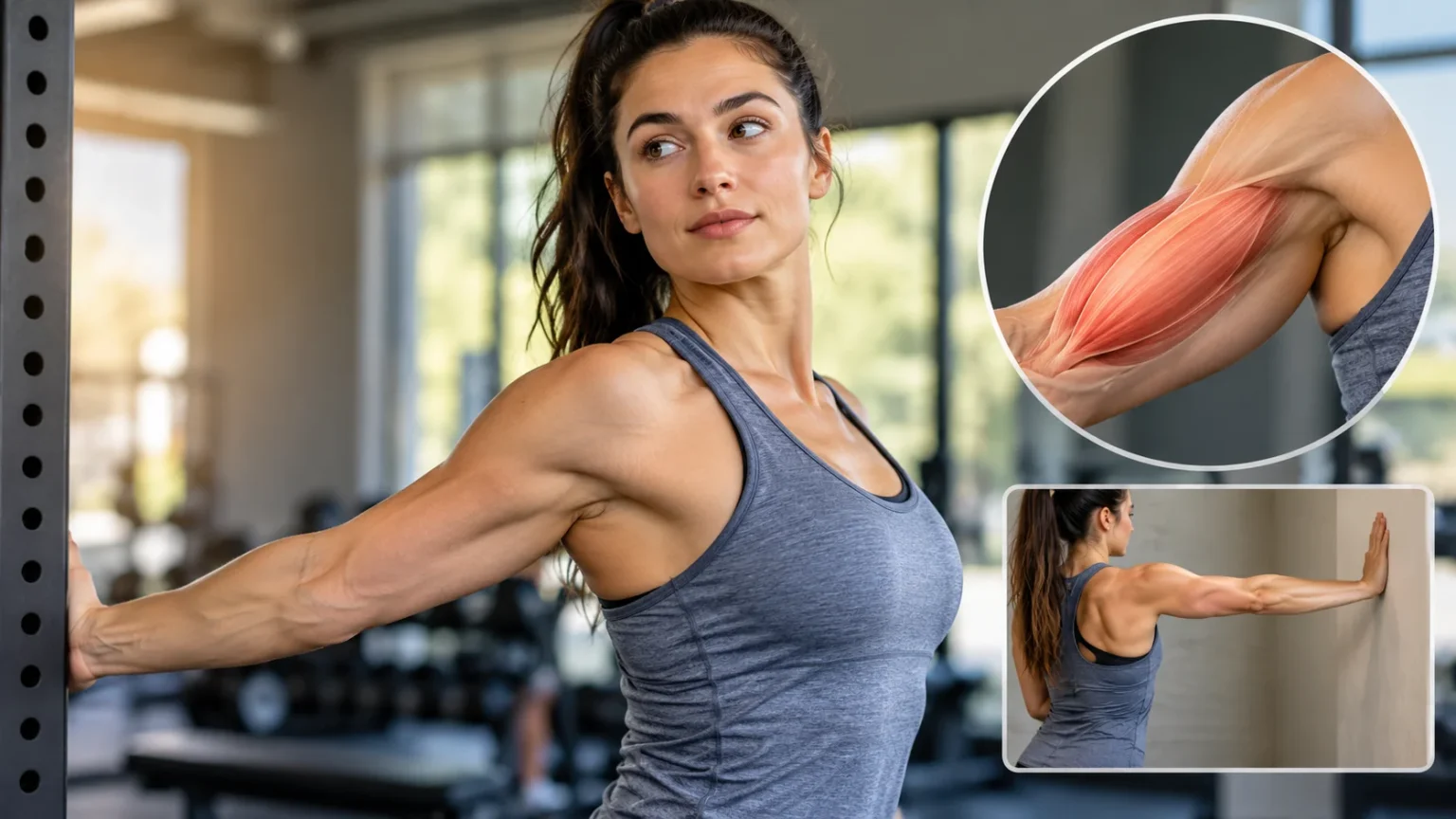

Why Should You Stretch Your Biceps?
Stretching your biceps can help maintain comfortable movement through the shoulders and elbows, especially if you regularly perform pulling, lifting, or resistance exercises. The biceps work during many everyday movements, including carrying bags and lifting objects. Gentle stretching may reduce the feeling of tightness that sometimes develops after training or prolonged upper-body activity.
Regular biceps stretches can also support overall upper-body mobility when combined with shoulder, chest, and forearm exercises. Tight muscles around the front of the arm may make certain reaching movements feel restricted or uncomfortable. Stretching gives the muscle an opportunity to move into a lengthened position without placing it under the same demands as strength training.
Stretching should feel controlled rather than painful. A mild pulling sensation through the front of the upper arm is generally expected, but sharp pain is a signal to stop. The goal is not to force your arm as far as possible but to gradually improve flexibility while protecting muscles, tendons, and nearby joints.
Understanding the Biceps Before You Stretch
The biceps brachii is the prominent muscle located on the front of your upper arm. It has two sections, often called the long head and short head, which work together during elbow flexion and forearm rotation. The muscle also crosses the shoulder joint, which explains why shoulder position can significantly change how strongly you feel a biceps stretch.
Because the biceps connects near both the shoulder and elbow, stretching it usually involves extending your elbow while moving your arm slightly behind your body. Rotating the palm or changing shoulder position can further influence the stretch. Understanding this relationship helps you avoid simply twisting the arm aggressively without actually creating a comfortable stretch through the muscle.
Your biceps do not work alone during upper-body movement. The shoulders, chest, forearms, upper back, and rotator cuff muscles all influence how your arm moves. A balanced mobility routine should therefore address several areas rather than relying only on isolated biceps stretches, particularly if stiffness appears during lifting or overhead movements.
When Is the Best Time to Stretch Your Biceps?
Static biceps stretches are generally more appropriate after exercise, during a mobility routine, or when your muscles are already warm. Holding a deeper stretch immediately before demanding strength exercises may not always be ideal because your muscles need to produce force during the workout. Before training, active and dynamic movements are usually a more practical approach.
After an upper-body workout, gentle stretching can feel particularly comfortable because your muscles are already warm. Exercises such as curls, rows, pull-ups, and other pulling movements may leave the front of the arms feeling tight or fatigued. A controlled stretch can help restore comfortable movement without adding significant additional stress to the worked muscles.
You can also stretch your biceps during the day if prolonged sitting or repetitive work leaves your shoulders and arms feeling stiff. Short mobility breaks may be more useful than waiting until discomfort becomes intense. The key is to stretch gradually and avoid forcing cold muscles suddenly into their deepest possible range.
How to Warm Up Before Stretching Your Biceps
A brief warm-up helps prepare your shoulders, elbows, and upper arms before you perform deeper static stretching. Start with simple movements such as arm circles, shoulder rolls, and gentle elbow bends for several minutes. These movements increase activity around the joints and allow you to check whether any particular direction feels painful or unusually restricted.
You can also swing your arms comfortably forward and backward while keeping the movement controlled. Gradually increase the range as your shoulders begin to feel looser, but avoid aggressive momentum. The purpose of a warm-up is to prepare the tissues for movement, not to push them immediately into positions that feel uncomfortable.
If you have just completed an upper-body workout, you may not need an additional lengthy warm-up before gentle stretching. Your arms are already warm from exercise, although you should still allow your breathing and heart rate to settle. Move into each stretch slowly and pay attention to whether the muscle feels normally tight or unusually painful.
How to Do a Standing Wall Biceps Stretch
A standing wall stretch is one of the simplest ways to stretch the biceps without requiring special equipment. Stand beside a wall and place your palm against it with your arm approximately at shoulder height. Straighten your elbow comfortably, then begin turning your chest and torso away from the wall until you notice a gentle stretch through the front of your upper arm.
Keep your shoulder relaxed rather than shrugging it toward your ear. Your palm can remain flat against the wall, although you may need to adjust your hand position depending on your flexibility. Rotate only as far as you can comfortably control, because aggressively twisting your shoulder can place unnecessary stress on the joint.
Hold the position while breathing normally and avoiding bouncing. You should feel mild tension through the biceps and possibly the front of the shoulder or chest, but you should not feel sharp pain, tingling, or numbness. Return slowly to the starting position before performing the stretch on your opposite arm.
How to Do a Doorway Biceps Stretch
The doorway biceps stretch provides another convenient option when you want to open the front of the arm and shoulder. Stand in a doorway and place one hand or forearm against the side of the frame. Keep your elbow reasonably straight, then step or rotate your body slightly forward until a comfortable stretch develops along the front of your arm.
Your exact arm height can change where you feel the stretch, so experiment with small adjustments rather than forcing one fixed position. Keeping the arm lower may feel more comfortable for people with limited shoulder mobility. Raising it higher may increase tension, but you should stop if the position creates pinching or discomfort around the shoulder joint.
Maintain a tall posture and avoid arching your lower back to create extra movement. The rotation should come mainly from your body moving away from the supported arm. Hold the stretch gently, breathe naturally, and release it slowly rather than suddenly allowing the arm to swing away from the doorway.
How to Stretch Your Biceps While Seated
A seated biceps stretch is useful when you want an option that also opens the shoulders and chest. Sit on the floor with your knees bent and place your hands behind you, keeping your fingers pointed away from your body if comfortable. Slowly move your hips forward while leaving your hands in place until you feel tension through the front of your arms.
Keep your elbows softly straight instead of forcefully locking them. Your shoulders should remain down and away from your ears as you gradually increase the stretch. Moving your hips only a small distance may be enough, particularly if your chest, shoulders, or biceps are already tight from training.
Stop immediately if you notice wrist pain, shoulder pinching, tingling, or numbness. This position places the wrists and shoulders under greater extension than some standing stretches, so it may not suit everyone. If it feels uncomfortable, return to a wall or doorway stretch that allows you to control each arm independently.
How Long Should You Hold a Biceps Stretch?
For general flexibility, holding a comfortable static biceps stretch for around 15 to 30 seconds is often enough to begin with. You can repeat the stretch two or three times on each side depending on how your muscles feel. Longer holds are not automatically better, particularly if your technique begins to change as fatigue or discomfort develops.
The sensation should remain mild to moderate rather than becoming increasingly painful. Take slow breaths while maintaining the position and allow tension to settle naturally instead of repeatedly pushing farther. If the muscle gradually relaxes, you can slightly increase the stretch, but only while maintaining comfortable control through the shoulder and elbow.
Consistency tends to matter more than forcing one intense stretching session. Including biceps mobility several times throughout the week can be easier on the body than occasionally performing very aggressive stretches. Your flexibility can change gradually as your muscles become accustomed to moving through a larger but still comfortable range.
Common Biceps Stretching Mistakes to Avoid
One of the most common mistakes is stretching too aggressively because you assume stronger tension produces faster results. Muscles and tendons do not need to be forced into painful positions to benefit from mobility work. Sharp pain, burning, numbness, or sudden joint discomfort indicates that you should release the stretch and reassess your position.
Another mistake is allowing your shoulder to roll forward or rise toward your ear. Poor positioning may shift stress away from the biceps and toward the shoulder joint or surrounding tissues. Maintain relaxed shoulders, controlled posture, and steady breathing so the movement remains focused on the intended area rather than compensating elsewhere.
Bouncing repeatedly at the end of your range is also unnecessary for normal static stretching. Sudden movements can create more tension than your body is prepared to handle, particularly when your muscles are cold. Move into and out of each position gradually, and focus on a smooth stretch that you can comfortably maintain.
How to Stretch Biceps After a Workout
After exercises such as biceps curls, chin-ups, rows, or cable pulls, give yourself a moment to recover before stretching. Allow your breathing to return toward normal, gently move your arms, and then begin with a moderate stretch. Post-workout muscles may feel temporarily tight or pumped, so your usual range of motion may feel different.
A wall or doorway stretch works well because you can adjust the intensity easily. Begin with a relatively small torso rotation and increase it only if your arm feels comfortable. There is no need to chase an extreme range after training, especially when your biceps and surrounding tissues have already experienced significant resistance.
Stretching can be one part of your recovery routine, but it does not replace adequate rest, nutrition, hydration, or sensible training progression. Muscle soreness can still develop after challenging workouts even if you stretch afterward. Give your arms sufficient recovery time before repeating heavy pulling or curling exercises, especially when they remain significantly sore.
When Should You Be Careful With Biceps Stretching?
Avoid deep biceps stretching if you recently injured your upper arm, elbow, or shoulder or if you experience unexplained swelling or bruising. Sudden weakness, visible changes in muscle shape, or severe pain after lifting may indicate more than ordinary tightness. In these situations, stretching aggressively could potentially aggravate irritated or injured tissues.
People returning to exercise after pregnancy, injury, surgery, or a prolonged period of inactivity may also need a more gradual approach to mobility work. Changes in posture and movement can affect several parts of the body at once, and issues such as postpartum back pain may influence how comfortable certain exercise positions feel. Modify stretches according to your current mobility instead of forcing previous ranges.
Persistent pain around the front of the shoulder or elbow may involve a tendon rather than simply a tight muscle. If discomfort repeatedly appears during stretching, lifting, or normal daily movements, professional assessment may be appropriate. A qualified healthcare or rehabilitation professional can help identify whether stretching, strengthening, temporary activity modification, or another approach makes more sense.
Conclusion
Learning how to stretch biceps safely is mainly about controlled movement and appropriate intensity. Wall, doorway, and seated stretches can all lengthen the front of the upper arm when performed gradually. Choose the position that feels most comfortable for your shoulders and elbows rather than assuming the deepest or most difficult stretch is automatically the best.
Warm muscles generally respond more comfortably to static stretching, making post-workout or dedicated mobility sessions useful times to practice. Hold each stretch without bouncing, maintain relaxed breathing, and stop if you experience sharp pain, numbness, or joint discomfort. Regular gentle stretching may support comfortable upper-body mobility when combined with sensible strength training and recovery.
Remember that persistent pain is different from ordinary muscle tightness. If your biceps, shoulder, or elbow remains painful despite reducing activity and modifying your stretches, consider having the area evaluated. Safe stretching should leave you feeling comfortably mobile, not increasingly sore or concerned about your arm.
FAQs
How do you properly stretch your biceps?
Straighten your elbow, move your arm slightly behind your body, and gently rotate away until you feel mild tension along the front of your upper arm. Avoid forcing the shoulder or elbow.
How long should I hold a biceps stretch?
Hold a comfortable static biceps stretch for about 15 to 30 seconds and repeat it two or three times if desired. Release sooner if you develop sharp pain, numbness, or tingling.
Should I stretch my biceps before or after a workout?
Dynamic upper-body movements are generally more suitable before demanding exercise, while longer static biceps stretches often fit better after training. Always stretch within a comfortable range rather than forcing flexibility.
Why do my biceps feel tight after working out?
Resistance exercises create temporary muscle fatigue and increased tension that can make your biceps feel tight or pumped. Gentle movement, recovery, and appropriate stretching may help the sensation gradually settle.
Can stretching help sore biceps?
Gentle stretching may feel comfortable with mild post-workout soreness, but it should not be painful. Rest, hydration, nutrition, and gradual recovery are also important when your biceps are recovering from demanding exercise.