
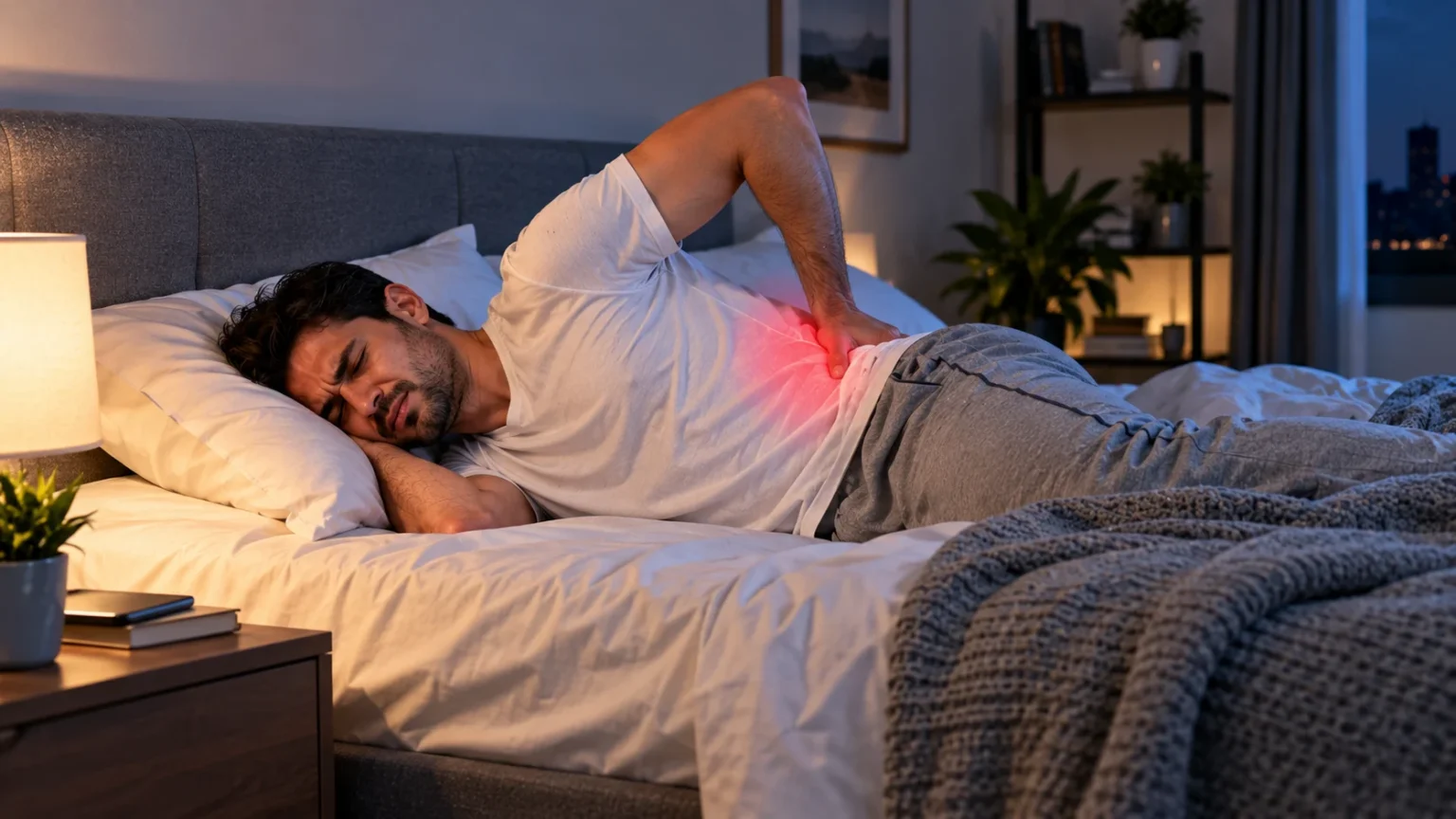

Lower back pain when lying down can be frustrating, especially when discomfort appears just as you are trying to rest or sleep. For some people, the pain develops after spending hours sitting, lifting something heavy, or exercising. For others, it seems to appear only at night or in certain sleeping positions without an obvious cause.
Pain while lying down does not always mean something serious. Muscle strain, joint irritation, poor sleep positioning, an unsupportive mattress, or stiffness around the hips can all contribute to symptoms. However, persistent nighttime back pain, pain with neurological symptoms, or discomfort accompanied by other concerning changes deserves medical attention.
Understanding when the pain occurs, what makes it better or worse, and whether it spreads into the hips or legs can provide useful clues. The sections below explain common reasons for lower back pain when lying down, practical ways to make rest more comfortable, and signs that should prompt professional evaluation.
Why Does My Lower Back Hurt When I Lie Down?
Lower back pain can feel more noticeable when you lie down because movement decreases and your attention shifts toward the discomfort. During the day, walking and changing positions may temporarily reduce stiffness or distract you from symptoms. Once you become still, irritated muscles, joints, or spinal structures may become easier to notice.
Your sleeping position also changes how pressure is distributed through the lumbar spine, pelvis, and hips. If your back arches excessively or your pelvis rotates while you sleep, some tissues may remain under tension for several hours. This can make an existing strain or stiffness feel worse even if the sleeping position was not the original cause.
Pain may also appear after a physically demanding day when muscles begin to tighten during rest. Activities such as lifting, repetitive bending, prolonged sitting, or unfamiliar exercise can irritate tissues around the lower back. Symptoms may not become obvious until later in the evening when you finally stop moving.
Muscle Strain and Overuse Can Cause Nighttime Back Pain
A muscle strain is one of the most common causes of temporary lower back discomfort. It can happen after lifting, sudden twisting, repetitive movement, exercise, or simply doing more physical activity than your body is accustomed to. Strained muscles may feel tight, sore, tender, or painful when you change positions in bed.
When you lie down, the muscles around your spine may relax differently than they do while standing. Certain positions can stretch irritated tissues or create pressure around a sensitive area. Rolling over, sitting up, or moving from lying to standing may therefore feel particularly uncomfortable when a muscle strain is present.
Mild strains often improve gradually with activity modification and time rather than complete bed rest. Gentle movement can help prevent stiffness, while heavy lifting or painful exercises may need to be reduced temporarily. If the pain becomes severe, continues worsening, or fails to improve, a clinician can help determine whether another cause is involved.
Sleeping Position May Be Increasing Lower Back Stress
Sleeping posture can influence how the lower back feels during the night and when you wake up. Lying in a position that creates excessive arching, twisting, or pelvic rotation may increase stress on already sensitive tissues. This does not mean there is one perfect sleeping position for everyone, because comfort and body structure differ between individuals.
Back sleepers sometimes feel better with a pillow placed underneath the knees. Slightly bending the knees can reduce the amount of arching through the lumbar spine and may help the lower-back muscles relax. The pillow should be comfortable rather than so high that it creates tension through the hips or knees.
Side sleepers may benefit from placing a pillow between the knees to reduce rotation through the pelvis. Some people also feel more comfortable hugging a pillow to support the upper body. The best position is usually the one that reduces symptoms and allows you to remain comfortable without forcing your body into an unnatural posture.
Your Mattress Could Be Contributing to the Problem
A mattress affects how your spine, hips, and shoulders are supported throughout the night. A surface that is extremely soft may allow the pelvis to sink excessively, while one that is very firm may create uncomfortable pressure points. Either situation can make existing lower back symptoms more noticeable in some people.
There is no universally best mattress for lower back pain because body weight, preferred sleeping position, and individual comfort all matter. A mattress should generally provide enough support to keep you comfortable while allowing natural curves of the body to remain supported. If you consistently wake with pain that improves after moving around, your sleep surface may be worth evaluating.
Before immediately replacing a mattress, look at the entire sleep setup. Pillows, sleeping position, mattress age, and changes in physical activity can all influence symptoms. If your pain started suddenly after an injury or is accompanied by other symptoms, it is important not to assume the mattress is the only explanation.
Tight Hips and Glutes May Add to Lower Back Discomfort
The muscles around the hips and pelvis work closely with the lower back during walking, lifting, sitting, and exercise. When these areas become stiff or fatigued, movement patterns can change and the lower back may take on additional work. This does not necessarily mean tight muscles directly cause your pain, but they can contribute to discomfort in some situations.
The gluteal muscles help stabilize the pelvis and support many lower-body movements. Gentle mobility exercises may feel helpful when stiffness around the hips accompanies mild mechanical back pain. A controlled gluteus medius stretch can be one option for improving hip comfort, provided the movement does not increase symptoms.
Stretching should feel gentle rather than painful. Forcing a deep stretch can irritate sensitive tissues, especially when back pain is already present. If stretching causes sharp pain, tingling, numbness, or symptoms traveling down the leg, stop and consider discussing the symptoms with a healthcare professional.
Could a Disc Problem Cause Pain When Lying Down?
The discs between the spinal bones help absorb forces and allow movement through the spine. Changes or irritation involving a disc can sometimes contribute to lower back pain, particularly when nearby nerves become affected. However, disc changes can also appear on imaging in people who have no pain at all, so symptoms need to be interpreted carefully.
Disc-related discomfort may sometimes worsen with bending, prolonged sitting, coughing, or certain sleeping positions. If a nerve is irritated, pain can travel into the buttock or leg and may be accompanied by tingling, numbness, or weakness. These symptoms do not confirm a disc problem by themselves, but they may justify further assessment.
Avoid trying to diagnose a slipped or herniated disc based only on where the pain occurs. Lower back symptoms can overlap across several conditions. A healthcare professional can examine strength, reflexes, sensation, and movement patterns to determine whether nerve involvement or another issue needs further investigation.
Arthritis and Joint Changes Can Cause Pain at Rest
The joints of the spine can develop age-related changes just like joints elsewhere in the body. These changes may contribute to stiffness, aching, or discomfort that becomes more noticeable after remaining in one position. Some people feel worse after lying still for several hours and notice improvement after gentle movement.
Facet joints at the back of the spine can also become irritated. Certain positions, particularly those that increase extension or arching through the lower back, may aggravate symptoms in some individuals. Changing sleep position or using pillows for support may reduce discomfort, but persistent pain should be assessed rather than managed through positioning alone.
Age-related changes on scans do not automatically explain pain. Many adults have degenerative findings without significant symptoms, while others experience pain without dramatic imaging changes. Diagnosis therefore depends on the overall clinical picture, including symptoms, examination findings, activity patterns, and how the pain responds to movement.
Sciatica May Cause Back and Leg Pain at Night
Sciatica describes symptoms caused by irritation or compression involving the sciatic nerve or nerve roots that contribute to it. Pain may begin in the lower back or buttock and travel down part of the leg. Some people also experience burning, tingling, numbness, or changes in strength.
Lying down can sometimes change nerve tension or pressure around irritated structures. Certain sleeping positions may therefore make symptoms more noticeable, while others may provide relief. Side sleeping with a pillow between the knees or adjusting leg position can sometimes improve comfort, but responses vary from person to person.
Persistent radiating pain deserves attention, especially when it affects walking, sleep, or everyday function. Seek prompt medical care for significant leg weakness, worsening numbness, or changes in bladder or bowel control. These symptoms can signal nerve problems that require urgent evaluation rather than home treatment alone.
Inflammatory Conditions Can Cause Nighttime Back Pain
Not all lower back pain comes from muscle strain or mechanical stress. Certain inflammatory conditions can cause pain and stiffness that are more noticeable during rest or during the second half of the night. Symptoms may improve after getting up and moving rather than becoming worse with activity.
Inflammatory back pain can have a different pattern from a typical short-term strain. It may begin gradually, persist for months, and be associated with prolonged morning stiffness. Some people may also have other symptoms involving joints, eyes, skin, or digestive health depending on the underlying condition.
Nighttime pain alone does not mean you have an inflammatory disorder. Many common mechanical problems can also disturb sleep. However, persistent symptoms with a clear pattern of prolonged stiffness or improvement with activity are worth discussing with a healthcare professional who can evaluate the broader picture.
What Sleeping Positions May Help Lower Back Pain?
For many people, sleeping on the back with a pillow beneath the knees can reduce strain through the lumbar area. The slight bend in the knees may allow the pelvis to rest in a more comfortable position. You can experiment with pillow height until the lower back feels supported without creating discomfort elsewhere.
Side sleeping is another commonly comfortable option. Place a pillow between the knees so the top leg does not pull the pelvis forward and rotate the spine excessively. A pillow that properly supports the head and neck can also help keep the rest of the spine in a more neutral and relaxed position.
Sleeping on the stomach can increase lower-back arching for some people, although individual experiences vary. If stomach sleeping is the only position you find comfortable, placing a thin pillow beneath the pelvis may reduce some strain. The goal is not perfect alignment but finding a position that allows restful sleep without increasing pain.
What Can You Do at Home for Mild Lower Back Pain?
Gentle activity is often more helpful than spending the entire day in bed when pain is mild and there are no warning signs. Short walks and comfortable everyday movement can help prevent stiffness. Avoid activities that clearly worsen symptoms, but complete inactivity can sometimes make the lower back feel even tighter.
Heat may provide temporary comfort for muscle tension or stiffness. A warm shower, heating pad, or warm pack can help some people relax before bedtime. Protect your skin from excessive heat and limit application time rather than sleeping directly on a heating device throughout the night.
Gentle mobility can also be useful if it feels comfortable. Slow pelvic movements, easy walking, or mild hip stretching may reduce stiffness without placing heavy demands on the spine. Stop any exercise that increases pain significantly, produces neurological symptoms, or causes discomfort to spread farther down the leg.
When Should Lower Back Pain When Lying Down Be Checked?
Back pain should be evaluated if it is severe, persistent, progressively worsening, or repeatedly disturbing your sleep. Pain that does not improve with position changes or continues for several weeks may need a professional assessment. A clinician can evaluate whether symptoms are more consistent with muscle, joint, nerve, or another type of problem.
Seek medical attention sooner if pain follows a significant fall, collision, or injury. You should also mention unexplained fever, unexplained weight loss, a history of cancer, long-term steroid use, or significant immune system problems. These factors can change how healthcare professionals evaluate back pain.
Emergency assessment is particularly important if lower back pain occurs with new bladder or bowel control problems, numbness around the groin or inner thighs, or major weakness in the legs. These symptoms can indicate serious nerve compression. They require urgent medical attention rather than waiting to see whether sleeping position changes help.
Conclusion
Lower back pain when lying down can result from several common causes, including muscle strain, stiffness, sleeping position, hip tension, or irritation around the joints and discs. In many cases, discomfort improves with time, gentle activity, and changes to sleep positioning. The pattern of symptoms is often more informative than one isolated episode of pain.
Simple adjustments such as supporting the knees or placing a pillow between the legs may make sleep more comfortable. Gentle movement and avoiding prolonged bed rest can also help with many mild mechanical back problems. However, exercises and stretches should not be forced when they increase pain or cause symptoms to travel into the leg.
Pay attention to how long symptoms last and whether other warning signs appear. Persistent nighttime pain, worsening neurological symptoms, or significant changes in bladder or bowel function should be medically evaluated. When you are unsure about the cause, a professional assessment can provide more reliable guidance than trying to diagnose the problem from sleeping position alone.
FAQs
Why does my lower back hurt only when I lie down?
Certain sleeping positions can increase pressure or tension around irritated muscles, joints, or other tissues. Pain may also become more noticeable at rest because you are moving less and focusing more on the discomfort.
Is nighttime lower back pain always serious?
No. Muscle strain, stiffness, sleeping position, and mattress support can all cause nighttime discomfort. However, persistent or severe night pain, especially with other concerning symptoms, should be discussed with a healthcare professional.
What is the best sleeping position for lower back pain?
Many people feel comfortable sleeping on their back with a pillow under the knees or on their side with a pillow between the knees. The best position is the one that reduces your symptoms.
Should I stretch my lower back before bed?
Gentle stretching may help some people with mild stiffness, but it should not cause sharp or spreading pain. Stop if symptoms worsen, and seek guidance if you experience persistent pain, numbness, or weakness.
When is lower back pain an emergency?
Seek urgent care if back pain occurs with new bladder or bowel problems, numbness around the groin area, severe leg weakness, or major neurological changes. These symptoms may indicate serious nerve compression.