
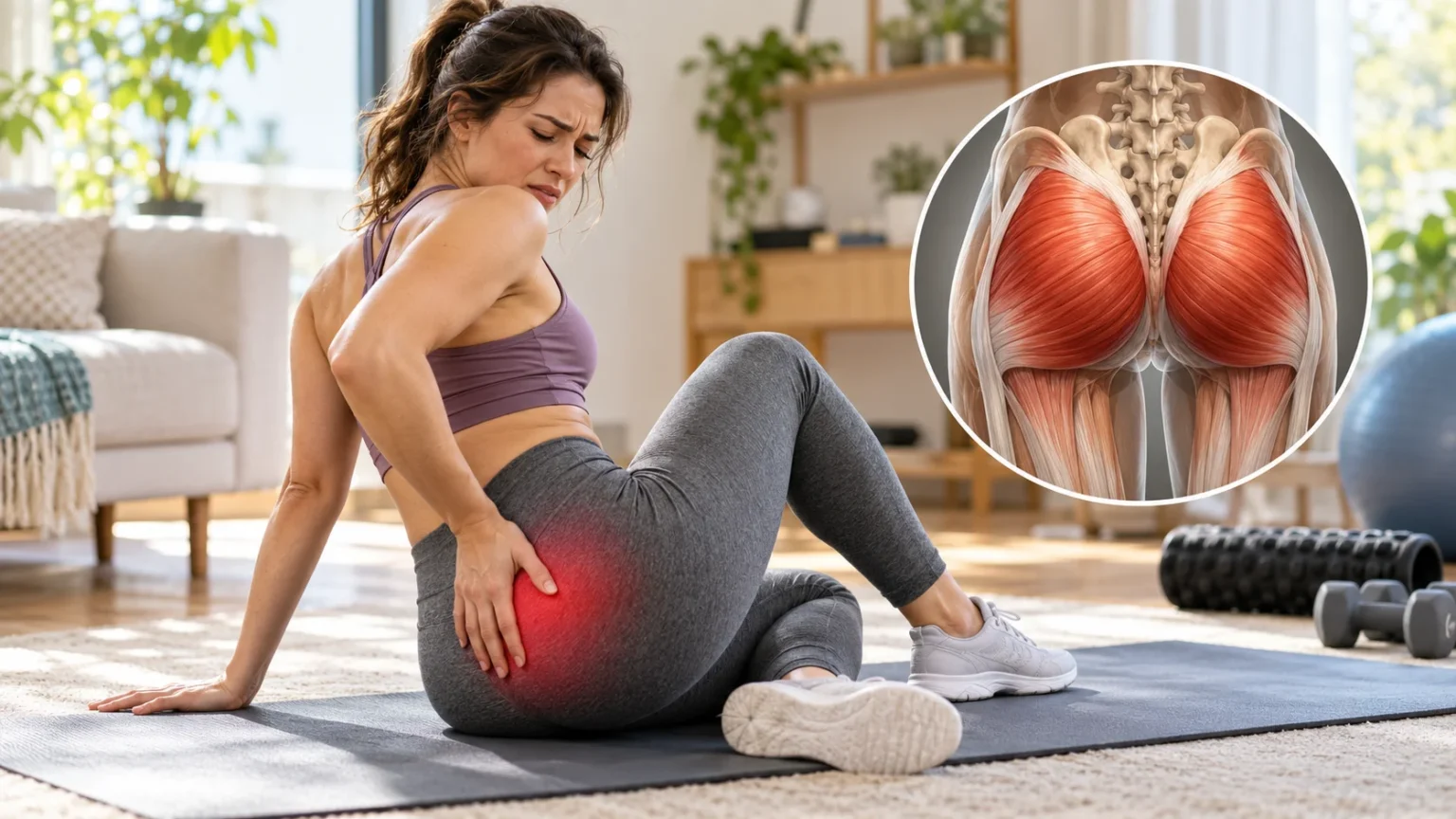

Butt muscle pain can make sitting, walking, climbing stairs, exercising, or even getting out of bed uncomfortable. The pain may feel like soreness, tightness, burning, cramping, or a deep ache in one or both sides of the buttocks. In many cases, the problem comes from overworked muscles, prolonged sitting, or irritation around the hips and lower back.
The buttocks contain several important muscles, including the gluteus maximus, gluteus medius, and gluteus minimus. These muscles help stabilize the pelvis, move the hips, support walking, and generate force during activities such as running, squatting, and climbing. When one of them becomes strained, tight, or overloaded, pain can develop.
This guide explains common causes of butt muscle pain, practical relief strategies, helpful stretches, strengthening exercises, and warning signs that should not be ignored. It also covers how to tell the difference between ordinary muscular soreness and symptoms that may involve nerves, joints, tendons, or other structures.
What Causes Butt Muscle Pain?
Butt muscle pain commonly develops after physical activity, prolonged sitting, lifting, or sudden changes in movement. The gluteal muscles can become overloaded when they are asked to handle more stress than usual. This may happen after a new workout, long hike, intense run, or repeated climbing.
Muscle strain is another common cause. A strain occurs when muscle fibers are overstretched or overloaded, often during a sudden movement or forceful contraction. Mild strains may cause localized soreness, while more significant injuries can lead to sharp pain, bruising, or noticeable weakness.
Pain in the buttocks does not always come directly from the gluteal muscles. Problems involving the lower back, sciatic nerve, sacroiliac joint, hip joint, or nearby tendons can produce similar symptoms. The location, triggers, and type of pain can help narrow down the possible source.
Which Butt Muscles Can Become Painful?
The gluteus maximus is the largest muscle in the buttocks and plays a major role in hip extension. It helps you stand from a chair, climb stairs, run, and lift. Pain in this muscle may feel broad, deep, or sore across the back of the hip.
The gluteus medius sits more toward the outer side of the hip and helps stabilize the pelvis during walking and single-leg movement. Irritation in this area can cause pain along the side of the buttock or outer hip. It may become worse during walking, climbing, or lying on one side.
The gluteus minimus lies beneath the gluteus medius and performs similar stabilizing functions. Pain in this muscle can sometimes spread toward the side of the hip or upper thigh. Because these muscles overlap and work together, identifying one specific muscle without examination can be difficult.
Muscle Strain in the Buttocks
A gluteal muscle strain can happen during sprinting, lifting, jumping, squatting, or sudden changes in direction. The muscle may be forced beyond its normal capacity, causing microscopic or larger tears. Pain often begins during or shortly after the activity that caused the injury.
Mild strains may feel like soreness or tightness and still allow normal walking. Moderate strains can cause sharper pain, reduced strength, and discomfort when contracting or stretching the muscle. Severe strains may lead to bruising, swelling, and difficulty using the affected leg normally.
Initial management usually involves reducing activities that clearly worsen the pain. Gentle walking and comfortable movement may be possible, but intense exercise should be avoided until symptoms settle. Persistent weakness, severe bruising, or inability to walk normally should be professionally assessed.
Delayed-Onset Muscle Soreness
Delayed-onset muscle soreness, often called DOMS, can develop after unfamiliar or demanding exercise. It usually appears several hours after a workout and may feel strongest one or two days later. Squats, lunges, hip thrusts, deadlifts, and hill running can all leave the glutes sore.
DOMS usually causes diffuse muscular tenderness rather than one sharp point of pain. The muscles may feel stiff when sitting down, standing up, or climbing stairs. Symptoms generally improve gradually as the muscle recovers and adapts to the training stimulus.
Light movement may help reduce stiffness, but intense training of the same muscles should be limited until soreness becomes manageable. DOMS is usually harmless, but severe swelling, dark urine, or extreme weakness after exercise deserves medical attention rather than being dismissed as ordinary soreness.
Piriformis Muscle Pain
The piriformis is a small muscle located deep in the buttock. It helps rotate the hip and contributes to pelvic stability. Irritation around this muscle can produce deep buttock pain, especially during sitting, climbing stairs, or certain hip movements.
Because the sciatic nerve passes close to the piriformis, symptoms may sometimes resemble sciatica. Pain can occasionally spread into the back of the thigh or feel burning or tingling. However, radiating symptoms can also come from the spine, so the piriformis should not automatically be blamed.
Gentle hip mobility and avoiding prolonged sitting may help some cases. Aggressive stretching can sometimes make symptoms worse, especially if nerve irritation is involved. Persistent radiating pain, numbness, or weakness should be evaluated to identify the true source.
Sciatica and Buttock Pain
Sciatica refers to pain caused by irritation of the sciatic nerve or the nerve roots that form it. Symptoms often begin in the lower back or buttock and may travel down the leg. Burning, tingling, numbness, or electric-like pain can occur along with aching.
Sitting for long periods may make sciatic symptoms more noticeable. Certain spinal positions can place more pressure on irritated nerves and increase discomfort through the buttock. Coughing, bending, or prolonged driving may also aggravate symptoms in some people.
Mild nerve irritation may improve with movement and time, but symptoms should be monitored. Worsening leg weakness, numbness around the groin, or new bowel or bladder changes require urgent medical evaluation because they can signal serious nerve compression.
Gluteal Tendon Problems
Gluteal tendons connect the gluteus medius and minimus muscles to the upper part of the femur. These tendons can become irritated through repetitive loading, running, prolonged standing, or changes in activity. Pain is often felt around the outer hip and upper buttock.
Symptoms may worsen when lying on the affected side, climbing stairs, or standing on one leg. Some people also feel pain when getting out of a chair or walking for long periods. Tendon-related pain can develop gradually rather than after one obvious injury.
Reducing aggravating positions and gradually strengthening the surrounding muscles can help improve tolerance. Avoid repeatedly stretching into strong pain because compression may irritate the tendon further. Persistent outer hip pain may benefit from professional assessment.
Sacroiliac Joint Pain
The sacroiliac joints connect the lower spine to the pelvis and are located near the upper buttocks. Irritation in one of these joints can cause pain that feels like it comes from the gluteal muscles. The discomfort is often concentrated on one side.
Symptoms may become worse when standing from a chair, climbing stairs, rolling in bed, or standing on one leg. The pain may remain in the buttock or spread slightly into the upper thigh. It usually does not follow exactly the same pattern as sciatic nerve pain.
Posture changes and gentle movement may help some people, but sacroiliac pain can be difficult to distinguish from other causes. Persistent symptoms should be assessed rather than self-diagnosed. A clinician can examine the spine, pelvis, hips, and surrounding muscles to identify the source.
Prolonged Sitting and Butt Muscle Pain
Sitting for several hours can place constant pressure on the buttock muscles. This may cause soreness, stiffness, or numbness, especially when the chair is hard or poorly supportive. Symptoms often improve after standing or walking for a few minutes.
Uneven sitting can make the problem worse. Leaning onto one side, crossing the legs, or sitting on a wallet can create asymmetrical pressure through the pelvis. Over time, this may make one side feel tighter or more painful than the other.
Try changing position regularly rather than aiming for one perfect posture. Stand up every 30–60 minutes, walk briefly, and keep both feet supported when possible. Small changes throughout the day can reduce continuous pressure more effectively than waiting until discomfort becomes severe.
Hip Problems That Can Feel Like Butt Muscle Pain
Some hip conditions cause pain that is felt more in the buttock than the front of the hip. Joint irritation, reduced hip mobility, or surrounding tendon problems can all produce deep discomfort. The pain may be difficult to pinpoint without an examination.
Hip-related pain can become more noticeable when walking, getting in and out of a car, climbing stairs, or rotating the leg. Some people also notice stiffness or clicking. The symptoms may overlap with lower back or gluteal muscle problems.
Gentle mobility can help maintain movement, but forcing painful ranges is not recommended. If the hip feels persistently stiff, catches, or produces deep joint pain, professional assessment may be useful. Identifying the correct source helps prevent unnecessary stretching or strengthening.
How to Relieve Mild Butt Muscle Pain
Start by reducing activities that clearly aggravate the area. This may include intense squatting, running, jumping, or long periods of sitting. You do not always need complete rest, but the painful tissues should be given enough time to settle.
Gentle walking can help maintain circulation and reduce stiffness. Short periods of movement throughout the day may feel better than remaining in bed or sitting for hours. Increase activity gradually as symptoms improve and avoid sudden jumps in training volume.
Heat may help tight or sore muscles feel more relaxed, while cold can sometimes provide temporary comfort after a recent strain. Use whichever feels better and protect your skin. These methods are mainly for symptom relief rather than treating the underlying cause.
Gentle Stretches for Butt Muscle Pain
A figure-four stretch can help target the gluteal region. Sit or lie down, place one ankle across the opposite thigh, and gently move into the stretch. Stop when you feel mild tension through the buttock rather than forcing the position.
A knee-to-chest stretch can also provide gentle mobility around the hips and lower back. Lie on your back and bring one knee toward your chest while keeping the opposite leg comfortable. Hold briefly and return slowly before switching sides.
Stretching should never create sharp or radiating pain. If you feel tingling, numbness, or discomfort that travels farther down the leg, stop. Nerve irritation can sometimes become worse when treated like ordinary muscle tightness.
Strengthening Exercises for the Glutes
Glute bridges are a simple exercise for building strength around the buttocks. Lie on your back with your knees bent and feet flat on the floor. Tighten your abdominal muscles gently and lift your hips while squeezing the glutes.
Side-lying hip abduction is another useful option. Keep the body aligned and lift the top leg without rotating the pelvis backward. This movement focuses more on the gluteus medius and other muscles that help stabilize the hip.
Clamshells can also target the lateral glute muscles when performed with good form. If you want a detailed technique breakdown, this guide to the clamshell exercise explains positioning and form. Start with body weight before adding bands or extra resistance.
When Exercise Makes Butt Pain Worse
Exercise should create manageable muscular effort rather than sharp pain. If a movement repeatedly causes stabbing, burning, or radiating symptoms, stop and reassess. Continuing through worsening pain can irritate an already sensitive muscle, tendon, joint, or nerve.
The problem may also be related to training volume rather than the exercise itself. Too many sets, heavy resistance, or sudden increases in running distance can overload the tissues. Reducing volume temporarily may allow you to continue moving while the area recovers.
Pain that consistently worsens after every workout should not be ignored. A physical therapist or healthcare professional can help determine whether technique, strength, mobility, or another condition is contributing. Proper diagnosis can make rehabilitation more effective.
How Long Does Butt Muscle Pain Last?
Mild muscle soreness from exercise often improves within a few days. Minor strains may take longer, especially if the muscle continues to be loaded heavily. The recovery time depends on the severity of the injury and how well aggravating activities are managed.
Tendon problems and nerve-related pain may last longer than simple muscle soreness. These conditions often require gradual strengthening, activity modification, and patience. Improvement may occur over weeks rather than days depending on the underlying issue.
Pain that does not improve, repeatedly returns, or becomes progressively worse should be assessed. Ongoing symptoms may indicate that the problem involves more than ordinary muscle fatigue. Early evaluation can help prevent months of unnecessary discomfort.
How to Prevent Butt Muscle Pain
Increase exercise intensity gradually instead of suddenly adding heavy lifts or long runs. Muscles and tendons need time to adapt to additional stress. Progressive training allows the tissues to become stronger without being overloaded.
Include glute, hamstring, hip, and core strengthening in your routine. A balanced program helps distribute force through several muscle groups rather than relying heavily on one area. Good technique is also important when performing squats, deadlifts, lunges, and similar movements.
Avoid sitting for very long periods without movement. Stand, walk, or stretch periodically throughout the day. Regular changes in position can reduce stiffness and pressure while keeping the hips and lower back more mobile.
When Butt Muscle Pain Needs Medical Attention
Seek medical advice if the pain is severe, follows a major injury, or prevents normal walking. Significant bruising, swelling, or weakness may suggest a more serious muscle injury. Pain that continues to worsen instead of gradually improving also deserves assessment.
Persistent burning, tingling, numbness, or pain traveling down the leg may indicate nerve involvement. These symptoms are especially important when they occur with weakness or changes in walking. A clinician can evaluate whether the source is the lower back, pelvis, or another area.
Urgent care is needed if buttock or back pain occurs with new bowel or bladder problems, groin numbness, major leg weakness, fever, or serious trauma. These symptoms can indicate conditions that require immediate medical attention.
Conclusion
Butt muscle pain can come from several sources, including muscle strain, exercise-related soreness, piriformis irritation, tendon problems, prolonged sitting, or nearby joints and nerves. The location and type of pain can help provide clues, but persistent symptoms should not be self-diagnosed.
For mild muscular pain, gentle movement, temporary activity modification, stretching, and gradual strengthening may help. Avoid forcing painful movements or staying completely inactive for long periods. Returning to normal activity gradually is usually more practical than rushing back into intense exercise.
If pain becomes severe, radiates down the leg, causes weakness or numbness, or continues despite reasonable self-care, seek professional assessment. Identifying the underlying cause is the best way to choose the right recovery strategy and prevent recurring problems.
FAQs
What causes pain in the butt muscles?
Common causes include muscle strain, exercise soreness, prolonged sitting, piriformis irritation, gluteal tendon problems, and referred pain from the lower back or hip.
How do you relieve sore butt muscles?
Gentle walking, light stretching, temporary reduction in aggravating activities, and heat or cold may help mild soreness. Gradual strengthening can also support recovery once pain begins to settle.
Can sitting too long cause butt muscle pain?
Yes. Prolonged sitting places continuous pressure on the gluteal muscles and can cause stiffness or soreness. Changing positions and taking regular walking breaks may help reduce discomfort.
Is buttock pain the same as sciatica?
No. Buttock pain can come from muscles, tendons, joints, or nerves. Sciatica specifically involves irritation of the sciatic nerve or its nerve roots and may cause radiating leg symptoms.
When should I worry about butt muscle pain?
Seek medical attention for severe pain, major weakness, persistent numbness, significant swelling, or difficulty walking. Urgent care is needed if symptoms occur with bowel or bladder changes or groin numbness.