
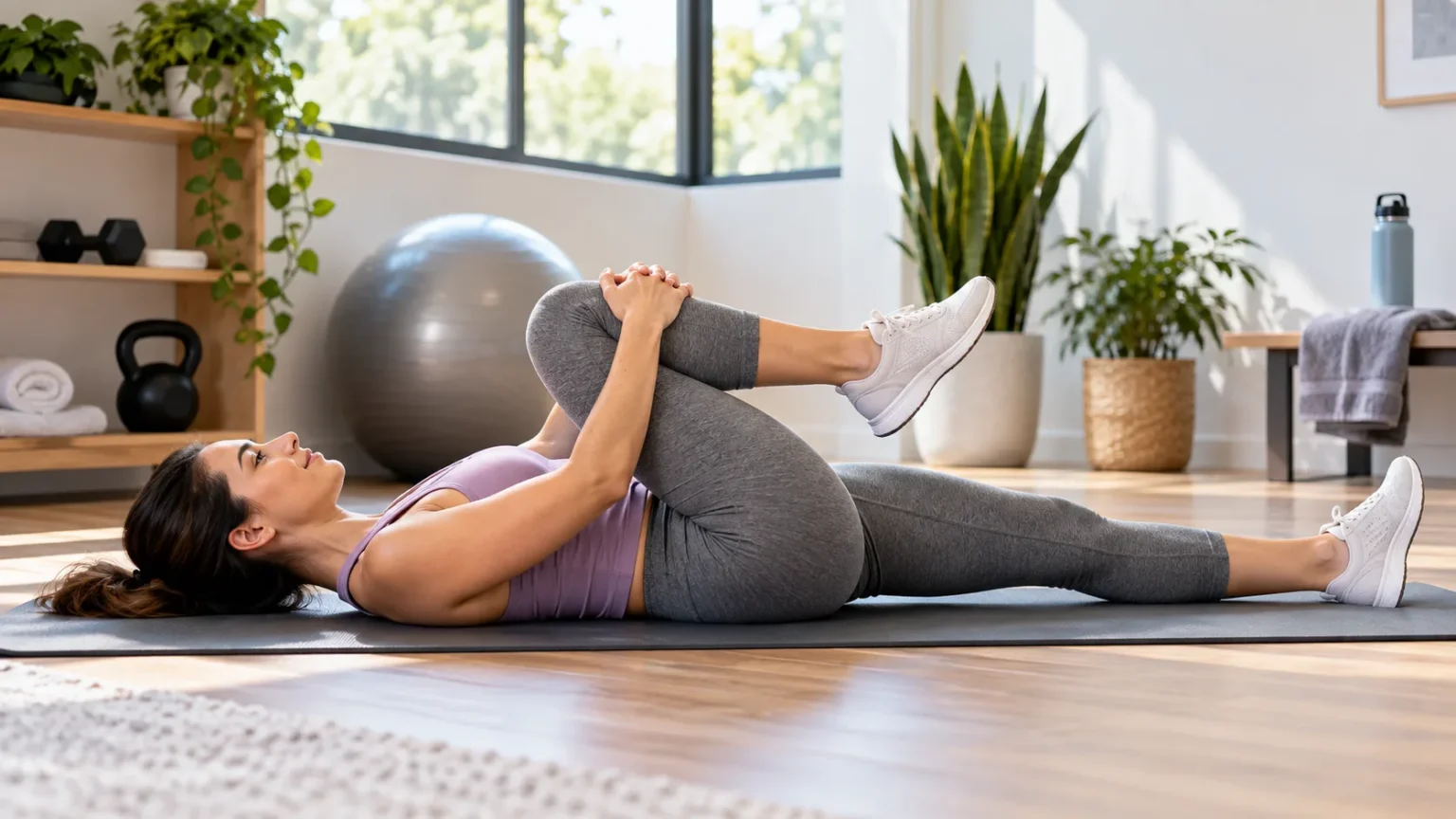

The knee to chest stretch is a simple mobility exercise commonly used to gently stretch the lower back, hips, and gluteal area. It requires no special equipment and can be performed on the floor, a bed, or another supportive surface. Many people include it in stretching routines when they feel stiff after sitting, exercising, or spending long periods in one position.
There are several versions of the exercise, including the single knee to chest stretch and double knee to chest stretch. Both involve bringing the knee or knees toward the torso while keeping the movement slow and controlled. The exercise should create a comfortable stretching sensation rather than sharp pain, intense pressure, or worsening symptoms.
Although the knee to chest stretch can feel relaxing, it is not suitable for every type of back, hip, or knee problem. Proper form, appropriate range of motion, and awareness of symptoms are important. Understanding how to perform the stretch correctly can help you add it to a mobility routine more safely and effectively.
What Is the Knee to Chest Stretch?
The knee to chest stretch is a flexibility and mobility exercise performed by gently bringing one or both knees toward the chest. It creates flexion through the hips and lower spine while stretching muscles around the lower back and buttocks. The movement is commonly used in general fitness, yoga, rehabilitation, and physical therapy programs.
The single-leg variation allows one hip to move while the opposite leg remains relaxed. This version can help you compare flexibility between sides and usually produces less spinal flexion than bringing both knees upward. It is often a comfortable starting point for beginners who are learning how their body responds to the movement.
The double knee to chest stretch brings both legs toward the torso simultaneously. This position generally creates a stronger stretch across the lower back and may feel more intense than the single-leg version. Neither variation is automatically better, so choose the option that feels comfortable and appropriate for your mobility level.
How Do You Perform a Single Knee to Chest Stretch?
Begin by lying on your back with both knees bent and your feet resting comfortably on the floor. Keep your head, shoulders, and lower body relaxed. Slowly lift one foot and bring that knee toward your chest while the other foot remains supported or the opposite leg extends comfortably.
Place your hands behind the thigh or over the shin and gently guide the knee closer to your torso. Do not aggressively pull the leg or force the hip beyond its comfortable range. You should feel mild tension through the buttock, hip, or lower back without experiencing sharp pain or pressure inside the knee.
Hold the position while breathing normally, then slowly release the leg back to the starting position. Repeat the stretch on the opposite side using the same controlled movement. Try to avoid twisting your pelvis, lifting your head, or tightening your shoulders while bringing the knee toward your chest.
How Do You Perform the Double Knee to Chest Stretch?
Start on your back with both knees bent and your feet supported. Bring one knee toward your chest and then carefully bring the second knee upward. Place your hands behind your thighs or around the upper shins, depending on which position feels more comfortable for your knees and hips.
Gently draw both knees toward your torso while keeping your neck and shoulders relaxed. The lower back may flatten slightly against the surface as the hips flex. Avoid pulling aggressively or lifting your hips excessively, because the goal is a comfortable lower-back stretch rather than forcing the spine into its maximum range.
Hold the stretch briefly while taking slow, relaxed breaths. When you are ready to finish, lower one foot to the floor and then the other rather than suddenly releasing both legs. This controlled return reduces unnecessary strain and gives you a chance to notice whether the movement caused increased discomfort.
What Muscles Does the Knee to Chest Stretch Target?
The knee to chest stretch primarily affects muscles and soft tissues around the lower back, buttocks, and hips. Bringing the thigh toward the torso flexes the hip and can lengthen parts of the gluteal region. Some people also notice a gentle stretching sensation across the muscles surrounding the lumbar spine.
The movement may also influence structures around the back of the pelvis. Because the pelvis changes position as the knee approaches the chest, muscles and connective tissues around the sacral and lower spinal region can experience gentle movement. Exactly where you feel the stretch depends on your anatomy, mobility, and chosen variation.
The exercise is not designed to create an intense hamstring stretch because the knee generally remains bent. It is also not a major strengthening exercise. Its main purpose is gentle mobility and flexibility, so it works best when performed slowly rather than treated like a high-repetition fitness movement.
What Are the Benefits of the Knee to Chest Stretch?
One potential benefit is reducing feelings of stiffness around the lower back and hips. After prolonged sitting or inactivity, gentle hip and spinal movement may make it easier to change positions and move comfortably. The stretch can be particularly convenient because it requires little space and no specialized equipment.
The knee to chest stretch can also improve awareness of hip mobility. Performing each side separately allows you to notice whether one hip feels tighter or more restricted than the other. Recognizing these differences can be useful when planning broader mobility, strength, or rehabilitation exercises with guidance from a qualified professional.
Another benefit is relaxation. Lying on your back and combining gentle stretching with slow breathing may help reduce unnecessary muscular tension after activity. However, the exercise should not be viewed as a cure for lower back pain, and persistent or recurring symptoms may require a more complete evaluation and exercise plan.
Can the Knee to Chest Stretch Help Lower Back Stiffness?
Some people find the knee to chest stretch helpful when their lower back feels stiff after sitting, traveling, or remaining inactive. Bringing the knee toward the torso gently flexes the lumbar area and can introduce movement after the spine has stayed relatively still. This may temporarily make the back feel more comfortable.
The stretch can also be useful as part of a larger mobility routine rather than as a standalone solution. Walking, changing positions regularly, strengthening the trunk and hips, and improving overall movement habits can all influence lower-back comfort. A single stretch usually cannot address every factor contributing to recurring stiffness.
Not every type of back pain responds well to flexion-based exercises. Certain disc-related, nerve-related, or other spinal conditions may become more uncomfortable when the knees are repeatedly pulled toward the chest. Stop if pain becomes sharper, spreads down the leg, or is accompanied by numbness, tingling, or weakness.
How Long Should You Hold the Knee to Chest Stretch?
Many people begin by holding the knee to chest stretch for approximately 15 to 30 seconds. This gives the muscles time to relax without requiring an excessively long position. Beginners can start with shorter holds and gradually increase the duration if the movement continues to feel comfortable.
You may repeat the stretch two or three times on each side depending on your goals and how your body responds. There is usually no need to perform dozens of repetitions. Slow, controlled holds are more appropriate for flexibility work than repeatedly pulling the knee toward the chest as quickly as possible.
Breathing normally during the hold can make the stretch feel more comfortable. Try to relax your jaw, shoulders, and abdominal muscles rather than holding unnecessary tension. If you find yourself holding your breath or pulling harder with every second, reduce the intensity until the position feels manageable again.
When Is the Best Time to Do the Knee to Chest Stretch?
The knee to chest stretch can be performed during a general mobility routine whenever the hips or lower back feel stiff. Some people prefer it in the morning after waking, while others use it after sitting for long periods. The best time is usually when your body feels comfortable and you can move without rushing.
It can also be performed after exercise as part of a cool-down or flexibility session. Your muscles are generally warm after physical activity, which may make gentle stretching feel more comfortable. However, the stretch does not need to be included after every workout unless it supports your mobility goals.
Before demanding sports or strength training, active movement is often more useful than relying only on long static holds. Walking, controlled squats, hip movements, or dynamic warm-up exercises may better prepare the body for activity. The knee to chest stretch can still be added when it feels helpful without replacing a complete warm-up.
What Common Mistakes Should You Avoid?
Pulling the knee too aggressively is one of the most common mistakes. Stretching harder does not necessarily improve flexibility faster and may irritate the hip, knee, or lower back. Move until you notice comfortable tension, then hold that position rather than repeatedly forcing the thigh closer to your torso.
Another mistake is grabbing directly over a painful knee joint. People with sensitive knees may find it more comfortable to hold behind the thigh instead of pulling on the shin. This changes the pressure placed on the knee while still allowing the hip to move toward the chest.
Lifting the head and shoulders from the floor can also create unnecessary neck tension. Keep the upper body relaxed unless your specific exercise variation requires otherwise. You should also avoid twisting your pelvis or holding your breath, because both can make the stretch less comfortable and harder to control.
When Should You Avoid the Knee to Chest Stretch?
Avoid forcing this stretch when it causes sharp lower-back, hip, groin, or knee pain. Mild muscular tension can be normal, but intense pain is not something to push through. Reducing the range may help, although some people need a completely different mobility exercise depending on their symptoms.
People recovering from recent hip, spine, abdominal, or knee surgery should follow the movement restrictions provided by their healthcare team. Certain injuries, joint replacements, fractures, or medical conditions may limit how much hip flexion is appropriate. General stretching advice should not replace specific post-surgical or rehabilitation instructions.
Stop the exercise if you develop new numbness, tingling, weakness, or pain traveling down the leg. Seek medical attention for severe back pain combined with bladder or bowel changes or numbness around the groin. These symptoms require proper medical assessment rather than continued stretching at home.
How Can You Make the Stretch More Comfortable?
Using a supportive exercise mat, carpeted floor, or firm bed can make the starting position more comfortable. If lying completely flat causes neck discomfort, a small pillow may provide support. Choose a surface that feels stable enough for you to control the movement without sinking excessively.
If reaching around the shin is difficult, hold behind the thigh instead. This modification can reduce pressure on sensitive knees and requires less hip flexibility. A towel or stretching strap may also help if limited mobility prevents you from comfortably reaching the leg without lifting your shoulders.
You can also reduce the intensity by keeping the knee farther away from the chest. There is no requirement for the thigh to touch the abdomen. Gradually exploring a comfortable range is more useful than trying to copy someone with greater flexibility, because individual hip structure and mobility naturally vary.
Conclusion
The knee to chest stretch is a simple mobility exercise that gently moves the hips and lower spine. It can be performed with one leg at a time or with both knees together, depending on your comfort and goals. The stretch primarily targets the lower-back, gluteal, and hip region without requiring equipment.
Good technique involves bringing the knee toward the chest slowly, maintaining relaxed breathing, and stopping at comfortable tension. Avoid aggressive pulling, twisting the pelvis, or placing unnecessary pressure on sensitive knees. Holding behind the thigh and reducing the range are simple modifications that can make the exercise easier.
The knee to chest stretch may help with general stiffness, but it is not appropriate for every back or hip problem. Stop if symptoms become sharp, spread into the leg, or involve numbness or weakness. Persistent or concerning symptoms should be evaluated so the underlying problem can be properly identified.
FAQs
What is the knee to chest stretch good for?
The knee to chest stretch is commonly used for gentle lower-back and hip mobility. It may reduce feelings of stiffness while stretching tissues around the glutes, hips, and lumbar region.
How long should I hold a knee to chest stretch?
A common starting point is approximately 15 to 30 seconds per side. Hold only as long as the position remains comfortable, and avoid pulling harder simply to increase the stretch.
Can I do the knee to chest stretch every day?
Many people can perform the stretch daily if it feels comfortable and does not worsen symptoms. The ideal frequency depends on your mobility, health, and overall exercise or rehabilitation plan.
Is single or double knee to chest better?
Neither version is universally better. Single knee to chest generally creates a gentler stretch, while the double-leg version may produce stronger lower-back flexion and should only be used when comfortable.
Why does knee to chest stretching hurt my back?
Pain may occur if you pull too far, have an irritated spinal structure, or the movement does not suit your condition. Stop if pain increases, especially when symptoms travel into the leg.