
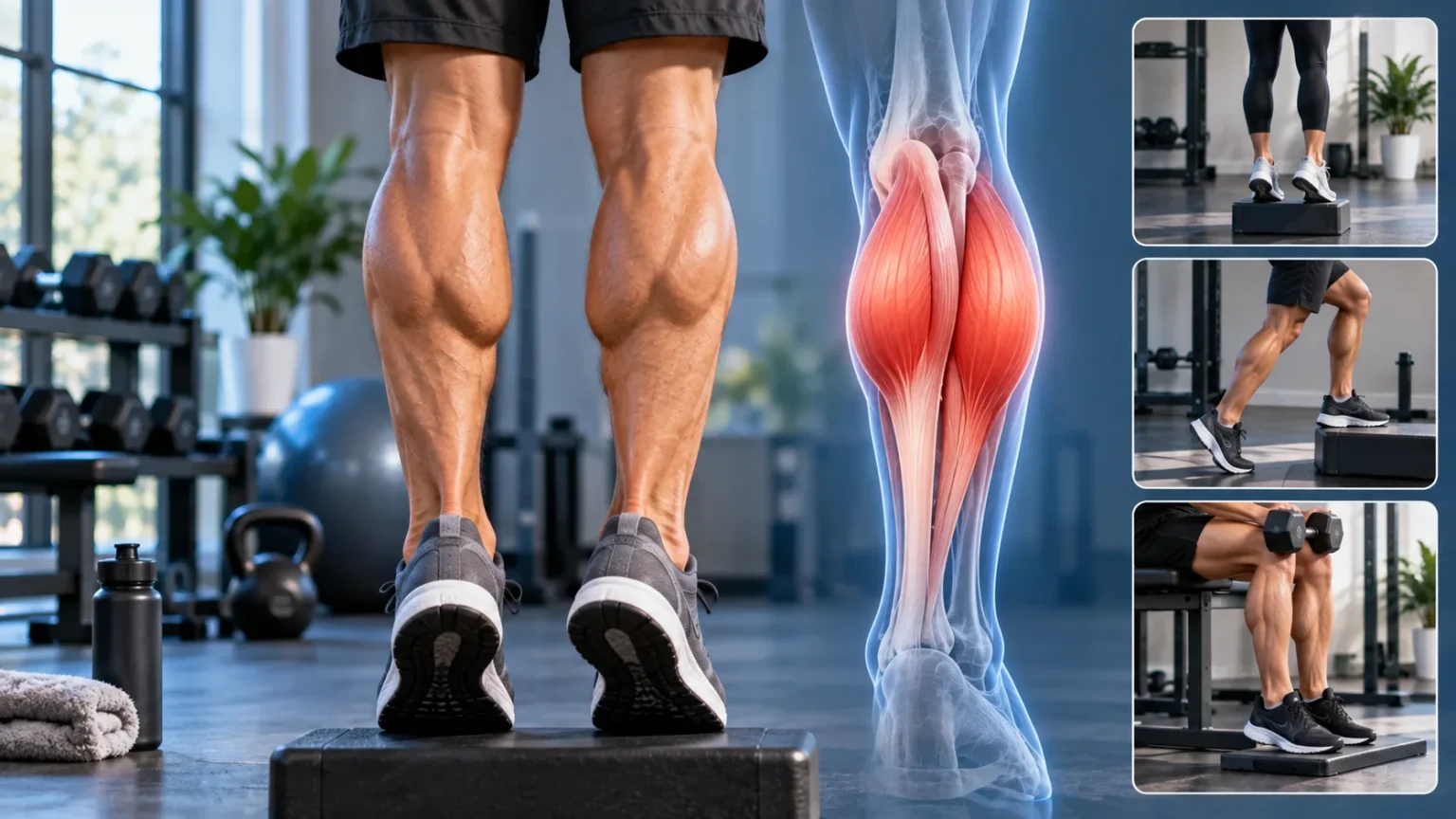

Strong calves support far more than appearance. The calf muscles help propel you forward when walking, running, climbing stairs, jumping, and changing direction. They also contribute to ankle stability, balance, and lower-leg control, making calf strengthening useful for athletes, recreational exercisers, and people simply trying to move more comfortably.
The main calf muscles are the gastrocnemius and soleus. Although they work together, different exercise positions can emphasize them in slightly different ways. Training both muscles can improve lower-leg strength and endurance while supporting movements that require pushing through the toes or controlling the ankle.
Calf strengthening exercises are usually simple, but good technique matters. Moving too quickly, using a limited range of motion, or adding resistance before you can control your body weight may reduce the benefit. This guide explains effective calf exercises, proper form, major benefits, common mistakes, and practical tips for building stronger lower legs.
Why Calf Strength Matters
Your calf muscles help create plantar flexion, which is the motion used when you point your toes or lift your heels from the floor. This action occurs repeatedly during walking and running because the calves help push the body forward. Strong calves can therefore contribute to efficient movement during both everyday activities and exercise.
Calf strength also helps control the ankle when your foot contacts the ground. Whether you are walking over uneven surfaces, landing from a jump, or changing direction during sport, the lower leg must manage force efficiently. Training the calves alongside other lower-body muscles can improve the overall strength and control of the kinetic chain.
The calves also work repeatedly during long periods of standing and movement, so muscular endurance matters as much as maximum strength. A person may be able to perform a few heavy calf raises but still fatigue during longer walks or runs. Combining controlled repetitions with gradual resistance can help develop both strength and endurance.
Understanding the Gastrocnemius and Soleus
The gastrocnemius is the larger, more visible muscle forming much of the shape at the back of the lower leg. It crosses both the knee and ankle joints, which means knee position affects how strongly it contributes during exercise. Straight-knee calf raises tend to place greater emphasis on the gastrocnemius.
The soleus sits deeper beneath the gastrocnemius and crosses only the ankle joint. It plays an important role during standing, walking, and endurance-based activity. Bending the knees during calf raises reduces some of the gastrocnemius contribution and allows the soleus to work more prominently.
A complete calf strengthening routine should usually include both straight-knee and bent-knee movements. Training only one position may leave part of the calf complex underchallenged. Using different variations also keeps training more balanced and prepares the lower legs for the range of positions they encounter during real movement.
Standing Calf Raises
Standing calf raises are one of the simplest exercises for strengthening the calves. Stand upright with your feet about hip-width apart and hold a wall, chair, or stable surface if you need balance. Slowly lift your heels as high as you can while keeping your toes and the balls of your feet firmly against the floor.
Pause briefly at the top and squeeze the calves without rolling onto the outside edges of your feet. Lower your heels slowly until they return to the ground, or slightly below foot level if you are standing on a safe step. The lowering phase should remain controlled rather than allowing your heels to drop quickly.
Beginners can start with body weight and focus on smooth repetitions. As the exercise becomes easier, hold dumbbells, wear a weighted backpack, or progress to single-leg variations. Avoid bouncing through the movement because momentum reduces muscular control and may place unnecessary stress through the ankle and Achilles tendon.
Single-Leg Calf Raises
Single-leg calf raises increase the demand because one calf supports most of your body weight. Stand near a wall or stable object and lift one foot slightly off the floor. Rise onto the ball of the working foot, pause near the top, and lower yourself slowly while keeping your ankle aligned.
Try to prevent your ankle from collapsing inward or rolling outward during the exercise. The movement should travel mostly up and down rather than shifting side to side. If you cannot complete controlled repetitions, return temporarily to two-leg calf raises or use more hand support while developing strength.
Single-leg training can also reveal differences between your right and left sides. One calf may fatigue earlier or move through a smaller range of motion than the other. Rather than immediately adding heavy resistance, first aim for similar technique and control on both legs before gradually increasing the challenge.
Seated Calf Raises
Seated calf raises emphasize the soleus because your knees remain bent during the movement. Sit on a chair or bench with both feet flat on the floor and your knees comfortably bent. Lift your heels while keeping the balls of your feet down, pause at the top, and then lower your heels with control.
Body-weight seated calf raises may feel relatively easy for some people, so resistance can be added gradually. You can place a dumbbell, weight plate, or other stable load across the thighs near the knees. Make sure the resistance stays secure and does not create uncomfortable pressure on the legs.
Performing both seated and standing calf raises provides a more complete training stimulus than relying on one variation alone. Standing raises emphasize the gastrocnemius more strongly, while seated work targets the soleus effectively. This combination can be especially helpful for runners, walkers, and athletes who need sustained lower-leg endurance.
Calf Raises on a Step
Using a step allows the heels to move through a greater range of motion than they can on a flat floor. Stand with the balls of your feet securely supported on the edge while holding a railing or stable surface. Rise onto your toes, pause, and then lower your heels gradually below the level of the step if comfortable.
Do not force your heels downward simply to create a deeper stretch. The amount of movement should remain comfortable and controlled, particularly if your ankles are stiff or your Achilles tendon feels sensitive. Start with a smaller range and increase it gradually as your mobility and strength improve.
Step calf raises can be performed with two legs or one leg and can later be loaded with weights. Because the exercise combines a larger range of motion with resistance, it can be demanding. Maintain a slow tempo and stop if you experience sharp pain rather than the normal muscular effort associated with strengthening.
Farmer Walks on Toes
Walking on your toes challenges calf endurance while also requiring balance and postural control. Stand tall, lift your heels from the floor, and walk forward using short, controlled steps. Keep your ankles steady and avoid rushing, leaning excessively forward, or allowing your heels to collapse toward the ground between steps.
You can begin with brief distances using body weight. As your balance and endurance improve, hold light dumbbells at your sides to increase the challenge. The goal is to maintain a consistent elevated heel position rather than simply covering as much distance as possible.
Toe walks work well near the end of a calf routine because they challenge the muscles after more traditional strength exercises. They can also complement broader lower-body movements such as squats and lunges. When combined thoughtfully, these exercises help build strength across the hips, knees, ankles, and feet rather than isolating one region completely.
Combine Calf Training With Lower-Body Exercises
Calf isolation exercises are useful, but your calves also work during compound lower-body movements. Squats, lunges, step-ups, and loaded carries require the feet and ankles to stabilize while larger muscles generate force. Including these exercises creates a more complete lower-body training program than performing calf raises alone.
Wide-stance movements can also develop strength through the hips and thighs while the lower legs provide stability. Learning sumo squats can be useful if you want another lower-body exercise to combine with calf work. The key is maintaining proper alignment through the knees, ankles, and feet throughout the movement.
You do not need dozens of exercises in one session. A practical routine might include one squat or lunge pattern followed by standing and seated calf raises. Combining compound and isolation exercises gives the lower body a broader training stimulus without making workouts unnecessarily complicated or time-consuming.
Benefits of Calf Strengthening Exercises
One major benefit is improved push-off strength during walking and running. Every step requires the ankle to generate force as the heel lifts from the ground. Stronger calves can help support this process, particularly during faster walking, uphill movement, running, or activities requiring repeated acceleration.
Calf strengthening can also support balance and ankle control. The muscles around the lower leg respond continuously to small changes in body position when you stand or move. Improving their strength may help you feel more stable during activities that involve uneven surfaces, quick direction changes, or single-leg positions.
Another benefit is improved muscular capacity for physical activity. Stronger calves may tolerate repeated loading better during hiking, running, court sports, or long periods on your feet. Strength does not guarantee protection from every injury, but gradual resistance training can prepare muscles and tendons for the demands placed on them.
Common Calf Raise Form Mistakes
One common mistake is rushing through repetitions. Quickly bouncing up and down relies partly on momentum instead of forcing the calves to control the movement. Slow down enough that you can feel the muscles working during both the lifting and lowering portions of each repetition.
Another mistake is allowing the ankles to roll outward while rising onto the toes. Try to distribute pressure through the ball of the foot while keeping the ankle aligned. If balance is difficult, hold a stable support rather than sacrificing technique just to perform the exercise without assistance.
A limited range of motion can also reduce the challenge. Some people lift their heels only slightly and immediately lower them again, missing the stronger contraction near the top. Work through the largest comfortable range you can control, but avoid forcing movement if ankle stiffness or pain prevents a deeper position.
How Often Should You Train Your Calves?
For general strength, training the calves two or three times per week can work well for many people. The exact frequency depends on exercise intensity, overall training volume, recovery, and other activities such as running or hiking. Your calves also receive indirect work during many lower-body exercises and daily movement.
Beginners might start with two or three sets of approximately 10 to 15 controlled repetitions per exercise. As strength improves, you can add resistance, increase repetitions, or progress to more difficult variations. You do not need to increase every training variable simultaneously to continue making progress.
Allow enough recovery between challenging sessions, particularly when introducing heavier resistance or new movements. Mild muscle soreness after unfamiliar training can occur, but persistent pain is different. If discomfort worsens with each session, reduce the load or volume and reconsider whether your technique or exercise selection needs adjustment.
Tips for Progressing Calf Exercises Safely
Progressive overload means gradually making an exercise more challenging as your body adapts. For calf exercises, this might involve adding weight, performing more controlled repetitions, increasing range of motion, or progressing from two-leg to single-leg movements. Small increases are usually easier to manage than sudden jumps in training difficulty.
Tempo is another useful way to increase difficulty without immediately adding heavy weights. Try taking two or three seconds to lower your heels after each repetition and pausing briefly at the top. This keeps the calves under tension longer and can make relatively simple body-weight movements much more challenging.
Track your repetitions, resistance, and exercise variations so you know whether your training is progressing. However, avoid chasing heavier loads at the expense of form. The best progression is one that allows you to maintain ankle alignment, controlled movement, and a comfortable range without sharp or increasing pain.
When Calf Pain Needs More Attention
Muscular fatigue or mild soreness after strengthening exercises can be normal, especially when starting a new routine. Sharp pain, sudden swelling, bruising, or an inability to bear weight is different and should not simply be pushed through. These symptoms may indicate an injury that needs professional assessment rather than additional exercise.
Calf swelling, warmth, redness, or unexplained tenderness can sometimes require urgent medical evaluation, particularly when symptoms appear suddenly or affect one leg. Seek prompt medical care if calf symptoms occur alongside chest pain, shortness of breath, or difficulty breathing. These symptoms should not be treated as ordinary exercise soreness.
Persistent Achilles tendon pain, recurring calf strains, numbness, weakness, or symptoms that fail to improve also deserve professional evaluation. A healthcare professional or physical therapist can help identify whether the problem involves muscle, tendon, nerve, circulation, or another structure. Getting the correct assessment is safer than repeatedly training through unexplained pain.
Conclusion
Calf strengthening exercises can improve lower-leg strength, ankle control, balance, and endurance for everyday activity and sport. Standing calf raises, seated calf raises, single-leg variations, step raises, and toe walks each challenge the muscles in slightly different ways. Combining several movements can provide balanced training for both the gastrocnemius and soleus.
Good form matters more than performing large numbers of fast repetitions. Move through a comfortable range, keep your ankles aligned, control the lowering phase, and progress resistance gradually. Combining calf exercises with broader lower-body training can also improve strength throughout the legs rather than focusing on one muscle group in isolation.
Most people can start with basic body-weight exercises and increase the challenge as strength improves. Pay attention to how your calves respond, allow adequate recovery, and avoid training through sharp or unexplained pain. Consistency and gradual progression are usually more valuable than trying to make every workout extremely difficult.
FAQs
What is the best exercise for strengthening calves?
Standing calf raises are a simple and effective starting point because they directly train the calf muscles. Adding seated and single-leg variations can provide a more complete challenge as your strength improves.
How many calf raises should beginners do?
Beginners can often start with two or three sets of roughly 10 to 15 controlled repetitions. The appropriate number depends on your strength, technique, resistance, and overall training experience.
Can I train calves every day?
Daily calf training is not necessary for most people. Two or three focused sessions per week can be enough for general strengthening, especially if your calves are already active during walking, running, or lower-body workouts.
Do squats strengthen the calves?
Squats involve the calves mainly as stabilizers, but they usually do not challenge them as directly as calf raises. Combining squats with specific calf exercises provides more focused lower-leg strengthening.
Why do my calves hurt after calf raises?
Mild muscle soreness after unfamiliar exercise can occur as your calves adapt. Sharp, persistent, worsening, or swollen pain is different and should be evaluated rather than repeatedly trained through.


