
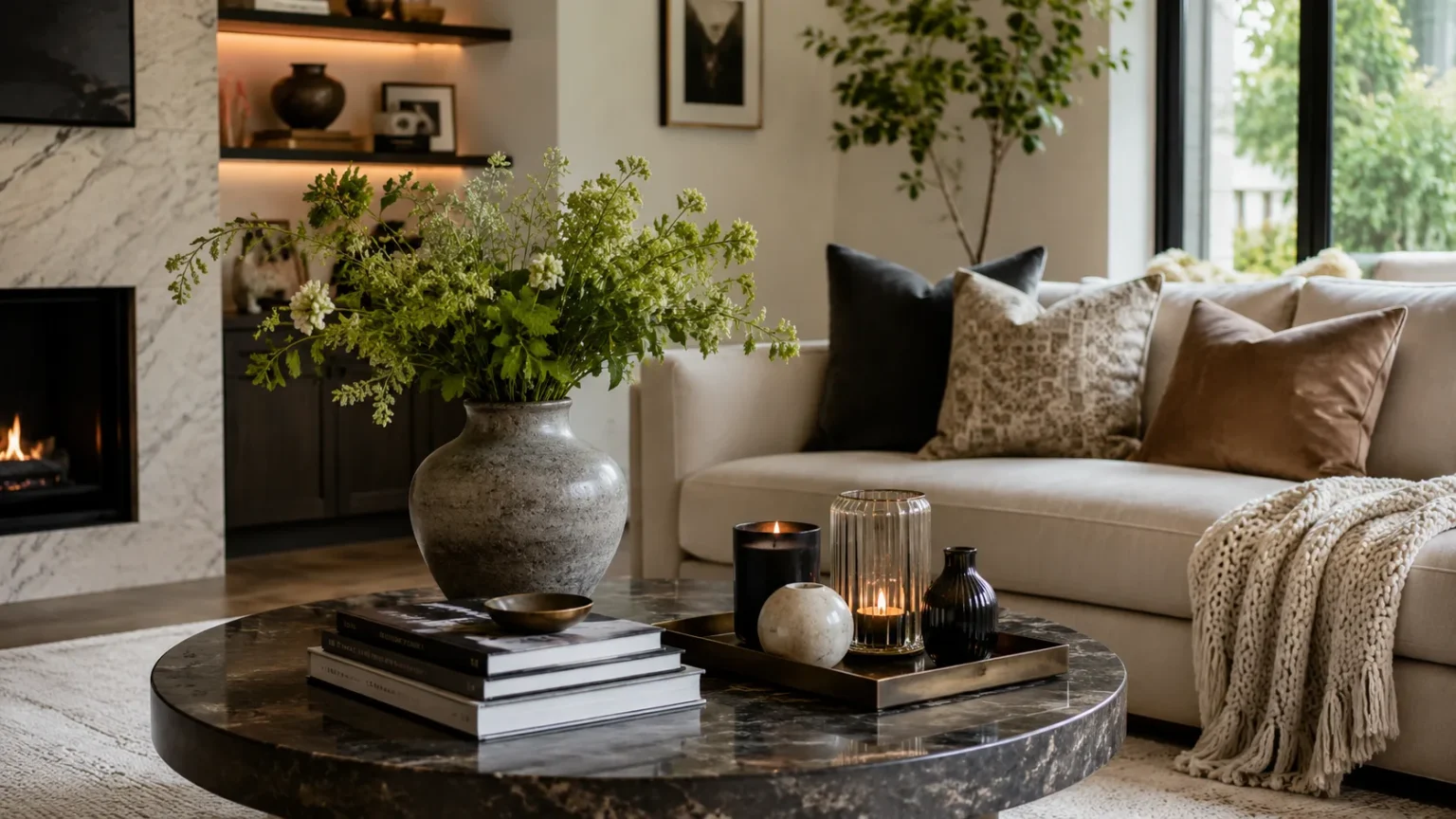

How to Style a Coffee Table So It Looks Professionally Designed
A coffee table may be one of the smallest pieces of furniture in your living room, but visually, it carries a surprising amount of weight. Because it usually sits near the center of the seating area, anything placed on it immediately attracts attention. Thoughtful coffee table decor can make the whole room appear more polished, comfortable, and complete. The goal is not to cover every inch with decorative accessories but to create a balanced arrangement that feels intentional. Even a few carefully chosen pieces can turn an ordinary table into an attractive focal point.
The best coffee table decor ideas combine style with everyday practicality. Your table still needs enough open space for a drink, remote control, laptop, or whatever you normally use while relaxing. Professional-looking styling therefore depends as much on what you leave empty as what you put on the surface. Designers often create small visual groupings while preserving negative space around them. This approach keeps the living room feeling relaxed instead of staged. It also makes the table much easier to live with every day.
Another secret behind designer coffee table styling is variety. A flat arrangement of objects that are all approximately the same size rarely creates much visual interest. Mixing something tall with something low, something soft with something structured, and something natural with something polished gives the display depth. Coffee table books, decorative trays, candles, vases, greenery, bowls, and sculptural objects are especially useful because they introduce different heights and textures. You do not need all of them at once. Usually, a carefully edited combination creates the strongest result.
Your existing interior style should guide the direction of your coffee table arrangement. A minimalist room might need only a beautiful book, ceramic bowl, and small branch, while a traditional living room can support layered books, flowers, candles, and collected objects. Contemporary homes often benefit from sculptural pieces and clean geometric shapes. Rustic interiors naturally work well with wood, stone, pottery, and organic textures. Rather than copying a photograph exactly, use styling principles that complement the furniture and personality already present in your home.
Most importantly, your coffee table should still feel like part of your life. Designer interiors rarely succeed because every accessory is expensive or perfectly coordinated. They work because proportions, colors, textures, and personal details feel connected. A meaningful travel object, favorite book, handmade bowl, or fresh flowers can make an arrangement feel far more distinctive than generic decorative pieces. The following coffee table styling ideas will help you build that collected, balanced appearance while keeping the table functional and welcoming.
Start With Scale, Shape, and the Right Coffee Table Layout
Before buying new accessories, look carefully at the size and shape of your coffee table. A large rectangular table can comfortably support several decorative groupings, while a compact table usually looks better with one focused arrangement. The visual weight of accessories should feel proportional to the furniture rather than overwhelming it. Oversized objects can crowd a small surface, while tiny accessories scattered across a large table may appear disconnected. Thinking about scale first gives your coffee table styling a stronger foundation and prevents unnecessary decorating mistakes.
The shape of your table can also guide the arrangement. A rectangular coffee table naturally suits two or three visual zones positioned across its length. You might place stacked books at one end, a decorative bowl near the center, and a vase or candle at the opposite side. A round coffee table usually looks more cohesive when accessories form one central cluster rather than sitting around the edge. Square tables can be divided mentally into quadrants, with decor occupying two or three sections while one remains open for everyday use.
Creating balance does not mean making both sides of the coffee table identical. In fact, perfectly symmetrical arrangements can sometimes feel overly formal. Instead, aim for visual balance by distributing height, color, and weight across the surface. A tall vase on one side can be balanced by a stack of books topped with a decorative object on the other. A heavier ceramic bowl might be paired with lighter candles or greenery nearby. This type of asymmetrical styling creates movement while still making the arrangement feel composed.
Negative space is equally important because it gives your decorative pieces room to stand out. When every section of the table is filled, individual objects compete with one another and the entire arrangement can appear cluttered. Leaving intentional open areas allows the eye to move comfortably around the display. It also keeps space available for drinks, snacks, and daily essentials. For a minimalist coffee table, negative space may actually become one of the strongest design elements because it emphasizes the shape and quality of the objects you choose.
Consider the coffee table in relation to the surrounding furniture as well. Accessories should not be so tall that they block conversation or interrupt sightlines between people sitting across from each other. The table itself should also feel comfortably accessible from the sofa and chairs without crowding the walkway. Many living rooms work well with roughly 12 to 18 inches between the seating and coffee table, although your furniture proportions may require adjustments. Good coffee table styling starts with comfort, movement, and usability before decoration is added.
Use a Decorative Tray to Instantly Organize the Look
A decorative coffee table tray is one of the easiest ways to make an arrangement appear intentional. Instead of having several unrelated accessories floating around the surface, a tray visually connects them into one organized composition. It works especially well for candles, small vases, coasters, decorative objects, and everyday items. Trays also create boundaries, which can make a busy coffee table look calmer. If you are unsure where to begin decorating, starting with a tray provides an immediate structure that you can gradually build around.
Choose a tray that complements rather than disappears into your coffee table. A wooden tray can add warmth to glass, marble, or metal tables, while a metal or mirrored tray can introduce contrast to natural wood. Woven rattan trays work particularly well in coastal, organic, bohemian, and relaxed interiors. Stone, lacquered, or ceramic trays can produce a more sophisticated contemporary appearance. The material does not necessarily need to match existing furniture. In many cases, a contrasting texture makes the entire living room decor feel more layered and interesting.
Size matters when choosing a coffee table tray. A tray that occupies nearly the entire surface can make the table feel smaller and leave little functional space. Conversely, a very small tray may appear insignificant on an oversized table. Aim for something substantial enough to anchor several objects while still leaving visible surface around it. On a rectangular table, an elongated tray can follow the table’s proportions beautifully. On a round or square coffee table, circular or compact rectangular trays often create a more balanced relationship with the furniture.
Once you have selected the tray, avoid filling every available inch inside it. Begin with three or four objects of different heights and shapes. For example, combine a small candle, medium-height plant, sculptural accessory, and container for remote controls. These items should feel connected through color, material, or style without being identical. Keeping a little breathing room between objects helps each item remain visible. You can always remove an accessory if the collection begins to feel crowded, because editing is one of the most important parts of designer styling.
A tray can also make a coffee table more functional, especially in homes where the living room is frequently used. When you need extra surface area, the entire arrangement can be lifted and moved quickly instead of relocating every accessory separately. It also gives everyday necessities a designated place, preventing remotes, coasters, and small items from spreading across the table. This balance of beauty and organization is exactly why trays appear so frequently in professionally styled living rooms. Good decor should make everyday life easier rather than constantly requiring maintenance.
Style Coffee Table Books Like a Designer
Coffee table books are popular for good reason: they add color, structure, personality, and height while providing an easy base for other decorative accessories. Instead of treating them as filler, choose books that genuinely reflect your interests. Photography, architecture, fashion, travel, art, cars, gardens, food, and interior design all make excellent subjects. Books with beautiful covers and substantial proportions tend to work particularly well. When someone notices the titles, the collection should reveal something about the people who actually live in the home.
Stacking two or three books is usually enough to create an effective platform. Arrange the largest book at the bottom and gradually decrease the size toward the top so the stack feels stable. You can align the books neatly for a cleaner modern look or turn one slightly for a more casual arrangement. A book stack also helps elevate smaller accessories that might otherwise disappear visually. A candle, decorative box, small bowl, or sculptural object placed on top suddenly gains greater importance within the overall coffee table centerpiece.
Consider the colors of book covers when creating your arrangement. They do not need to match your sofa, rug, or curtains exactly, but repeating one or two colors already present in the room can produce visual harmony. Neutral books in white, beige, black, gray, or muted tones work well in understated interiors. More colorful covers can bring energy to neutral living rooms and act almost like artwork. If a dust jacket feels too visually busy, removing it may reveal a simpler hardcover underneath that coordinates more naturally with your decor.
Books can also help correct proportion problems on large coffee tables. Small objects often look lost when placed directly on a broad surface, but stacking them on books creates greater visual weight. On a long rectangular table, one book stack can form the first decorative zone while another arrangement sits farther away. On a round coffee table, books can create a low horizontal element beneath a taller vase or plant. This combination of vertical and horizontal shapes produces the varied silhouette that makes professionally styled arrangements feel dynamic.
Avoid using too many stacks unless your coffee table is exceptionally large. Covering most of the surface with books can quickly turn thoughtful styling into visual clutter. You also do not need to arrange books solely because they fit the room’s color palette. A beautiful table should feel personal, not like a showroom display assembled according to a color chart. Choose titles you enjoy opening occasionally and rotate them throughout the year. That small element of authenticity helps your coffee table decor feel collected, interesting, and naturally connected to your home.
Create Interest by Mixing Heights, Shapes, and Textures
One of the most noticeable differences between basic decorating and designer-level styling is variation in height. When every accessory sits at the same level, the eye moves straight across the arrangement without finding a clear focal point. Introducing tall, medium, and low objects creates a more interesting visual rhythm. A vase filled with branches could provide height, a candle might form the middle layer, and a decorative bowl could create the lowest point. This gradual change in elevation gives even a simple arrangement a carefully composed appearance.
Shape matters in much the same way. Coffee tables themselves often contain strong geometric lines, especially rectangular and square designs. Adding too many similarly shaped accessories can make the arrangement feel rigid. Rounded bowls, curved vases, organic sculptures, and soft foliage help break up those straight edges. Conversely, a round coffee table may benefit from rectangular books or a structured box. Mixing forms creates contrast, allowing both the furniture and accessories to become more visually distinctive without adding excessive decorative pieces.
Texture adds another layer that is easy to overlook when decorating primarily through color. Combining smooth ceramic, rough stone, soft greenery, warm wood, reflective metal, and woven materials creates visual depth even when everything falls within a neutral palette. This technique is particularly valuable for beige, cream, gray, white, and earth-toned living rooms. Instead of relying on bright colors to generate interest, you allow materials to do the work. Modern coffee table decor often feels luxurious precisely because simple colors are balanced with rich and varied textures.
Try combining natural and refined materials rather than purchasing accessories from one matching collection. A polished stone tray can look more interesting next to a handmade ceramic vase than another piece with exactly the same finish. Wood can soften glass or metal, while woven textures can make sleek furniture feel warmer and more inviting. These contrasts produce the layered look associated with thoughtfully designed interiors. They also make decorating easier over time because new pieces do not have to perfectly match something you already own.
A useful guideline is to repeat some elements elsewhere in the living room so the coffee table feels connected to its surroundings. If you have brass lighting, a small metallic accessory can subtly echo that finish. A wooden bowl might relate to the legs of an accent chair, while greenery can repeat plants positioned elsewhere in the room. Repetition should be subtle rather than exact. When materials and shapes appear in several locations, the eye naturally connects them, creating a more cohesive living room interior design without making everything look overly coordinated.
Add Greenery, Candles, Vases, and Sculptural Objects
Natural elements bring softness and life to coffee table arrangements, making them one of the easiest additions for almost any decorating style. Fresh flowers can instantly introduce seasonal color, while leafy stems or branches create a more relaxed, organic appearance. Small houseplants work particularly well if the table receives suitable natural light. Even one carefully chosen stem in a beautiful vase can be enough. Greenery helps balance harder materials such as glass, stone, metal, and wood while making the entire living room feel fresher and more welcoming.
Choose greenery that suits the scale of your table rather than automatically reaching for a large bouquet. Oversized arrangements can block views and dominate smaller living rooms. Short floral arrangements, eucalyptus stems, olive branches, or compact plants often work better because they add movement without interfering with conversation. If your room already contains several large plants, the coffee table greenery can remain subtle. High-quality dried or preserved stems can also work when frequent maintenance is impractical, especially if their colors and textures suit the rest of the interior.
Candles are another versatile option because they contribute both decoration and atmosphere. A substantial candle in an attractive vessel can stand alone, while two or three slim candleholders can introduce additional height. Choose scents carefully if you frequently use candles, because very strong fragrances can become overwhelming in smaller living rooms. Unscented decorative candles are useful when appearance is the primary goal. Placing them on a tray or stack of books can make them feel like part of a composition rather than an accessory that happened to be left on the table.
Vases provide even more flexibility because they can look beautiful with or without flowers. Ceramic, glass, stoneware, metal, and textured vases all create different moods. A simple sculptural vase can function almost like artwork when positioned alone beside a book stack. Try avoiding arrangements where the vase, tray, bowl, and candleholder all have exactly the same finish. Slight differences in tone and texture usually create a richer, more collected appearance. This is especially useful when building neutral coffee table decor with beige, cream, brown, or white accessories.
Finally, introduce one object that exists primarily because you enjoy looking at it. This might be a small sculpture, handcrafted piece, decorative knot, vintage object, travel souvenir, or unusual stone. Sculptural pieces give a coffee table personality and prevent the styling formula from becoming predictable. They are particularly effective when paired with functional items such as books and trays. Instead of buying whatever decor is currently trending, select something that makes you curious or reminds you of an experience. Personality is often what transforms attractive styling into memorable styling.
Match Your Coffee Table Decor to the Shape and Interior Style
For a rectangular coffee table, consider decorating in two or three loose sections rather than creating one arrangement in the exact center. One end might contain stacked books and an object, while the middle features a bowl and the opposite side holds a vase or plant. Varying the size of these groups keeps the table from looking overly symmetrical. Leave some open surface between them to maintain function. This approach takes advantage of the table’s length and encourages the eye to move naturally across the entire arrangement.
A round coffee table usually benefits from a more centralized composition. Because there are no corners directing the layout, a tray can provide structure and create an obvious focal point. Combine items of different heights inside or around the tray, such as books, a vase, and a candle. Avoid positioning separate pieces evenly around the edge because the arrangement may begin to resemble a clock face. Instead, overlap visual zones slightly so the pieces feel connected while keeping the overall silhouette loose and interesting from every seating angle.
Square coffee tables provide enough surface area for several approaches. You can mentally divide the surface into four sections and decorate approximately three of them, leaving the fourth open. Another option is a large tray positioned slightly off-center with a separate book stack nearby. Because square tables already have strong symmetry, introducing objects with curved or organic silhouettes can soften their appearance. Round bowls, irregular pottery, and leafy branches work particularly well. These contrasts prevent the table from looking too rigid or heavily structured.
Your interior style should also influence accessory choices. Minimalist coffee table decor usually relies on fewer objects, subtle colors, and strong shapes, while a traditional room can handle additional layers, decorative boxes, books, flowers, and classic candleholders. Organic-modern interiors pair beautifully with stoneware, wood, textured ceramics, and natural branches. Coastal spaces often benefit from pale woods, woven textures, soft blues, and relaxed greenery. For farmhouse interiors, aged pottery, rustic wood, simple florals, and vintage-inspired objects can produce warmth without making the display feel themed.
Contemporary interiors give you freedom to experiment with unusual shapes and statement pieces. A bold sculptural object, abstract vase, oversized book, or architectural bowl can become the focal point while supporting pieces remain simple. Eclectic spaces allow even more personality, combining collected objects from different periods and places. Whatever style you prefer, avoid forcing every accessory to fit a rigid category. The most appealing coffee tables often mix elements while maintaining a common thread through color, material, proportion, or mood. Cohesion matters more than perfect matching.
Refresh Your Coffee Table Decor With Seasons and Personal Details
Seasonal decorating does not require replacing the entire coffee table arrangement every few months. Small adjustments can make the room feel current without creating unnecessary clutter or expense. During spring, introduce fresh flowers, lighter-colored books, or delicate ceramic pieces. Summer can bring leafy greenery, woven textures, and relaxed natural materials. In autumn, warmer woods, amber glass, earthy pottery, and textured accessories create a cozy feeling. Winter arrangements can incorporate deeper colors, candles, branches, and understated metallic details for added warmth.
The easiest strategy is to keep a few foundational pieces on the table year-round and change only one or two supporting elements. A favorite tray, neutral vase, and stack of books might remain constant while flowers, candles, and small decorative objects rotate. This approach reduces the temptation to buy entirely new collections every season. It also keeps the living room recognizable rather than transforming it every few months. Sustainable decorating often produces better results because familiar pieces gradually become part of the visual identity of your home.
Personal objects are equally important because they keep seasonal or trendy decor from feeling generic. A small item discovered while traveling can create a conversation point. A vintage object inherited from family can introduce history and character. Handmade pottery, local artwork, or an unusual collectible can also contribute personality. You do not need many sentimental pieces on the coffee table; one carefully placed item can have greater impact than several. Surrounding it with simpler books, trays, or greenery allows the meaningful object to stand out naturally.
Your hobbies can also inspire unique coffee table decor ideas. Someone interested in photography might display a beautiful photography book with a vintage camera nearby. A gardener might use botanical books and a small plant, while a traveler could rotate books and decorative objects from favorite destinations. These combinations communicate your personality without turning the table into a themed display. The key is subtlety. Choose items that genuinely belong in your life and then arrange them according to good proportion, color balance, and visual hierarchy.
Do not feel pressured to follow every new interior trend. Trends can provide inspiration, but coffee table styling looks more sophisticated when it develops slowly around pieces you actually enjoy. Organic shapes, natural materials, handcrafted ceramics, sculptural accessories, and warm layered textures continue to work because they feel comfortable and adaptable rather than purely fashionable. Use current ideas as a starting point while retaining your own preferences. A designer look is ultimately about thoughtful editing and visual confidence, not continuously replacing your home decor.
Avoid These Common Coffee Table Decorating Mistakes
One of the most common mistakes is simply using too many accessories. Because coffee tables provide an obvious decorating surface, it is easy to keep adding candles, bowls, books, flowers, and ornaments until very little space remains. More decor does not automatically create more style. In many cases, removing two or three objects immediately improves the composition. Look at the arrangement from across the room rather than only from above. If it feels visually busy from a distance, simplify it until individual pieces become easier to appreciate.
Another mistake is choosing objects that are all approximately the same height. Even attractive accessories can look flat when their silhouettes create a single horizontal line. Use books as risers, select vases of different proportions, or introduce taller natural stems to create variation. At the same time, avoid extremely tall centerpieces that interfere with conversations or television viewing. The strongest arrangement usually moves gradually between several heights. This visual rhythm makes the coffee table interesting without allowing any single object to dominate the entire seating area.
Using too many matching accessories can also make a coffee table feel more like a showroom than a home. Purchasing a tray, vase, candleholder, bowl, and ornament from the same collection may create coordination, but it often removes depth and personality. Instead, combine materials and finishes while repeating selected colors or shapes. A smooth vase can sit beside a rough stone object, for example, while both share similar neutral tones. Carefully controlled contrast gives designer coffee table styling its collected and sophisticated appearance.
Ignoring function is another frequent problem. An arrangement may photograph beautifully but become frustrating if everything has to be moved whenever someone wants to put down a cup. Leave usable surface area and consider the habits of everyone who uses the living room. Families may need space for games, snacks, or remote controls, while smaller homes may rely on the coffee table for multiple purposes. Decorative boxes and trays can hide everyday necessities while keeping them accessible. Practical styling will always feel more comfortable over the long term.
Finally, avoid copying another room without considering your own furniture, architecture, and lifestyle. A large arrangement that works on a six-foot designer table will overwhelm a compact apartment coffee table. Likewise, extremely minimal styling may feel unfinished in a richly layered traditional living room. Use inspiration to understand principles such as proportion, repetition, balance, and texture rather than reproducing every individual accessory. The best coffee table decorating ideas are adaptable. When the styling belongs naturally within your room, the entire space feels more intentional.
Create a Designer Coffee Table Without Overthinking It
A beautifully styled coffee table does not require an enormous collection of accessories. Begin with one anchoring element such as a tray or stack of books, then introduce two or three complementary pieces. Vary their heights, shapes, and textures while keeping enough open space around the arrangement. Step away from the table occasionally and view it from the sofa or doorway. Styling becomes easier when you evaluate the table as part of the whole living room rather than treating it as an isolated decorative project.
If your arrangement feels incomplete, resist the instinct to immediately add more objects. The problem may simply be proportion. A tiny vase might need taller branches, or several small accessories may need to be grouped on a larger tray. Sometimes raising an object on books creates exactly the visual hierarchy the display was missing. Moving pieces closer together can also make them feel intentional. Small adjustments often improve a coffee table centerpiece more effectively than purchasing additional decor, so experiment with what you already own first.
Color can provide another simple connection between individual pieces. Choose one or two tones from your sofa, rug, cushions, artwork, or surrounding furniture and repeat them subtly on the table. You do not need exact color matches. A warm brown book cover might relate to wooden furniture, while green foliage echoes colors from nearby artwork. Repeating these details creates visual continuity throughout the room. The result feels coordinated without looking like every item was purchased simultaneously from the same furniture collection.
Remember that a coffee table arrangement can evolve. Books can be changed when you discover new favorites, flowers can reflect the season, and personal objects can rotate depending on your mood. This flexibility keeps the living room interesting without requiring major decorating projects. It also allows you to experiment with different levels of minimalism or layering until you discover what works for your lifestyle. Treat the coffee table as a small creative space rather than something you must decorate perfectly once and never change.
Ultimately, successful coffee table decor combines proportion, personality, and practicality. Use a mixture of books, greenery, trays, candles, vases, bowls, and sculptural objects only when they contribute something useful or visually meaningful. Vary heights and textures, respect the shape of your furniture, and leave enough negative space for comfortable everyday use. Designer styling is less about expensive objects and more about knowing when an arrangement feels complete. When your coffee table looks attractive while still supporting real life, you have achieved the right balance.
Conclusion: Make Your Coffee Table Look Collected, Not Cluttered
The easiest way to achieve a designer look is to stop thinking about your coffee table as a surface that needs to be completely filled. Instead, treat it as a small composition where every piece has a purpose. A few well-chosen objects with different heights, textures, and shapes often produce far more impact than a large collection of decorative accessories. Begin with items you already own and enjoy. Books, ceramics, greenery, candles, and meaningful objects can create a sophisticated arrangement without requiring an expensive redesign.
Remember that proportion should guide every decision. The scale of your coffee table, sofa, and living room determines how much decor the space can comfortably support. Larger tables allow several styling zones, while smaller surfaces usually benefit from one simple grouping. Whatever the size, maintain enough negative space for the arrangement to breathe. That open space also keeps your coffee table useful for daily activities, which is essential in a room designed for relaxing, entertaining, and spending time with family.
Texture and material can make even neutral coffee table decor feel visually rich. Combine smooth surfaces with organic elements, polished finishes with handmade pottery, or structured books with soft greenery. These contrasts create depth without relying on excessive color. Repeating small details from elsewhere in the living room can then connect the table to the larger interior. This subtle coordination is one reason professionally designed spaces often feel cohesive even when individual objects do not match perfectly.
Personal details should be the finishing touch. A coffee table filled entirely with trending accessories may look fashionable, but an arrangement that includes something meaningful feels more memorable. Incorporate a book you love, an object from a trip, a handmade piece, or another item with a story behind it. These details help your living room reflect the people who actually use it. When personal pieces are combined with thoughtful styling principles, your decor feels curated rather than copied.
There is no single perfect formula for coffee table decor ideas for a designer look. The strongest arrangement is one that complements your furniture, supports your lifestyle, and feels visually balanced from different parts of the room. Experiment, remove pieces when things become crowded, and allow your styling to change over time. With a thoughtful mix of scale, texture, height, greenery, books, and personal objects, even the simplest coffee table can become an elegant focal point.
Frequently Asked Questions
What should I put on a coffee table for decoration?
A balanced coffee table can include books, a decorative tray, vase, candle, greenery, bowl, or sculptural object. Choose only a few pieces and vary their heights and textures while leaving some usable surface space.
How many items should you put on a coffee table?
There is no strict number, but three to five visual elements often provide enough variety without creating clutter. Large tables may support multiple groups, while smaller coffee tables generally look better with fewer accessories.
How do you make a coffee table look expensive?
Focus on quality materials, varied textures, intentional spacing, and a limited number of well-chosen pieces. Coffee table books, handmade ceramics, greenery, stone, wood, glass, and sculptural objects can create an elevated look without a luxury budget.
How do you decorate a coffee table without making it look cluttered?
Group smaller items on a decorative tray, vary the height of accessories, and maintain plenty of negative space. Removing unnecessary pieces is often the fastest way to make coffee table styling appear more polished.
What is the best centerpiece for a coffee table?
The best centerpiece depends on your table size and interior style, but a low vase with greenery, decorative bowl, sculptural object, or grouped tray works well in most rooms. Keep the centerpiece low enough to preserve comfortable sightlines.