

Hip Thrusts: Build Stronger Glutes With Better Form
If stronger, more powerful glutes are one of your training goals, hip thrusts deserve serious consideration. The exercise places the hips through a large range of extension while allowing you to progressively add resistance, making it a practical choice for building glute strength and muscle. Hip thrusts can fit into bodybuilding programs, general strength routines, athletic training, or lower-body workouts focused on developing the posterior chain.
Unlike exercises that challenge the glutes most when the hips are deeply flexed, the hip thrust places substantial tension on the glutes as the hips move toward full extension. That makes it useful alongside movements such as squats, Romanian deadlifts, lunges, and split squats rather than necessarily replacing them. A balanced lower-body routine often combines exercises that challenge the glutes through different ranges and movement patterns.
The movement may look simple—rest your upper back on a bench and drive your hips upward—but small technique details can change how effective it feels. Poor foot placement, excessive lower-back arching, rushing through repetitions, or loading the bar too heavily can shift tension away from the glutes. Learning proper hip thrust form first makes it easier to progress safely and consistently.
This guide explains how to do hip thrusts, which muscles they work, their key benefits, common mistakes, useful variations, sets and reps, and ways to improve your technique. Whether you are a beginner learning the movement or an experienced lifter trying to strengthen your glutes, the goal is the same: create controlled hip extension without turning the exercise into a lower-back movement.
What Are Hip Thrusts?
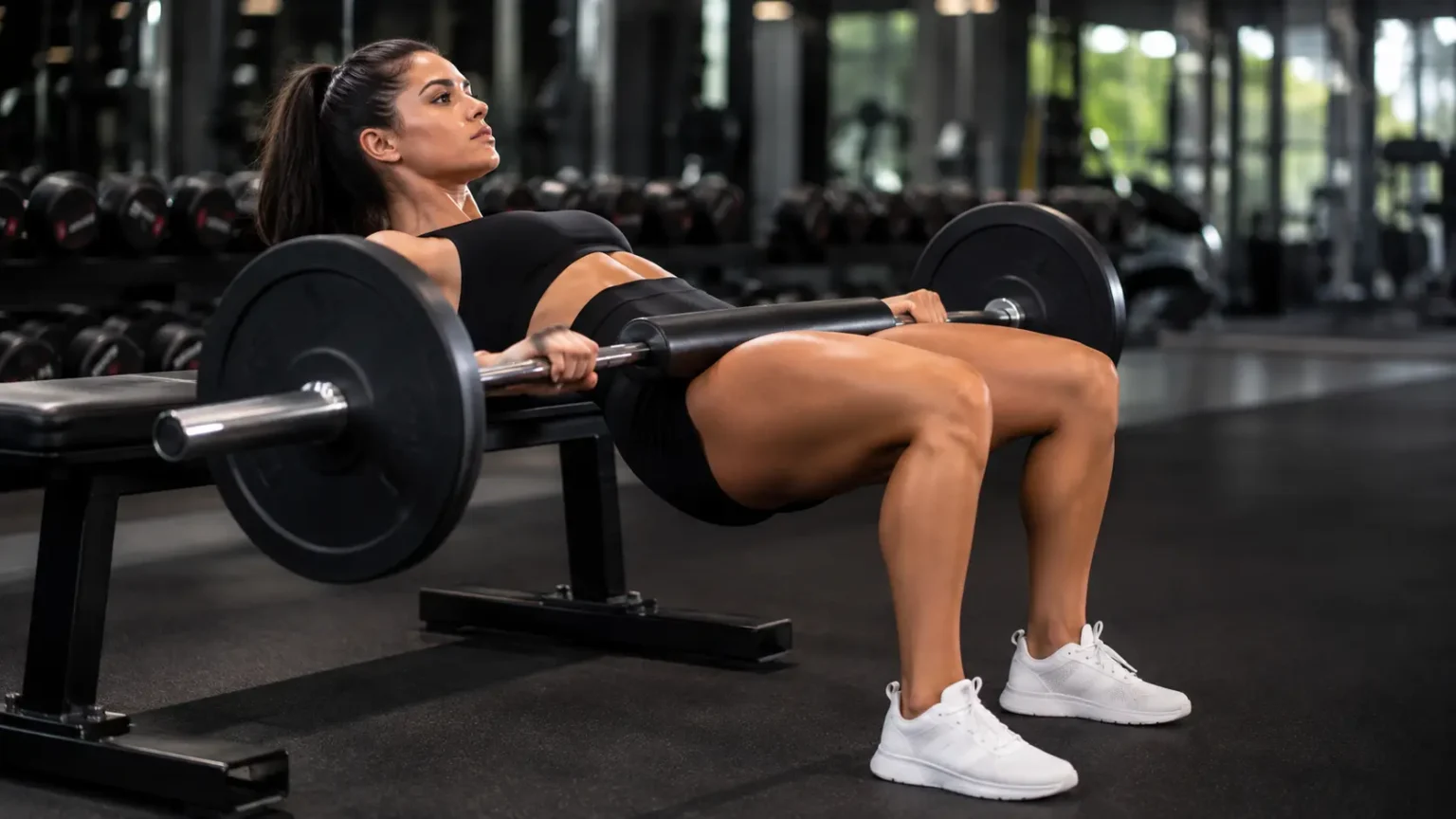
A hip thrust is a lower-body resistance exercise in which your upper back is supported on a bench or similar stable surface while your hips move from a lowered position into extension. Your feet remain planted on the floor as you drive through the legs and squeeze the glutes to raise the hips. Resistance can come from body weight, a barbell, dumbbell, resistance band, machine, or other equipment.
The barbell hip thrust is probably the most recognized version because it makes progressive overload relatively straightforward. A padded bar rests across the crease of the hips while the lifter lowers and raises the pelvis under control. As strength improves, weight can gradually be increased without needing to dramatically change the basic movement pattern.
Hip thrusts are primarily a hip extension exercise, meaning the hips move from a flexed position toward a straighter position. The gluteus maximus is heavily involved in producing this motion, while other muscles contribute to stability and force production. Because the exercise is performed with the torso supported, many people find it easier to focus directly on glute contraction than during more complex compound lifts.
That does not mean hip thrusts are automatically superior to every other glute exercise. Squats, deadlifts, step-ups, lunges, and split squats all provide valuable training benefits. Hip thrusts are best viewed as one useful tool within a broader lower-body program, especially when the goal is to increase glute strength, hip extension power, and glute muscle development.
What Muscles Do Hip Thrusts Work?
The primary muscle involved in the hip thrust is the gluteus maximus, the largest muscle of the buttocks. Its major functions include extending the hip and helping control movement of the pelvis and thigh. When you drive your hips upward during a properly performed hip thrust, the gluteus maximus generates much of the force needed to reach the top position.
The hamstrings also assist with hip extension, although their contribution can vary depending on foot position and technique. Because the knees remain bent during the exercise, the hamstrings are not usually placed under the same lengthened tension they experience during a Romanian deadlift. This helps explain why many lifters feel the hip thrust more strongly in their glutes than in their hamstrings.
The gluteus medius and other muscles around the hip help stabilize the pelvis and control the position of the thighs. Your core muscles also work to maintain trunk and pelvic position throughout the movement. Without adequate abdominal control, it becomes easier to compensate by excessively arching the lower back at the top of each repetition.
Quadriceps involvement is also possible because the knees flex and extend slightly as the body moves through the exercise. However, the hip thrust remains primarily a hip-dominant movement rather than a knee-dominant exercise such as a squat. Correct setup helps keep the emphasis where you want it: on controlled hip extension and a strong contraction through the glutes.
7 Benefits of Hip Thrusts
One major benefit of hip thrusts is their ability to directly train glute strength and hypertrophy. Because resistance can be progressively increased over time, the exercise gives the glutes a clear overload stimulus. Lifters seeking more muscular glutes can use hip thrusts as one component of a program that also includes exercises challenging the glutes in lengthened positions.
A second benefit is improved hip-extension strength. Hip extension plays an important role in everyday movement and many athletic actions, including running, jumping, accelerating, climbing stairs, and standing up from a low position. Increasing strength through this movement pattern may therefore support broader lower-body performance when combined with sport-specific training and other compound exercises.
Third, hip thrusts can be relatively easy to modify for different ability levels. Beginners can start with body-weight or banded versions, while stronger lifters can use barbells, machines, heavier dumbbells, or single-leg variations. This scalability makes the movement useful across a wide range of resistance-training programs.
Other potential benefits include adding training volume without performing another squat pattern, strengthening the posterior chain, improving awareness of pelvic control, and providing a glute-focused exercise that many people find comfortable. The seven practical benefits are therefore stronger glutes, muscle growth, hip-extension strength, easy progression, exercise variety, posterior-chain development, and adaptable difficulty.
How to Do Hip Thrusts With Proper Form
Start by sitting on the floor with a sturdy bench behind you. Position the lower portion of your shoulder blades against the bench rather than placing your neck or entire back on top of it. Bend your knees and plant your feet approximately hip- to shoulder-width apart, adjusting your stance until you can drive through the floor comfortably.
If you are using a barbell, roll it over your legs and position it securely across the crease of your hips with a thick bar pad for comfort. Hold the bar gently to keep it stable rather than pulling it aggressively downward. Before starting the repetition, brace your core and keep your head and ribcage controlled so your torso and pelvis can move together.
Drive through your feet and extend your hips upward by contracting your glutes. At the top, aim for a position where your torso and thighs form roughly a straight line without forcing your hips higher by excessively arching your lower back. Your shins will often be close to vertical at the top when your foot placement is appropriate.
Pause briefly while squeezing the glutes, then lower the hips under control until you reach a comfortable bottom position. Avoid bouncing off the floor or rushing into the next repetition. A smooth tempo allows you to maintain tension, monitor technique, and make each repetition look similar from the beginning of the set to the end.
How High Should You Lift Your Hips?
The goal of a hip thrust is to reach strong hip extension, not simply to move the bar as high as possible. At the top of the repetition, your torso and upper legs should generally create a relatively straight line while your pelvis remains controlled. Going beyond this position often comes from extending the lumbar spine rather than creating additional movement at the hips.
Many lifters make the mistake of throwing their head backward and dramatically arching their lower back at lockout. This can make the bar appear to travel farther, but it does not necessarily create a better glute contraction. Instead, keep the ribs controlled and think about bringing the front of the pelvis slightly toward the ribs as you finish the repetition.
A useful cue is to keep your chin gently tucked rather than staring at the ceiling. This can make it easier to maintain a more controlled trunk position throughout the repetition. The movement should feel like your hips are driving upward beneath you rather than your chest and spine bending backward to create extra range.
Individual anatomy and bench height can affect what the top position looks like, so there is no need to force every lifter into an identical posture. Focus on a strong, pain-free glute contraction with a stable pelvis and neutral-feeling spine. If the lockout consistently causes lower-back discomfort, reduce the load and review your technique before continuing.
The Best Foot Position for Hip Thrusts
Foot position can strongly influence how a hip thrust feels. If your feet are too close to your hips, you may feel more work through the quadriceps and struggle to maintain a comfortable knee angle. If your feet are too far away, your hamstrings may become more dominant and you may have difficulty achieving a strong, controlled lockout.
A useful starting point is to position your feet so your shins are approximately vertical when you reach the top of the movement. This is not a rigid rule, but it provides a practical baseline for most lifters. From there, move your feet slightly forward or backward until you can achieve full hip extension while maintaining solid foot contact with the floor.
Keep your entire foot planted rather than deliberately lifting your toes or heels. Driving through a stable foot provides a stronger base and makes it easier to transfer force through the hips. Your knees should generally track in the same direction as your toes instead of collapsing inward as you lift the weight.
Stance width can also be adjusted slightly based on comfort and anatomy. Some people feel stronger with a relatively narrow stance, while others prefer their feet just outside hip width with the toes turned slightly outward. The best setup is the one that allows repeatable hip extension, stable knees, and a strong glute contraction without joint discomfort.
7 Common Hip Thrust Mistakes to Avoid
Using too much weight is one of the most common mistakes. A heavily loaded bar can look impressive, but excessive resistance often shortens the range of motion and causes lifters to bounce, arch their backs, or rush repetitions. Choose a load that allows you to reach controlled hip extension and maintain similar technique across the entire set.
Overarching the lower back is another frequent problem. Instead of finishing by squeezing the glutes, some lifters drive the ribcage upward and hyperextend the spine. Keeping the abdomen braced and ribs controlled can reduce this compensation. Think about moving through the hips rather than trying to push the bar toward the ceiling at any cost.
Other mistakes include placing the feet too close or too far away, letting the knees collapse inward, and using excessive momentum. Each can reduce control and change where the exercise is felt. If you cannot pause briefly at the top or lower the weight smoothly, the load may be too heavy for the technique you are trying to maintain.
Finally, avoid placing the bench incorrectly or rushing progression. A bench that contacts the neck or sits at an awkward height can make the exercise uncomfortable, while increasing weight too quickly can hide technique problems. Build confidence with the movement first, then add resistance gradually as your control and strength improve.
Hip Thrusts vs. Glute Bridges: What’s the Difference?
Hip thrusts and glute bridges both train hip extension, but their setups create meaningful differences. During a glute bridge, your upper back and shoulders remain on the floor. During a hip thrust, your upper back is elevated on a bench, allowing the hips to move through a larger range before reaching the top position.
Because of this greater range, hip thrusts are often easier to load heavily and progress over time. A barbell can be positioned across the hips while the bench provides support for the upper body. Glute bridges can also be loaded, but the shorter movement and floor position make them feel different even when similar muscles are working.
Glute bridges can be an excellent starting point for beginners learning how to contract the glutes without excessively arching the lower back. They also require less equipment and can be performed almost anywhere. Once the movement feels natural, transitioning to a bench-supported hip thrust can provide a larger range and more loading options.
Neither exercise needs to completely replace the other. You might use heavy barbell hip thrusts as a primary strength movement and lighter glute bridges as a warm-up, accessory exercise, or high-repetition finisher. Exercise selection should reflect your goals, equipment, comfort, and ability to progress with consistent technique.
Hip Thrusts vs. Squats for Glute Growth
Hip thrusts and squats both train the glutes, but they challenge the body differently. Squats involve substantial knee and hip flexion and train the quadriceps alongside the glutes and other lower-body muscles. Hip thrusts place a more direct emphasis on hip extension and can create a strong glute contraction near the top of the movement.
Rather than asking which exercise is universally “better,” it is more useful to consider how they complement each other. Squats expose the glutes to significant tension as the hips move into deeper flexion, while hip thrusts emphasize force production closer to hip extension. Combining exercises with different strength curves can create a more complete glute-training program.
If your goal is overall lower-body strength, relying only on hip thrusts would leave important movement patterns undertrained. Squats, lunges, split squats, hinges, and step-ups provide challenges that hip thrusts cannot fully reproduce. Likewise, someone performing only squats may choose to add hip thrusts for additional targeted glute volume.
For muscle growth, the most important factors include sufficient training volume, challenging sets, progressive overload, recovery, and consistent technique. Hip thrusts can contribute meaningfully to this process, but no single exercise guarantees glute growth. A varied program usually offers more flexibility than building your entire lower-body routine around one movement.
How Many Sets and Reps of Hip Thrusts Should You Do?
For muscle growth, a common starting range is around 6 to 15 repetitions per set, depending on the load and your training experience. Heavier sets might sit toward the lower end of that range, while moderate-weight sets can extend higher. The final repetitions should feel challenging without causing your technique to collapse.
Most people can begin with around 2 to 4 working sets during a lower-body session. Total weekly volume depends on how many other glute exercises you perform, how hard those sets are, and how quickly you recover. Someone already doing squats, Romanian deadlifts, lunges, and split squats may require fewer additional hip-thrust sets than someone whose program contains little direct glute work.
For strength-focused training, lower-repetition sets with heavier resistance can be useful once your technique is well established. However, repeatedly performing maximal or near-maximal hip thrusts is unnecessary for most people seeking stronger glutes. Moderate loads that allow controlled repetitions are often easier to recover from and provide plenty of opportunity for progression.
Regardless of your chosen repetition range, leave enough recovery between sets to perform the next one with good technique. Longer rest periods can be helpful when the load is heavy, while lighter accessory work may require less rest. Track the weight, repetitions, and form quality so progression is based on performance rather than simply adding plates every workout.
How Often Should You Do Hip Thrusts?
Many people can train their glutes two or three times per week as part of a well-designed lower-body program, but hip thrusts do not need to appear in every session. Training frequency should account for total weekly workload, recovery, exercise selection, and individual experience rather than following one fixed schedule.
For example, you might perform heavier hip thrusts on one lower-body day and use a lighter glute variation later in the week. Another approach is to perform hip thrusts twice weekly with different repetition ranges, such as moderate-heavy sets in one session and lighter, higher-repetition sets in another.
Beginners may progress well with only one or two hip-thrust sessions per week because their overall training needs are relatively modest. Experienced lifters may tolerate additional volume, but more training is only helpful when recovery remains adequate. Persistent soreness, declining performance, or worsening technique can indicate that workload needs adjustment.
Remember that glute recovery is affected by every exercise that trains the same muscles. Romanian deadlifts, squats, Bulgarian split squats, lunges, step-ups, deadlifts, and sprinting can all contribute to fatigue. Count the whole training program rather than treating hip thrusts as if they occur in isolation.
How to Progress Hip Thrusts for Stronger Glutes
Progressive overload means gradually increasing the training challenge as your body adapts. With hip thrusts, the most obvious method is adding weight, but it is not the only option. You can also perform more repetitions with the same weight, improve your range of motion, increase control, or make each repetition more consistent.
A simple progression method is to choose a repetition range such as 8 to 12 reps. Keep the same weight until you can perform all planned sets near the top of that range with solid form. Then increase the resistance slightly and work your way upward again rather than adding weight every session regardless of performance.
Tempo can also improve the quality of your training. Lowering the hips under control and briefly pausing at full extension reduces momentum and makes it harder to disguise weak technique. A one- or two-second squeeze at the top can be particularly useful for lifters who tend to rush through the movement.
Progress does not need to happen every workout. Strength and muscle gain occur over weeks and months, not from constantly chasing personal records. Consistent training, adequate protein intake, sufficient calories for your goal, sleep, and recovery all influence whether your glutes actually adapt to the work you perform.
Best Hip Thrust Variations to Try
The body-weight hip thrust is a useful starting point for learning technique. Without external resistance, you can focus on foot placement, pelvic control, and glute contraction. Once you can perform smooth repetitions comfortably, adding a resistance band or light dumbbell can provide the next level of difficulty.
The barbell hip thrust offers one of the easiest ways to increase resistance over time. Use a secure bench and thick pad around the bar so discomfort at the hips does not limit performance. Start lighter than you think necessary and prioritize full control before increasing the load.
The single-leg hip thrust increases the challenge without requiring large amounts of external weight. Because one leg works at a time, it can also expose side-to-side differences in control and strength. Keep your pelvis relatively level and resist the urge to rotate toward the working side as fatigue increases.
Other useful options include banded hip thrusts, dumbbell hip thrusts, machine hip thrusts, Smith-machine hip thrusts, and feet-elevated variations. Each version changes the setup slightly, but the fundamental goal remains the same: create stable, controlled hip extension while allowing the glutes to do most of the work.
How to Feel Hip Thrusts More in Your Glutes
If you mainly feel hip thrusts in your quadriceps, check whether your feet are positioned too close to your body. Moving them slightly farther away may help shift the movement toward the hips. If your hamstrings dominate instead, your feet may be too far forward, so bringing them slightly closer can improve your setup.
Next, reduce the weight. Lifters often lose their ability to feel or control the glutes when the load becomes heavier than their current technique can handle. A lighter bar performed through a complete range with a deliberate squeeze can provide a more useful stimulus than a heavier load moved with momentum.
Control your pelvis and ribcage at lockout. If you arch your back aggressively, the glutes may stop being the primary source of the final portion of movement. Keep the ribs down, lightly tuck the chin, brace the abdomen, and think about squeezing the glutes to bring the hips into extension.
Finally, remember that you do not need to feel an extreme burning sensation for an exercise to work. Muscle sensation can be helpful feedback, but progression and technique matter more. If your hip thrust strength is improving while your form remains consistent, the glutes are still being trained even when every set does not produce an intense pump.
Are Hip Thrusts Safe for Your Lower Back?
Hip thrusts can generally be performed comfortably when technique and loading match the person’s ability. The movement itself is intended to come primarily from the hips, while the torso remains controlled. Problems are more likely when someone repeatedly finishes each repetition by aggressively extending the lower back instead of using the glutes.
Keeping your core braced and ribs controlled can help maintain a more stable spine. At the top, stop when the hips reach full extension rather than trying to force the bar higher. If you cannot reach that position without significant spinal movement, reduce the load and reassess your setup.
Bench placement also matters. Supporting the upper back around the lower shoulder-blade region usually gives the torso a stable pivot point. A bench that is excessively high, unstable, or positioned awkwardly can make the exercise uncomfortable and encourage compensation through the back or neck.
Pain should not be treated as a normal part of training. If hip thrusts consistently cause sharp, radiating, or persistent back or hip pain, stop the exercise and have the issue appropriately assessed. A qualified physical therapist, physician, or experienced fitness professional can help determine whether technique, equipment, mobility, or another condition is contributing.
How to Add Hip Thrusts to a Glute Workout
If glute strength is a high priority, perform hip thrusts relatively early in your workout while you still have enough energy to use good technique. You might place them after your primary squat or hinge movement, or use them as the first main exercise on a dedicated glute-focused training day.
A balanced workout could include hip thrusts alongside Romanian deadlifts, Bulgarian split squats, lunges, or step-ups. The hip thrust emphasizes hip extension near the top of the movement, while hinging and single-leg exercises provide different challenges. This variety helps train the glutes through multiple positions rather than repeating nearly identical exercises.
For example, a lower-body session might begin with squats, continue with hip thrusts, then include Romanian deadlifts and walking lunges. Another workout later in the week could use Bulgarian split squats, lighter hip thrusts, and step-ups. The exact exercises matter less than having a logical balance of movement patterns and manageable weekly volume.
Avoid adding unnecessary exercises simply because they target the glutes. More movements do not automatically produce faster growth. A smaller number of exercises performed consistently with progressive overload and good recovery will usually be more productive than an exhausting routine filled with overlapping variations.
The Bottom Line on Hip Thrusts
Hip thrusts are an effective way to directly train the glutes and strengthen hip extension. They can be progressively loaded, modified for different fitness levels, and combined easily with other lower-body movements. For people seeking stronger or more developed glutes, they are a practical exercise to include in a well-rounded resistance-training program.
Proper form matters more than the amount of weight on the bar. Set your upper back securely against the bench, plant your feet firmly, brace your core, and drive your hips upward using the glutes. Finish in controlled hip extension rather than hyperextending your lower back, then lower the weight smoothly before beginning the next repetition.
For the best results, combine hip thrusts with exercises such as squats, Romanian deadlifts, lunges, split squats, and step-ups. Training the glutes through different ranges of motion gives your program more variety and allows you to develop strength across multiple movement patterns instead of relying on one exercise.
Most importantly, progress gradually. Build a foundation of good technique, select a manageable repetition range, and increase resistance only when your form remains consistent. Done this way, hip thrusts can become one of the most useful exercises in your routine for developing stronger glutes, better hip extension, and a more powerful lower body.
Frequently Asked Questions
Are hip thrusts good for building glutes?
Yes. Hip thrusts directly train hip extension and allow progressive resistance, making them useful for glute strength and muscle growth when combined with sufficient training volume and recovery.
How many hip thrusts should I do?
A practical starting point is 2–4 sets of roughly 6–15 repetitions. Choose a range that challenges your glutes while still allowing you to maintain controlled technique.
Should I do hip thrusts every day?
Usually not. Your glutes need recovery after challenging resistance training, and other lower-body exercises also contribute to fatigue. One to three sessions per week is enough for many people.
Why do I feel hip thrusts in my thighs instead of glutes?
Your foot position may be contributing. Feet placed too close can increase quadriceps involvement, while poor pelvic control can reduce glute emphasis. Adjust your stance and use a lighter load.
Are hip thrusts better than squats for glutes?
They train the glutes differently rather than making one universally better. Hip thrusts emphasize hip extension, while squats challenge the glutes and legs through deeper hip and knee flexion. Using both can be effective.