
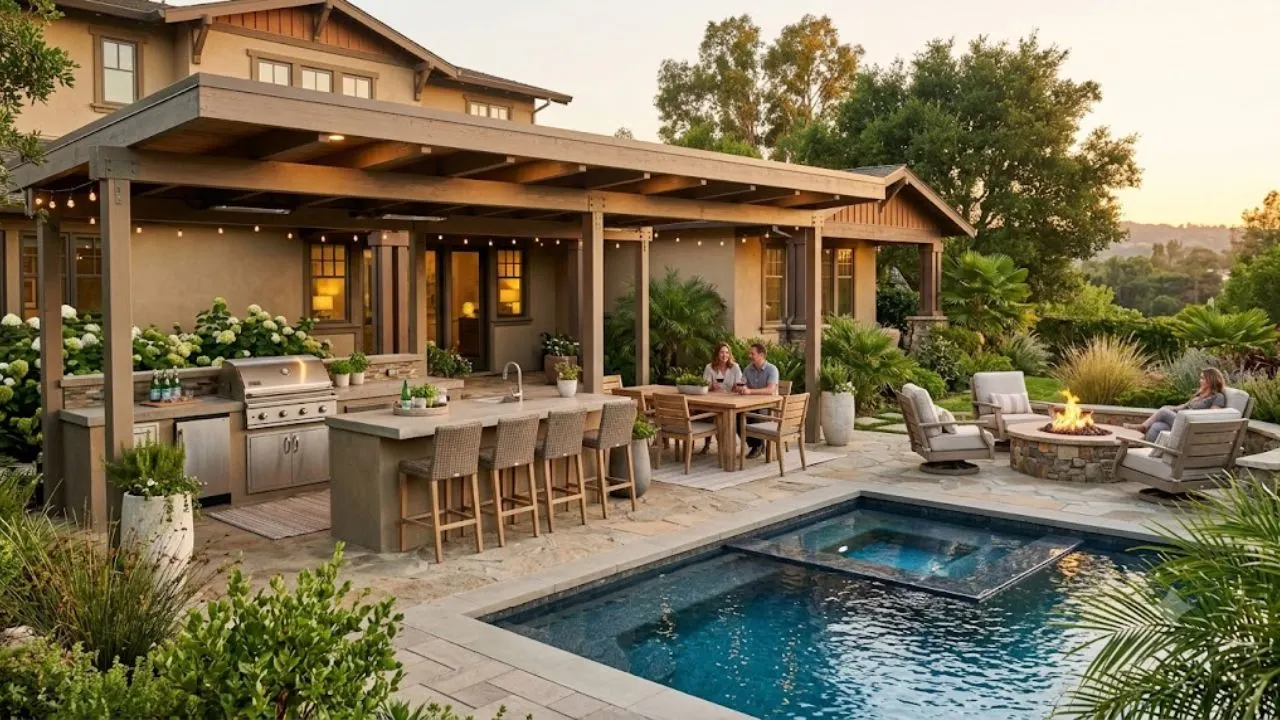

Best Outdoor Living Features That Add Home Value
A well-designed outdoor area can make a home feel larger, more welcoming, and better suited to everyday life. Buyers increasingly look beyond interior square footage and consider whether a property offers comfortable places to dine, relax, entertain, and spend time outside. The most valuable improvements usually combine practical function with attractive, low-maintenance design.
Recent housing research supports this interest in usable outdoor living space. The National Association of Home Builders reported in 2026 that builders are using patios, front porches, decks, exterior lighting, and landscaping to expand functional living space without increasing a home’s indoor footprint. These features can be especially attractive when affordability makes larger houses harder to purchase.
However, no backyard feature guarantees a specific increase in sale price. Resale value depends on the local climate, neighborhood expectations, construction quality, maintenance requirements, and whether the improvement suits the home’s price range. A luxury outdoor kitchen may attract buyers in an upscale market but appear excessive beside a modest starter home.
The best outdoor living features that add home value are therefore not always the largest or most expensive. A clean patio, attractive landscaping, safe lighting, and a comfortable seating area may create broader buyer appeal than a highly personalized resort-style renovation. The goal should be to make the property easier to enjoy while avoiding costs that future owners may view as burdens.
What Makes an Outdoor Feature Valuable to Buyers?
An outdoor improvement adds the most value when buyers can immediately understand how they would use it. A defined patio suggests outdoor dining, while a covered porch offers shade and weather protection. Good landscaping improves curb appeal before buyers enter the house, and exterior lighting makes walkways, steps, entrances, and entertaining spaces feel safer and more functional.
Broad usefulness normally matters more than novelty. An outdoor feature should suit different ages, lifestyles, and furniture arrangements rather than supporting only one specialized activity. A flexible paved space can accommodate dining, children’s play, container gardening, or quiet seating, making it appealing to more buyers than a permanent structure designed around one unusual hobby.
Quality and condition are equally important. Uneven pavers, rotting deck boards, poor drainage, exposed wiring, or an unfinished outdoor kitchen can reduce buyer confidence instead of increasing value. Buyers may discount their offers when they expect immediate repairs, even when the original project was expensive. Professional installation and routine maintenance can therefore matter as much as the feature itself.
National Association of Realtors research emphasizes that project returns vary according to design, materials, location, the home’s age and condition, and homeowner preferences. Its outdoor remodeling report also found that curb appeal is considered important by the overwhelming majority of real estate professionals when attracting potential buyers.
1. A Functional Patio Creates Versatile Outdoor Space
A patio is one of the most broadly appealing backyard improvements because it creates a clear, stable surface for furniture, grilling, entertaining, and relaxation. It can turn an undefined section of lawn into an outdoor room without requiring the elevation or structural complexity of a raised deck. Patios can also be designed for small courtyards, side yards, and compact urban properties.
Concrete, brick, natural stone, porcelain, and concrete pavers offer different price points and maintenance requirements. The best material should complement the architecture and local climate rather than simply following a design trend. Neutral surfaces tend to be easier for buyers to personalize, while heavily patterned or unusually colored materials may limit broader appeal.
National buyer-preference research identified patios as one of the most wanted exterior features, with 82% of surveyed buyers describing one as essential or desirable. The same study placed patios ahead of rear porches and decks, although preferences naturally vary by region, home type, income, and available yard space.
A National Association of Realtors project model estimated that a new paver patio could recover approximately 95% of its cost. That figure is not a promise for every property, but it illustrates why a sensibly sized patio can be a stronger investment than an elaborate backyard installation. Keeping the design proportional to the house is essential.
2. A Well-Built Deck Can Deliver Strong Resale Appeal
A deck extends usable living space where a ground-level patio may not work, particularly on sloped lots or homes with elevated rear doors. It can create an easy transition between indoor and outdoor areas while providing room for seating, dining, and grilling. Buyers often respond positively when the deck feels visually connected to the home rather than added as an afterthought.
Wood decking offers a warm, natural appearance but normally requires regular cleaning, sealing, staining, and inspection. Composite materials can reduce maintenance, although their initial cost is usually higher. The right choice depends on the climate, budget, architectural style, and the amount of upkeep buyers in the local market are likely to accept.
The 2025 Cost vs. Value Report estimated that a midrange wood deck addition recovered 94.9% of its national average cost, while a composite deck recovered 88.5%. Regional returns differed, and these figures represent modeled national averages rather than guaranteed increases in an individual property’s appraisal or sale price.
Safety and condition are critical because a deteriorating deck can become a liability. Secure railings, code-compliant stairs, stable foundations, proper flashing, and sound boards should take priority over decorative extras. Before building, homeowners should investigate local permits, setbacks, structural requirements, homeowners association rules, and whether the design could obstruct drainage or access.
3. Covered Porches and Pergolas Improve Everyday Comfort
Shade can determine whether an outdoor space is used regularly or avoided during the hottest hours of the day. A covered porch, pergola, pavilion, awning, or carefully placed shade structure can protect seating areas from strong sunlight and light rain. This added comfort helps the backyard function for more months of the year.
A front porch can contribute to both outdoor living and curb appeal. It creates a visible transition between the street and the home, adds architectural character, and provides a place for seating or social interaction. Buyer-preference research found that 81% of respondents considered a front porch essential or desirable, while 75% expressed the same view about a rear porch.
Pergolas can be attractive and relatively flexible, but they should be designed with realistic expectations. An open-roof pergola offers partial shade rather than complete weather protection. Retractable covers, climbing plants, curtains, screens, or slatted roofs may increase comfort, provided they are durable and appropriate for local wind, rain, heat, and snow conditions.
The structure should match the scale and style of the house. A small, carefully detailed porch can add more visual value than an oversized pavilion that consumes most of the yard. Buyers usually appreciate shade and shelter, but they may be less enthusiastic about a structure that blocks natural light, creates maintenance problems, or removes flexible garden space.
4. Exterior Lighting Adds Safety and Evening Appeal
Outdoor lighting is one of the most practical upgrades because it improves visibility while highlighting the home’s architecture and landscape. Path lights can define walkways, step lights can reduce trip hazards, and focused fixtures can illuminate entrances, house numbers, patios, and gathering areas. The result can make the property feel more welcoming after sunset.
Exterior lighting was rated essential or desirable by 87% of buyers in NAHB research, making it the most wanted outdoor feature in that study. Its appeal is understandable because lighting contributes to security, appearance, and usability without demanding a large section of the yard or changing how future owners arrange the space.
Effective lighting should be layered rather than excessively bright. Soft ambient lighting supports conversation, while task lighting is useful near cooking and dining areas. Motion-activated fixtures can work near side entrances or service areas. Fixtures should direct light where it is needed instead of producing glare that disturbs neighbors or overwhelms the landscaping.
Weather-rated products, safe wiring, and professional installation are important for permanent systems. Solar lights can provide a simple improvement, but inexpensive models may perform inconsistently in shaded locations or during cloudy seasons. Buyers are more likely to value an outdoor lighting system when it appears intentional, efficient, easy to control, and properly maintained.
5. Attractive Landscaping Strengthens Curb Appeal
Landscaping shapes a buyer’s first impression before the front door is opened. Trimmed plants, defined beds, healthy trees, fresh mulch, and a visible walkway can make a property appear cared for. Neglected vegetation, dead grass, overgrown shrubs, or branches touching the house may suggest that other parts of the property have also been poorly maintained.
The most valuable landscape is not necessarily the most elaborate. Buyers often prefer a yard that looks attractive without requiring specialist care every weekend. A combination of regionally appropriate trees, shrubs, ground covers, flowering plants, and manageable lawn space can provide color and structure while keeping maintenance understandable.
NAR’s outdoor remodeling analysis estimated full cost recovery for a representative overall landscape upgrade and more than full recovery for standard lawn care and landscape maintenance. These were standardized project estimates rather than guaranteed returns, but they demonstrate how basic presentation and maintenance can sometimes compete with more expensive construction projects.
Mature trees can add shade, privacy, and visual depth, but they should be healthy and correctly positioned. Diseased trees, invasive roots, overhanging limbs, and dense planting against the house can create repair or insurance concerns. A professional assessment may be worthwhile when large trees are close to buildings, utility lines, retaining walls, or drainage systems.
6. An Outdoor Kitchen Can Appeal to Lifestyle-Focused Buyers
An outdoor kitchen can turn a patio into a genuine entertaining area by moving food preparation, cooking, and serving outside. The most useful versions normally include a quality grill, weather-resistant work surface, storage, lighting, and convenient access to the indoor kitchen. Refrigeration, sinks, pizza ovens, and additional appliances can be added when the market supports the expense.
Recent Zillow research found that listings mentioning outdoor kitchens were associated with sale prices 4.4% higher than expected in its 2026 analysis. Zillow examined more than two million homes listed during 2025, but the finding shows an association rather than proof that installing an outdoor kitchen will independently create the same premium.
Older NAR project modeling also estimated full cost recovery for a representative outdoor kitchen containing a built-in grill, storage, sink, countertop, and masonry finish. Real-world results can be very different because construction costs, climate, buyer expectations, and home price vary widely. A modest cooking station may outperform a fully equipped luxury kitchen in many neighborhoods.
Durability should guide every material choice. Indoor cabinets, ordinary electrical fittings, and surfaces that absorb moisture may deteriorate quickly outside. Weather-rated appliances, proper ventilation, drainage, utilities, and protective covers can reduce problems. Homeowners should also confirm permits and safety requirements before adding gas, electrical, plumbing, or permanent cooking installations.
7. Fire Pits and Outdoor Fireplaces Create a Gathering Point
A fire feature can give an outdoor area a clear focal point and extend its usefulness into cooler evenings. Portable fire pits are relatively affordable and flexible, while built-in fireplaces can provide greater visual impact and architectural structure. Both can help buyers imagine gatherings, quiet evenings, and seasonal use of the backyard.
The feature should fit the size of the space and allow comfortable circulation around it. Seating placed too close to flames can feel unsafe, while a large masonry fireplace may dominate a small yard. A simple fire pit surrounded by durable paving may be more appealing than a costly installation that leaves little room for other activities.
Local rules are especially important. Some cities, homeowners associations, and fire districts restrict open flames, fuel types, chimney heights, burn periods, or placement near buildings and property boundaries. Wildfire-prone regions may require additional caution, and buyers may not consider a fire feature valuable when it conflicts with local risk conditions.
A fire feature is generally better viewed as a lifestyle enhancement than a guaranteed high-return project. It can strengthen an already functional patio or seating area, but it should not replace more fundamental improvements such as drainage, lighting, safe surfaces, or landscaping. Clean installation, easy operation, and appropriate spacing will support wider buyer appeal.
8. Privacy Features Make Outdoor Areas More Usable
An attractive backyard may still feel uncomfortable when it is completely exposed to neighboring windows, traffic, or public walkways. Thoughtful privacy can transform a rarely used space into a comfortable outdoor retreat. Fences, screens, trellises, hedges, layered planting, and strategically placed shade structures can all reduce unwanted views.
Privacy should not make the yard feel enclosed or dark. Solid fencing may be appropriate near a busy road, while filtered screening may work better between neighboring patios. A combination of plants and structures can soften the boundary and create visual depth. The design should also preserve useful sunlight, airflow, and sightlines from the house.
Defined activity zones can increase the value of privacy improvements. A dining area may be screened from the street, while an open lawn remains visible from indoor rooms. Small yards can benefit from vertical planting and narrow trellises that preserve floor space. Larger properties may use trees and shrubs to create gradual separation instead of one continuous barrier.
Before installing a fence or tall screen, check property lines, easements, height restrictions, permits, and homeowners association requirements. Boundary disputes can overshadow any resale benefit. Buyers are more likely to appreciate privacy features when they are legally placed, professionally finished, easy to maintain, and compatible with the surrounding neighborhood.
9. Pools, Hot Tubs, and Outdoor Showers Need Market Fit
Swimming pools can be highly desirable in warm climates and neighborhoods where they are common. They may also support exercise, family recreation, and entertaining. However, installation costs, maintenance, energy use, fencing, repairs, safety, insurance, and limited yard space can make a pool less appealing to buyers who do not want those responsibilities.
A pool should therefore be evaluated through local comparable sales rather than national assumptions. In some markets, buyers expect one and may reject homes without it. In other areas, the pool may not add enough value to recover its cost. Consulting a local real estate professional before construction can reveal whether similar properties benefit from the feature.
Hot tubs involve a smaller footprint but can still create maintenance and inspection concerns. An aging unit may appear more like equipment the buyer must remove than an asset. A clean, energy-efficient model placed on a safe, structurally appropriate surface may add lifestyle appeal, but it should not be expected to produce a predictable financial return.
Outdoor showers are gaining attention, especially near pools, beaches, gardens, and recreation areas. Zillow’s 2026 analysis associated outdoor showers with a 4.3% sale premium, but this does not mean every home needs one. The feature is most convincing when it has privacy, drainage, freeze protection where necessary, and a clear practical purpose.
10. Climate-Smart Landscaping Can Reduce Future Burdens
Homebuyers increasingly consider whether a property can handle heat, drought, heavy rain, and other local conditions. Climate-smart outdoor design may include native plants, shade trees, efficient irrigation, permeable surfaces, rain gardens, erosion control, and drainage improvements. These features can make a yard more resilient while reducing unnecessary maintenance and resource use.
The Environmental Protection Agency recommends regionally appropriate, native, or drought-tolerant plants and irrigation systems that respond to actual landscape conditions. WaterSense guidance also encourages smart controllers, appropriate soil preparation, drip irrigation, and designs that match plants to the local climate.
Permeable paving and rain gardens can help manage water where local soil and regulations make them suitable. However, drainage projects should be designed carefully because redirecting runoff toward foundations, neighboring properties, or unstable slopes can cause serious problems. Functional drainage is often more valuable than a decorative feature that repeatedly collects standing water.
Wildfire-prone properties require a different landscape strategy. Federal fire guidance emphasizes maintaining vegetation and creating defensible areas around structures, beginning with the space immediately beside the home. In such locations, dense shrubs, combustible mulch, and firewood storage near buildings may reduce safety even when they look attractive.
How to Choose the Right Outdoor Upgrade for Your Home
Start by studying what is normal in your neighborhood. Buyers may expect patios and shade structures in one region, while decks, screened porches, or outdoor showers may be more relevant elsewhere. Review comparable listings and recent sales rather than relying entirely on national remodeling statistics. Local agents and appraisers may offer useful market-specific insight.
Next, decide how long you expect to remain in the home. Someone selling within a year may benefit most from landscape maintenance, cleaning, repairs, lighting, and a modest seating area. A homeowner staying for a decade may reasonably choose a more personalized feature because years of enjoyment can matter alongside eventual resale value.
Set a complete budget that includes design, permits, labor, materials, utilities, furniture, landscaping repairs, insurance changes, and ongoing maintenance. A project can become financially disappointing when only the initial construction quote is considered. Building a smaller, fully finished space is usually better than leaving an ambitious design incomplete.
Finally, prioritize problems before adding luxuries. Repair unsafe steps, unstable railings, poor drainage, broken fencing, dead vegetation, and damaged surfaces before installing an outdoor kitchen or fireplace. Buyers notice deferred maintenance quickly. A simple outdoor area that feels safe, clean, and ready to use can create more confidence than expensive amenities surrounded by visible defects.
Outdoor Renovation Mistakes That Can Reduce Home Value
Overbuilding is one of the most common mistakes. A backyard renovation should remain proportional to the home, lot, and neighborhood. Spending heavily on resort-style amenities may not produce a similar increase in resale value when buyers in that market prioritize affordability. It can also remove lawn, garden, storage, or play space that future owners would prefer.
Poor material selection is another costly problem. Outdoor surfaces must tolerate moisture, temperature changes, sunlight, insects, and local weather. Materials that stain, warp, rust, fade, or become slippery can quickly make a recent project appear old. Durability, drainage, and ease of repair should be considered before decorative appearance.
Highly personalized design can narrow the buyer pool. Unusual colors, permanent sports installations, oversized bars, complex water features, and themed structures may delight the current owner but require expensive removal later. Personalization is reasonable when you plan to enjoy it for years, but it should not automatically be described as an investment.
Ignoring approval and documentation can also create difficulties during a sale. Unpermitted structures, unsafe electrical work, unclear property boundaries, and installations built over easements may delay transactions or require correction. Keep permits, plans, warranties, receipts, appliance information, and maintenance records so future buyers can understand how the project was completed.
Final Thoughts on Outdoor Features That Add Home Value
The best outdoor living features that add home value begin with broad functionality. Patios, decks, porches, shade, landscape lighting, and attractive planting help buyers see the exterior as usable living space. Current buyer research continues to rank lighting, patios, porches, and decks among the most desirable outdoor elements.
More specialized additions, including outdoor kitchens, fireplaces, pools, and showers, can strengthen value when they fit the climate, neighborhood, and property price. They can also become expensive overimprovements when market demand is weak. Recent listing analyses show promising associations for some luxury outdoor features, but those premiums should not be treated as guaranteed project returns.
Maintenance remains a central part of resale appeal. Buyers may value an established landscape but worry about a yard requiring constant irrigation, pruning, or specialist care. They may enjoy seeing a pool but calculate its running costs. The strongest design balances appearance, comfort, durability, safety, and reasonable ongoing responsibility.
Before renovating, consider how the space will improve your own life as well as its future marketability. A project that provides years of outdoor dining, relaxation, play, or entertaining can be worthwhile even without recovering every dollar. Build for genuine usefulness, respect the character of the property, and let resale potential support—not control—the entire decision.
Frequently Asked Questions
1. Which outdoor feature adds the most value to a home?
Patios, decks, exterior lighting, and well-maintained landscaping usually offer broad buyer appeal. The best-performing feature depends on the home, local climate, neighborhood, construction cost, and buyer expectations.
2. Does a patio increase home value?
A properly designed patio can increase buyer interest by creating defined outdoor living space. Its financial return depends on size, materials, condition, local demand, and whether the project is proportional to the property.
3. Is an outdoor kitchen worth the investment?
An outdoor kitchen may be worthwhile in warm climates and higher-value markets where outdoor entertaining is common. A simple, durable cooking area is generally less financially risky than an elaborate kitchen filled with specialized appliances.
4. Does a swimming pool add resale value?
A pool can add value in markets where buyers expect one, but it may discourage buyers concerned about safety, maintenance, insurance, or reduced yard space. Local comparable sales provide better guidance than national estimates.
5. What is the cheapest outdoor improvement that adds value?
Cleaning, pruning, lawn care, fresh mulch, minor repairs, and simple exterior lighting can noticeably improve curb appeal at a relatively low cost. These improvements often make a stronger first impression than unfinished luxury projects.