
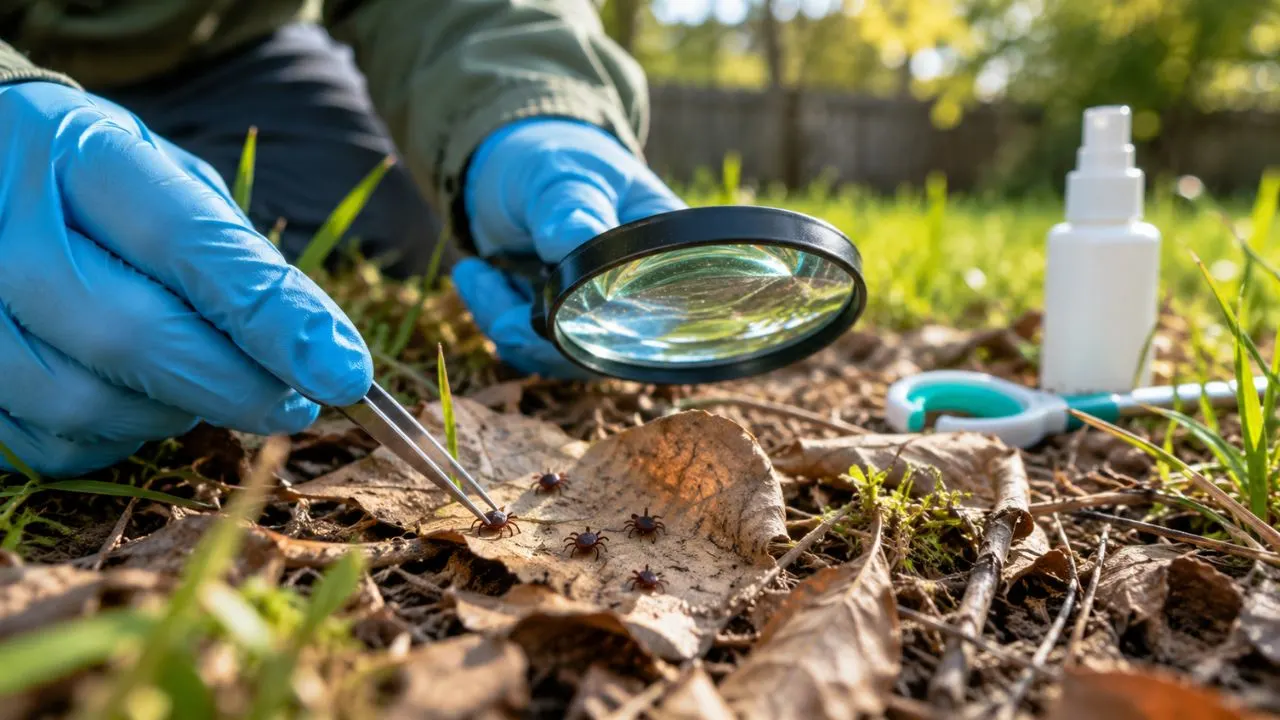

Tick Nest: How to Find, Remove & Prevent Ticks
Finding a cluster of tiny ticks in your yard, home, or pet’s bedding can be alarming. You may assume that you have discovered a tick nest and wonder how many more ticks are hiding nearby. Acting quickly is sensible, but the correct response depends on whether you found eggs, newly hatched larvae, adult ticks, or another pest entirely.
Ticks do not build organized nests like birds, ants, or wasps. The phrase “tick nest” usually describes a mass of tick eggs, a cluster of newly hatched larvae, or an area where several ticks have gathered because the conditions are favorable. Damp leaf litter, shaded vegetation, animal resting places, and indoor dog areas can all support tick activity.
One adult female tick can lay a large mass containing thousands of eggs after completing a blood meal. When the eggs hatch, the extremely small larvae may remain close together temporarily, creating a moving cluster sometimes called “seed ticks.” Their small size makes them difficult to identify without magnification.
This guide explains what a tick nest really is, how to identify possible tick eggs, and where ticks commonly hide. You will also learn how to remove ticks safely, clean affected areas, protect your pets, reduce tick habitat, and recognize symptoms that may require medical attention.
What Is a Tick Nest?
The term “tick nest” is an informal expression rather than a scientific description. Ticks do not collect materials, create shelters, or care for their young. An adult female typically leaves its host after feeding, finds a protected location, lays an egg mass, and eventually dies.
Tick eggs may be deposited in leaf litter, beneath low vegetation, inside cracks, near animal shelters, or in another protected place with suitable moisture. The female does not remain to defend or feed the young. After hatching, the larvae begin seeking small animals, birds, reptiles, or other hosts.
A cluster of tick larvae may look like a nest because hundreds or thousands of tiny organisms appear in one small area. These larvae have six legs, while tick nymphs and adults have eight. The larvae gradually disperse as they search for their first blood meal and continue their life cycle.
Seeing several adult ticks in the same location does not necessarily mean eggs are nearby. The area may simply provide shade, humidity, vegetation, and access to animals. Deer paths, rodent nesting areas, dog kennels, wood piles, and woodland borders can repeatedly attract or introduce ticks without containing a single egg mass.
What Does a Tick Egg Mass Look Like?
Tick eggs are extremely small and usually appear in tightly packed groups. Depending on the species and stage of development, an egg mass may look tan, amber, reddish brown, dark brown, or nearly translucent. From a distance, it may resemble a small patch of caviar, beads, seeds, or shiny dirt.
The eggs are generally round or oval and may have a moist or slightly glossy appearance. They can be difficult to recognize with the naked eye because each egg is tiny. Lighting, dirt, moisture, plant material, and the age of the eggs can also change how the mass appears.
After the eggs hatch, the larvae may remain clustered for a short period. These tiny “seed ticks” can resemble moving specks of pepper or a reddish-brown patch. A person brushing against the cluster may pick up many larvae at once, potentially resulting in numerous small bites.
Photos found online are not always reliable for identification. Spider eggs, mites, aphids, beetle eggs, seeds, mold, soil pellets, and other natural materials may be incorrectly labelled as tick nests. When identification matters, place a sample in a secure container and contact a local pest specialist, extension service, or public health agency.
Where Are Tick Nests Usually Found Outdoors?
Ticks generally prefer environments that protect them from drying out. Wooded, brushy, and grassy areas with leaf litter provide shade and moisture while allowing ticks to encounter passing animals. The edges between maintained lawns and unmanaged vegetation are especially important places to inspect.
Check beneath piles of damp leaves, fallen branches, ground-covering plants, stacked firewood, stones, garden debris, and dense shrubs. Ticks may also occur along fence lines, animal trails, woodland paths, compost areas, and the shaded ground beneath decks or outdoor structures.
Wildlife can continually bring ticks onto a property. Deer, rodents, birds, raccoons, rabbits, stray animals, and other hosts may carry feeding ticks that later drop into the environment. Areas where animals regularly rest, feed, hide, or travel can therefore have more tick activity.
A sunny, closely mowed lawn is generally less suitable for many ticks than a damp, shaded border containing tall vegetation and leaves. However, ticks can still be carried across maintained areas by people or animals. Yard appearance alone cannot guarantee that a property is completely free of ticks.
Can Ticks Create a Nest Inside Your House?
Most common outdoor ticks do not establish lasting indoor infestations. They may enter on clothing, shoes, outdoor equipment, dogs, cats, or other animals, but indoor air is often too dry for them to reproduce successfully. Finding one tick inside does not automatically mean your home is infested.
The brown dog tick is an important exception. It can complete its entire life cycle indoors and may infest homes, kennels, shelters, and other places where dogs live. These ticks can hide in cracks, behind baseboards, beneath rugs, around furniture, and near pet sleeping areas.
Soft ticks may also live near the sleeping or nesting places of rodents, birds, or bats. In some regions, they can occur in rustic cabins, attics, barns, caves, or wall spaces where suitable animal hosts are present. They may emerge briefly to feed before returning to protected hiding places.
Repeatedly seeing ticks on walls, curtains, furniture, pet beds, or floors may indicate more than an occasional outdoor hitchhiker. Inspect every pet, record where the ticks appear, and save a sample for identification. Knowing the species can determine whether indoor reproduction is likely and which control method is appropriate.
How to Search for Ticks Around Your Property
Begin with the places where people and animals spend the most time. Examine patios, play areas, garden paths, dog runs, kennels, outdoor furniture, sheds, and the borders of the lawn. Pay particular attention to locations that remain shaded or collect moisture and organic material.
Wear light-colored clothing, long trousers, closed shoes, and gloves while inspecting possible tick habitat. Light fabric makes crawling ticks easier to notice. Avoid sitting directly in vegetation or handling leaf litter with bare hands, especially when you have pets or wildlife frequently passing through the area.
A white cloth may help reveal host-seeking ticks in low vegetation. Slowly drag or sweep the cloth over grass and plants, then examine it carefully for small crawling arachnids. This method can show that ticks are present, but it cannot measure the complete population or locate every egg mass.
Inspect pets after they have visited each part of the yard. Concentrate around the ears, eyelids, collar, front legs, toes, groin, and tail. Finding ticks repeatedly after visits to one shaded border or brushy corner may help you identify the area where exposure is occurring.
How to Find Ticks Inside Your Home
Start with your pet’s sleeping, feeding, and resting areas. Remove bedding and inspect seams, folds, crate corners, carpet edges, and the spaces beneath furniture. Look around baseboards, door frames, wall cracks, curtains, and nearby objects where a detached female tick could hide.
Check rooms where pets spend long periods rather than inspecting only the place where you found the first tick. Brown dog ticks can climb walls and hide away from the animal between life stages. A single room may not contain the entire indoor population.
Use a flashlight and a magnifying glass when inspecting dark gaps and textured surfaces. Unfed ticks can be very small, while fed females may become much larger and rounder. Tick larvae may appear as tiny moving dots rather than recognizable adult-shaped ticks.
Do not rely only on bites to determine whether ticks are present. A tick may remain hidden, feed on a pet, or crawl for some time before attaching to a person. Regular sightings, ticks at different life stages, and repeated pet infestations are stronger signs that professional identification may be needed.
How to Remove a Tick Egg Mass Safely
Do not crush a suspected egg mass with your bare fingers. Although tick eggs cannot bite, physical removal without direct contact is cleaner and prevents the eggs from being scattered. Wear disposable gloves and keep children and pets away from the area while you work.
For an outdoor mass on a movable object, carefully lift it using a paper towel, stiff card, or disposable tool. Place the material into a sealed plastic bag or tightly closed container. Avoid brushing the eggs into surrounding leaves, carpet, or soil where they may be harder to collect.
Indoors, use a vacuum with a crevice attachment to clean the egg mass and the nearby cracks. Empty the canister outside into a sealed bag, or remove and seal the disposable vacuum bag immediately. Continue checking the area because additional eggs or ticks may be hidden nearby.
Do not spray bleach, kerosene, gasoline, essential oils, or a random pesticide mixture over the area. These substances may damage surfaces, harm pets, or expose people to irritating fumes. When a pesticide is needed, use only a product labelled for the specific site and pest, following every label direction.
How to Remove an Attached Tick From Your Skin
Remove an attached tick as soon as you discover it. Use clean, fine-tipped tweezers to grasp the tick close to the skin’s surface. Hold the tick by its mouthparts or head area rather than squeezing the swollen body.
Pull upward using steady, even pressure. Do not twist, jerk, or sharply yank the tick because this can break its mouthparts. If a small part remains and cannot be removed easily with clean tweezers, allow the skin to heal rather than repeatedly digging into it.
After removal, clean the bite area and your hands with soap and water, rubbing alcohol, or another appropriate antiseptic. Dispose of the tick by sealing it in a container or bag, wrapping it securely in tape, or following your local health authority’s instructions for identification or testing.
Do not cover an attached tick with petroleum jelly, nail polish, alcohol, heat, or an essential oil. These methods delay removal and may irritate the tick or your skin. Current CDC guidance recommends prompt mechanical removal rather than waiting for the tick to release itself.
What to Do After Removing a Tick
Write down the date of the bite and where the exposure probably occurred. You may also take a clear photograph of the tick beside a ruler or coin before disposal. These details can be helpful if you later develop symptoms or need help identifying the species.
Watch the bite site and your general health during the following weeks. A small area of immediate redness or irritation can occur after many insect and tick bites. A rash that gradually expands, however, may require medical evaluation, particularly when accompanied by fever, fatigue, or body aches.
Seek medical advice if you develop fever, chills, headache, muscle pain, joint pain, unusual tiredness, swollen lymph nodes, neurological symptoms, or a spreading rash. Tell the clinician when the bite occurred, where you encountered the tick, and how long it may have been attached.
Do not take leftover antibiotics or use veterinary medicine after a bite. Whether medical treatment is appropriate depends on the tick species, geographic area, estimated attachment time, symptoms, and personal risk factors. A qualified healthcare professional should make that decision.
How to Remove Ticks From Dogs and Cats
Check pets daily when they spend time outdoors, even when they use a tick-prevention product. Run your hands slowly over the coat and feel for small bumps. Examine the ears, eyelids, collar area, armpits, groin, toes, tail, and spaces beneath harnesses.
Use fine-tipped tweezers or a veterinarian-approved tick-removal tool. Separate the fur, grasp the tick close to the pet’s skin, and pull it out steadily without crushing its body. Clean the area afterward and wash your hands thoroughly.
Contact a veterinarian when you cannot remove the tick, the mouthparts remain deeply embedded, or the skin becomes swollen, painful, or infected. Veterinary attention is also important if your pet develops fever, weakness, poor appetite, limping, unusual bruising, pale gums, or changes in behavior.
Ask your veterinarian which preventive product is appropriate for the animal’s species, age, weight, lifestyle, and health. Never apply a product intended for dogs to a cat unless a veterinarian confirms that it is safe. Some canine flea and tick ingredients can be extremely dangerous to cats.
How to Clean Your Home After Finding Ticks
Wash pet bedding, removable furniture covers, and other washable fabrics according to their care instructions. Drying items thoroughly is important because ticks generally survive better in humid environments. Continue checking bedding regularly rather than assuming one cleaning has removed the entire problem.
Vacuum floors, rugs, furniture edges, baseboards, cracks, and areas beneath pet beds. Pay special attention to rooms where pets sleep or spend long periods. Seal and discard the vacuum contents outdoors so that surviving ticks cannot crawl back into the home.
Reduce clutter around pet areas and seal accessible cracks or gaps where ticks may hide. Clean crates, kennels, carriers, collars, and grooming equipment. Check vehicles as well when pets frequently travel, because ticks can detach from an animal inside a car.
An indoor brown dog tick infestation usually requires coordinated treatment of the pet and the environment. Treating only the dog may leave eggs and immature ticks in the building, while treating only the house allows the pet to reintroduce them. A veterinarian and licensed pest professional can help coordinate control.
How to Prevent Ticks in Your Yard
Remove leaf litter, brush, weeds, and tall grasses from places where people and pets regularly walk or rest. Mow the lawn and trim shrubs to increase light and airflow. A drier, sunnier environment is generally less favorable for many tick species.
Create separation between lawns and wooded or brushy borders. A barrier of wood chips, gravel, or another dry material can reduce direct contact with tick habitat. Position play equipment, seating areas, patios, and frequently used spaces away from dense vegetation and yard edges.
Stack firewood neatly in a dry, sunny place and remove unused garden materials that shelter rodents. Secure rubbish, avoid intentionally feeding wildlife, and address openings that allow rodents to enter sheds or buildings. Reducing animal nesting and resting sites can lower opportunities for ticks to enter the yard.
Pesticide treatment may be useful in some high-risk properties, but it should complement landscape management rather than replace it. Treating the entire lawn is not always necessary or effective. A licensed professional can identify targeted border areas and select products approved for local use.
How to Protect Yourself From Tick Bites
Avoid walking through tall grass, thick brush, and heavy leaf litter when practical. Stay near the center of established paths instead of brushing against vegetation along the edges. Ticks generally do not jump or fly; they wait on vegetation and grasp passing hosts.
Wear long sleeves, long trousers, closed shoes, and light-colored clothing in tick habitat. Tucking trousers into socks can reduce skin access and make crawling ticks easier to see. Clothing choices are especially useful during hiking, gardening, hunting, camping, and outdoor work.
Use an EPA-registered repellent that lists ticks on the label. Depending on the product, active ingredients may include DEET, picaridin, IR3535, or oil of lemon eucalyptus. Permethrin products can be used on appropriate clothing or gear according to the label, but should not be applied directly to skin.
After outdoor activity, check your clothing, equipment, children, pets, and entire body. Examine hidden areas such as the scalp, hairline, ears, armpits, waist, navel, groin, backs of the knees, and between the toes. Showering soon after returning indoors can also help you find unattached ticks.
Common Tick-Removal Mistakes to Avoid
Do not crush a tick with your fingers. Direct contact with a tick’s fluids is unnecessary and may expose small cuts or mucous membranes to germs. Place the removed tick into a secure container, alcohol, sealed bag, or tightly folded tape instead.
Avoid grabbing only the tick’s swollen abdomen. Squeezing the body can cause it to rupture and makes controlled removal more difficult. Fine-tipped tweezers allow you to grip close to the skin and pull steadily without putting excessive pressure on the tick.
Do not delay removal while searching for a perfect tool or complicated home remedy. Regular tweezers are preferable to leaving the tick attached for hours. When tweezers are unavailable, CDC guidance allows careful removal with protected fingers while avoiding pressure on the tick’s body.
Do not assume that every bite requires testing, antibiotics, or emergency care. At the same time, do not ignore a worsening rash, fever, severe headache, weakness, or neurological symptoms. The safest approach is prompt removal followed by informed symptom monitoring.
When Should You Call a Pest-Control Professional?
Professional help may be necessary when you find ticks repeatedly inside the home, particularly in several rooms or at different life stages. Adult ticks, larvae, and egg masses appearing together can suggest that reproduction is occurring rather than ticks occasionally arriving from outdoors.
Contact a licensed pest professional when brown dog ticks are suspected. This species can complete its life cycle indoors and hide in cracks, wall gaps, kennels, and furniture. Successful control may require repeated, targeted treatment combined with veterinary care for every dog in the household.
You may also need help when a large property contains extensive brush, unmanaged woodland borders, rodent activity, or outdoor animal shelters. A professional can evaluate where people and pets face the greatest exposure instead of applying pesticides broadly across areas that do not require treatment.
Ask what species is present, which locations will be treated, what product will be used, and when children or pets can safely return. Choose a licensed provider that uses integrated pest management and follows the pesticide label rather than promising that one heavy spray will permanently eliminate every tick.
When Should You See a Doctor After a Tick Bite?
Contact a healthcare professional when you develop a rash, fever, chills, headache, unusual fatigue, muscle aches, joint pain, or swollen lymph nodes after a known or possible tick bite. Symptoms of tick-borne illnesses can overlap, so diagnosis should not depend on a rash alone.
Seek prompt care for an expanding circular or oval rash, even when it does not form a perfect bull’s-eye pattern. Other warning signs include facial weakness, severe headache, neck stiffness, confusion, heart palpitations, shortness of breath, numbness, or increasing difficulty walking.
Emergency care may be needed for trouble breathing, fainting, rapidly developing weakness, severe confusion, chest pain, or other serious symptoms. Tick paralysis is rare but can cause progressive weakness while a tick remains attached, making a complete body and scalp check important.
Medical advice may also be appropriate when the attached tick is deeply embedded, cannot be removed, or was found on a young child, pregnant person, or someone with reduced immunity. Bring the tick or a clear photograph when available, but do not delay necessary care just to obtain identification.
Final Thoughts
A tick nest is usually an egg mass, a temporary cluster of larvae, or a heavily infested location rather than a constructed nest. Identifying what you found helps determine whether simple removal, environmental cleaning, veterinary treatment, or professional pest control is necessary.
Remove suspected eggs without touching or scattering them, vacuum affected indoor areas, and inspect every pet. When a tick is attached to skin, use fine-tipped tweezers and pull upward with steady pressure. Avoid heat, oils, chemicals, twisting, and other methods that delay removal.
Prevention works best when several strategies are combined. Clear leaves and brush, reduce shaded animal habitat, keep play areas away from woodland borders, use suitable repellents, protect pets, and perform full tick checks after outdoor activities.
Most individual tick discoveries do not mean a home is infested. Repeated indoor sightings, ticks at several life stages, or ongoing problems on dogs may indicate brown dog ticks and deserve professional evaluation. After any bite, monitor your health and seek medical care if concerning symptoms develop.
Do ticks actually build nests?
No. Ticks do not build or care for nests. The term usually refers to a tick egg mass, a cluster of newly hatched larvae, or an area containing many ticks.
What kills a tick egg mass?
Physical removal and secure disposal are the safest first steps. Pesticides should only be used when the label includes ticks and the treatment location, preferably with professional guidance.
Can ticks lay eggs in your house?
Most outdoor ticks do not reproduce successfully indoors, but brown dog ticks can complete their life cycle inside homes and kennels. Repeated sightings may require veterinary and professional pest control.
Where do ticks hide in a house?
Ticks may hide around pet beds, crates, carpets, baseboards, furniture, curtains, door frames, and wall cracks. Brown dog ticks can also climb walls and move beyond the pet’s main sleeping area.
How do you know if your yard has ticks?
Repeated ticks on people or pets, especially after visiting the same brushy area, suggest tick activity. Inspect leaf litter and yard borders or use a white cloth to check low vegetation.