
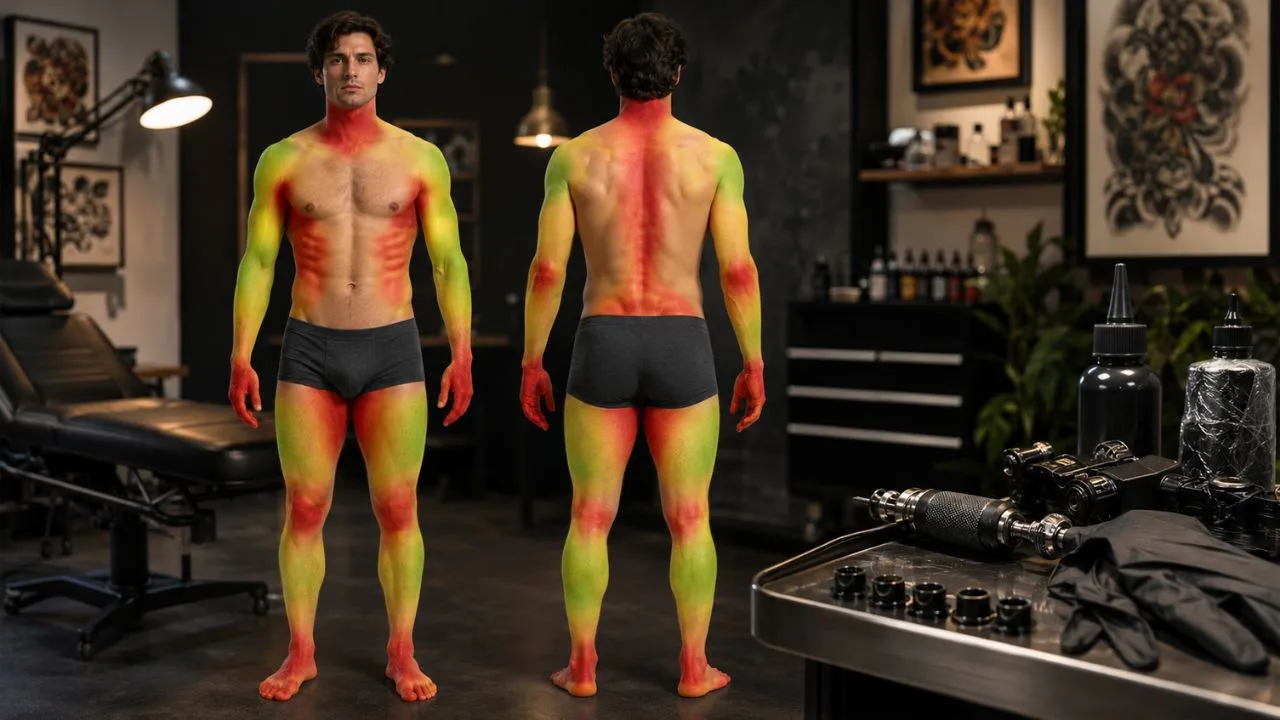

Tattoo Pain Chart: Most & Least Painful Body Spots
Tattoo pain is one of the biggest concerns people have before booking their first appointment. Because tattoo needles repeatedly pass through the skin, some discomfort is unavoidable. However, the intensity can range from a manageable scratching feeling to a sharper, burning sensation depending on the placement, design, session length, and individual.
A tattoo pain chart can help you compare body locations before choosing where to place your design. Areas with thicker skin, more muscle, and extra cushioning generally feel easier to tattoo. Spots with thin skin, prominent bones, many nerve endings, or frequent movement usually feel more sensitive.
No tattoo pain scale can predict exactly how your appointment will feel. Two people may receive similar tattoos in the same location and describe completely different pain levels. Sleep, stress, health, expectations, previous tattoo experience, and the artist’s technique can all influence the experience.
This guide ranks common tattoo placements from least to most painful using a practical 1-to-10 scale. It also explains what tattoo pain feels like, why certain body areas hurt more, how design choices affect discomfort, and what you can do before, during, and after your session.
How the Tattoo Pain Scale Works
The tattoo pain scale in this guide uses ratings from 1 to 10. A rating of 1 represents mild irritation that most people find easy to tolerate, while 10 describes intense discomfort that may require frequent breaks or shorter sessions. These numbers provide comparisons rather than guaranteed results.
Lower-rated locations usually have more muscle or fatty tissue beneath the skin. This cushioning can soften the vibration and pressure created by the tattoo machine. The outer upper arm, shoulder, forearm, thigh, and calf are commonly described as more manageable areas, particularly for smaller and simpler designs.
Higher-rated spots often have thin skin stretched over bone or contain many sensitive nerve endings. The ribs, sternum, spine, armpits, knees, elbows, hands, feet, and groin frequently fall into this category. Tattooing may feel especially sharp when the needle passes directly over a bone.
Pain can also change within one body part. An outer thigh tattoo may feel manageable until the artist reaches the inner thigh, knee, or hip crease. A forearm design may be comfortable in the center but become more painful as it approaches the wrist or inner elbow.
Quick Tattoo Pain Chart by Body Location
The least painful tattoo spots are generally the outer upper arm, shoulder, outer forearm, outer thigh, calf, and fleshy parts of the buttocks. These locations usually offer a combination of thicker skin, muscle, and cushioning, although no body area is completely painless.
Moderately painful locations include the inner forearm, upper back, shoulder blade, lower back, chest muscles, stomach, hips, wrists, and inner biceps. These areas may feel comfortable at first but become more difficult during long sessions, heavy shading, or repeated passes over irritated skin.
The most painful tattoo spots commonly include the ribs, sternum, spine, neck, armpits, elbows, knees, hands, fingers, ankles, feet, toes, inner thighs, groin, nipples, and parts of the head. Thin skin, bone vibration, sensitivity, and limited cushioning contribute to the discomfort.
The following tattoo pain chart shows typical ranges rather than fixed medical scores. Your personal rating may be lower or higher depending on your anatomy, pain tolerance, design, artist, and session. Use it as a planning tool, not as a promise about what you will feel.
| Body Location | Typical Pain Level | General Experience |
|---|---|---|
| Outer upper arm | 2–4 | Mild to moderate |
| Shoulder | 3–4 | Usually manageable |
| Outer forearm | 3–4 | Good first-tattoo area |
| Outer thigh | 3–5 | Cushioned and manageable |
| Calf | 4–5 | Moderate discomfort |
| Buttocks | 3–5 | Usually well cushioned |
| Upper back | 4–6 | Varies near shoulder blades |
| Inner forearm | 4–6 | More sensitive than outer arm |
| Chest muscles | 5–7 | Worse near sternum and nipples |
| Stomach | 5–7 | Soft but sensitive |
| Wrist | 5–7 | Thin skin near bone |
| Inner bicep | 6–8 | Tender and nerve-rich |
| Elbow or knee | 7–9 | Strong vibration over bone |
| Ribs and sternum | 8–10 | Thin skin and constant movement |
| Spine and neck | 7–10 | Bone vibration and sensitivity |
| Hands and fingers | 7–9 | Thin skin and many nerves |
| Ankles and feet | 7–10 | Little cushioning over bone |
| Armpits | 9–10 | Extremely sensitive |
| Groin and inner thigh | 8–10 | Delicate, nerve-rich skin |
Most Painful Places to Get a Tattoo
The armpit is frequently considered one of the most painful tattoo locations. Its skin is delicate, the area contains important nerves and lymphatic structures, and there is little room for comfortable positioning. Friction and arm movement can also make the healing period inconvenient.
The ribs and sternum are also known for intense tattoo pain. The skin is thin, the bones sit close to the surface, and breathing constantly moves the area. People often describe a sharp scratching sensation combined with uncomfortable vibration spreading across the chest or side.
Hands, fingers, feet, toes, elbows, knees, ankles, and the spine can be difficult because the tattoo machine works close to bone. The vibration may feel as though it travels beyond the skin, creating a rattling or tapping sensation that some people find harder to tolerate than ordinary scratching.
Sensitive areas such as the inner thigh, groin, nipple, breast, neck, and inner arm can also rank highly. These areas may have thinner skin, more nerve endings, or frequent contact with clothing. Tattoo placement in intimate areas also requires careful consent, privacy, hygiene, and artist selection.
Why Rib, Sternum and Spine Tattoos Hurt
The rib cage has minimal natural cushioning in many people. As the tattoo needle moves across the skin, the ribs beneath it may amplify the sensation. The pain can feel sharp, hot, vibrating, or deeply uncomfortable, especially when the design requires repeated shading or solid color.
Breathing makes a rib tattoo more challenging for both the client and artist. The skin moves with every breath, so you may be asked to maintain a steady breathing pattern. Holding your breath can increase tension and make discomfort feel worse rather than helping the artist.
Sternum tattoos share many of the same challenges. The breastbone is close to the skin, and the central chest can be highly sensitive. Pain may also seem to travel into nearby areas because the vibration is transmitted across the firm surface of the bone.
Spine tattoos can produce strong vibration because each pass occurs over or near the vertebrae. The upper and lower back may be easier when the design extends into fleshier areas, but the center line can become intense. Large spine pieces are often divided into several sessions to make the process more manageable.
Armpit, Inner Arm, Elbow and Knee Pain
Armpit tattoos are usually recommended only after someone understands their pain tolerance. The area is extremely sensitive, difficult to keep still, and vulnerable to friction from normal arm movement. Sweat, clothing, and skin-to-skin contact can also complicate healing.
The inner upper arm is often more painful than the outer arm. Its skin is softer and less exposed to daily friction, and discomfort may increase as the design approaches the armpit or elbow crease. A large wraparound arm piece can therefore shift from manageable to intense within the same session.
The elbow and elbow ditch create different sensations. Tattooing directly over the elbow bone may feel sharp and vibrating, while the inner crease can feel burning or pinching because the skin is sensitive. Bending the arm during healing may also pull at the irritated area.
Kneecaps and the backs of the knees have similar problems. The front produces strong vibration over bone, while the knee ditch contains soft, sensitive skin that moves whenever the leg bends. Swelling and stiffness can make walking or sitting uncomfortable during the early healing period.
Hand, Finger, Foot and Ankle Tattoo Pain
Hand tattoos can be painful because the skin is thin and the bones, tendons, joints, and nerves sit close to the surface. The back of the hand may produce sharp vibration, while the palm can feel particularly intense due to its dense sensory supply and thicker, specialized skin.
Finger tattoos often hurt more than their small size suggests. There is little cushioning around the finger bones, and the artist must work within a narrow space. Knuckles, fingertips, and the sides of the fingers can feel especially sharp or electric.
Feet and toes combine thin skin with many small bones, tendons, and sensitive structures. The top of the foot is usually more painful than the fleshy portions of the sole, although sole tattoos bring their own challenges. Keeping the foot still can become difficult during a long session.
Ankle pain changes according to the exact position. The outer ankle bone and front of the ankle often feel sharp and vibrating, while fleshier sections may be more manageable. Shoes and socks can rub against the fresh tattoo, so healing arrangements should be considered before booking.
Moderately Painful Tattoo Locations
The upper back generally falls in the middle of the tattoo pain chart. Areas covered by muscle may feel manageable, while discomfort increases near the spine, shoulder blades, neck, and ribs. Large back pieces can become difficult mainly because of their duration rather than one consistently painful spot.
Chest tattoos vary significantly according to anatomy and placement. Tattooing over the pectoral muscles may cause moderate discomfort, while the sternum, collarbone, ribs, and nipple area usually feel much stronger. A design that crosses several zones can produce rapidly changing pain levels.
Stomach tattoos are difficult to rank because the amount of cushioning differs between people. Soft tissue can reduce bone vibration, but the abdomen remains sensitive and moves with breathing. Tensing the abdominal muscles may make the skin harder for the artist to work on and increase fatigue.
Wrist, hip, shoulder blade, and lower-back tattoos often fall between moderate and high pain. A small design may be easy to tolerate, while detailed linework or heavy shading can become tiring. Nearby bones, thinner skin, and body positioning all influence the final experience.
Least Painful Places to Get a Tattoo
The outer upper arm is one of the most popular first-tattoo locations. It has muscle, thicker skin, and fewer highly sensitive areas than the inner arm. The placement is also easy for the artist to access, allowing you to sit in a relatively comfortable position.
The outer forearm is another beginner-friendly tattoo spot. Most of the area has enough muscle and tissue to make the sensation manageable, although pain increases near the wrist, elbow crease, and inner forearm. It also allows you to watch the process or look away easily.
Outer thighs usually provide generous cushioning and a stable surface for tattooing. Designs can be small or large, and the client can often sit or lie comfortably. The pain generally rises as the work approaches the knee, hip bone, or sensitive inner thigh.
Shoulders, calves, and fleshier sections of the buttocks are also commonly rated on the lower end. The shoulder has rounded muscle, while the calf offers a reasonably padded surface. Even these areas can become painful during long sessions, dense color work, or repeated passes.
Why Tattoo Placement Changes Pain Levels
A body area tends to hurt more when the skin is thin and the bone lies close beneath it. Without much muscle or fat to absorb the pressure, the needle’s vibration becomes more noticeable. This is why the ribs, sternum, ankles, fingers, elbows, and knees often receive high pain ratings.
Nerve distribution also influences sensitivity. The hands, feet, armpits, groin, face, and inner limbs contain structures that help the body detect touch, temperature, pressure, and potential injury. Tattooing these areas may produce sharper or more varied sensations.
Skin movement matters as well. The ribs move during breathing, while the knees, elbows, wrists, and ankles bend frequently. Remaining still during the procedure may require more effort, and ordinary movement can make the tattooed skin feel tight or sore afterward.
Accessibility and body position can affect pain indirectly. An uncomfortable position may create back, shoulder, or neck fatigue even before the tattooed skin becomes difficult to tolerate. Experienced artists usually adjust the client’s position and schedule breaks during complex placements.
What Does Tattoo Pain Feel Like?
At the beginning of a session, tattooing often feels like repeated scratching, stinging, or pinching. The sensation may be uncomfortable but predictable. Many people become more relaxed after the first few minutes once they understand what the needle feels like.
Linework can feel sharp because the artist creates precise outlines using concentrated passes. Some people compare it to a cat scratch moving slowly across the skin. The pain can feel stronger when a line crosses bone, sensitive skin, or an area that has already been tattooed.
Shading may feel rough, hot, or brush-like because the needle configuration and movement differ from outlining. Some clients find shading easier because the sensation is less sharp, while others find it worse because the artist covers a larger surface repeatedly.
As the session continues, the skin may feel increasingly raw, warm, and irritated. This is sometimes described as a burning or sunburn-like feeling. Tattoo pain is therefore not one fixed sensation; it can change according to the needle grouping, technique, placement, and time.
How Design and Session Length Affect Tattoo Pain
A small, simple outline normally takes less time than a large, detailed tattoo. Shorter exposure gives the skin less time to become swollen and tender. However, a tiny tattoo on a finger, rib, or foot can still hurt more than a larger design on the outer arm.
Fine-line tattoos may appear delicate, but they are not automatically painless. Precise linework can feel sharp, especially when the artist works slowly or repeats a section. The total discomfort depends on the design density, body location, artist technique, and duration.
Heavy shading, solid black areas, and color packing can increase pain because the artist must cover the same region thoroughly. Later passes occur on skin that is already irritated. White highlights added near the end may feel surprisingly intense for this reason.
Long sessions can create physical and mental fatigue even in a lower-pain area. Hunger, stiffness, stress, and repeated stimulation may gradually reduce your ability to cope. Large tattoos are often divided into multiple appointments so the client and skin have time to recover.
Personal Factors That Influence Tattoo Pain
Pain tolerance differs naturally between people. Previous experiences, expectations, stress, attention, mood, and cultural attitudes can influence how the brain interprets discomfort. A person who feels calm and prepared may describe the same sensation differently from someone who feels frightened or uncertain.
Sleep can make a noticeable difference. Arriving exhausted may reduce patience, increase stress, and make it harder to remain still. A full night of rest will not eliminate tattoo pain, but it can help you manage the physical and emotional demands of the appointment.
Hunger, dehydration, illness, and recent alcohol use may also make the experience harder. Feeling weak, shaky, nauseated, or lightheaded can force the session to stop. Eating a normal meal and drinking water beforehand generally supports a steadier appointment.
Medical conditions, skin sensitivity, medications, and past experiences with fainting or allergic reactions should be discussed appropriately. Do not stop prescribed medicine to prepare for a tattoo without medical advice. When your health could affect healing or bleeding, consult a qualified clinician before booking.
How to Prepare for a Less Painful Tattoo Session
Choose a reputable artist whose work suits your design and who follows local hygiene requirements. A skilled professional can work efficiently, communicate clearly, and avoid unnecessary damage to the skin. Visit the studio beforehand when possible and ask how equipment, surfaces, inks, and single-use items are handled.
Get adequate sleep and eat a balanced meal before the appointment. Include carbohydrates for energy and some protein for longer-lasting fullness. Bring water and an approved snack when the studio allows it, especially for a session expected to last several hours.
Wear loose, clean clothing that provides easy access to the tattoo site. Choose items you do not mind staining, since small amounts of ink or fluid may reach the fabric. Plan how you will protect the area from rubbing during the journey home.
Avoid arriving with sunburned, irritated, broken, or infected skin. Do not apply heavy lotion, self-tanner, or an unapproved numbing product before the appointment. Ask the artist whether you should shave the area, as shaving incorrectly can create small cuts and irritation.
Numbing Creams and Pain Medicine Before a Tattoo
Numbing creams may reduce surface sensation for some people, but they do not make every tattoo painless. Their effect can vary according to the ingredient, concentration, application time, body area, and duration of the appointment. The skin may also feel different when the product begins wearing off.
Always discuss a numbing product with your tattoo artist before using it. Some formulations can change the texture of the skin, interfere with stencil placement, or create irritation. An artist may refuse to tattoo an area when an unknown product has already been applied.
Do not assume that a stronger cream is safer or more effective. High concentrations of lidocaine and similar anesthetics can be dangerous when applied excessively, left on for too long, covered tightly, or used over large, irritated, or broken areas. Use only an appropriate product exactly as directed.
Ask a clinician or pharmacist before taking pain medicine when you have health conditions or use other medication. Do not stop prescribed blood thinners without medical instructions. Avoid alcohol and recreational drugs, as they can affect judgment, bleeding, consent, hydration, and healing.
How to Manage Pain During the Appointment
Tell the artist when you need a break rather than waiting until you feel overwhelmed. Short, planned pauses can help you drink water, eat a snack, stretch, or reset your breathing. Too many unscheduled movements, however, may lengthen the appointment and make the skin cool or stiff.
Use slow, steady breathing instead of holding your breath. Relax the muscles around the tattoo whenever possible, since constant tension can create fatigue and make body positioning harder. Focus on breathing out during sharper sections rather than anticipating every needle movement.
Distraction can help some people manage discomfort. Music, a podcast, conversation, or a permitted video may reduce how closely you focus on the sensation. Choose something calming and make sure headphones do not prevent you from hearing the artist’s instructions.
Speak up immediately if you feel faint, confused, unusually nauseated, short of breath, or unable to control your movement. These symptoms require a pause and assessment rather than determination to continue. Finishing a tattoo in one sitting is never more important than your safety.
Normal Tattoo Pain During Healing
A fresh tattoo commonly feels sore, warm, tight, or similar to mild sunburn. Some redness, swelling, tenderness, clear fluid, and small spots of blood may occur during the early healing period. These symptoms should generally begin settling rather than becoming progressively worse.
Pain often improves significantly during the first few days, although large tattoos and sensitive placements may remain uncomfortable longer. Areas that bend, rub against clothing, or support body weight can feel sore whenever they move. Follow the aftercare instructions provided by your professional artist.
As the surface heals, itching, dryness, peeling, and light scabbing may replace the original soreness. Do not scratch, pick, or pull away peeling skin. Damaging the healing surface can cause bleeding, introduce bacteria, remove pigment, and increase the chance of scarring.
Keep the tattoo clean and avoid unnecessary touching, soaking, swimming, and friction while it heals. Dressing instructions vary according to the covering used, so follow the artist’s directions. Once healed, sun protection can help reduce fading and protect the tattooed skin.
When Tattoo Pain May Signal a Problem
Pain that becomes stronger instead of gradually improving may indicate infection, significant irritation, or another skin reaction. Increasing warmth, spreading redness, worsening swelling, pus, unpleasant odor, or red streaks extending from the tattoo should not be dismissed as ordinary healing.
Fever, chills, severe weakness, dizziness, or swollen lymph nodes alongside a painful tattoo require prompt medical attention. Infections can occur when contaminated ink, equipment, hands, surfaces, water, or aftercare products introduce microorganisms into the injured skin.
An allergic reaction may cause intense itching, raised bumps, swelling, persistent redness, or a rash concentrated within one ink color. Reactions can occasionally appear long after a tattoo has healed. A dermatologist can distinguish allergy from infection and recommend appropriate treatment.
Seek emergency care for trouble breathing, chest tightness, fainting, rapidly increasing swelling, or widespread hives. Do not treat a serious reaction by applying random antibiotic creams, steroids, essential oils, or harsh disinfectants because the wrong product may worsen the condition.
Choosing the Best Tattoo Spot for Your Pain Tolerance
For a first tattoo, consider the outer upper arm, outer forearm, shoulder, calf, or outer thigh. These areas are usually easier to access, position, and heal than the ribs, feet, fingers, or joints. A small-to-medium design can help you learn how your body responds.
Think beyond the needle pain when selecting placement. Consider sleeping positions, work clothing, exercise, shoes, sun exposure, and daily movement. A foot tattoo may affect footwear, while a rib tattoo may interfere with sleeping and tight clothing during early healing.
Discuss the design with the artist before committing to a location. Some artwork needs a flat or large surface, while other designs can follow the natural shape of an arm, leg, shoulder, or back. An experienced artist can suggest a position that supports both appearance and comfort.
Do not choose a location only because a chart labels it painless. Every tattoo causes some discomfort, and your experience may not match the average. The best placement balances pain tolerance, design quality, lifestyle, healing, visibility, and long-term satisfaction.
Final Thoughts
A tattoo pain chart can help set realistic expectations, but it cannot tell you exactly how much your tattoo will hurt. Pain is personal and changes with body anatomy, design, technique, session duration, sleep, stress, health, and previous experience.
The outer upper arm, forearm, shoulder, outer thigh, and calf are generally considered more manageable tattoo locations. The ribs, sternum, spine, armpits, hands, feet, knees, elbows, inner thighs, and groin usually fall on the more painful end of the scale.
Preparation can make the appointment easier. Choose a reputable artist, sleep well, eat beforehand, stay hydrated, wear suitable clothing, and communicate during the session. Use numbing creams or pain medicines only after checking that they are appropriate and safe.
Some soreness is expected after a tattoo, but worsening pain, spreading redness, pus, fever, or severe swelling should be evaluated. A beautiful tattoo should be created and healed safely, regardless of where it falls on the tattoo pain scale.
What is the least painful place to get a tattoo?
The outer upper arm, shoulder, outer forearm, calf, and outer thigh are commonly considered the least painful tattoo spots. These areas usually have more muscle or cushioning and fewer highly sensitive structures.
What is the most painful place for a tattoo?
The armpits, ribs, sternum, spine, groin, knees, elbows, hands, fingers, feet, and ankles are often rated as the most painful. Thin skin, prominent bones, and greater sensitivity contribute to the discomfort.
How bad does a tattoo hurt on a scale of 1 to 10?
Tattoo pain may range from about 2 or 3 in a cushioned area to 8 or higher over sensitive or bony locations. Your design, session length, artist, health, and personal pain tolerance can change the rating.
Does shading hurt more than tattoo outlines?
Some people find outlines sharper, while others find shading and color packing more painful because the artist repeatedly works over the same skin. The experience depends on technique, placement, design density, and session length.
Can numbing cream make a tattoo painless?
Numbing cream may reduce surface discomfort, but it does not guarantee a pain-free session. Discuss it with your artist first and avoid high-strength or excessive applications that could cause irritation or serious side effects.