
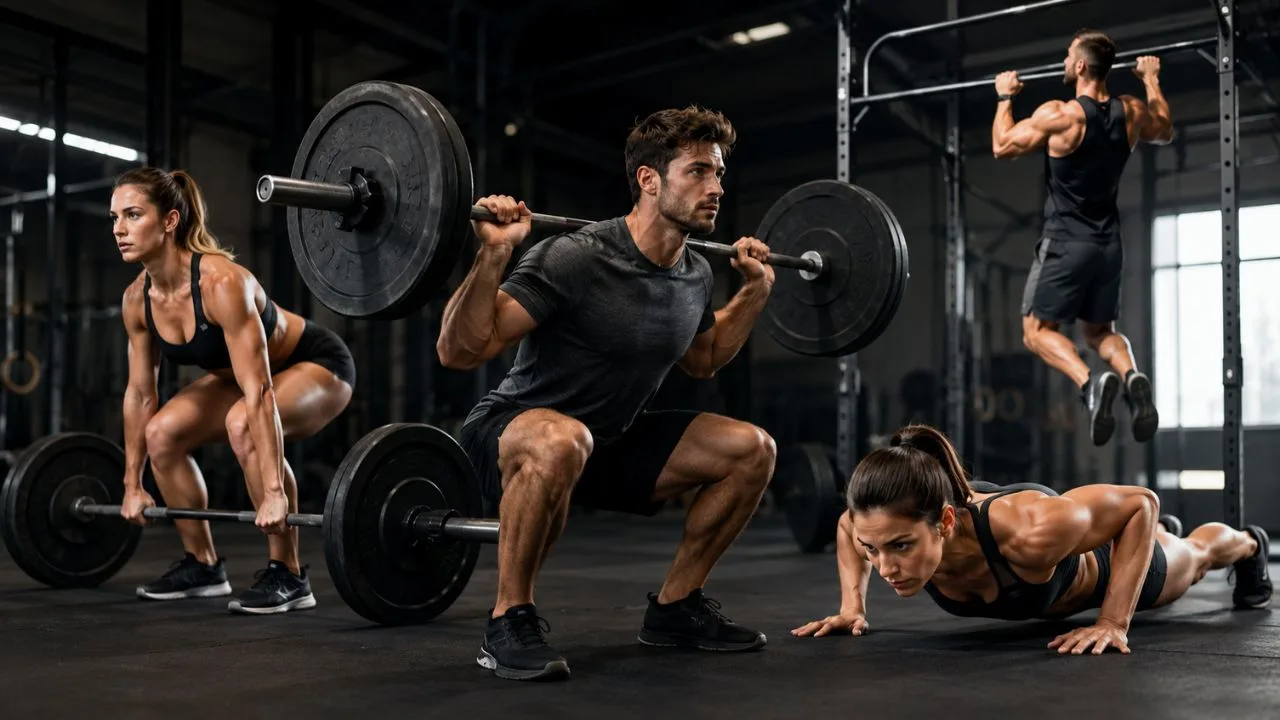

Compound Exercises: Best Moves for Full-Body Strength
Compound exercises are the foundation of many effective strength-training programs because they work several muscle groups at the same time. Instead of training one small area in isolation, movements such as squats, deadlifts, presses, rows, and pull-ups teach different parts of your body to work together as one coordinated system.
These multi-joint exercises can help you build strength, improve muscle development, and complete productive workouts without spending hours in the gym. They also resemble everyday movements, including lifting objects, standing from a chair, climbing stairs, pushing a door, and carrying groceries from one place to another.
However, compound movements are only effective when they match your current strength, mobility, experience, and goals. You do not need to perform the heaviest barbell versions to benefit. Dumbbells, resistance bands, machines, kettlebells, and bodyweight exercises can provide equally useful starting points for many beginners.
This guide explains what compound exercises are, why they matter, and which movements are best for full-body strength. You will also learn how to perform them safely, choose sets and repetitions, apply progressive overload, avoid common mistakes, and build a balanced compound exercise workout.
What Are Compound Exercises?
Compound exercises are movements that involve two or more joints and recruit several muscle groups during the same repetition. A squat, for example, requires movement at the hips, knees, and ankles while engaging the quadriceps, glutes, hamstrings, calves, core, and upper back.
A bench press is another compound movement because the shoulders and elbows work together. The chest, front shoulders, and triceps create the pressing force, while the upper back and core help stabilize the body. This cooperation allows you to move more resistance than most single-joint exercises permit.
Other common compound exercises include deadlifts, lunges, overhead presses, push-ups, pull-ups, rows, step-ups, dips, and loaded carries. Each movement emphasizes certain muscles, but none works in complete isolation. Stabilizing muscles contribute even when they are not the primary target.
Compound training can be performed with barbells, dumbbells, kettlebells, cables, machines, resistance bands, or your own body weight. The equipment matters less than selecting a movement you can control through a comfortable range of motion while gradually increasing the challenge.
Compound Exercises vs. Isolation Exercises
Isolation exercises mainly involve one joint and emphasize a smaller muscle group. Examples include biceps curls, triceps extensions, leg curls, calf raises, and lateral raises. These movements can be valuable, but they usually train fewer muscles per repetition than compound lifts.
Compound movements are generally more time-efficient when your goal is total-body strength. A row trains the back, rear shoulders, biceps, forearms, and grip together, while a biceps curl primarily targets the muscles responsible for bending the elbow.
That does not mean isolation exercises are unnecessary. They can strengthen an underdeveloped muscle, support rehabilitation, improve muscular balance, or add training volume without creating as much total fatigue. Bodybuilders also use them to develop specific areas that compound lifts may not stimulate fully.
A balanced program often starts with compound exercises while energy and concentration are highest. Isolation movements can then be added near the end of the workout. The right combination depends on your goals, available time, injury history, and preferred style of training.
Why Compound Exercises Are Effective for Full-Body Strength
Compound lifts allow several large muscle groups to contribute to one movement, which makes them useful for developing practical strength. A deadlift, for instance, requires the legs to push, the hips to extend, the back to remain stable, and the hands to maintain a secure grip.
These exercises also improve coordination between muscles. Your nervous system learns how to recruit the correct muscles in the correct sequence while controlling balance and joint position. Better coordination can make the same movement feel smoother and stronger even before significant muscle growth occurs.
Multi-joint movements can provide a strong muscle-building stimulus because they allow progressive increases in resistance, repetitions, or difficulty. When training is consistent and recovery is adequate, this progressive challenge encourages the body to adapt by becoming stronger and more capable.
Compound exercises are also efficient for people with limited workout time. A routine containing a squat, push, pull, hip hinge, and loaded carry can train most major muscle groups. You can then add smaller exercises only where additional work is needed.
Best Compound Exercises at a Glance
A complete strength program should include several basic movement patterns rather than relying on one favorite exercise. These patterns include squatting, hinging at the hips, pushing horizontally, pushing overhead, pulling horizontally, pulling vertically, carrying weight, and resisting unwanted core movement.
Squats, lunges, and step-ups primarily develop the lower body while requiring core stability. Deadlifts, Romanian deadlifts, hip thrusts, and kettlebell swings emphasize the posterior chain, including the glutes, hamstrings, and muscles that help support the spine.
Push-ups and bench presses train horizontal pushing strength, while overhead presses build the shoulders and triceps. Pull-ups, pulldowns, and rows train the upper back, arms, grip, and shoulder stabilizers, helping balance the pressing work in your routine.
Farmer’s carries, suitcase carries, sled pushes, and crawling variations add whole-body conditioning and stability. You do not need every exercise in one session. Choosing one movement from each important category is usually enough to create an effective full-body workout.
Squats for Lower-Body Strength
The squat is one of the most recognized compound exercises because it trains the hips, knees, and ankles together. The quadriceps and glutes perform much of the work, while the hamstrings, calves, abdominal muscles, and upper back help control posture and balance.
To perform a basic bodyweight squat, stand with your feet in a comfortable position and keep the entire foot connected to the floor. Sit your hips down while allowing your knees to bend and travel in the same general direction as your toes.
Descend only as far as you can maintain balance, control, and a comfortable spinal position. Then push through your feet and extend your knees and hips to stand. Your squat depth does not need to match someone else’s because limb lengths, mobility, and experience differ.
Beginners can start with chair squats, box squats, goblet squats, or supported squats. More experienced lifters may use front squats, back squats, safety-bar squats, or machine variations. The best squat is the version you can perform consistently without forcing painful positions.
Deadlifts and Hip-Hinge Exercises
The deadlift trains the hip-hinge pattern, which is used whenever you bend to lift something from the ground. It mainly develops the glutes, hamstrings, back, grip, and core while teaching you to create force through the hips without losing control of your trunk.
During a hip hinge, the hips move backward while the knees bend slightly. The spine remains stable as the torso leans forward, and the weight stays close to the body. You should feel tension through the hips and hamstrings rather than turning the movement into a deep squat.
Traditional barbell deadlifts are only one option. Romanian deadlifts, trap-bar deadlifts, kettlebell deadlifts, cable pull-throughs, hip thrusts, and glute bridges can develop similar muscles with different levels of technical difficulty and lower-back demand.
Start with a light resistance and learn to control the hinge before adding significant weight. Stop the descent when you can no longer move from the hips without rounding excessively or losing balance. A shorter range performed correctly is more useful than forcing the weight toward the floor.
Lunges, Split Squats and Step-Ups
Lunges are unilateral compound exercises, meaning each leg works somewhat independently. They train the quadriceps, glutes, hamstrings, calves, and core while challenging balance. This makes them useful for identifying and improving strength differences between the left and right sides.
A split squat keeps both feet in place while your body moves up and down. A lunge includes a step forward, backward, or sideways before returning to the starting position. Beginners often find stationary split squats easier because there is less movement to coordinate.
Step-ups train a similar pattern using a stable platform. Keep the full working foot on the surface and choose a height that allows you to rise without pushing excessively from the trailing leg. Drive through the elevated foot and control the descent instead of dropping quickly.
Reverse lunges are often more comfortable for beginners because stepping backward can reduce the balance and braking demands of a forward lunge. Start with body weight or light dumbbells, then gradually increase repetitions, range of motion, or resistance as control improves.
Bench Presses and Push-Ups
The bench press is a horizontal pushing exercise that targets the chest, triceps, and front shoulders. The upper back, legs, and core also contribute by creating a stable base. It can be performed with a barbell, dumbbells, cables, or a chest-press machine.
Lower the resistance with control while keeping your wrists reasonably stacked over your forearms. Your elbows should move in a comfortable path rather than flaring directly sideways. Press the weight upward without bouncing it off your chest or losing your stable position.
Push-ups train a similar pattern while requiring more active core control. Keep your body in a strong line and lower your chest between your hands. The elbows can travel slightly backward rather than pointing straight out to the sides.
Beginners can perform push-ups against a wall, countertop, bench, or sturdy bar. As strength increases, use a lower surface before progressing to the floor. Knee push-ups are another option, but incline push-ups often make it easier to practice the full-body position.
Overhead Presses for Shoulders and Upper-Body Strength
The overhead press develops the shoulders, triceps, upper chest, core, and upper-back stabilizers. It also requires the body to control the resistance as it travels above the head, making it a valuable movement for lifting and reaching tasks.
Begin with the weight near shoulder level and keep your wrists aligned with your forearms. Brace your midsection and press upward without excessively leaning backward. Finish with the arms overhead in a position that feels stable and does not create shoulder pain.
Dumbbells allow each arm to move independently and may feel more natural for some shoulders. A landmine press follows a forward and upward angle, making it a useful alternative when a fully vertical press feels uncomfortable or your overhead mobility is limited.
Seated presses provide more external stability, while standing presses increase the demand on the core and lower body. Neither version is automatically superior. Choose the variation that allows consistent technique and fits the other exercises in your program.
Rows, Pull-Ups and Pulldowns
Rows develop horizontal pulling strength by bringing the arms toward the torso. They train the upper back, rear shoulders, biceps, forearms, and grip. Strong pulling muscles support posture and help balance the pressing exercises commonly included in strength programs.
Popular variations include one-arm dumbbell rows, chest-supported rows, cable rows, machine rows, inverted rows, and barbell rows. Chest-supported versions reduce the need to hold a bent-over position, making them useful when lower-back fatigue limits your pulling work.
Pull-ups and chin-ups train vertical pulling strength. Pull-ups generally use an overhand grip, while chin-ups use an underhand or neutral grip and often involve the biceps more strongly. Both movements also require grip strength and control of the shoulder blades.
Assisted pull-up machines, resistance bands, and pulldown machines can help beginners develop the movement. Focus on pulling your elbows downward while keeping the motion controlled. Avoid swinging, kicking, or shortening every repetition simply to reach a higher number.
Farmer’s Carries and Loaded Carry Variations
A farmer’s carry involves walking while holding a weight in each hand. It may look simple, but it trains grip strength, posture, shoulders, upper back, legs, and core stability. It also teaches you to maintain control while moving under load.
Stand tall, hold the weights securely, and walk with controlled steps. Avoid leaning excessively, shrugging constantly, or allowing the weights to swing. Select a distance that lets you maintain posture from the first step to the last.
A suitcase carry uses one weight on one side of the body. Your abdominal muscles must resist bending toward the load, making it a useful anti-lateral-flexion core exercise. Perform equal work on both sides to maintain balanced training.
Other options include front-rack carries, overhead carries, bear-hug carries, and sled pushes. Each variation changes the challenge, so begin with the simplest version. Loaded carries are often placed near the end of a workout because they can fatigue the grip and entire body.
How Compound Exercises Train the Core
Your core does more than produce sit-ups or visible abdominal definition. It includes muscles around the abdomen, lower back, hips, pelvis, and diaphragm that help stabilize the trunk while force moves between the upper and lower body.
During a squat or deadlift, the core resists excessive bending and helps maintain a controlled trunk position. During a one-arm row or suitcase carry, it resists rotation or sideways movement. This stabilizing role is essential for transferring force efficiently.
Compound lifts can therefore strengthen the core without requiring a separate abdominal exercise during every workout. However, they may not develop every core function equally, especially when the exercises are heavily supported by machines or performed with very light resistance.
Planks, side planks, dead bugs, bird dogs, Pallof presses, and controlled carries can complement compound training. Add one or two core exercises when you want more direct stability work, but do not assume that endless crunches are required for full-body strength.
How Beginners Should Start Compound Training
Beginners should first learn a small group of movements rather than changing exercises constantly. A squat, hip hinge, push, pull, and carry can form the base of an effective routine. Practicing these patterns regularly makes it easier to improve technique and track progress.
Begin with body weight, resistance bands, machines, or light dumbbells when needed. Starting light is not a sign that the workout is ineffective. It gives you time to understand the movement and identify which variations feel comfortable for your joints.
Perform two or three full-body sessions each week with at least one recovery day between demanding workouts. This schedule provides frequent practice without requiring daily lifting. More training is not always better when sleep, food intake, stress, or recovery are limited.
Stop each set while you can still complete a few repetitions with good control. Training to complete muscular failure is not necessary for every set, especially when learning technical compound lifts. Consistent, high-quality practice creates a better foundation than repeatedly exhausting yourself.
Sets, Repetitions and Rest Periods
A beginner can often start with two or three sets of each compound exercise. Use approximately six to twelve controlled repetitions for most movements, depending on the resistance and goal. Loaded carries may be measured by distance or time instead.
For general strength, lower repetition ranges with moderately heavier resistance can be useful after technique is established. Muscle-building programs often include moderate repetition ranges, while endurance-focused sessions may use higher repetitions with lighter resistance.
Rest periods should be long enough to restore your breathing, concentration, and ability to perform the next set correctly. Larger exercises such as squats and deadlifts may require two or more minutes, while lighter assistance movements may need less time.
Do not shorten every rest period simply to make the workout feel more intense. Strength training quality depends on controlled effort and repeatable technique. Rushing between demanding sets can reduce performance and turn a strength workout into poorly controlled conditioning.
How to Use Progressive Overload
Progressive overload means gradually increasing the challenge placed on your muscles. This process encourages continued adaptation and prevents training from remaining at the same level indefinitely. Progress can occur without adding weight during every session.
You can increase repetitions while using the same resistance. For example, you might progress from three sets of eight repetitions to three sets of twelve. Once you reach the top of your planned range with good control, increase the weight slightly.
You can also add a set, improve range of motion, use a harder exercise variation, slow the lowering phase, or reduce assistance. Better technique can itself represent progress because it allows the correct muscles to perform more of the work.
Increase only one or two variables at a time. Rapid jumps in weight or volume can cause technique to deteriorate and recovery demands to rise suddenly. Slow progression may feel less exciting, but it usually supports more consistent strength gains.
Common Compound Exercise Mistakes
One common mistake is adding weight before learning the movement. Heavy resistance can hide poor control because momentum and compensation allow the repetition to continue. Reduce the load when your range of motion, balance, or joint position changes significantly.
Another mistake is copying another person’s stance or technique exactly. Limb lengths, mobility, body shape, injury history, and equipment can change how an exercise looks. A safe squat or deadlift does not need to appear identical for every person.
Some people perform too many compound exercises in one session. Several demanding lifts can create excessive fatigue, reduce technique quality, and make recovery difficult. A few well-chosen movements completed consistently are usually more productive than a long list of random exercises.
Ignoring pain is also a serious mistake. Muscular effort, fatigue, and mild discomfort are different from sharp, sudden, or worsening joint pain. Stop the exercise, adjust the variation, or seek qualified advice when pain continues instead of forcing yourself through it.
Sample Full-Body Compound Exercise Workout
Begin with a squat variation for three sets of eight to ten repetitions. A goblet squat, bodyweight box squat, or machine squat can work well. Choose a level that allows you to control the descent and stand without losing your balance.
Next, perform a hip-hinge movement for three sets of eight to twelve repetitions. Use a dumbbell Romanian deadlift, kettlebell deadlift, or hip thrust. Follow it with push-ups or a dumbbell bench press for three controlled sets.
Add a row or pulldown for three sets of eight to twelve repetitions, then complete two or three sets of an overhead press. Finish with farmer’s carries or suitcase carries for several short walks while maintaining steady posture and breathing.
This workout can be completed two or three times per week, with small adjustments to the exercises or repetitions. Keep at least one rest day between sessions at first. Warm up gradually and begin each exercise with a lighter practice set.
Best Compound Exercises for Home Workouts
A productive home strength workout does not require a barbell or large gym. Bodyweight squats, split squats, push-ups, glute bridges, step-ups, and crawling variations can train most major muscle groups using limited space.
Resistance bands make rows, pulldowns, presses, deadlifts, and assisted squats possible at home. Secure each band according to its instructions and inspect it for damage before training. Never attach a band to an unstable object.
A pair of adjustable dumbbells can add further progression. Use them for goblet squats, Romanian deadlifts, floor presses, overhead presses, one-arm rows, lunges, and farmer’s carries. Increasing repetitions and improving control can extend their usefulness.
Household items may also provide resistance, but safety must come first. A loaded backpack can support squats or carries when it is closed securely and comfortable to hold. Avoid lifting unstable furniture, fragile containers, or objects that are difficult to grip.
Recovery, Nutrition and Rest
Strength improves during the recovery period after training, not only while you are exercising. Muscles and connective tissues need time to adapt to the stress of compound movements. Training the same demanding exercises intensely every day can eventually reduce performance.
Sleep supports recovery, concentration, and exercise technique. Most people also benefit from eating enough total food and including protein across their daily meals. Carbohydrates can support training energy, while dietary fats contribute to overall health and meal satisfaction.
Mild muscle soreness may occur when beginning a new program or increasing training volume. It often develops several hours after exercise and improves within a few days. Severe pain, major swelling, weakness, or loss of normal movement is not typical soreness.
Schedule easier days when your body feels unusually fatigued or your performance has declined for several sessions. Reducing weight, sets, or exercise difficulty temporarily can support progress. Recovery adjustments are part of intelligent training rather than evidence of failure.
Safety Tips for Compound Exercises
Warm up with several minutes of easy movement and lighter versions of the exercises you plan to perform. A good warm-up should help you feel prepared rather than exhausted. Gradually increase the resistance across your first few practice sets.
Use safety bars, spotters, or machines when appropriate, particularly during heavy presses and squats. Learn how to set up equipment before beginning the set. Do not attempt a personal record without a safe way to end the repetition if you cannot complete it.
People with existing injuries, balance difficulties, cardiovascular conditions, pregnancy-related concerns, or recent surgery may need exercise modifications. A qualified healthcare professional or experienced trainer can help select suitable movements and intensity.
Stop exercising and seek medical help for chest pain, fainting, severe shortness of breath, sudden weakness, or another alarming symptom. Sharp joint pain, new numbness, or pain that worsens with each repetition also deserves attention rather than being treated as normal training discomfort.
Final Thoughts
Compound exercises are among the most efficient tools for building full-body strength. Squats, hinges, presses, rows, pull-ups, lunges, and carries recruit multiple muscles while improving coordination across several joints.
The best compound exercises are not necessarily the heaviest or most complicated versions. A goblet squat, machine press, assisted pull-up, or dumbbell deadlift can be highly effective when it matches your current ability and allows steady progression.
Build your routine around the major movement patterns and train them consistently. Use controlled repetitions, adequate rest, gradual progressive overload, and enough recovery between sessions. Add isolation exercises only when they support a specific goal or muscle group.
Strength training should make your body more capable rather than leaving you repeatedly injured or exhausted. Focus on sustainable improvement, adjust exercises when necessary, and judge progress across months instead of expecting dramatic results from one difficult workout.
What are the five main compound exercises?
The most commonly recognized compound lifts are the squat, deadlift, bench press, overhead press, and row or pull-up. Together, they train the major pushing, pulling, squatting, and hip-hinge movement patterns.
Are compound exercises good for beginners?
Yes. Beginners can use bodyweight, dumbbell, machine, or resistance-band variations while learning proper movement. The exercise should be adjusted to match current mobility, coordination, and strength.
Can compound exercises build muscle?
Compound exercises can build muscle when they provide enough resistance, training volume, and progressive overload. Adequate nutrition, protein, sleep, and recovery also influence muscle development.
How many compound exercises should I do per workout?
Most people can build an effective session around three to six compound movements. The right number depends on workout length, exercise difficulty, training experience, and how quickly you recover.
Should I do compound or isolation exercises first?
Compound exercises are usually performed first because they require more energy, coordination, and concentration. Isolation movements can follow afterward to train specific muscles or add targeted volume.