
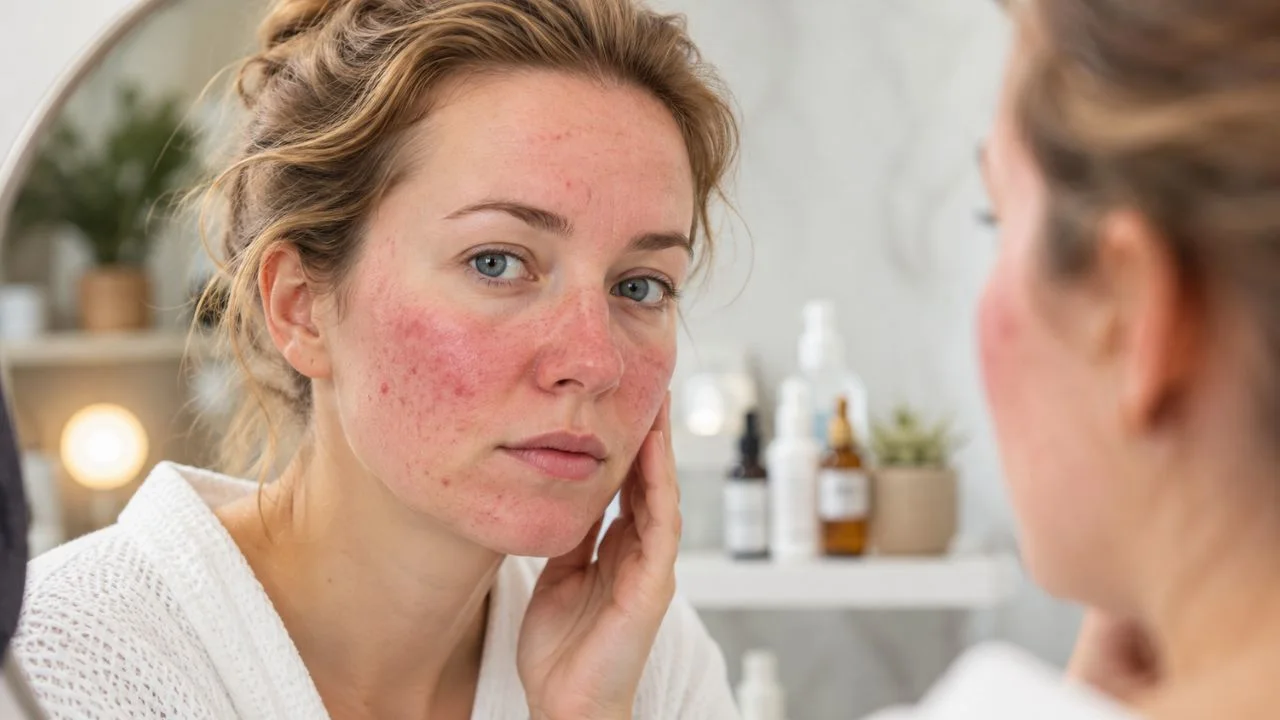

Papulopustular Rosacea: Recognise the Signs and Calm Flare-Ups
Papulopustular rosacea is a long-term inflammatory skin condition that causes red bumps and pus-filled spots, usually across the central face. These breakouts can resemble acne, but they develop through a different process and often appear alongside facial flushing, persistent discolouration, burning, sensitivity or visible blood vessels.
The condition most commonly affects the cheeks, nose, forehead and chin. Symptoms may improve for a period and then return during a flare-up. Some people experience only a few occasional bumps, while others develop widespread inflammation that becomes uncomfortable and difficult to cover with skincare products or makeup.
Papulopustular rosacea was previously called subtype 2 rosacea. Modern clinical guidance increasingly assesses rosacea according to individual features, or phenotypes, rather than placing every patient into one fixed subtype. Papules and pustules are now treated as major signs that may occur with redness, flushing, eye symptoms or visible facial blood vessels.
Rosacea has no permanent cure, but treatment can reduce bumps, control inflammation and make the skin feel more comfortable. The best plan depends on the symptoms and their severity. This article provides general information and should not replace an examination or personalised treatment from a qualified healthcare professional.
What Is Papulopustular Rosacea?
Papulopustular rosacea describes rosacea in which inflamed papules and pustules are prominent. Papules are solid, raised red bumps, while pustules contain visible fluid or pus. These blemishes often develop in groups across the middle of the face and may appear against a background of persistent redness or darker discolouration.
The appearance can vary according to skin tone. Redness may be obvious on lighter skin, while it may appear brown, purple or less visible on darker skin. Burning, warmth, swelling, sensitivity and changes in skin texture may therefore be important signs when facial redness is difficult to recognise.
Some people develop only a few scattered bumps, while moderate cases may involve many papules and pustules across the cheeks, nose, chin or forehead. Severe inflammation may include extensive breakouts, plaques, nodules, persistent discolouration, burning or stinging. A dermatologist can assess the complete pattern rather than relying on the number of spots alone.
Although the term papulopustular rosacea remains widely used, it does not mean that bumps and pustules are the person’s only symptoms. Flushing, sensitive skin, visible blood vessels and eye irritation may occur at the same time. Treatment therefore needs to address the individual features affecting each patient.
Common Signs and Symptoms
The most recognisable symptoms are dome-shaped red bumps and pus-filled pustules on the central face. They may develop quickly during a flare and can be mistaken for a sudden acne breakout. The surrounding skin may also feel swollen, warm, dry, rough, itchy, tender or unusually sensitive to ordinary products.
Persistent facial colour is another common sign. A person may initially notice temporary flushing after heat, exercise or emotional stress. Over time, the colour may remain for longer periods. The affected skin can also sting or burn when exposed to water, cleanser, sunscreen, makeup or other products.
Small facial blood vessels may become visible, particularly around the nose and cheeks. These vessels do not directly cause the pustules, but they may appear as part of the same rosacea pattern. Medication can help inflammatory bumps, while laser or light-based treatment may be considered separately for persistent redness or visible vessels.
Rosacea can also affect the eyes. Possible symptoms include redness, watering, dryness, itching, swollen eyelids, light sensitivity, recurrent styes or a gritty feeling. Eye symptoms should not be ignored because untreated ocular rosacea can sometimes damage the eye and affect vision.
Papulopustular Rosacea vs Acne
Papulopustular rosacea and acne can both cause inflamed bumps and pustules, which is why the conditions are frequently confused. Rosacea usually concentrates on the central face and often includes flushing, persistent redness, burning or sensitivity. Acne can affect the face but also commonly develops on the chest, shoulders and back.
Blackheads and whiteheads, medically called comedones, are common signs of acne. They are not considered typical features of rosacea. A person who has papules and pustules alongside comedones may have acne, or both acne and rosacea at the same time, rather than rosacea alone.
The two conditions may also respond differently to skincare. Strong acne treatments, abrasive exfoliation and frequent cleansing can irritate rosacea-prone skin. Products containing acids, alcohol, fragrance, menthol or astringents may increase burning, dryness and visible inflammation in people with highly sensitive rosacea.
Because acne, rosacea, dermatitis, lupus and other conditions can produce similar facial changes, self-diagnosis may lead to unsuitable treatment. A doctor usually examines the location and appearance of the bumps, asks about flushing and triggers, and checks for eye symptoms before deciding which condition is present.
What Causes Papulopustular Rosacea?
The exact cause of rosacea is not fully understood. Researchers continue to examine interactions involving the immune system, nerves, facial blood vessels, microorganisms and genetic susceptibility. These factors may make the skin react strongly to environmental or internal triggers that would not cause the same response in someone without rosacea.
Abnormal immune activity may contribute to facial inflammation. The American Academy of Dermatology notes that the way the body processes cathelicidin, a protein involved in skin defence, may play a role in colour changes and swelling. This does not mean rosacea is an infection or that it results from poor hygiene.
Rosacea can affect anyone, but it is diagnosed more often in middle-aged and older adults and in women. Cases in men may become more severe. The condition is also recognised more frequently in people with fair skin, although it may be underdiagnosed in darker skin because facial redness can be less noticeable.
A family history may increase the likelihood of developing rosacea, but the exact genetic contribution remains unclear. Rather than looking for one cause, doctors usually focus on recognising the visible features, identifying personal triggers and selecting treatments that control the symptoms affecting the individual patient.
Common Rosacea Triggers
Triggers do not cause rosacea, but they can make existing symptoms flare. Frequently reported examples include sunlight, hot weather, emotional stress, alcohol, spicy foods and overheating. A trigger that produces a strong reaction in one person may have little or no effect on another.
Temperature changes can be particularly important. Hot showers, saunas, intense exercise and warm indoor environments may increase flushing. Cold weather and strong wind can also irritate sensitive skin. Wearing suitable protection and preventing extreme changes in body or facial temperature may reduce some flares.
Skincare and haircare products can also trigger burning, dryness or bumps. Fragrance, alcohol, camphor, menthol, glycolic acid, lactic acid, sodium lauryl sulphate and astringents are among the ingredients dermatologists advise some rosacea patients to avoid when their skin is easily irritated.
Keeping a daily trigger diary can make patterns easier to identify. Record food, drinks, weather, exercise, stress, skincare products and symptom changes for several weeks. The goal is not to avoid every possible trigger but to find the specific situations that repeatedly worsen your own skin.
How Doctors Diagnose Rosacea
There is no single laboratory test that confirms papulopustular rosacea. Diagnosis is normally based on the appearance and location of the skin changes, the patient’s medical history and the presence of additional features such as flushing, persistent colour, visible blood vessels, sensitivity or eye irritation.
A healthcare professional may ask when the bumps began, how long each flare lasts and whether heat, sunlight, food, stress or products make symptoms worse. They may also examine the eyelids and eyes because ocular symptoms can appear before, during or after noticeable skin symptoms.
Diagnosis may be more difficult when redness is subtle or when another condition occurs at the same time. Acne, contact dermatitis, seborrhoeic dermatitis, lupus and keratosis pilaris can resemble parts of rosacea. In uncertain cases, further evaluation may be required to rule out other explanations.
Current assessment focuses on the specific features present rather than assuming every patient follows the same disease pattern. A person may need one treatment for papules and pustules, another for persistent redness and additional care for eye symptoms. This feature-based approach allows treatment to be more closely matched to the condition.
Papulopustular Rosacea Treatment
Mild cases are often treated first with a topical prescription. Depending on the patient, a dermatologist may recommend ivermectin, azelaic acid, metronidazole, minocycline foam or another approved product. These medicines work in different ways, so the correct option depends on the symptoms, skin sensitivity and medical history.
Moderate or widespread inflammation may require an oral medicine. Low-dose doxycycline can reduce inflammation at a dose below the usual antibiotic level. A clinician may sometimes prescribe an antibiotic dose for more difficult breakouts, generally for the shortest suitable period.
Severe or treatment-resistant rosacea may require specialist care. Oral retinoids such as isotretinoin are sometimes considered when other options have failed, but they can cause serious side effects and are not appropriate for everyone. They must only be used under close medical supervision.
Improvement is usually gradual rather than immediate. NIAMS notes that it may take three months or longer to see meaningful results. Once symptoms are controlled, a dermatologist may recommend a maintenance plan using fewer treatments, supported by consistent skincare, sun protection and trigger management.
A Gentle Skincare Routine
Cleanse the face gently, usually in the morning and evening, using lukewarm water and a mild fragrance-free cleanser suitable for sensitive skin. Apply it with clean fingertips instead of a washcloth, cleansing brush or rough sponge. Pat the face dry without rubbing or pulling the skin.
Follow cleansing with a fragrance-free moisturiser that supports the skin barrier. Rosacea-prone skin can become dry and easily irritated, and suitable moisturising may reduce roughness, peeling and discomfort. A cream may feel more protective and less irritating than a thin gel or alcohol-based lotion.
Apply a gentle broad-spectrum sunscreen with an SPF of at least 30 every day. The American Academy of Dermatology recommends considering fragrance-free mineral sunscreens containing zinc oxide, titanium dioxide or both because they may be less irritating to sensitive rosacea-prone skin.
Introduce only one new product at a time and test it before applying it widely. Avoid scrubs, harsh toners, rough cleansing tools and products that cause immediate burning or stinging. Skincare can support medical treatment, but it cannot replace prescription therapy when inflammatory bumps are persistent or severe.
Makeup and Daily Management
People with papulopustular rosacea can usually wear makeup, but product selection matters. Choose lightweight, fragrance-free products intended for sensitive skin. A liquid foundation that spreads easily may require less rubbing than a heavy or waterproof formula, reducing the chance of irritating active bumps.
Apply moisturiser and sunscreen before makeup, allowing each layer time to settle. Use clean fingers, brushes or sponges and wash reusable tools regularly. Remove makeup gently at the end of the day rather than sleeping in it or scrubbing repeatedly to remove long-wearing products.
Green-tinted makeup can visually reduce the appearance of facial redness, although it does not treat inflammation. Avoid squeezing, picking or covering individual pustules with multiple heavy layers. Physical pressure can increase irritation and make it harder to see whether the prescribed treatment is improving the skin.
Daily management should also include realistic expectations. Flare-ups can still happen even when someone follows treatment carefully. Instead of changing several products after every breakout, record possible triggers, continue the prescribed plan and contact the treating clinician when symptoms are worsening or the medication is causing problems.
When to See a Doctor
Arrange a medical appointment when facial redness, bumps or pustules keep returning, cause discomfort or fail to improve with gentle skincare. An accurate diagnosis is important because rosacea can resemble acne and several forms of dermatitis, yet the treatments used for those conditions may not be appropriate for sensitive rosacea-prone skin.
Seek follow-up care when prescribed treatment is not helping, symptoms are becoming more widespread or the skin begins to thicken. Early assessment of thickening, particularly around the nose, may improve the available treatment options and reduce the risk of permanent changes.
Eye pain, blurred vision, sensitivity to light, marked redness or a persistent gritty feeling require urgent medical advice. These symptoms may indicate inflammation affecting the surface of the eye. Untreated eye involvement can occasionally lead to damage and vision problems.
A dermatologist is the main specialist for skin rosacea, while an ophthalmologist may become involved when symptoms affect the eyes. Treatment should be personalised, particularly during pregnancy, when taking other medicines or when considering oral antibiotics or retinoids.
Frequently Asked Questions
Is papulopustular rosacea a form of acne?
No. It can resemble acne because it causes papules and pustules, but rosacea is a separate inflammatory condition. Blackheads and whiteheads are generally associated with acne rather than rosacea.
Can papulopustular rosacea be cured?
There is currently no permanent cure, but medication, gentle skincare, sun protection and trigger management can control symptoms and reduce flare-ups.
What is the best treatment for papulopustular rosacea?
There is no single treatment that is best for everyone. Doctors may use topical ivermectin, azelaic acid, metronidazole or other medicines, while moderate cases may require oral doxycycline.
Should I pop rosacea pustules?
No. Squeezing or picking pustules can increase irritation and damage the skin. Use gentle skincare and follow a clinician’s treatment plan instead of attempting to drain the bumps.
How long does rosacea treatment take to work?
Improvement is gradual and may take several weeks or three months or longer. Continue the prescribed treatment unless your clinician advises otherwise or you develop a concerning reaction.
Conclusion: Managing Papulopustular Rosacea
Papulopustular rosacea causes acne-like red bumps and pus-filled spots, usually across the cheeks, nose, forehead and chin. Unlike ordinary acne, it frequently occurs with flushing, persistent facial colour, burning, sensitivity or visible blood vessels and generally does not produce comedones.
Effective management begins with an accurate diagnosis. A dermatologist can separate rosacea from acne, dermatitis and other conditions, assess the severity of the inflammation and check for eye symptoms. Treatment may involve topical medication, oral anti-inflammatory therapy or a combination based on the individual features present.
Gentle daily care can make medical treatment easier to tolerate. Use a mild cleanser, fragrance-free moisturiser and broad-spectrum SPF 30 sunscreen while avoiding rough exfoliation and irritating ingredients. Track personal triggers instead of removing every commonly reported food or activity without evidence that it affects your skin.
Do not ignore worsening inflammation, skin thickening or eye discomfort. Rosacea is long-lasting, but consistent treatment can reduce its visible and uncomfortable effects. With professional guidance and a simple routine, many people can achieve longer periods of calmer, more comfortable skin.