
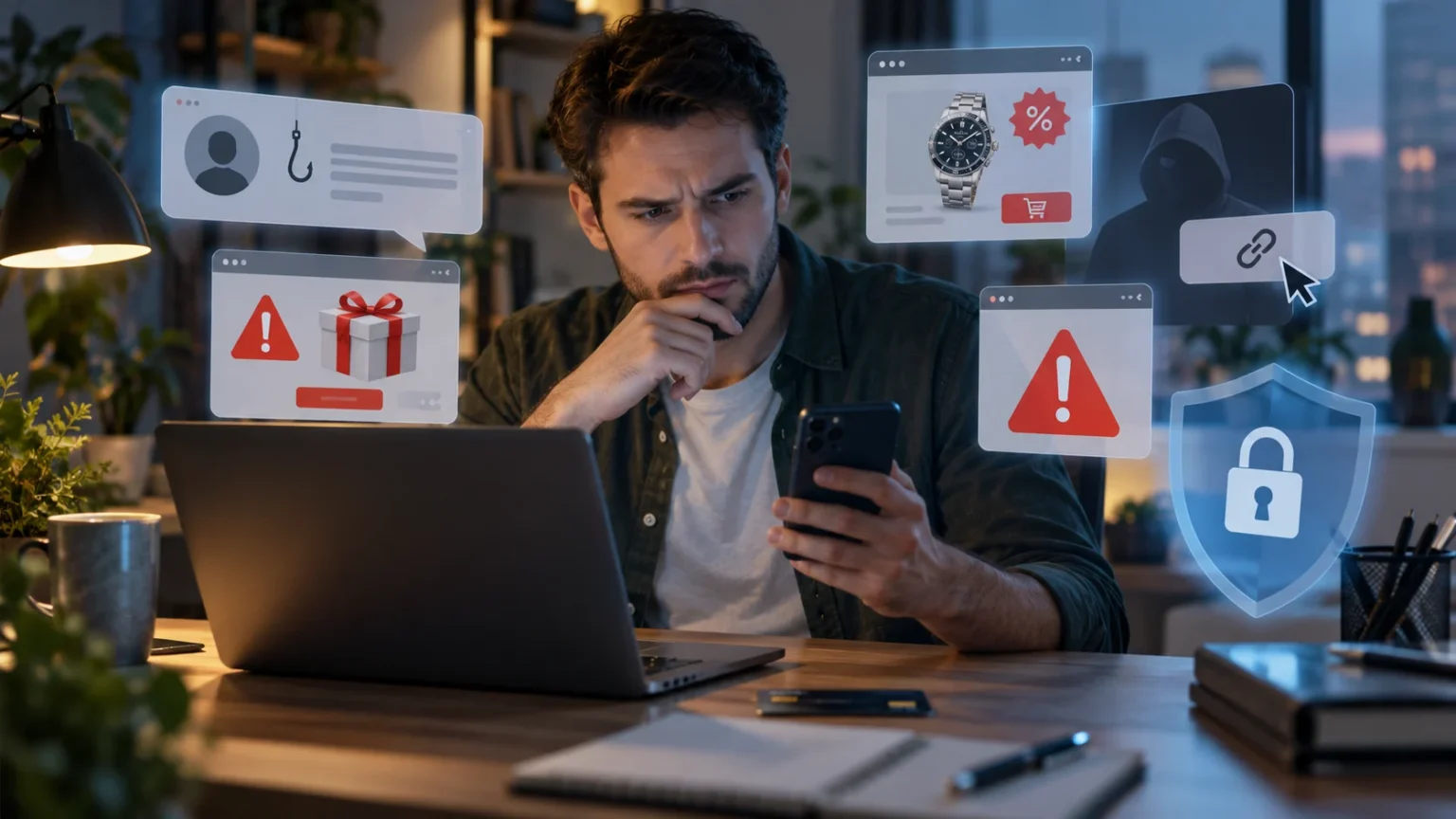

Online scams can appear almost anywhere, including email, social media, shopping websites, text messages, messaging apps, and online marketplaces. Some scams promise unbelievable discounts, prizes, jobs, investments, or urgent refunds, while others imitate trusted companies to steal passwords and payment details. Because many fraudulent offers now look professional, spotting them is not always as easy as finding spelling mistakes or suspicious graphics.
Avoiding online scams requires a combination of caution, verification, strong account security, and awareness of common manipulation tactics. You do not need to distrust every online offer, but you should slow down when something creates urgency or seems unusually generous. A few careful checks can often reveal whether an opportunity is genuine before you send money or share sensitive information.
Be Suspicious of Offers That Seem Too Good to Be True
Scammers often attract attention with offers that appear significantly better than anything available elsewhere. You may see expensive products at extremely low prices, guaranteed investment returns, high-paying jobs requiring little work, or prizes you never entered to win. These offers are designed to create excitement strong enough to make you ignore obvious warning signs.
Before acting, compare the offer with normal market prices and conditions. If a new laptop usually costs hundreds of dollars, a website offering it for a tiny fraction of that price deserves careful investigation. Genuine businesses may run discounts, but dramatic price differences without a clear explanation can indicate counterfeit products, fake stores, or payment scams.
Do not allow scarcity messages to rush your decision. Claims such as “only two left,” “offer ends in five minutes,” or “act now or lose your reward” may be used to stop you from researching. A legitimate opportunity should survive a few minutes of verification, while a scam often depends on you reacting before thinking.
Check the Website Before Entering Personal Information
A professional-looking website does not automatically mean the business behind it is trustworthy. Scammers can copy logos, product images, layouts, and company descriptions from legitimate websites within a short time. Before entering payment details or creating an account, examine the web address carefully and look for unusual spelling, extra characters, or unfamiliar domain variations.
Search for basic business information such as clear contact details, return policies, customer support options, and consistent company branding. A website containing copied text, broken pages, vague policies, or only one questionable contact method deserves caution. However, remember that sophisticated scam websites can still include convincing policies and professional design.
Do not assume the padlock symbol in your browser proves that a store is legitimate. HTTPS protects the connection between your browser and the website, but fraudulent sites can also use encryption. Treat secure connections as a basic requirement rather than proof that the people operating the website are trustworthy.
Watch for Phishing Messages and Fake Login Pages
Many online scams begin with a message claiming there is a problem with your account, payment, delivery, subscription, or security. The message usually includes a link that leads to a fake login page. Once you enter your username and password, those credentials can be collected and used against the real account.
Understanding phishing attacks can help you recognize common warning signs before entering sensitive information. Be cautious with unexpected requests for passwords, verification codes, banking details, or urgent account confirmation. A familiar company name or logo does not prove the message actually came from that organization.
Instead of clicking an unexpected link, open the official application or type the known website address into your browser yourself. Check whether the same warning appears inside your real account. This simple habit can prevent many phishing scams because you avoid relying on links controlled by the person who sent the suspicious message.
Verify the Seller Before Shopping Online
Fake online stores often attract customers through social media advertisements, search results, or unusually large discounts. Before purchasing from an unfamiliar seller, research the company independently. Look for a consistent online presence, realistic customer feedback, clear policies, and contact information that appears connected to a genuine business.
Be cautious when every review is extremely positive or written in a similar style. Fraudulent stores may publish fake testimonials to create artificial trust. Reviews from independent sources can be more useful, although no review platform is perfect and even legitimate businesses may occasionally receive negative feedback.
Pay attention to how long the business appears to have been operating and whether its social media accounts show normal activity. Newly created profiles filled with expensive products and aggressive discount advertising deserve extra scrutiny. You do not need to avoid every new business, but newer sellers should provide enough information to justify your trust.
Never Send Money Through Unusual Payment Methods
Scammers often request payment methods that are difficult to reverse or trace. They may ask for cryptocurrency, gift cards, direct transfers, or other forms of payment that offer limited buyer protection. Once the money is sent, recovering it may be much harder than disputing a transaction through a protected payment service.
Gift card requests are particularly suspicious when connected to taxes, technical support, account problems, employment fees, or emergencies. Legitimate organizations generally do not require customers to purchase gift cards and provide the codes as payment. Anyone creating urgency around gift card numbers should be treated with extreme caution.
When shopping online, prefer payment options that provide reasonable fraud protection and dispute processes. Avoid saving payment details on websites you do not fully trust. If a seller refuses normal payment methods and insists on a difficult-to-recover transfer, consider that a serious warning sign rather than a minor inconvenience.
Protect Your Accounts With Strong Authentication
Scammers may target your login credentials even when they cannot convince you to send money directly. Once they control an email or social media account, they may impersonate you, reset passwords, contact your friends, or access saved information. Strong account protection can limit the damage if one scam successfully captures your password.
Use a different password for every important account rather than repeating the same credentials across multiple services. A password manager can help generate and store long, unique passwords without requiring you to memorize each one. Password reuse makes one successful phishing attack much more dangerous because attackers can try the same credentials elsewhere.
Enable multi-factor authentication whenever possible, especially on email, banking, social media, and financial accounts. An additional verification step can stop some unauthorized logins even when the password is stolen. Never share authentication codes with someone who contacts you unexpectedly, because scammers may ask for the code needed to complete their own login attempt.
Be Careful With Fake Job Offers
Online job scams often promise excellent salaries, flexible schedules, and immediate hiring without a realistic interview process. Fraudsters may impersonate established companies or recruiters and contact people through email, messaging apps, or social networks. The goal may be to steal personal information, collect fake fees, or involve victims in fraudulent financial activity.
A legitimate employer should not normally require you to pay upfront for a job opportunity. Requests for training fees, equipment payments, registration charges, or gift cards before employment begins deserve careful verification. Some scammers also send fake checks and ask applicants to purchase equipment before the fraudulent payment is eventually reversed.
Verify the position through the company’s official website and independently confirmed contact information. Do not rely entirely on the links or phone numbers provided by the person offering the job. Be especially cautious when interviews happen only through text messages and the employer pressures you to provide identity or banking information immediately.
Recognize Investment and Cryptocurrency Scams
Investment scams often promise unusually high returns with little or no risk. Fraudsters may present fake trading dashboards, testimonials, celebrity endorsements, or screenshots showing impressive profits. These tactics create the impression that other people are already making money and that delaying your investment means missing a rare opportunity.
Never make an investment decision solely because someone contacted you unexpectedly online. Research the company, platform, and people involved through independent sources before sending funds. Be cautious when someone guarantees profit because genuine investments involve uncertainty and no trustworthy person can promise that every investment will increase in value.
Cryptocurrency transactions can be particularly attractive to scammers because payments may be difficult to reverse. Fraudsters may demand additional taxes, release charges, or verification fees before allowing fake profits to be withdrawn. If you must keep sending more money to access money you supposedly already earned, treat the situation as highly suspicious.
Avoid Social Media Giveaway and Impersonation Scams
Fake giveaways are common on social media because scammers can easily copy profile photos, names, logos, and recent posts from well-known creators or businesses. A fraudulent account may tell you that you won a prize and only need to provide personal details, pay shipping, or follow a payment link to claim it.
Check the profile carefully before responding. Look at the exact username, account history, follower patterns, verification status when relevant, and whether the genuine brand announced the same promotion publicly. Small spelling differences can be easy to overlook when the account uses the same profile picture and branding as the real page.
Never send passwords, authentication codes, or financial information simply to receive a prize. Legitimate giveaways should have clear rules and should not require winners to pay suspicious fees through unusual methods. If you never entered a competition, an unexpected message claiming you won should immediately trigger additional skepticism.
Protect Yourself From Romance and Friendship Scams
Online relationship scams often develop slowly because the scammer wants to build emotional trust before asking for money. They may communicate frequently, share personal stories, and create a strong connection while avoiding in-person meetings. Eventually, an emergency, travel problem, medical expense, or business opportunity may be used to justify a financial request.
Be cautious when someone you have never met repeatedly creates excuses for why video calls or face-to-face meetings are impossible. Photographs and personal details can be stolen from real people, so images alone cannot prove identity. Reverse image searching or independent verification may help when circumstances repeatedly seem inconsistent.
Do not send money or financial information because you feel pressured to prove trust or affection. Emotional manipulation can make scams especially difficult to recognize because victims become invested in the relationship. Discussing the situation with a trusted friend or family member can provide useful perspective before making major financial decisions.
Limit the Personal Information Scammers Can Find
Scammers can create more convincing stories when large amounts of personal information are publicly available. Social media profiles may reveal birthdays, workplaces, family members, travel plans, phone numbers, pets, and other details. These facts can be incorporated into phishing messages or used to answer common account recovery questions.
Review the privacy settings on your social accounts and remove information that strangers do not need. Avoid publicly sharing identification documents, financial details, addresses, or real-time travel information. Even seemingly harmless posts can provide context that helps an attacker impersonate someone you know or create a believable emergency.
You should also be cautious about online quizzes and surveys requesting personal information. Questions about your first school, childhood address, mother’s name, or favorite things may resemble security questions used by some services. Do not provide sensitive identity information simply because the request appears entertaining or harmless.
Know What to Do If You Fall for a Scam
If you entered a password on a suspicious website, change it immediately through the legitimate service. Change the same password anywhere else you reused it and enable multi-factor authentication. Review recent account activity and remove unfamiliar devices, sessions, recovery methods, or forwarding settings that may indicate unauthorized access.
If you sent money or exposed payment information, contact your bank or payment provider as quickly as possible. Explain what happened and ask whether the transaction can be stopped, disputed, or monitored. Acting quickly may improve your options, although recovery cannot be guaranteed depending on the payment method and circumstances.
Keep screenshots, messages, receipts, email addresses, usernames, and transaction details connected to the scam. This information can help when reporting the incident to relevant platforms, financial institutions, employers, or authorities. Do not continue sending money simply because the scammer promises to return earlier payments after one final fee.
Build a Simple Habit of Verifying Before You Trust
The strongest defense against many online scams is slowing down. Fraudsters frequently create urgency because they do not want you to research, call someone, compare prices, or think carefully. Giving yourself even a few additional minutes can reveal inconsistencies that were easy to miss during the first emotional reaction.
Verify important claims through a second source whenever money, passwords, or personal information are involved. Contact companies through official websites, call people through saved phone numbers, and confirm unusual workplace requests through another trusted channel. Independent verification breaks many scams because the attacker no longer controls every source of information you are using.
Online safety does not require assuming everyone is dishonest. It means recognizing when the potential consequences justify a little extra caution. Developing a consistent verification habit can protect you from fake stores, phishing messages, investment fraud, impersonation schemes, and other scams without making everyday online activity unnecessarily difficult.
Conclusion
Avoiding online scams and fake offers starts with recognizing how scammers influence decisions. They often use urgency, unrealistic rewards, emotional pressure, authority, or familiar branding to make suspicious requests feel legitimate. Slowing down and examining the offer carefully can prevent excitement or fear from overriding good judgment.
Protect yourself further by using unique passwords, enabling multi-factor authentication, limiting public personal information, and choosing safer payment methods. Verify unfamiliar sellers, job offers, investments, giveaways, and unexpected account messages independently. Never assume a professional website, recognizable logo, or convincing profile automatically proves that the person behind it is trustworthy.
If you make a mistake, act quickly rather than feeling embarrassed or hoping the problem disappears. Change compromised passwords, contact financial providers, secure affected accounts, and preserve evidence. Online scams continue to evolve, but strong verification habits and basic account security can make many fraudulent offers much easier to recognize and avoid.
FAQs
How can I tell if an online offer is fake?
Watch for unrealistic discounts, urgent deadlines, unusual payment methods, unclear company information, and requests for sensitive data. Verify the business or offer independently before sending money or entering account credentials.
What should I do before buying from an unfamiliar website?
Check the exact website address, company details, independent reviews, contact information, payment options, and return policies. Avoid purchasing if important information appears inconsistent, copied, vague, or intentionally difficult to verify.
Why do scammers create urgent messages?
Urgency reduces the time you have to think, research, or ask someone for advice. Scammers want you to react emotionally before noticing inconsistencies or verifying whether the request is genuine.
What payment methods should I avoid with suspicious sellers?
Be cautious when unfamiliar sellers insist on gift cards, cryptocurrency, or difficult-to-reverse transfers. Safer payment options generally provide clearer transaction records and stronger fraud or dispute protections.
What should I do if I gave a scammer my password?
Change the password immediately, replace it anywhere you reused it, enable multi-factor authentication, and review recent account activity. Secure your email first if it can reset passwords for other services.