
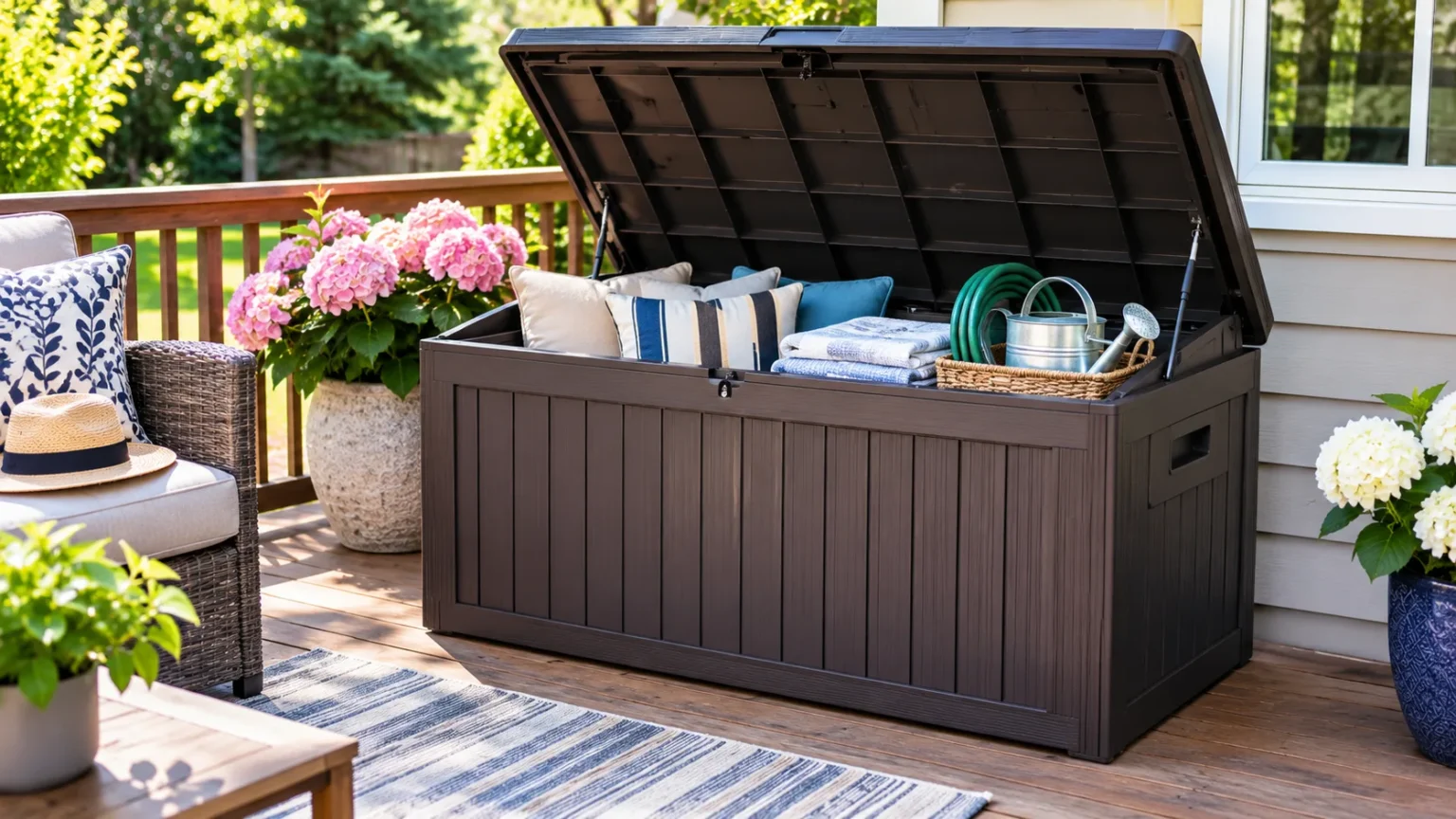

Keeping your outdoor space clean and organized can become difficult when cushions, gardening tools, pool accessories, and children’s toys are scattered across the patio. Exposure to sunlight, rain, and dust can also damage items that are not stored properly. A deck box provides a convenient way to protect outdoor essentials while maintaining a tidy appearance. Choosing the right one can make everyday outdoor living much easier.
A deck box is an outdoor storage container designed to hold items commonly used on decks, patios, balconies, and in gardens. These boxes come in different materials, sizes, and styles, including resin, plastic, wood, and metal. Some models also provide additional seating or serve as decorative furniture.
This practical guide explains what a deck box is, how it works, and how to choose the best option for your outdoor space. You will also learn about storage capacity, weather resistance, materials, placement, maintenance, and common buying mistakes.
What Is a Deck Box?
A deck box is a storage container designed for outdoor use, providing a convenient place to keep items protected and organized. It is commonly placed on patios, decks, balconies, or near swimming pools. Most deck boxes feature a hinged or removable lid that allows users to access stored belongings without moving the entire container.
Outdoor deck boxes are available in different sizes and materials to accommodate various storage needs. Smaller models may hold gardening gloves and lightweight accessories, while larger containers can accommodate patio cushions, pool supplies, and outdoor toys. Many designs are made to coordinate with existing outdoor furniture.
The main purpose of a deck box is to reduce clutter and provide practical storage near the areas where items are frequently used. Instead of carrying accessories back and forth between the house and garden, homeowners can keep appropriate belongings nearby. A well-chosen box can also contribute to the overall appearance of an outdoor living space.
Why Do You Need a Deck Box?
A deck box helps organize outdoor belongings that might otherwise remain scattered around the patio or garden. Cushions, small gardening accessories, and children’s outdoor toys can quickly create clutter. Having one designated storage space makes these items easier to find and helps maintain a cleaner environment.
Another benefit is protection from weather-related exposure. Many outdoor storage boxes are designed to resist rain, moisture, and ultraviolet radiation. Although the level of protection varies between models, suitable storage can reduce unnecessary exposure and help preserve the condition of outdoor accessories.
A deck box can also improve convenience because frequently used items remain close to their intended location. Some models provide additional functions, such as seating or tabletop space when the manufacturer specifically designs them for those purposes. These practical features make deck boxes useful for both small patios and spacious outdoor areas.
Different Types of Deck Boxes
Deck boxes are available in several designs, each intended to serve different storage needs. Standard outdoor storage boxes typically feature a rectangular shape with a hinged lid. They are suitable for general items such as cushions, gardening supplies, and outdoor equipment that require convenient access.
Bench-style deck boxes combine storage with a seating surface when they are specifically rated for sitting. These models can be useful on smaller patios because they provide two functions within the same space. Some designs include backrests or decorative details that make them resemble traditional outdoor benches.
Other options include vertical storage boxes, compact balcony containers, and larger patio storage chests. Tall designs may be useful when floor space is limited, while larger rectangular boxes provide additional capacity for bulky items. Choosing the right type depends on available space, storage requirements, and the items you intend to keep inside.
How to Choose the Right Deck Box Size
Choosing the correct deck box size begins with identifying the items you want to store. Measure larger belongings, such as patio cushions, before comparing storage containers. Interior dimensions are particularly important because a box may have a large exterior but provide less usable storage space than expected.
Deck box capacity is commonly measured in gallons or liters. Smaller boxes may hold approximately 20 to 50 gallons, while medium-sized options often provide around 70 to 120 gallons. Larger models can exceed 150 gallons, although actual capacity varies by manufacturer and design.
Consider the available outdoor floor space before purchasing. A large deck box may provide useful storage but interfere with walkways, doors, or other furniture. Allow enough clearance for opening the lid and reaching stored items comfortably. Measuring both the container and its intended location helps prevent inconvenient placement.
Best Materials for Outdoor Deck Boxes
The material used to construct a deck box influences its durability, appearance, weight, and maintenance requirements. Common options include resin, plastic, wood, and metal. Each material provides different advantages depending on the local climate, storage needs, and preferred outdoor decorating style.
Resin and durable plastic are popular because they are generally easy to clean and resistant to many outdoor conditions. Wooden deck boxes can provide a traditional appearance, particularly when paired with natural garden furniture. Metal options may offer sturdy construction, although protective coatings are important for reducing corrosion.
No material is completely maintenance-free under every condition. Strong sunlight, standing water, temperature changes, and physical damage can affect outdoor storage containers over time. Selecting suitable construction materials and following manufacturer care instructions helps maintain both functionality and appearance.
Are Resin Deck Boxes a Good Choice?
Resin deck boxes are popular because they combine relatively lightweight construction with practical weather resistance. Many models are designed to tolerate outdoor exposure without requiring painting or regular sealing. This makes them attractive for homeowners who prefer storage solutions that require relatively little maintenance.
Another advantage is the variety of available designs. Resin boxes may feature wood-inspired textures, neutral colors, and decorative paneling that coordinate with outdoor furniture. Some models are also reinforced to improve rigidity, although structural strength and seating capacity depend on the specific product.
Resin containers still have limitations because prolonged sunlight, extreme temperatures, and repeated impacts may affect their condition. Lower-quality models can become brittle or lose their appearance over time. Checking product specifications, ultraviolet resistance, and warranty information helps determine whether a particular resin deck box suits your outdoor environment.
Wooden Deck Boxes for a Natural Look
Wooden deck boxes provide a classic appearance that can complement garden furniture, wooden decks, and traditional patios. Their natural textures introduce warmth and character into outdoor spaces. Common construction materials may include cedar, teak, or other woods selected for their appearance and suitability for outdoor use.
One advantage of wood is its design flexibility. Wooden storage boxes can be painted, stained, or finished to complement nearby furniture. However, finishing products should be compatible with the wood species and outdoor conditions. Proper construction and drainage are also important for reducing moisture-related problems.
Wood generally requires more maintenance than many resin alternatives. Rain, humidity, insects, and sunlight can affect untreated or poorly maintained surfaces. Regular inspection and appropriate finishing can help protect the container, making wooden deck boxes suitable for homeowners who appreciate natural materials and are comfortable with occasional upkeep.
Metal Deck Boxes: Strength and Durability
Metal deck boxes provide a different combination of appearance and structural performance. Some are made from galvanized steel, aluminum, or coated metal panels. Their designs may suit modern outdoor spaces where homeowners prefer clean lines and practical storage with a more industrial appearance.
Metal construction can provide sturdy panels, although overall durability depends on thickness, joints, coatings, and manufacturing quality. Aluminum generally resists corrosion well, while steel may require protective finishes to reduce rust. Weather exposure and damage to coatings can influence the useful life of a metal storage container.
Another consideration is temperature because metal surfaces may become hot when exposed to strong sunlight. Some metal boxes can also be heavier than plastic alternatives. Evaluating ventilation, lid design, and manufacturer recommendations helps determine whether a metal deck box is appropriate for the belongings you plan to store.
Waterproof vs. Weather-Resistant Deck Boxes
Waterproof and weather-resistant are terms commonly used when describing outdoor storage products, but they do not always mean the same thing. A weather-resistant deck box is generally designed to withstand some exposure to rain and moisture. However, water may still enter during heavy storms, flooding, or prolonged wet conditions.
A box marketed as waterproof may include features intended to limit water entry, such as overlapping lids, seals, or specialized construction. However, performance depends on the manufacturer’s design and testing. Even containers described as waterproof may not be suitable for complete submersion or standing water.
For items that must remain completely dry, consider additional protection such as sealed storage bags or moisture-resistant containers inside the deck box. Keep the box on a suitable surface that allows drainage. Reading product specifications carefully is more reliable than assuming that every outdoor storage container provides complete water protection.
Deck Boxes With Built-In Seating
A deck box with built-in seating can provide useful storage and an additional place to sit outdoors. These models are especially practical when patio space is limited. However, only boxes specifically designed and rated for seating should be used this way, because ordinary lids may not support a person’s weight.
Seating deck boxes often feature reinforced lids and stable frames intended to handle normal sitting loads. Some designs resemble benches, while others have simple flat tops. Check the manufacturer’s weight capacity and assembly requirements before using the box as outdoor furniture.
Comfort can be improved with suitable outdoor cushions when permitted by the manufacturer. However, cushions should not obstruct lid operation or create instability. Combining storage and seating can help make a smaller patio more functional while reducing the need for separate furniture pieces.
What Can You Store in a Deck Box?
Deck boxes are commonly used to store patio cushions, outdoor blankets, garden gloves, toys, and pool accessories. Keeping these items together helps reduce clutter and makes outdoor activities easier to prepare for. Suitable storage also reduces unnecessary exposure to sunlight, dust, and occasional moisture.
Garden accessories such as small hand tools, empty pots, and lightweight watering attachments may also fit inside a deck box. However, sharp objects should be protected to prevent damage to the container or injury during access. Wet items should generally be cleaned and dried before storage to reduce moisture buildup.
Avoid using ordinary deck boxes to store gasoline, hazardous chemicals, propane cylinders, or other dangerous materials. These substances require storage arrangements that follow applicable safety rules and manufacturer instructions. Food and items highly sensitive to heat or humidity may also be unsuitable for outdoor storage.
How to Organize a Deck Box Efficiently
Good organization helps you make better use of the available space inside a deck box. Begin by grouping similar items, such as cushions, gardening accessories, and outdoor games. This makes belongings easier to locate and reduces unnecessary searching when preparing for outdoor activities.
Small baskets or suitable containers can help separate lightweight accessories from larger objects. Items used frequently should remain easy to reach, while seasonal belongings can be placed farther inside. Avoid packing the container so tightly that opening the lid or removing items becomes difficult.
Regular organization also helps identify belongings that are damaged or no longer needed. Remove unnecessary items and clean the interior periodically. A simple arrangement with clear categories is often more practical than using too many small compartments that reduce available storage space.
Best Deck Box Placement Ideas
Choosing the right location for a deck box improves both convenience and long-term performance. A spot near patio seating may be ideal for storing cushions and outdoor accessories. Placing the container close to the items it supports reduces unnecessary movement and makes everyday outdoor activities easier.
Deck boxes should generally sit on stable, reasonably level surfaces that provide appropriate drainage. Avoid locations where water collects after rainfall. Keeping the container away from constantly wet areas can help reduce moisture problems and protect both the box and its contents.
Consider how the box fits into the overall outdoor layout. It should not block doors, steps, emergency exits, or commonly used walking routes. Leave adequate room for the lid to open fully and for users to reach stored belongings without moving nearby furniture.
Deck Box Ideas for Small Patios and Balconies
Small patios and balconies benefit from compact storage solutions that provide useful capacity without occupying excessive floor space. A narrow deck box can fit against a suitable wall or railing area. Choosing a simple design helps keep the outdoor space functional and visually organized.
Bench-style deck boxes may provide additional value when space is limited because they can combine seating with storage. However, confirm the product’s seating capacity before using it as a bench. Lightweight containers may also be easier to reposition when cleaning or adjusting furniture.
For balconies, consider building rules, drainage requirements, wind exposure, and permitted loading before adding storage furniture. Large containers can become heavy when filled with belongings. Selecting a suitable size and maintaining clear access routes helps create a more comfortable and practical outdoor arrangement.
How to Protect Patio Cushions in a Deck Box
Patio cushions are among the most common items stored in deck boxes because they can be bulky and inconvenient to carry indoors. A sufficiently large container keeps cushions together and makes them easier to access. However, the box must provide suitable protection from moisture and outdoor conditions.
Before storing cushions, remove surface dirt and allow the fabric and filling to dry completely. Trapped moisture can encourage unpleasant odors or mildew, even inside a weather-resistant container. Folding or compressing cushions excessively may also affect their shape, depending on the material.
For long-term storage during very wet or cold seasons, an indoor location may provide better protection than a deck box. Outdoor containers can experience temperature changes and condensation. Checking stored cushions periodically helps identify moisture problems before they cause significant damage.
How to Clean and Maintain a Deck Box
Regular cleaning helps maintain a deck box’s appearance and reduces the buildup of dirt, pollen, and other outdoor debris. Begin by removing stored items and checking the interior for moisture or damage. Follow the manufacturer’s cleaning instructions, particularly when using products on painted, sealed, or textured surfaces.
Resin and plastic boxes can often be cleaned using mild soap and water, followed by thorough rinsing and drying. Wooden containers may require appropriate cleaning products and periodic finish maintenance. Metal deck boxes should be inspected for damaged coatings or signs of corrosion.
Check hinges, handles, fasteners, and lid mechanisms periodically. Tighten loose components when permitted by the manufacturer’s instructions and address damage before it becomes worse. Keeping the box clean and correctly positioned can help preserve its functionality and extend its useful life.
How Much Does a Deck Box Cost?
Deck box prices vary according to capacity, construction materials, design, and additional features. Compact plastic storage boxes are often more affordable than large reinforced models. Premium wooden containers, specialized weather-resistant construction, and seating features may increase the overall purchase price.
When comparing options, consider more than the initial cost. A larger box may provide additional storage but require more outdoor space. A less expensive model may be suitable for occasional use, while homeowners storing valuable accessories may prefer a sturdier product with better weather protection.
Delivery, assembly, warranty coverage, and maintenance expenses can also influence overall value. Compare internal dimensions, weight limits, and material quality before making a purchase. Choosing a box that matches your actual storage needs can prevent unnecessary spending on features or capacity that you will rarely use.
Common Mistakes When Buying a Deck Box
One common mistake is purchasing a deck box without measuring the items that need to fit inside. Exterior dimensions can be misleading because walls, hinges, and internal supports reduce usable space. Checking internal measurements helps ensure that cushions and other bulky accessories will fit comfortably.
Another mistake is assuming that every outdoor storage box is completely waterproof. Some containers resist ordinary rainfall but may allow moisture to enter during severe weather. Reading product specifications and considering additional protection for moisture-sensitive belongings helps reduce the risk of damage.
Ignoring lid clearance and placement requirements can also create problems. A large storage box may fit within a patio area but become difficult to open near walls or furniture. Considering available space, weather exposure, and maintenance requirements helps avoid inconvenient purchases.
How to Choose the Best Deck Box for Your Home
The best deck box should match your storage needs, outdoor space, and preferred design. Begin by identifying the belongings you intend to store and measuring the available area. This information helps narrow down suitable capacities, shapes, and construction materials.
Next, evaluate durability, weather resistance, lid operation, and any additional features. A resin model may suit someone seeking easy maintenance, while a wooden design may complement a natural outdoor setting. If seating is important, choose a product specifically designed to support the intended load.
Finally, compare manufacturer specifications, warranty terms, and overall value. A suitable deck box should remain convenient to access, provide enough storage, and tolerate the conditions where it will be used. Focusing on practical requirements helps create an outdoor organization system that is easier to maintain.
Conclusion
A deck box is a practical outdoor storage solution that helps keep patios, decks, balconies, and gardens organized. It provides a convenient place for cushions, gardening accessories, outdoor toys, and other appropriate belongings. Choosing the right material, capacity, and design can improve both functionality and the appearance of an outdoor space.
Resin, wood, plastic, and metal deck boxes provide different advantages depending on maintenance preferences and environmental conditions. Weather resistance, seating capability, and interior dimensions are important features to compare before purchasing. Proper placement and regular cleaning also help protect stored belongings and maintain the container’s condition.
The best deck box is one that fits your space and supports your everyday storage needs. Measuring carefully, comparing materials, and understanding weather protection can help you make a more informed decision. With suitable organization and maintenance, a deck box can become a useful addition to your outdoor living area for many years.
Frequently Asked Questions (FAQs)
What is a deck box used for?
A deck box is used to store outdoor items such as patio cushions, garden accessories, pool supplies, and toys. It helps reduce clutter and provides convenient storage near outdoor living spaces.
Are deck boxes completely waterproof?
Not all deck boxes are waterproof. Many are weather-resistant and provide protection from ordinary rainfall, but heavy storms or standing water may allow moisture to enter some containers.
What is the best material for a deck box?
Resin is popular because it is relatively lightweight, weather-resistant, and easy to maintain. Wood offers a natural appearance, while metal can provide sturdy construction when appropriately protected against corrosion.
Can you sit on a deck box?
You can sit on a deck box only when the manufacturer specifically designs and rates it for seating. Ordinary storage box lids may not safely support a person’s weight.
What size deck box should I buy?
Choose a size based on the items you need to store and the available outdoor space. Measure bulky belongings and compare internal dimensions rather than relying only on stated storage capacity.