
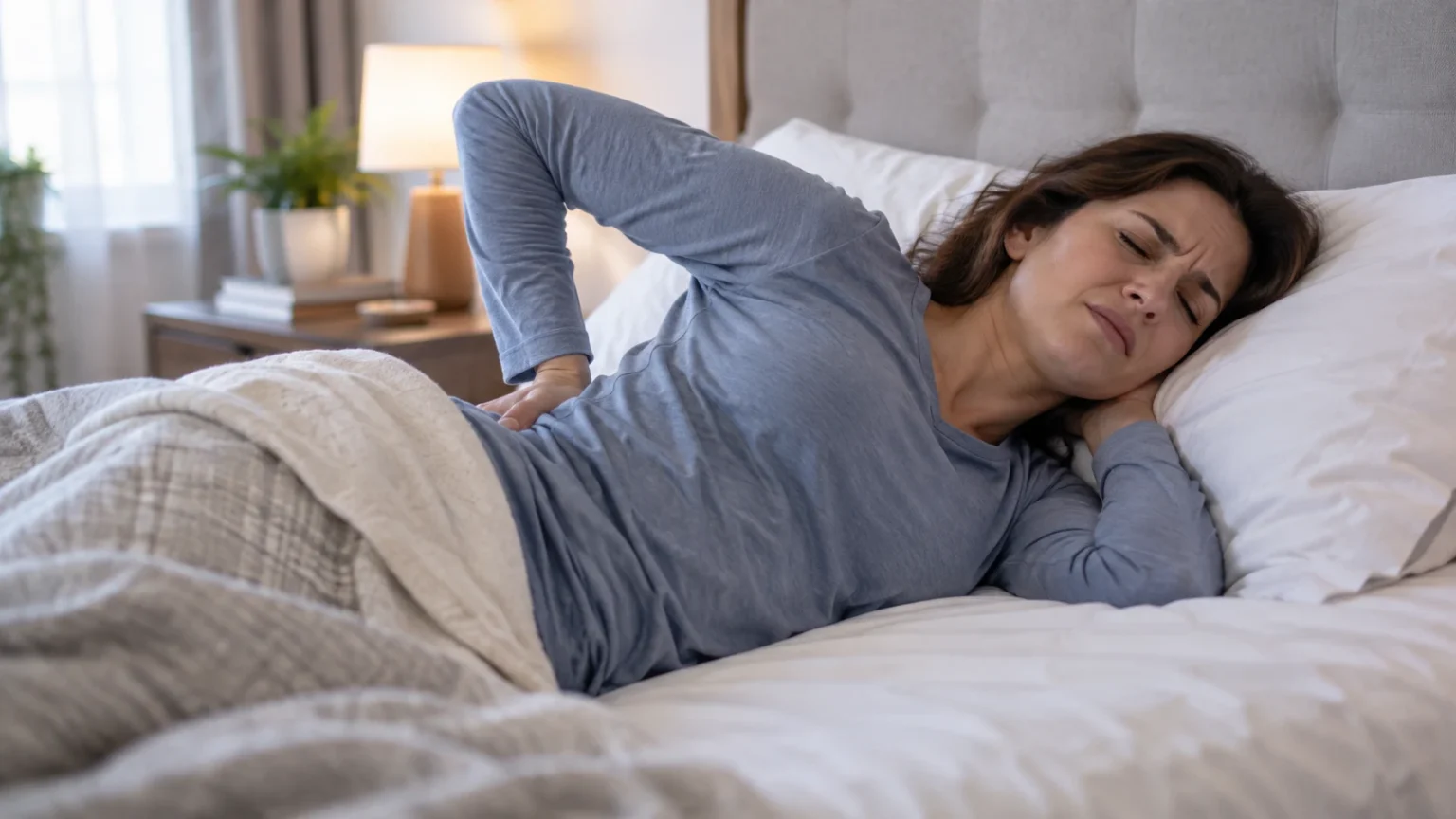

Back pain when lying down can be frustrating, especially when you expect rest to make discomfort better. Some people notice aching after getting into bed, while others wake during the night with stiffness, pressure, or sharp pain in the lower or middle back. The cause can range from simple muscle tension to irritation involving joints, discs, or nearby nerves.
The position you sleep in, your mattress, daily activity, and how long symptoms have been present can all provide useful clues. Nighttime back pain does not automatically mean something serious, but certain patterns deserve closer attention. Understanding the possible causes can help you make practical changes and recognize when professional evaluation is appropriate.
Why Does My Back Hurt When I Lie Down?
Lying down changes the amount of pressure placed on your spine, muscles, joints, and surrounding tissues. A position that feels comfortable during the day may place more stress on an irritated structure once you are in bed. This is why some people have relatively little pain while walking or sitting but experience a noticeable ache when lying still.
Muscles can also become more noticeable when activity stops. During the day, regular movement keeps tissues warm and changes the load placed on different parts of your back. At night, staying in one position for longer periods may allow tight muscles or sensitive joints to stiffen, making pain more obvious when you roll over or get out of bed.
The timing of symptoms can offer clues about what might be happening. Pain that appears only in certain sleeping positions often points toward mechanical factors, while persistent pain that does not change with position may require further assessment. Symptoms such as numbness, weakness, fever, unexplained weight loss, or bladder changes should receive more careful medical attention.
Common Causes of Back Pain When Lying Down
Muscle strains are among the most common explanations for back pain at night. Lifting, exercise, awkward movements, prolonged sitting, or repetitive work can irritate muscles and connective tissues around the spine. These tissues may become particularly uncomfortable when stretched or compressed by certain sleeping positions, even if you did not notice much discomfort immediately after the activity.
Joint irritation can also contribute to pain when resting. The small facet joints of the spine and the sacroiliac joints near the pelvis can become sensitive because of repetitive stress, stiffness, arthritis, or changes in movement patterns. Pain may feel localized, achy, or sharp and can worsen when lying flat, twisting in bed, or extending the lower back.
Spinal discs and nerves may play a role when pain radiates into the buttock, hip, or leg. A bulging or herniated disc can sometimes irritate nearby nerve roots, while age-related narrowing may also affect nerve space. Nerve-related symptoms often include burning, tingling, numbness, or electric sensations in addition to ordinary back pain.
Can Your Mattress Cause Back Pain at Night?
A mattress can influence spinal comfort, but there is no single firmness level that works for everyone. A mattress that is excessively soft may allow the hips or shoulders to sink too deeply, while a very firm surface can create uncomfortable pressure points. Your preferred sleep position, body shape, and existing back sensitivity all affect how supportive a mattress feels.
An older mattress may gradually lose its ability to distribute body weight evenly. Sagging areas can place the spine in an awkward position for several hours, especially around the pelvis and lower back. If your symptoms are noticeably better when sleeping somewhere else, your mattress may be contributing to the problem, although it may not be the only cause.
Before replacing a mattress, consider other factors such as pillow height and sleeping posture. Small adjustments can sometimes make a meaningful difference without requiring a major purchase. The goal is to keep your spine in a reasonably neutral, relaxed position while minimizing pressure on sensitive areas rather than trying to create one perfectly straight posture.
How Sleeping Position Affects Back Pain
Back sleeping can be comfortable for many people, but lying completely flat may increase the natural curve in the lower spine. If this position causes discomfort, placing a small pillow under the knees may reduce tension around the lumbar area. The support should feel comfortable rather than forcing your hips or knees into an exaggerated position.
Side sleeping can reduce pressure on the lower back for some people. Placing a pillow between the knees may help keep the hips and pelvis more aligned, particularly if the upper leg tends to rotate forward. Switching sides occasionally can also prevent one hip, shoulder, or side of the lower back from carrying the same load every night.
Stomach sleeping often requires more neck rotation and may increase extension through the lower back. If you cannot comfortably sleep in another position, a thin pillow beneath the pelvis or lower abdomen may reduce excessive arching. The best sleeping position is ultimately the one that allows you to rest without repeatedly triggering pain or neurological symptoms.
Muscle Strain and Tightness in the Lower Back
A strained back muscle may feel sore, stiff, or tender when you lie on it or move in bed. Symptoms often follow an unfamiliar workout, heavy lifting, prolonged bending, or a sudden awkward movement. The discomfort may improve with light activity but return after spending several hours in one position because the irritated muscles become stiff again.
Muscle guarding can continue even after the original irritation begins to settle. The nervous system may tighten surrounding muscles to protect the painful area, which can make the back feel rigid or difficult to relax. This protective response is common, but prolonged guarding can sometimes maintain discomfort by reducing comfortable movement and increasing sensitivity.
Gentle walking, position changes, and gradual movement often help uncomplicated muscle-related back pain. Complete bed rest is generally less useful because staying still for long periods may increase stiffness and reduce confidence in movement. If pain is severe, worsening, or accompanied by neurological symptoms, it is safer to seek professional evaluation before beginning more demanding exercises.
Herniated Discs and Nerve-Related Back Pain
A spinal disc can become irritated when its outer tissues are stressed or when disc material pushes toward a nearby nerve root. Lying down may change pressure around the disc and nerve, sometimes improving symptoms and sometimes making them worse. The exact response depends on the disc involved, your sleeping position, and how sensitive surrounding tissues have become.
Nerve-related pain usually has characteristics beyond a simple localized ache. You may experience burning, tingling, pins and needles, numbness, or pain traveling into the buttock or leg. Certain positions may reproduce the symptoms consistently, while changing posture or gently walking may reduce them by altering pressure around the irritated nerve.
Persistent or progressive weakness should not be ignored. Difficulty lifting the foot, standing on your toes, controlling the leg, or noticing expanding numbness can indicate greater nerve involvement. Sudden bowel or bladder problems or numbness around the groin require urgent medical attention because they can signal serious compression of nerves in the lower spine.
Can Arthritis or Joint Problems Cause Pain While Lying Down?
Arthritis and age-related changes in the spine can make certain resting positions uncomfortable. Facet joints at the back of the spine may become irritated when the lower back remains extended or twisted for too long. The pain is often localized and may feel worse when lying flat, turning over, standing after rest, or extending the spine backward.
The sacroiliac joints can also produce pain around the lower back, buttock, or pelvis. Symptoms sometimes become more noticeable when lying on one side because additional pressure is placed on the painful region. Long periods of standing, stair climbing, uneven loading, or certain rotational movements may also aggravate sacroiliac joint discomfort during the day.
Joint-related pain does not always mean significant structural damage. Stiffness, muscle weakness, altered movement, and sensitivity can all influence how painful a joint feels. Gradual strengthening and mobility work may help many mechanical problems, but persistent symptoms should be evaluated so that treatment is based on the likely source rather than guesswork.
Why Back Pain May Feel Worse at Night
Nighttime pain can feel stronger because there are fewer distractions and less movement. During the day, attention is divided between work, walking, conversations, and other activities, while lying quietly in bed makes physical sensations more noticeable. Reduced movement can also allow stiff muscles and joints to become uncomfortable after remaining in one position for too long.
Inflammatory back pain can have a different pattern from ordinary mechanical discomfort. It may be associated with prolonged morning stiffness, symptoms that improve with movement, and pain that becomes more noticeable after resting. This pattern does not confirm an inflammatory condition, but recurring nighttime pain combined with these features is worth discussing with a healthcare professional.
Pain that consistently wakes you regardless of position deserves attention, particularly when it becomes progressively worse. Most nighttime back pain still has a musculoskeletal explanation, but symptoms should be assessed in context. Fever, unexplained weight loss, significant fatigue, recent infection, or a history of cancer are reasons to seek medical evaluation rather than relying only on home care.
Could Back Pain When Lying Down Come From Another Organ?
Not all pain felt in the back originates from the spine. Kidney problems can sometimes cause discomfort around the side of the back beneath the ribs, and the pain may not change much with ordinary movement. Urinary symptoms, fever, nausea, or blood in the urine alongside back or flank pain should prompt medical evaluation.
Digestive, reproductive, or other internal conditions can occasionally produce referred pain that is felt in the back. These symptoms may occur with abdominal discomfort, changes in bowel habits, pelvic pain, nausea, or other signs that do not fit a typical muscle strain. The combination of symptoms is often more informative than the location of back pain alone.
Because many structures can refer pain toward the back, avoid assuming that every nighttime ache is caused by your mattress or posture. Pain that remains severe regardless of movement, repeatedly worsens, or appears with other unexplained symptoms should be professionally assessed. A healthcare provider can determine whether further examination or testing is appropriate.
How to Relieve Back Pain When Lying Down
Start by experimenting with comfortable position changes rather than forcing yourself to remain in one sleeping posture. A pillow under the knees during back sleeping or between the knees during side sleeping may reduce strain around the lower spine. Use enough support to feel relaxed without creating an unnatural or rigid position that makes movement difficult.
Heat can be useful when muscle tightness or stiffness is a major part of the problem. A warm shower, heating pad, or warm pack for a short period before bed may help muscles relax. Cold therapy may feel better after a recent strain or flare, so use whichever option provides relief while protecting your skin from direct extreme temperatures.
Gentle movement before bed may also help reduce stiffness. Short walks, easy mobility exercises, or light stretching can be useful when they do not increase symptoms. Avoid aggressively stretching into pain, especially if discomfort radiates into the leg or causes tingling, because strong nerve-related symptoms may require a more individualized approach.
Strengthening Your Back and Hips for Better Support
Strengthening the muscles around your trunk, hips, and pelvis can improve how forces are distributed through the lower back. Exercises such as bridges, controlled squats, bird dogs, and appropriately performed resistance exercises may help build tolerance over time. Progress gradually rather than adding heavy loads quickly, particularly if you are recovering from a recent flare.
Strong hip muscles can reduce unnecessary compensation through the lower back during walking, lifting, and other daily movements. Hip thrusts are one exercise commonly used to train the glutes, but technique and load matter. If you are considering them, this guide to proper hip thrust technique explains how the exercise works and how it is typically performed.
Strengthening should not reproduce severe pain, numbness, or radiating symptoms. Some mild muscle effort is expected, but sharp or progressively increasing discomfort is a reason to modify the exercise. A physical therapist can help choose appropriate movements when pain has lasted several weeks, repeatedly returns, or makes normal exercise difficult.
When Should You See a Doctor for Nighttime Back Pain?
Consider making a medical appointment if your back pain persists for several weeks, repeatedly wakes you from sleep, or continues to worsen despite basic self-care. Earlier evaluation is appropriate when pain significantly limits walking, work, exercise, or ordinary daily activities. A professional assessment can help separate common mechanical pain from conditions that require different treatment.
Seek prompt medical care if back pain occurs with fever, unexplained weight loss, significant weakness, recent serious trauma, or a history of cancer. Severe pain that does not change with position may also deserve evaluation, particularly when it is new and unexplained. These signs do not automatically indicate a serious condition, but they increase the importance of assessment.
Emergency care is needed for new loss of bladder or bowel control, numbness around the groin or inner thighs, or rapidly worsening leg weakness. These symptoms can indicate severe compression of spinal nerves. They are uncommon, but recognizing them early is important because they should not be managed by simply changing sleeping positions or waiting for improvement.
Conclusion
Back pain when lying down can result from muscle tension, joint irritation, sleeping position, mattress support, disc problems, or nerve sensitivity. The way your symptoms behave can provide useful clues. Pain that changes with position is often mechanical, while persistent pain accompanied by neurological or other unexplained symptoms may need professional evaluation.
Simple changes such as adjusting your sleeping position, supporting the knees, moving regularly, using heat, and gradually strengthening the back and hips may help many mild cases. Avoid prolonged bed rest because too little movement can increase stiffness. Focus instead on comfortable activity that keeps you moving without repeatedly triggering a major flare.
Pay attention to symptoms that go beyond ordinary back soreness. Progressive weakness, bowel or bladder changes, significant numbness, fever, unexplained weight loss, or severe unrelenting pain should be evaluated promptly. When pain keeps returning or interferes with sleep, a healthcare professional or physical therapist can help identify the likely cause and guide your recovery.
FAQs
Why does my back hurt only when I lie down?
Certain lying positions can place more pressure on irritated muscles, joints, or spinal structures. Your mattress and sleep posture may also contribute, especially when symptoms improve soon after getting up and moving.
Is nighttime back pain always serious?
No. Nighttime back pain often comes from common musculoskeletal problems such as muscle tension, joint stiffness, or sleeping position. Persistent pain with fever, weakness, weight loss, or neurological symptoms deserves medical evaluation.
What sleeping position is best for lower back pain?
Many people feel comfortable on their side with a pillow between their knees or on their back with support beneath the knees. The best position is the one that reduces pain and allows restful sleep.
Can a bad mattress cause lower back pain?
An unsupportive or sagging mattress can contribute to discomfort by allowing prolonged awkward positioning of the spine. However, persistent back pain may have several causes, so changing a mattress does not always solve the underlying problem.
When should I worry about back pain at night?
Seek medical attention when nighttime pain is severe, progressively worsening, or accompanied by weakness, significant numbness, fever, unexplained weight loss, trauma, or bladder and bowel changes. These features require more than routine home care.