
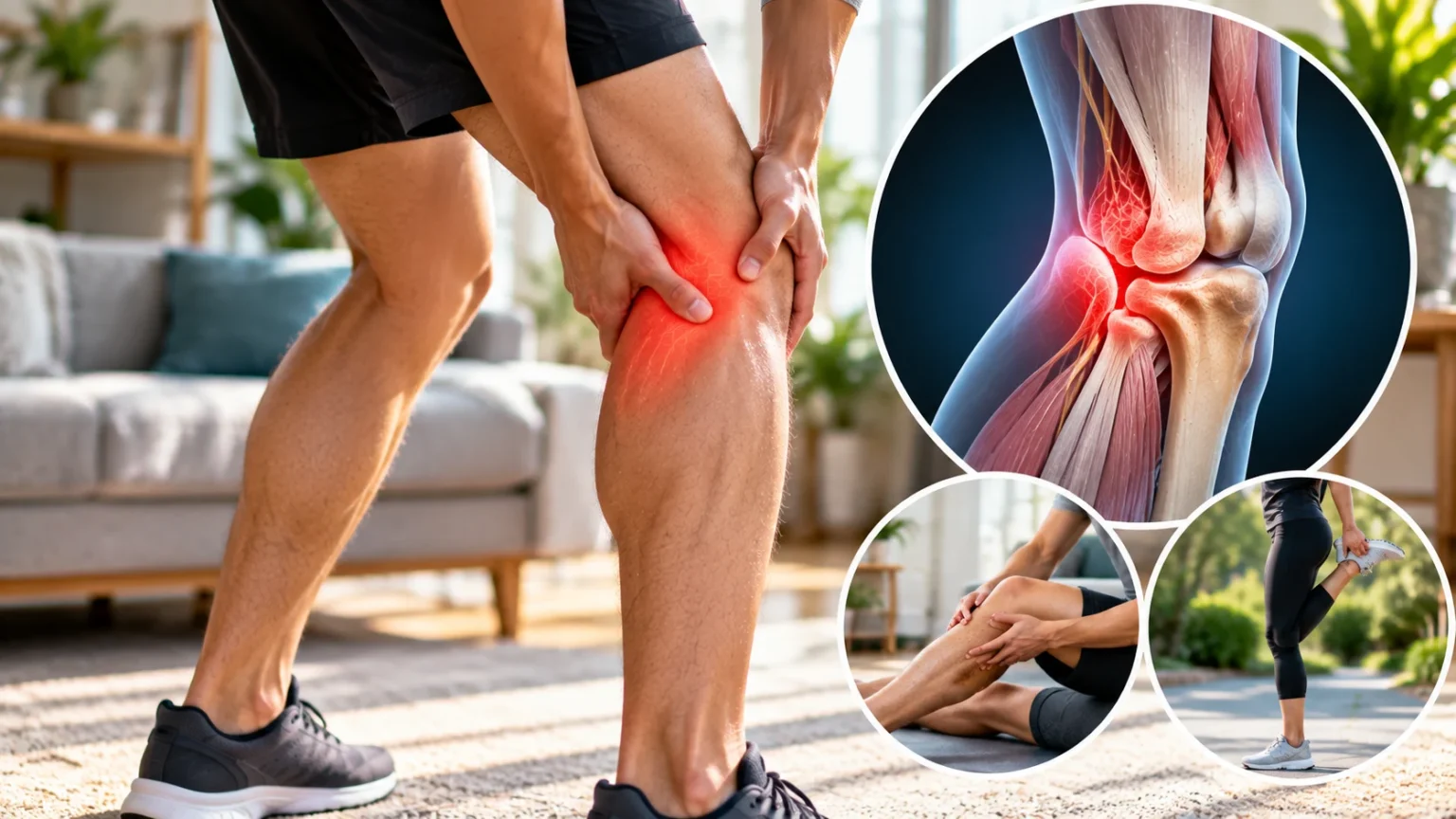

Back knee pain can make walking, bending, exercising, or even sitting for long periods uncomfortable. The area behind the knee contains tendons, muscles, nerves, blood vessels, and parts of the knee joint, so discomfort can come from several different structures. Some causes are mild and related to activity, while others deserve medical attention.
The pattern of your symptoms can provide useful clues. Pain that appears after exercise may involve muscles or tendons, while swelling, stiffness, or a feeling of fullness can suggest joint irritation. Understanding common causes, simple relief strategies, and important warning signs can help you respond more safely without assuming every pain behind the knee has the same cause.
What Is Back Knee Pain?
Back knee pain refers to discomfort felt in the area behind the knee joint, also called the popliteal region. It can feel sharp, dull, tight, aching, burning, or swollen depending on the cause. Some people notice pain only while walking or exercising, while others experience symptoms when bending the knee or sitting.
Several important structures pass through this area, including the hamstring tendons, calf muscles, nerves, arteries, veins, and soft tissues surrounding the joint. Because these structures sit close together, pain can sometimes be difficult to pinpoint. The exact location and type of discomfort may still provide useful information.
How the symptoms started also matters. Sudden pain during running, jumping, or twisting may suggest a strain or injury, while gradual discomfort can develop from overuse or joint irritation. Swelling, bruising, instability, numbness, or pain spreading into the calf or thigh can provide additional clues.
Hamstring Strain and Tendon Irritation
The hamstring muscles run along the back of the thigh and attach near the knee, making them a common source of pain in this area. A strain can happen during sprinting, jumping, sudden acceleration, or heavy strength training. The pain may begin suddenly or develop as tightness after repeated activity.
Hamstring tendon irritation can also appear gradually, especially when training volume increases too quickly. Runners, athletes, and people performing frequent lower-body workouts may notice discomfort behind the knee during stretching or bending. The area can feel tender, tight, or weak when the hamstrings are placed under load.
Mild strains often improve with activity modification and gradual return to movement. Avoid forcing deep stretches or heavy exercises while symptoms are sharp. Once discomfort decreases, gentle strengthening and controlled mobility can help restore normal function and improve the muscle’s tolerance to regular activity.
Calf Muscle Problems
The gastrocnemius muscle crosses the knee joint and forms much of the upper calf, so a calf strain can create pain behind the knee. This commonly occurs after running, jumping, quick direction changes, or explosive movements. Pain may be felt high in the calf or directly behind the knee.
Symptoms often become more noticeable when pushing off the foot, climbing stairs, or rising onto the toes. Mild strains may cause tightness or soreness, while larger injuries can lead to swelling or bruising. Walking may also become uncomfortable if the muscle is significantly irritated.
Gentle movement is usually more appropriate than aggressive stretching during the early stages of a strain. Gradual strengthening can be added as pain improves. However, calf pain with significant swelling, warmth, or redness should not automatically be assumed to be muscular because other conditions can create similar symptoms.
Baker’s Cyst Behind the Knee
A Baker’s cyst is a fluid-filled swelling that forms behind the knee. It often develops when excess joint fluid collects because of another knee problem, such as arthritis or cartilage irritation. Some cysts are small and cause little discomfort, while others create noticeable pressure or tightness.
People with a Baker’s cyst may feel fullness behind the knee, especially when bending or straightening the leg. The area can become stiff after activity, and swelling may be more noticeable at certain times. In some cases, the cyst can change in size as joint irritation increases or decreases.
Treatment usually focuses on the underlying cause of the extra joint fluid rather than only the cyst itself. Mild cases may improve when knee inflammation settles. A painful or enlarging cyst should be assessed, especially if sudden calf swelling develops because a ruptured cyst can resemble other medical problems.
Meniscus and Knee Joint Problems
The meniscus is a piece of cartilage inside the knee that helps absorb shock and distribute pressure. A meniscus injury can occur after twisting, pivoting, squatting, or age-related wear. Pain may appear along the joint line and sometimes extend toward the back of the knee.
Other symptoms can include swelling, catching, clicking, or difficulty fully bending or straightening the leg. Some people also describe a feeling that the knee is temporarily stuck or unstable. Not every click indicates a serious problem, but painful locking or repeated swelling deserves further attention.
Mild joint irritation may improve with temporary activity changes and appropriate strengthening. Exercises targeting the quadriceps, hamstrings, hips, and calves can support knee function when performed comfortably. Persistent locking, major swelling, or inability to move the knee normally should be evaluated by a healthcare professional.
Arthritis and Back Knee Discomfort
Arthritis can cause pain, stiffness, and swelling anywhere around the knee, including the back of the joint. Osteoarthritis becomes more common with age and can affect how smoothly the knee moves. Symptoms may be worse after prolonged activity or after sitting in one position for a long time.
Joint swelling can also increase pressure behind the knee and contribute to the formation of a Baker’s cyst. Some people notice morning stiffness that improves after gentle movement. Others experience discomfort later in the day after walking or standing for several hours.
Regular low-impact exercise and appropriate strengthening can help many people maintain knee mobility and function. Walking, cycling, or water-based exercise may be suitable depending on comfort and fitness level. When pain repeatedly limits normal activity, professional assessment can help identify more specific treatment options.
Referred Pain From the Hip or Lower Back
Pain behind the knee does not always start in the knee itself. Problems involving the lower back, hips, buttock muscles, or nearby nerves can create referred pain that travels down the leg. This type of discomfort may change depending on spinal position or prolonged sitting.
Nerve-related symptoms may include burning, tingling, numbness, or shooting pain rather than a simple ache. Discomfort may begin around the lower back or butt muscle pain area before extending toward the thigh or knee. Symptoms that travel below the knee may suggest that nerves are involved.
Persistent numbness or weakness should be assessed professionally. Sudden major weakness, loss of bladder or bowel control, or numbness around the groin requires urgent medical attention. These symptoms are not typical of an ordinary knee strain and should not be managed only with stretching.
Could a Blood Clot Cause Back Knee Pain?
A deep vein thrombosis, or DVT, is a blood clot that develops in a deep vein, usually in the leg. It can sometimes cause pain around the calf or behind the knee. Additional symptoms may include swelling, warmth, tenderness, or skin color changes.
Not everyone with a DVT experiences the same symptoms, and the condition cannot be reliably diagnosed at home. Risk may be higher after surgery, long periods of immobility, pregnancy, certain medications, or a previous blood clot. Because symptoms can resemble a calf strain, proper medical testing may be necessary.
Seek urgent medical attention for sudden unexplained swelling, warmth, or pain in one leg, especially when clot risk factors are present. Emergency care is needed if these symptoms occur with chest pain, shortness of breath, fainting, or coughing up blood because a clot can sometimes travel to the lungs.
How to Relieve Mild Back Knee Pain
For mild pain that appears related to exercise or overuse, reducing the aggravating activity for a short period may help. Complete inactivity is often unnecessary when there is no major injury. Gentle walking and comfortable knee movement can prevent excessive stiffness while irritated tissues recover.
Cold packs may be useful when swelling develops after recent activity, while gentle warmth can sometimes feel better for stiffness. Protect the skin by wrapping cold or heat sources appropriately. Choose the option that improves comfort rather than assuming one method is always better for every type of pain.
As symptoms improve, gradual strengthening of the hamstrings, quadriceps, calves, and hips can support knee function. Avoid returning immediately to heavy squats, sprinting, or jumping if everyday walking still hurts. A gradual increase in exercise load gives muscles and tendons more time to adapt.
Stretches for Pain Behind the Knee
Gentle hamstring stretching may help when tightness contributes to discomfort. Extend one leg with the knee slightly relaxed and hinge forward from the hips until you feel mild tension along the back of the thigh. Avoid locking the knee aggressively or forcing the stretch into sharp pain.
A calf stretch can also reduce tension around the back of the lower leg. Place both hands against a wall, step one leg behind you, and keep the heel on the floor. Lean forward gently while keeping the back knee comfortable and stop when you feel a mild stretch.
Stretching should not be used to push through major swelling, acute injury, or unexplained calf pain. If stretching makes symptoms sharper or causes tingling, stop the movement. Mobility is most useful when muscle tightness is part of the problem and the movement remains comfortable.
When Should You See a Healthcare Professional?
Consider medical assessment if pain behind the knee lasts for several weeks, repeatedly returns, or interferes with walking, exercise, or sleep. Persistent swelling, locking, instability, or limited range of motion are also reasons to seek professional advice. A clinician can assess the knee and surrounding tissues.
Seek care sooner if the pain follows a major fall, collision, or sports injury. Inability to bear weight, obvious deformity, severe swelling, or rapidly developing bruising can suggest a more significant injury. Sudden calf swelling without an obvious injury also deserves prompt evaluation.
Emergency care is needed when leg pain or swelling occurs with chest pain, breathing difficulty, fainting, or coughing up blood. Major neurological symptoms such as sudden weakness or loss of bladder or bowel control also require urgent attention. These warning signs should not be managed with home remedies alone.
Conclusion
Back knee pain can come from several different causes, including hamstring strain, calf injury, Baker’s cysts, meniscus problems, arthritis, nerve irritation, or less commonly a blood clot. The way the pain begins and whether swelling, weakness, or neurological symptoms are present can help narrow down the possibilities.
Mild activity-related discomfort may improve with temporary activity changes, gentle movement, comfortable stretching, and gradual strengthening. Avoid forcing painful movements or returning too quickly to demanding exercise. If symptoms repeatedly return, identifying the underlying cause is more useful than relying only on short-term pain relief.
More serious symptoms should always receive prompt attention. Sudden one-sided swelling, warmth, chest symptoms, severe weakness, or major injury can indicate a problem requiring medical care. Understanding what is typical and what is not can help you make safer decisions about recovery and treatment.
FAQs
What is the most common cause of back knee pain?
Common causes include hamstring or calf strain, Baker’s cysts, joint irritation, and meniscus problems. The exact cause depends on how the pain started and whether swelling or other symptoms are present.
Can tight muscles cause pain behind the knee?
Yes. Tight or overloaded hamstrings and calf muscles can create pulling or aching sensations behind the knee. Persistent pain, swelling, or weakness should still be assessed to rule out other causes.
Is walking good for back knee pain?
Gentle walking may help when symptoms are mild and movement remains comfortable. Avoid forcing yourself through significant pain, limping, or swelling, as those signs may require activity modification or evaluation.
How do I know if back knee pain is a blood clot?
A blood clot can cause one-sided swelling, warmth, tenderness, or calf pain, but symptoms vary. Sudden unexplained swelling or clot risk factors require urgent medical assessment because diagnosis requires professional testing.
When should I worry about pain behind my knee?
Seek medical care for severe or persistent pain, major swelling, inability to bear weight, or symptoms after significant injury. Chest pain, breathing difficulty, fainting, or sudden leg swelling require urgent attention.