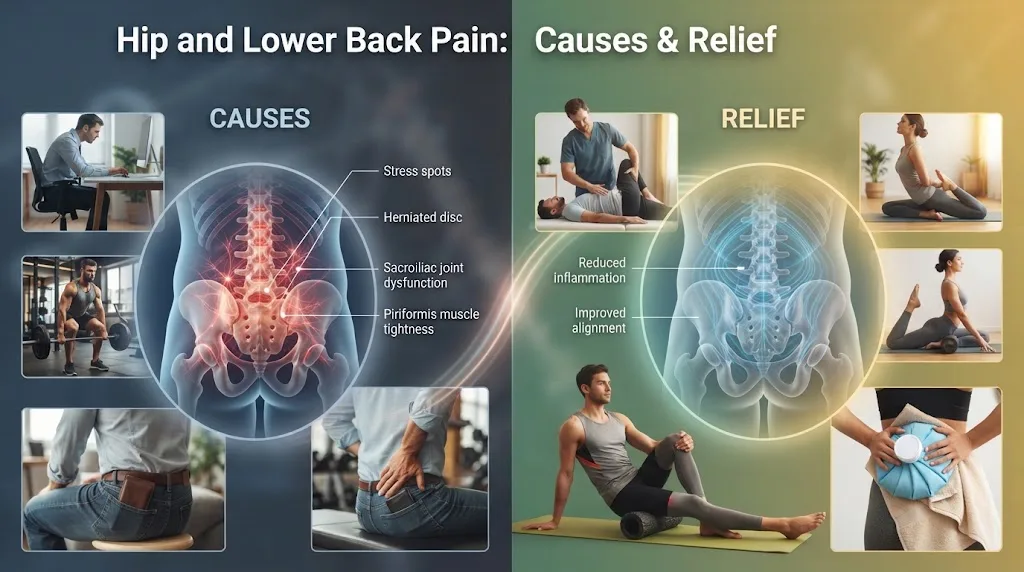

Hip and lower back pain can come from muscles, joints, nerves, discs, or surrounding soft tissues. Because the pelvis connects the spine and legs, problems in one area can easily affect the other. Some people feel pain mainly in the lower back, while others notice aching around the buttocks, outer hip, groin, or upper thigh.
Common triggers include prolonged sitting, lifting, sudden twisting, repetitive exercise, poor recovery, and reduced strength around the core or hips. Pain can also develop gradually without one obvious injury. In many cases, symptoms improve with movement, temporary activity changes, and progressive strengthening rather than complete rest.
The exact cause matters because different conditions can feel similar. Muscle strain, joint irritation, nerve-related pain, and hip problems may overlap, especially when discomfort spreads across the lower back and pelvis. If pain is severe, persistent, or accompanied by weakness, numbness, fever, or bladder changes, professional medical evaluation is important.
Muscle Strain and Overuse
Muscle strain is one of the most common reasons for lower back and hip discomfort. It can happen after heavy lifting, repetitive bending, intense exercise, or an awkward movement that overloads the muscles. The pain may feel sore, tight, or sharp during certain movements and often improves when the irritated area is allowed to recover.
The lower back, glutes, and surrounding hip muscles work together during standing, walking, lifting, and squatting. If one group is tired or weak, other muscles may compensate and become overloaded. This can create stiffness around the pelvis or discomfort that seems to move between the back and hip depending on the activity.
Mild strains often improve with gentle movement and a temporary reduction in painful tasks. Staying completely inactive for long periods can increase stiffness and reduce confidence with movement. Gradually returning to normal activities is usually more useful than avoiding all bending, walking, or lifting once the worst soreness has started to settle.
Hip Joint Problems
The hip joint itself can sometimes be the source of pain that also feels connected to the lower back. Hip-related pain is often felt in the groin, front of the thigh, or side of the hip, although symptoms vary. Stiffness may become more noticeable when putting on shoes, getting into a car, climbing stairs, or standing after prolonged sitting.
Osteoarthritis can cause gradually increasing stiffness and discomfort, especially in older adults. Other possible causes include labral irritation, impingement, bursitis, or tendon problems around the joint. These conditions can change the way you walk, which may increase stress on the lower back and create symptoms in both regions.
Not every hip problem requires surgery or aggressive treatment. Strengthening, mobility work, load management, and activity modification can help many people maintain function and reduce symptoms. Persistent groin pain, major loss of movement, or difficulty bearing weight should be assessed to determine whether the hip joint is contributing significantly to the problem.
Sacroiliac Joint Pain
The sacroiliac joints connect the lower spine to the pelvis and sit on either side of the sacrum. Irritation around this area can cause pain near the lower back, upper buttock, or back of the hip. Symptoms may be more noticeable on one side and can worsen when standing from a chair, climbing stairs, or remaining in one position.
Sacroiliac pain can be difficult to distinguish from other causes because nearby muscles, spinal joints, and hip structures can create similar symptoms. There is no single home test that reliably confirms the diagnosis. A clinician may use several movement tests and symptom patterns together when deciding whether the sacroiliac region is likely involved.
Treatment often focuses on improving movement tolerance, hip strength, and trunk control rather than trying to force the joint back into a particular position. Gentle walking and progressive strengthening can be helpful. If pain remains severe or continues despite sensible rehabilitation, professional assessment can help identify whether another source is contributing.
Sciatica and Nerve-Related Pain
Sciatica refers to pain associated with irritation of the sciatic nerve or related nerve roots in the lower spine. Symptoms can begin in the lower back or buttock and travel down the back or side of the leg. Burning, tingling, numbness, or electric sensations are more suggestive of nerve involvement than ordinary muscle soreness.
A bulging or herniated disc is one possible cause, although not every disc change produces symptoms. Spinal narrowing and other age-related changes can also irritate nerve roots. The location of numbness, weakness, or radiating pain can provide clues about which nerve may be affected, but proper assessment is useful when symptoms are significant.
Nerve pain should not always be stretched aggressively. Some movements may temporarily relieve symptoms, while others can increase pain farther down the leg. If weakness, numbness, or radiating pain is progressing, seek medical evaluation rather than relying only on home stretches or massage.
Poor Sitting Habits and Prolonged Inactivity
Sitting for long periods can make the hips and lower back feel stiff, especially when work or travel keeps you in one position for hours. The issue is not necessarily that sitting itself is harmful. Remaining still for too long can reduce movement variety and increase sensitivity in muscles and joints that normally benefit from frequent changes in position.
A chair that allows your feet to rest comfortably on the floor can make long work periods easier. Adjust screen height, move closer to the desk, and avoid leaning heavily to one side for extended periods. Small ergonomic improvements can reduce unnecessary strain, but they should be combined with regular movement rather than treated as a permanent posture correction.
Brief movement breaks can be surprisingly effective. Stand up, walk for a few minutes, perform gentle hip movements, or simply change positions several times throughout the day. There is no need to maintain one rigidly perfect posture, because the ability to move comfortably between positions is often more important than holding one position continuously.
Weak Hips and Core Muscles
The glutes, abdominal muscles, and deeper trunk muscles help control the pelvis and spine during everyday movement. If these areas lack strength or endurance, activities such as lifting, climbing stairs, walking uphill, or standing for long periods may feel more demanding. Weakness does not automatically cause pain, but improving capacity can make movement more comfortable.
Exercises such as glute bridges, side steps, split squats, bird dogs, and controlled core bracing can help build support around the hips and lower back. Start with manageable resistance and focus on smooth movement. You do not need to feel an intense burn for an exercise to be useful, especially when returning from a painful episode.
Strengthening should progress gradually. Increase repetitions, resistance, range, or exercise difficulty only when your symptoms remain stable. If an exercise consistently causes sharp pain or worsens symptoms for a prolonged period afterward, reduce the difficulty or replace it with a more comfortable variation.
Hip and Lower Back Stretches
Gentle stretching can help when stiffness limits comfortable movement. A hip flexor stretch, hamstring stretch, or gentle glute stretch may reduce temporary tightness around the pelvis and thighs. Hold each position at a mild intensity rather than pulling aggressively, and avoid any stretch that produces sharp pain, tingling, or symptoms traveling down the leg.
A knee-to-chest movement can feel comfortable for some people with lower back stiffness. Lie on your back and gently bring one knee toward your chest while keeping the other leg relaxed. If rounding the lower back increases symptoms, stop the stretch and choose another movement, because not every exercise is appropriate for every type of pain.
Upper and lower spinal symptoms can sometimes share nerve-related features, even though they affect different regions. If you are also dealing with neck or upper-back radiating pain, understanding a pinched nerve in the shoulder blade can help clarify how nerve irritation may cause pain away from the original source.
Exercises That May Help
Walking is one of the simplest ways to keep the hips and lower back moving without requiring special equipment. Start with a duration that feels comfortable and increase gradually. If walking causes symptoms to build quickly, try shorter sessions more frequently rather than forcing yourself through one long walk that leaves you significantly worse afterward.
Glute bridges can strengthen the hips while placing relatively little demand on balance. Lie on your back with knees bent, press through your feet, and lift your hips without excessively arching the lower back. Pause briefly at the top and lower slowly, focusing on controlled movement rather than trying to raise the hips as high as possible.
Bird dogs can help improve trunk and hip coordination. Begin on your hands and knees, extend one arm and the opposite leg, and keep the pelvis relatively level. Use a small range at first if balance is difficult, because the goal is controlled stability rather than reaching as far as possible.
How to Relieve Hip and Lower Back Pain at Home
Begin by identifying the movements or activities that clearly aggravate symptoms and reduce them temporarily. This might mean using lighter loads, shorter walks, fewer repetitions, or more frequent breaks. Avoid eliminating all movement unless a healthcare professional has advised you to do so, because prolonged rest can increase stiffness and reduce muscle capacity.
Heat may help when stiffness or muscle tension is the main problem, while a cold pack can provide temporary relief after a recent flare or activity that increases soreness. Use either for short periods and protect the skin with a cloth barrier. Choose the option that feels more comfortable rather than assuming one method is always better.
Over-the-counter pain medication may be appropriate for some people, but individual health conditions and other medicines can affect what is safe. A pharmacist or clinician can provide guidance if you are unsure. Medication can reduce symptoms temporarily, but movement, load management, and progressive rehabilitation are usually more important for improving long-term function.
Sleeping With Hip and Lower Back Pain
Sleep position can influence discomfort, particularly when the hip or lower back is already sensitive. Back sleepers may feel more comfortable with a pillow under the knees, which can reduce tension through the lower back. The goal is not to flatten the spine completely but to find a position that allows the body to relax.
Side sleepers can try placing a pillow between the knees to keep the hips and pelvis more comfortable. If one hip is particularly painful, sleeping on the opposite side may reduce direct pressure. A supportive pillow can also prevent the upper leg from falling forward and twisting the pelvis excessively during the night.
Stomach sleeping can increase discomfort for some people because it may place the lower back in more extension or require the neck to remain rotated. If it is your preferred position, a thin pillow under the pelvis may feel better. The best sleep position is ultimately the one that allows you to rest without increasing pain.
When Hip and Lower Back Pain Is Serious
Most episodes of mechanical hip and lower back pain are not emergencies, but certain symptoms require prompt medical attention. Seek urgent care if you develop new bladder or bowel control problems, numbness around the groin or saddle area, or rapidly worsening leg weakness. These symptoms can indicate serious nerve compression and should not be managed through home exercise alone.
Severe pain after a major fall, collision, or other trauma also deserves evaluation, particularly if you cannot bear weight or move normally. Fever, unexplained weight loss, or feeling significantly unwell alongside persistent back pain can indicate problems beyond a simple muscle strain. Night pain that is severe and unrelated to movement may also need assessment.
You should also consider professional care when symptoms continue for several weeks without meaningful improvement. A physical therapist, physician, or other qualified clinician can assess hip motion, strength, nerve function, and spinal movement. This can help narrow down the likely cause and guide a more specific rehabilitation plan.
Conclusion
Hip and lower back pain can come from muscles, joints, nerves, discs, or surrounding tissues, which is why symptoms often overlap. Common causes include muscle strain, hip joint irritation, sacroiliac pain, nerve-related problems, prolonged sitting, and reduced strength. Understanding how the pain behaves can help guide the most appropriate next steps.
Relief usually involves a combination of temporary activity modification, gentle movement, progressive strengthening, and comfortable mobility work. Walking, glute bridges, core exercises, and selected stretches may help when they are matched to your current tolerance. Avoid forcing painful movements or assuming every episode requires complete rest.
Seek medical attention for severe trauma, progressive weakness, bladder or bowel changes, saddle numbness, fever, or other concerning symptoms. Persistent pain that does not improve also deserves evaluation. When serious causes are excluded, gradual movement and strength-building can often help restore confidence and make daily activities more comfortable.
FAQs
Can hip problems cause lower back pain?
Yes. Hip stiffness, weakness, or joint irritation can change the way you walk and move, which may increase stress through the lower back. The two areas often influence each other during daily activities.
Is walking good for hip and lower back pain?
Walking can be helpful when performed at a comfortable level. Start with shorter sessions if needed and gradually increase duration, but reduce or stop if symptoms become significantly worse during or afterward.
What stretches help hip and lower back pain?
Gentle hip flexor, hamstring, glute, and lower-back movements may help some people. Avoid any stretch that causes sharp pain, numbness, tingling, or symptoms that travel farther down the leg.
How should I sleep with hip and lower back pain?
Back sleepers can try a pillow under the knees, while side sleepers may benefit from a pillow between the legs. Choose the position that reduces pressure and allows you to rest comfortably.
When should I worry about hip and lower back pain?
Seek urgent care for new bladder or bowel problems, saddle numbness, severe weakness, major trauma, or rapidly worsening symptoms. Persistent pain that fails to improve should also be professionally evaluated.