
Why AI Image Generators Matter for Creators
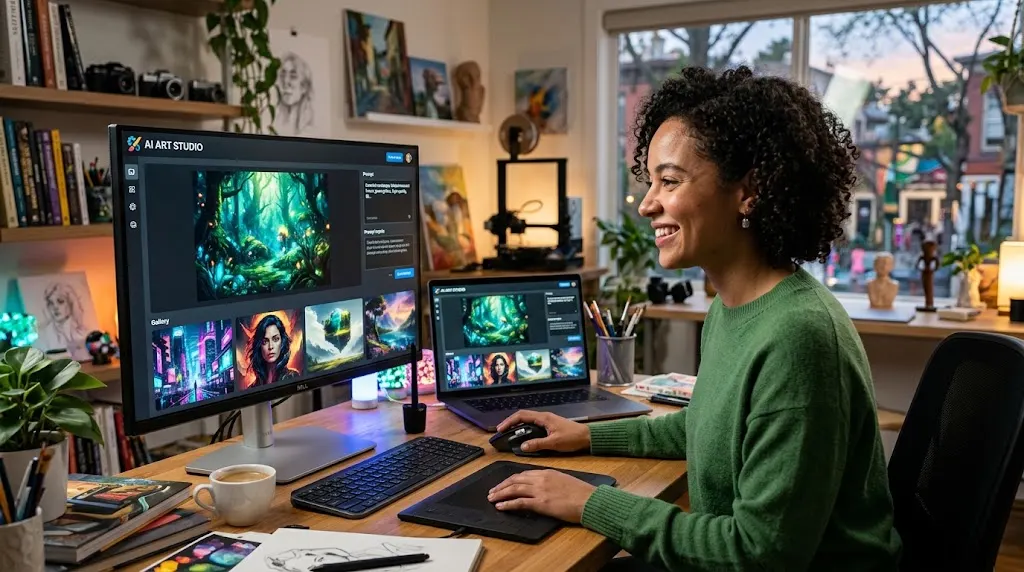
AI image generators have changed how creators turn ideas into visual content. Instead of starting every design from a blank canvas, users can describe a scene, style, subject, or composition and receive multiple visual concepts within seconds. This makes artificial intelligence useful for bloggers, marketers, designers, social media creators, and small businesses producing frequent visual content.
The biggest advantage is speed. Creating thumbnails, concept art, social graphics, illustrations, or advertising ideas manually can require significant time and specialist skills. AI-powered image generation shortens the early creative process, allowing creators to experiment with more visual directions before choosing the strongest concept and refining it for publication.
AI-generated images are not automatically perfect, however. Creators still need to consider composition, originality, brand consistency, accuracy, and licensing requirements before using visuals professionally. The strongest workflow treats AI as a creative assistant that accelerates experimentation while leaving important artistic and commercial decisions under human control.
ChatGPT Image Generation: Best Overall for Creators
ChatGPT is a strong option for creators who want image generation combined with a conversational workflow. Users can describe the image they need in everyday language and continue refining the result through follow-up instructions. This makes it especially useful when you know the overall concept but need help developing lighting, composition, environment, or visual direction.
Creators can use ChatGPT for blog graphics, thumbnails, product concepts, advertising ideas, illustrations, social media visuals, and creative brainstorming. Because the experience is conversational, users can request changes such as removing objects, adjusting framing, changing backgrounds, or making the image more realistic without completely rewriting the original creative brief.
Its greatest strength is convenience for people already using ChatGPT for writing, brainstorming, research, or planning. Instead of moving between separate tools, creators can develop content ideas and visual assets within a connected workflow. Careful prompting still matters, especially when exact composition, realistic details, or consistent visual characteristics are important.
Midjourney: Best for Artistic and Cinematic Images
Midjourney remains popular among creators who value dramatic, polished, and visually distinctive image generation. It is especially strong for concept art, cinematic scenes, fantasy environments, editorial imagery, fashion concepts, and other creative work where visual atmosphere matters. Users can produce impressive results by describing subject matter alongside lighting, perspective, mood, texture, and artistic direction.
Designers often use Midjourney during early concept development because it can generate several different interpretations quickly. A creator working on a campaign might explore multiple visual moods before investing time in a final production. This makes the platform useful for mood boards, visual storytelling, creative pitches, character ideas, and inspiration for larger design projects.
The learning curve can be higher for users who want precise control over every visual detail. Strong results often depend on understanding how descriptive prompts influence composition and style. Midjourney therefore suits creators who enjoy experimentation and are willing to refine prompts repeatedly rather than expecting the first image to perfectly match a detailed commercial brief.
Adobe Firefly: Best for Professional Creative Workflows
Adobe Firefly is particularly useful for creators who already work with Adobe applications and want AI generation integrated into professional design workflows. It can support image creation, generative editing, visual experimentation, and other tasks that complement traditional graphic design. This makes it valuable for designers who want artificial intelligence without abandoning familiar creative software.
A professional might generate an initial concept with AI and then refine typography, branding, color treatment, layout, or image details manually. This combination allows creators to benefit from faster ideation while keeping the precision offered by established editing software. Firefly can therefore fit naturally into advertising, marketing, social content, and commercial design workflows.
Its biggest advantage is integration rather than simply raw image generation. Creators working across Photoshop and other Adobe tools can move between AI-assisted creation and detailed manual editing more easily. This is useful when the final visual needs greater control than a standalone text-to-image generator typically provides through prompts alone.
Canva AI: Best for Social Media and Marketing Graphics
Canva is a practical choice for creators who need AI-generated visuals alongside templates, layouts, presentations, and social media design tools. It is particularly useful for marketers, entrepreneurs, and content creators who do not have advanced graphic design experience. AI features can help generate creative assets that are then combined with Canva’s familiar drag-and-drop editing environment.
Social media managers can create visual concepts and quickly adapt them into different formats for multiple platforms. Bloggers can develop featured images, while small businesses can experiment with advertising ideas, promotional materials, and presentation graphics. The ability to move directly from generation into layout design can reduce the number of separate tools required.
Canva works best when speed and ease of use matter more than advanced artistic control. Users can generate a starting image, place it inside a template, and refine the surrounding design manually. This workflow is especially efficient for creators producing large volumes of everyday content rather than highly detailed concept art or complex professional illustrations.
Ideogram: Best for Images With Text
Ideogram is especially useful for creators who need visuals that include readable words as part of the composition. AI image models historically struggled with typography, often generating distorted letters or meaningless text. Tools focused on stronger text rendering can be useful for posters, promotional concepts, social graphics, signs, and other designs where words are integrated directly into the visual.
Creators can combine descriptive prompts with specific phrases, visual styles, and layout ideas to explore marketing concepts quickly. This is useful when developing poster directions, campaign graphics, merchandise ideas, or social media designs. Even when the first output is not publication-ready, it can provide a fast starting point for further editing.
Typography should still be reviewed carefully before commercial use. AI may create spelling errors, inconsistent letterforms, or layouts that look attractive but reduce readability. For important brand materials, creators should consider using generated imagery as a base and finalize critical text manually inside professional design software.
Leonardo AI: Best for Creative Control and Asset Generation
Leonardo AI appeals to creators who want more flexibility across illustrations, game assets, concept art, product visuals, and other creative categories. It provides tools for experimenting with different styles and generated outputs, making it suitable for people who want more control than a simple prompt-and-download experience. This flexibility can support both artistic and commercial workflows.
Game developers and digital artists may use AI to explore environments, characters, objects, or visual directions before creating final production assets. Marketing teams can also experiment with product concepts, branded scenes, or campaign imagery. Generating several possibilities quickly allows teams to make visual decisions earlier without manually designing every idea from the beginning.
The platform is most valuable when users take time to understand its controls and workflow options. More flexibility can also mean more complexity, especially for beginners. Creators who simply need occasional social graphics may prefer a simpler tool, while users producing large volumes of visual assets can benefit from deeper customization.
Stable Diffusion: Best for Customization and Flexibility
Stable Diffusion is known for offering significant flexibility to users who want greater control over AI image generation. Depending on the interface and setup being used, creators can customize models, settings, workflows, and image-generation processes far beyond what many simpler platforms provide. This makes it popular among technically confident artists, developers, and AI enthusiasts.
The ecosystem supports a wide range of creative experiments, including realistic imagery, illustrations, concept art, stylized designs, and customized visual workflows. Users can explore different models and techniques depending on the desired result. This flexibility can make Stable Diffusion particularly valuable for creators who do not want to depend entirely on the default style of one commercial platform.
Greater customization also introduces a steeper learning curve. Beginners may find dedicated consumer tools easier because those platforms simplify technical decisions behind a polished interface. Stable Diffusion becomes more attractive when creators value control, experimentation, and the ability to develop specialized workflows rather than simply generating occasional images from short prompts.
How to Write Better AI Image Prompts
Good image prompts describe more than just the main subject. Creators should consider environment, composition, camera perspective, lighting, mood, distance, textures, and important background details. Instead of requesting “a person working,” describe the type of workspace, time of day, camera angle, lighting conditions, clothing, activity, and visual atmosphere you want.
It also helps to describe what the image will be used for. A YouTube thumbnail may need a clear focal subject and strong visual contrast, while a blog featured image may need more balanced composition and room around the subject. Giving the AI practical context can improve how well the resulting image fits its intended placement.
Avoid filling prompts with unnecessary descriptive words that do not meaningfully affect the image. Start with the subject and most important visual requirements, then refine the result based on what is missing. Iterative prompting usually works better than trying to create one extremely long prompt that predicts every possible visual problem in advance.
How to Choose the Right AI Image Generator
Start by deciding what kind of visual content you create most frequently. A social media marketer may prefer Canva, while a concept artist may get more value from Midjourney or Leonardo AI. Someone working deeply inside Adobe software may prefer Firefly because integration can matter more than having the largest number of standalone generation features.
Consider image quality, creative control, editing options, speed, ease of use, pricing, and commercial usage requirements. Some creators need realistic imagery, while others care more about illustrations, typography, or consistent visual styles. Testing the same creative brief across multiple platforms can reveal which tool better understands the type of work you regularly produce.
Do not assume you need several paid AI image tools immediately. Begin with one platform that matches your primary workflow and evaluate whether it actually saves time. Add another only when it solves a limitation you repeatedly encounter, because maintaining several overlapping subscriptions can quickly make an otherwise efficient creative workflow unnecessarily expensive.
Managing Storage for AI-Generated Images
AI image generation can produce large numbers of files surprisingly quickly. A creator experimenting with several variations for every concept may accumulate hundreds or thousands of images over time. High-resolution exports, edited versions, source files, and client deliverables can increase storage requirements even further, particularly when visual content is produced every day.
Creators should develop an organized file-management system before their AI library becomes difficult to navigate. Separate finished assets from experimental generations, use descriptive folder names, and regularly remove low-quality duplicates that no longer serve a purpose. Understanding digital storage measurements such as GB and TB can also help when planning local or cloud storage capacity.
Cloud storage can make collaboration easier when several people need access to creative assets. However, keeping every generated variation indefinitely is rarely necessary. Save important originals, final exports, useful project versions, and images likely to be reused while periodically cleaning temporary generations that would otherwise consume storage without providing meaningful creative value.
Tips for Using AI Images Professionally
Creators should always review generated images carefully before publishing them. Look closely for distorted hands, incorrect objects, strange reflections, inconsistent backgrounds, unrealistic proportions, or visual details that do not make sense. Small errors can be easy to miss during quick generation but become obvious once an image appears in a professional advertisement, website, or client project.
Brand consistency also matters. If every image uses a completely different visual style, your website or social channels may begin to feel disconnected. Create repeatable guidelines for lighting, composition, image style, subject treatment, and overall mood so AI-generated assets complement your existing visual identity rather than making it less recognizable.
Finally, understand the usage terms of the platform you choose, particularly for commercial projects. Policies and licensing conditions can vary between services and may change over time. Professional creators should know what rights apply to generated assets and maintain human review before using AI imagery in major advertising, product packaging, branding, or client deliverables.
Conclusion
The best AI image generators for creators serve different needs rather than competing for one universal first place. ChatGPT offers a flexible conversational workflow, Midjourney excels at artistic visuals, Adobe Firefly supports professional design, Canva simplifies marketing graphics, and platforms such as Ideogram, Leonardo AI, and Stable Diffusion provide specialized creative capabilities.
Choosing the right tool starts with understanding what you actually create. Consider whether your priority is realistic imagery, social content, concept art, typography, customization, commercial design, or rapid experimentation. Testing several platforms with the same project can reveal which one consistently produces results closest to your creative expectations.
AI image generators can dramatically accelerate visual production, but strong creative judgment still matters. Refine prompts, review details, maintain brand consistency, and edit generated work when necessary. The most effective creators use artificial intelligence to explore ideas faster while keeping human direction responsible for the final visual quality and purpose.
FAQs
What is the best AI image generator for creators?
The best option depends on your workflow. ChatGPT is highly versatile, Midjourney works well for artistic imagery, Canva suits marketing content, and Adobe Firefly is useful for creators already working with professional Adobe software.
Which AI image generator is best for beginners?
Canva and ChatGPT are approachable options because their interfaces make image creation straightforward. Beginners can describe what they need, review the output, and refine visuals without learning complicated technical settings.
Can AI image generators create realistic photos?
Yes, modern AI image generators can produce highly realistic-looking visuals. However, creators should inspect details carefully because generated people, objects, reflections, backgrounds, and physical relationships can occasionally contain noticeable inaccuracies.
Are AI-generated images safe for commercial use?
Commercial usage depends on the platform, plan, content, and applicable terms. Creators should review current licensing and usage policies before using AI-generated images in advertising, client work, products, branding, or other commercial projects.
How can I make AI-generated images look better?
Use clear prompts describing the subject, environment, lighting, composition, perspective, and intended use. Generate several variations, identify what is wrong, and refine the image with targeted follow-up instructions rather than repeatedly starting over.