
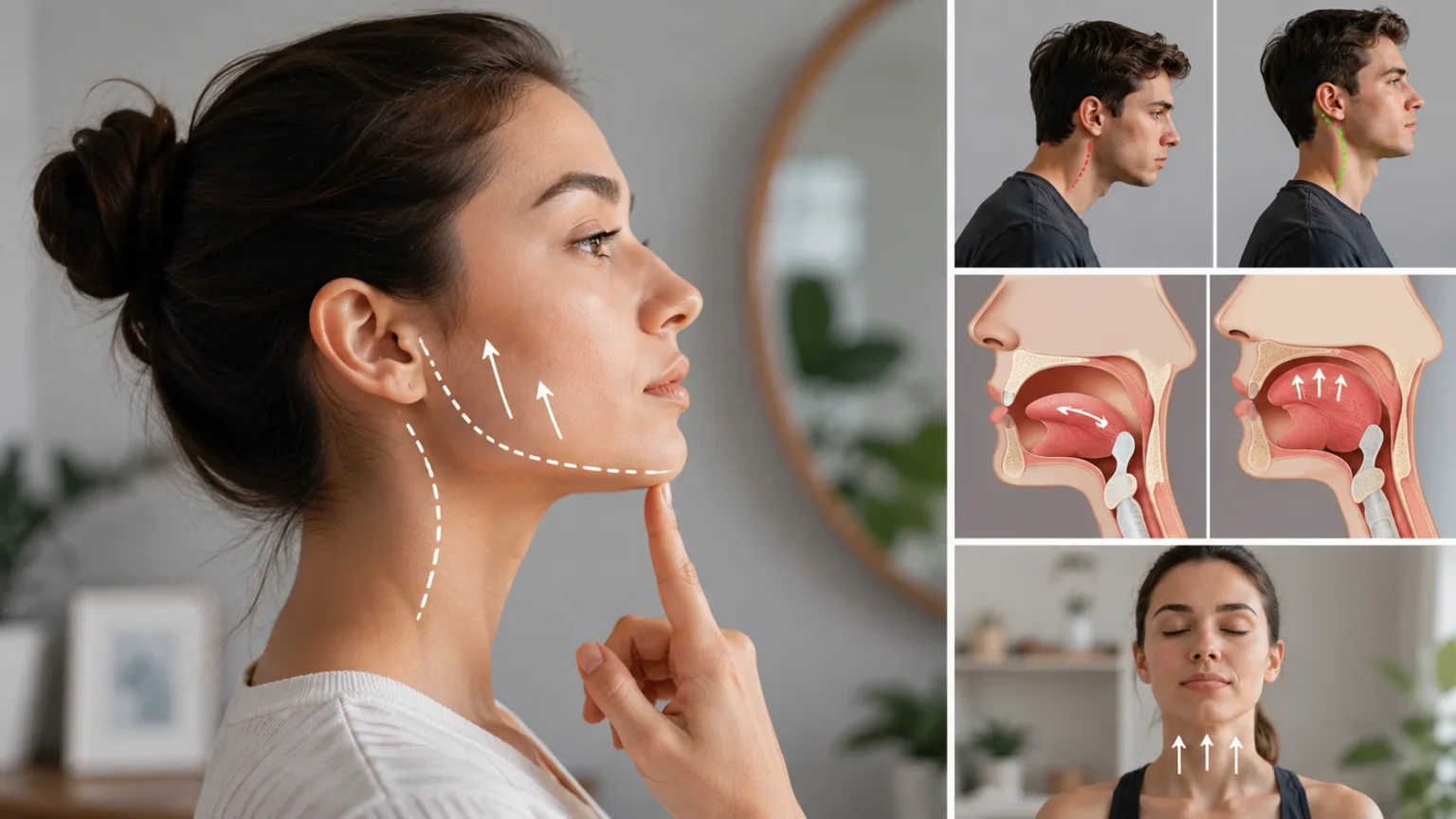

How to Mew Properly: Technique, Benefits and Risks
Mewing has become one of the most widely discussed facial exercises on social media, often promoted as a simple way to create a sharper jawline, improve facial symmetry, and even change the shape of the lower face. The technique generally involves resting the tongue against the roof of the mouth while keeping the lips closed and maintaining a relaxed jaw position. Its simplicity has helped make it popular, particularly among people interested in appearance and facial posture.
The important issue is that online claims about mewing frequently go much further than current scientific evidence supports. Proper tongue posture has legitimate roles in speaking, swallowing, oral function, and development, particularly during childhood. However, orthodontic experts caution that simply changing tongue position has not been shown to dramatically reshape an adult jaw, straighten crooked teeth, or replace orthodontic treatment.
That does not mean tongue position is completely irrelevant. The tongue is a powerful muscular organ that participates in swallowing, speech, chewing, and airway function, while abnormal habits such as persistent tongue thrust can influence the teeth and oral function. The problem arises when normal oral posture is transformed into an aggressive exercise promising structural changes that are unlikely to occur.
Learning how to mew properly should therefore focus on gentle, comfortable tongue resting posture rather than forcefully pressing the tongue into the palate for hours. This guide explains the basic technique, what changes are realistically possible, common mewing mistakes, potential risks, and when an orthodontist, dentist, ENT specialist, or other healthcare professional may be more appropriate than a social-media exercise.
What Is Mewing?
Mewing is the informal name given to a tongue-posture technique in which the tongue is positioned against the roof of the mouth while the lips remain closed and the jaw stays relatively relaxed. The practice became popular online because supporters claimed that maintaining this position could influence the shape of the face and jaw over time.
The term is associated with British orthodontist John Mew and later his son Mike Mew, whose ideas about facial growth and oral posture became known as orthotropics. Online communities simplified these concepts into what most people now recognize as mewing: placing as much of the tongue as comfortably possible against the palate and maintaining that position during rest.
Normal resting tongue posture is not exactly the same thing as aggressive mewing. In a comfortable resting position, the tongue may naturally sit upward rather than pressing strongly against the teeth or floor of the mouth. The lips can remain gently together, while the jaw muscles should not be clenched or under constant tension.
Problems often begin when people interpret mewing as a strength exercise. Forcefully pushing the tongue against the palate, clenching the teeth, pulling the chin backward, or maintaining uncomfortable pressure is not necessary for healthy oral posture. More pressure does not mean faster or greater facial changes.
How to Mew Properly Step by Step
Begin by sitting or standing comfortably with your head in a neutral position rather than forcing your chin dramatically backward. Relax your shoulders and jaw. Good posture can make it easier to notice where your tongue naturally rests without creating unnecessary tension in the neck or facial muscles.
Next, gently close your lips and breathe through your nose if you can do so comfortably. Place the tip of your tongue on the palate just behind the upper front teeth, but avoid pressing directly against those teeth. The goal is contact with the roof of the mouth rather than pushing the tongue forward.
Allow the middle and back portions of the tongue to rise gently toward the palate as well. One practical way to feel this position is to swallow normally and notice where the tongue finishes immediately after the swallow. Do not force the back of the tongue upward so intensely that breathing becomes difficult.
Finally, keep the jaw relaxed. Your teeth should not be tightly clenched together. The position should feel sustainable and natural rather than like an intense workout. If you develop jaw pain, headaches, tooth pressure, neck tension, or difficulty breathing, stop forcing the posture and consider having your oral function assessed professionally.
Where Should Your Tongue Rest When Mewing?
The tip of the tongue should generally rest on the palate behind the upper front teeth rather than pushing against the teeth themselves. This distinction matters because persistent pressure against teeth can potentially contribute to unwanted tooth movement or reinforce abnormal oral habits.
The middle portion of the tongue should also make gentle contact with the palate when comfortable. Many online explanations focus only on the tongue tip, but normal tongue posture involves more than placing one small section against the roof of the mouth.
People practicing mewing often try to elevate the back third of the tongue as well. That position can be difficult to recognize, particularly for someone who normally breathes through the mouth or has nasal obstruction. The tongue should never be forced backward or upward to the point that airflow feels restricted.
Comfortable nasal breathing is an important practical test. If raising your tongue makes it difficult to breathe, the solution is not to force yourself to tolerate the problem. Nasal congestion, enlarged tonsils, structural obstruction, allergies, or another airway issue may need proper evaluation before trying to maintain a closed-mouth resting posture.
Should Your Teeth Touch While Mewing?
One of the most confusing parts of mewing advice involves what to do with the teeth. Some online instructions encourage continuous tooth contact, while others recommend maintaining a slight space between the upper and lower teeth.
You should not forcefully clench your teeth while attempting tongue posture. Continuous clenching activates the jaw muscles and may contribute to facial pain, headaches, tooth wear, or temporomandibular joint discomfort in susceptible individuals.
Your jaw should instead remain comfortable and relaxed. Natural resting positions vary slightly between people, so attempting to hold the teeth together with constant muscular force is unnecessary.
If you already grind or clench your teeth, aggressive mewing could add another source of jaw tension. Bruxism itself can contribute to cracked teeth, headaches, facial pain, and TMJ problems. In that situation, speak with a dentist rather than attempting to solve jaw appearance concerns by applying more pressure.
Should Your Lips Be Closed While Mewing?
Mewing is usually described with the lips gently closed during rest. This position often goes together with nasal breathing and a tongue that rests upward rather than remaining low in the mouth.
“Closed” does not mean squeezing the lips together. The muscles around the mouth should remain relaxed. Constantly pursing or tightening the lips can create unnecessary facial tension and make the posture difficult to maintain.
Some people cannot comfortably keep their lips closed because nasal breathing is difficult. Persistent nasal congestion, allergies, a deviated nasal septum, enlarged tonsils, or other airway issues may lead someone to rely on mouth breathing.
Trying to force the mouth closed when your nose does not provide adequate airflow is not appropriate. Persistent mouth breathing deserves evaluation because airway function should take priority over attempting an internet facial exercise.
How Do You Know If You Are Mewing Correctly?
Correct tongue posture should feel relatively gentle. You should notice broad tongue contact with the palate without pain, strong pressure against the front teeth, or intense jaw-muscle activation.
Breathing should remain comfortable through the nose. You should also be able to swallow normally without deliberately pushing the tongue forward between the teeth. If swallowing feels awkward every time you attempt the position, you may be overthinking or forcing the technique.
Your jaw and neck should remain relaxed. Headaches, aching temples, jaw clicking, tooth soreness, or neck tightness are not signs that mewing is “working.” They are signals that you may be creating excessive muscular tension.
The easiest test is sustainability. Healthy resting posture should eventually feel natural enough that you do not have to maintain it through constant force. If you have to concentrate intensely throughout the day to hold your tongue in position, a dentist, orthodontist, or appropriately trained therapist can help determine whether an underlying functional issue exists.
How Long Should You Mew Each Day?
Mewing is usually presented as a resting posture rather than a traditional exercise performed for a set number of repetitions. Supporters generally encourage maintaining an upward tongue position whenever the mouth is at rest.
That does not mean you should spend hours forcefully pushing your tongue into the palate. Constant muscular effort is unnecessary and may increase jaw or tongue fatigue. A comfortable resting position should require minimal conscious force.
If your tongue normally rests low, becoming aware of its position periodically throughout the day may help you establish a more natural habit. Gentle reminders are more reasonable than treating every waking hour as an intense tongue workout.
There is also no scientifically established number of daily mewing hours required to reshape an adult face. Claims such as “mew eight hours per day for six months” are not supported by reliable evidence demonstrating predictable changes in jaw structure.
How Long Does Mewing Take to Show Results?
There is no scientifically established timeline in which mewing reliably produces structural facial changes. Online before-and-after photographs often claim dramatic improvements after several months or years, but photographs alone cannot establish that tongue posture caused the changes.
Differences in camera angle, head posture, facial expression, lighting, body weight, hairstyle, facial hair, age, and normal growth can dramatically alter how the jawline appears in photographs. Adolescents may also naturally experience substantial facial development during the same period they begin practicing mewing.
In adults, major changes in jaw-bone shape generally should not be expected from tongue posture alone. The American Association of Orthodontists specifically cautions that there is insufficient scientific evidence showing that mewing can reshape the jawline or correct tooth alignment.
A person may notice that holding the head differently or keeping the mouth closed changes how the face looks temporarily. That visual difference should not be confused with permanent remodeling of the jawbone.
Does Mewing Actually Change Your Jawline?
This is the claim that made mewing popular, but it is also where expectations need the most adjustment. Current evidence does not demonstrate that ordinary mewing reliably creates a dramatically sharper or larger adult jawline. Orthodontic authorities have warned against presenting it as a proven method of reshaping facial bones.
Facial appearance is influenced by genetics, bone structure, tooth position, muscle size, body-fat distribution, age, and overall growth. Tongue posture represents only one part of a far more complicated biological system.
Research does suggest relationships between oral function, breathing patterns, tongue posture, and craniofacial development in children. Studies involving children have found associations between tongue position, breathing patterns, and aspects of facial growth. However, association during growth is very different from proving that an adult can reshape the jaw through mewing.
If someone wants substantial changes to a recessed jaw, bite, tooth alignment, or facial proportions, an orthodontic assessment provides considerably more reliable information. Depending on the problem, evidence-based options may include orthodontics or, in selected severe skeletal cases, jaw surgery.
Can Mewing Make Your Face More Symmetrical?
Facial asymmetry is extremely common. Almost everyone has differences between the left and right sides of the face because bones, muscles, teeth, and soft tissues are rarely perfectly identical.
Mewing is sometimes claimed to correct asymmetry by applying equal tongue pressure across the palate. There is no strong clinical evidence demonstrating that consciously balancing tongue pressure can reliably correct established adult facial asymmetry.
Minor visual differences may appear when posture improves. Holding the head tilted to one side, pushing the jaw forward, or habitually turning the face can change how symmetry appears in mirrors and photographs.
Significant asymmetry may result from bite problems, jaw development, previous injury, TMJ conditions, or other structural factors. If asymmetry is new, worsening, painful, or functionally significant, professional evaluation is more appropriate than trying to push one side of the tongue harder.
Can Mewing Straighten Teeth?
Mewing should not be considered an alternative to braces or clear aligners. Tooth movement requires controlled forces applied in carefully planned directions, which is exactly what orthodontic appliances are designed to provide.
The tongue can influence teeth over time, but uncontrolled pressure is not the same as orthodontic treatment. Persistent tongue thrust, for example, involves pushing the tongue against or between teeth and can contribute to dental alignment or bite problems.
Trying to use the tongue deliberately to push crooked teeth into position could instead create undesirable forces. You cannot reliably predict how individual teeth, roots, supporting bone, and bite relationships will respond.
If your main goal is straighter teeth, see an orthodontist. A professional assessment can identify crowding, spacing, overbite, open bite, crossbite, and skeletal problems and determine the safest way to correct them.
Can Mewing Fix an Overbite?
An overbite describes excessive vertical overlap between the upper and lower front teeth, although people sometimes use the term when they actually mean overjet or a recessed lower jaw.
These problems can result from tooth position, jaw relationships, growth patterns, oral habits, or combinations of several factors. Because the causes differ, there is no single tongue exercise capable of correcting every type of bite problem.
The American Association of Orthodontists warns that mewing is not a scientifically supported substitute for professional orthodontic treatment. Trying to correct a bite by continuously applying tongue pressure may delay treatment while the underlying problem remains.
Children and teenagers may have more growth-related treatment options because their jaws are still developing. Adults may require orthodontics or, for significant skeletal discrepancies, other specialist treatment. Proper diagnosis determines which approach is appropriate.
Can Mewing Improve a Receding Chin?
A recessed or retruded chin can result from the shape and position of the lower jaw, chin anatomy, dental relationships, soft tissue, and genetics. Mewing is frequently promoted as a way to push the lower jaw forward permanently.
There is no convincing evidence that ordinary tongue posture can significantly advance an established adult mandible. A person may temporarily hold the chin or head differently while mewing, creating the visual impression of a stronger jaw.
Changes during childhood and adolescence are more complicated because the face is still growing. Tongue posture, airway function, oral habits, and skeletal growth can interact during development, but that does not mean self-directed mewing can predictably control facial growth.
Anyone concerned about a substantially recessed jaw should consider an orthodontic evaluation. A specialist can determine whether the concern is primarily dental, skeletal, cosmetic, or functional and explain realistic treatment options.
Possible Benefits of Proper Tongue Posture
The strongest reason to care about tongue posture is normal oral function rather than cosmetic jaw transformation. The tongue plays major roles in chewing, swallowing, speech, and airway function. Maintaining comfortable oral posture can therefore be considered part of normal function.
Keeping the tongue from constantly pressing forward against the teeth may also be beneficial when abnormal tongue thrust is present. Persistent tongue thrust can affect swallowing and dental relationships and sometimes requires targeted therapy.
Comfortable lip closure and nasal breathing may also encourage awareness of mouth-breathing habits. However, someone who cannot breathe comfortably through the nose should have the cause investigated instead of simply forcing the lips shut.
Another potential benefit is postural awareness. People practicing gentle mewing may become more aware of jaw clenching, open-mouth posture, forward-head posture, or unnecessary facial tension. Correcting those habits may improve comfort even if facial bones do not change.
Does Mewing Improve Nasal Breathing?
Mewing itself does not physically remove an obstruction from the nasal airway. If your nose is blocked because of allergies, swollen tissues, structural abnormalities, infection, or another condition, moving your tongue upward will not necessarily solve the problem.
However, people who can already breathe well through their nose may become more conscious of keeping their lips closed and using nasal breathing while practicing tongue posture.
Research involving children suggests that chronic mouth breathing and airway obstruction can be associated with differences in craniofacial development. These findings support taking persistent mouth breathing seriously, particularly during development.
If nasal breathing is consistently difficult, an ENT specialist or other qualified clinician can investigate the underlying reason. Airway problems should not be treated as a willpower issue or blamed simply on poor mewing technique.
Can Mewing Help With Sleep Apnea?
Claims that mewing can cure obstructive sleep apnea are not supported by adequate clinical evidence. Sleep apnea involves repeated narrowing or closure of the upper airway during sleep and can have several anatomical and neurological contributors.
Tongue position is relevant to airway anatomy, but consciously holding the tongue against the palate while awake does not mean it will remain there during sleep or prevent airway collapse.
Untreated sleep apnea can contribute to daytime sleepiness, impaired concentration, cardiovascular problems, and other health risks. People who snore loudly, wake gasping, experience witnessed pauses in breathing, or remain extremely sleepy during the day should pursue proper evaluation.
Evidence-based sleep apnea treatments may include positive airway pressure, oral appliances, weight management when appropriate, positional approaches, or surgery in selected cases. The appropriate option depends on the cause and severity.
Can Mewing Help With Mouth Breathing?
Mewing encourages a closed-mouth posture, so people sometimes use it as an attempt to stop mouth breathing. This may help someone notice an unnecessary habit when nasal breathing is completely comfortable.
Persistent mouth breathing, however, can have an underlying physical reason. Nasal allergies, chronic congestion, enlarged adenoids or tonsils, structural differences, or other airway conditions can make nasal breathing difficult.
Forcing the mouth closed without addressing obstruction can make breathing uncomfortable and potentially unsafe. The first priority should always be maintaining adequate airflow rather than achieving an idealized tongue position.
Children who consistently mouth-breathe deserve particular attention because breathing patterns and craniofacial development interact during growth. Professional evaluation can determine whether medical, dental, orthodontic, or functional treatment is needed.
Mewing and Swallowing Technique
Normal swallowing involves coordinated movement of the tongue, lips, jaw, throat, and other structures. The tongue helps move food or liquid backward while protecting the airway and preparing material for swallowing.
People with tongue thrust may push the tongue forward against or between the teeth during swallowing. This differs from simply having a low resting tongue position and may require assessment when it persists beyond expected developmental stages.
Practicing a relaxed upward tongue rest position may improve awareness, but it should not replace professional therapy when a genuine swallowing disorder exists. Speech-language pathologists and other appropriately trained clinicians can evaluate oral motor patterns and swallowing function.
Difficulty swallowing, coughing during meals, repeated choking, unexplained weight loss, or food frequently feeling stuck should not be treated as a mewing problem. These symptoms require appropriate medical assessment.
Hard Mewing vs Regular Mewing
Regular mewing usually refers to maintaining gentle tongue contact with the roof of the mouth during rest. Hard mewing refers to deliberately pressing the tongue upward with considerably more force in the hope of speeding facial changes.
There is no good evidence showing that harder pressure produces faster or better structural results. The assumption comes largely from online communities rather than controlled clinical research.
Hard mewing may instead increase muscular fatigue and pressure on teeth or jaw structures. People may develop headaches, tongue soreness, jaw discomfort, or excessive awareness of facial muscles.
If a posture exercise requires continuous force and produces pain, it is no longer functioning like a relaxed resting posture. Avoid turning mewing into an endurance challenge simply because influencers claim that greater pressure creates greater bone remodeling.
Common Mewing Mistakes
One of the most common mistakes is pressing the tongue against the front teeth. The tongue should generally rest behind the upper front teeth rather than forcefully pushing them forward. Continuous dental pressure is not necessary for correct oral rest posture.
Another mistake is clenching the jaw. Some people assume that keeping the upper and lower teeth tightly together will create a stronger jawline, but prolonged clenching can strain muscles and aggravate temporomandibular joint symptoms.
People also frequently overcorrect their head posture by pulling the chin aggressively backward. A neutral head and neck position is preferable to maintaining a forced “chin tuck” throughout the day.
Finally, many users expect rapid cosmetic transformation. When they do not see changes within weeks, they increase tongue pressure or create increasingly complicated routines. The absence of dramatic results does not mean you are failing; the underlying claim itself may be unrealistic.
Can Mewing Cause Jaw Pain?
Yes, particularly when someone mews aggressively or combines tongue pressure with clenching. The temporomandibular joints and surrounding muscles already perform thousands of movements every day during chewing, swallowing, and speaking.
Adding continuous unnecessary muscle contraction can increase fatigue. Symptoms may include jaw soreness, pain near the ears, temple headaches, facial aching, or difficulty opening the mouth comfortably.
Jaw clicking without pain is common and does not always indicate serious disease, but painful clicking, locking, or reduced jaw movement deserves assessment. Continuing to push through pain because you believe your jaw is “adjusting” is not sensible.
If jaw symptoms begin after changing your tongue posture, stop the forceful technique and allow the muscles to relax. Persistent problems can be evaluated by a dentist or another clinician experienced in temporomandibular disorders.
Can Mewing Cause TMJ Problems?
There is no strong evidence that gentle normal tongue posture inherently causes temporomandibular joint disorders. The concern is more relevant when people combine mewing with jaw clenching, forced mandibular positioning, or excessive tongue pressure.
TMD can involve pain in the jaw joint, surrounding muscles, or both. Headaches, facial pain, clicking, locking, and discomfort during chewing may occur. Jaw tension and clenching can aggravate these symptoms in susceptible individuals.
Ironically, some therapeutic jaw exercises use gentle tongue contact with the roof of the mouth to guide controlled movement. That is very different from forcing the jaw into an unnatural position for cosmetic purposes.
If you already have TMJ pain, ask a clinician before adding prolonged jaw or tongue exercises. The appropriate approach depends on whether your symptoms involve muscle tension, joint dysfunction, grinding, bite issues, or another cause.
Can Mewing Move Your Teeth?
Teeth can move when sufficient force is applied over time. Orthodontics deliberately uses this biological property through carefully controlled forces applied by braces or aligners.
The tongue also exerts force against oral structures during everyday functions. Abnormal tongue habits can contribute to dental changes, which is one reason tongue thrust is taken seriously in orthodontics.
This does not mean you can safely use your tongue as a homemade orthodontic appliance. Uncontrolled pressure may move teeth in undesirable directions or interfere with bite relationships rather than correcting them.
If you notice new tooth spacing, bite changes, tooth soreness, or shifting after deliberately applying tongue pressure, stop the forceful technique and speak with a dentist or orthodontist.
Does Mewing Work Better for Teenagers?
Teenagers are still undergoing craniofacial growth, so their faces naturally change substantially over time. This makes before-and-after mewing claims particularly difficult to interpret in adolescents.
Research does show relationships between tongue position, airway patterns, and facial development in growing children. However, this evidence does not establish that unsupervised mewing can reliably create a desired jaw shape.
Young people with bite problems, chronic mouth breathing, unusual swallowing patterns, or jaw-development concerns can benefit from early professional evaluation because treatment options may differ while growth remains.
Teenagers should therefore avoid treating viral facial exercises as substitutes for orthodontic care. Growth is valuable biologically, but it also makes accurate diagnosis and properly timed treatment especially important.
Does Mewing Work for Adults?
Adults can certainly become more aware of tongue posture, mouth breathing, jaw clenching, and other oral habits. Those functional improvements may be worthwhile when they create a more comfortable resting position.
What adults should not expect is dramatic remodeling of established facial bones through ordinary tongue pressure. Once facial growth is largely complete, significant skeletal corrections generally require treatments capable of applying controlled orthopedic or surgical changes.
Temporary appearance differences may nevertheless occur. Improved head posture, reduced mouth opening, body-weight changes, facial-muscle tension, and photographic angles can all make the jawline appear somewhat different.
This explains why some people sincerely believe they have transformed their face through mewing even when bone structure has probably changed very little. Subjective visual improvement is possible without proving skeletal remodeling.
How Mewing Before-and-After Photos Can Be Misleading
Jawline photographs are extremely sensitive to camera position. Moving the camera slightly higher or lower can make the chin and lower jaw look dramatically different.
Lighting is equally influential. Strong side lighting creates shadows below the jaw, which can produce more definition than soft frontal lighting. Facial hair and hairstyle can further change perceived facial proportions.
Posture also matters. Extending the neck, bringing the chin slightly forward, closing the mouth, or tightening the jaw muscles can immediately create a stronger-looking profile without altering the underlying bone.
Reliable scientific evidence requires standardized measurements and controlled comparisons rather than social-media photographs. Before-and-after images can be interesting personal documentation, but they are not enough to prove that mewing reshapes facial bones.
Mewing vs Orthodontic Treatment
Mewing is a self-directed posture technique, whereas orthodontics involves diagnosis, treatment planning, and controlled movement of teeth and sometimes modification of growth in suitable younger patients.
Orthodontists use clinical examinations, photographs, dental scans, X-rays when indicated, and bite analysis to understand why teeth or jaws are misaligned. Treatment is then designed around the specific problem.
Mewing cannot provide that diagnostic information. Someone with an underbite, open bite, crossbite, crowding, recessed jaw, or facial asymmetry may require very different interventions despite having similar cosmetic concerns.
If appearance is your main motivation, an orthodontic consultation can also clarify what can realistically be changed. Understanding whether the concern originates from teeth, bone, soft tissue, or posture prevents years of pursuing an exercise that cannot address the underlying anatomy.
Mewing vs Myofunctional Therapy
Orofacial myofunctional therapy is sometimes confused with mewing because both can involve the tongue, lips, breathing, and swallowing patterns. They are not necessarily the same thing.
Myofunctional therapy is generally a structured approach used to address specific oral-function patterns under the guidance of an appropriately trained professional. Exercises may target tongue posture, lip function, swallowing, or related behaviors depending on the individual’s needs.
Mewing, by contrast, is usually self-directed and most commonly promoted online for changing facial appearance. The technique lacks the individualized assessment that would normally determine whether an oral posture problem actually exists.
Someone with persistent tongue thrust, difficulty maintaining lip closure, abnormal swallowing, or oral-function concerns may benefit more from professional assessment than from copying a universal mewing routine.
Who Should Avoid Aggressive Mewing?
Anyone with existing jaw pain or a diagnosed temporomandibular joint disorder should avoid aggressive tongue pressure or deliberate jaw repositioning unless specifically advised by a qualified clinician.
People undergoing orthodontic treatment should also avoid attempting to independently manipulate tooth position with tongue pressure. Braces and aligners are designed around carefully calculated forces, and adding uncontrolled habits may interfere with treatment.
Those who cannot breathe comfortably through the nose should not force closed-mouth posture. Breathing difficulty requires identifying the airway problem rather than attempting to overcome it through determination.
Finally, anyone who develops pain, tooth movement, headaches, jaw locking, numbness, or swallowing difficulty after beginning mewing should stop forceful practice and seek appropriate evaluation.
How to Practice Better Oral Posture Safely
Think “relaxed posture” rather than “exercise.” Let the tongue rest gently upward when comfortable, keep it away from forceful pressure against the teeth, and avoid clenching the jaw.
Maintain comfortable head and neck alignment rather than constantly pushing the chin backward. Your shoulders should also remain relaxed because whole-body tension can quickly turn a simple tongue position into an uncomfortable habit.
Breathe through your nose when nasal breathing is easy and unobstructed. If it is consistently difficult, address the reason rather than forcing the mouth closed.
Most importantly, do not measure success by whether your jaw becomes dramatically sharper. Better oral awareness, reduced unnecessary mouth opening, and less jaw tension are more realistic goals than trying to reshape adult facial bones.
When Should You See a Dentist or Orthodontist?
Consider professional evaluation if you are concerned about crooked teeth, significant overbite or underbite, an open bite, jaw asymmetry, or a recessed jaw. These concerns require identifying whether the cause is dental, skeletal, functional, or a combination.
Persistent jaw pain, clicking with pain, locking, or difficulty chewing also deserves evaluation. These symptoms may indicate a temporomandibular disorder rather than incorrect mewing technique.
Frequent tongue thrust, difficulty swallowing, or an unusual resting tongue position may warrant assessment from dental or appropriately trained functional specialists depending on the symptoms.
Chronic mouth breathing, snoring, or difficulty breathing through the nose may require medical or ENT evaluation. Correcting an airway problem can be substantially more important to long-term health than achieving a particular jawline.
What Does Science Really Say About Mewing?
Scientific evidence supports the broader idea that oral function, breathing patterns, tongue posture, and craniofacial development interact, particularly during childhood growth. Studies have observed relationships between tongue position and aspects of maxillofacial development in younger children.
Evidence also shows that chronic mouth breathing and airway obstruction can be associated with differences in dentofacial development in growing individuals. These findings make oral posture scientifically interesting.
What the research does not establish is the viral claim that adults can predictably sculpt a stronger jaw, straighten their teeth, or correct major skeletal problems simply by holding the tongue against the palate. The American Association of Orthodontists states that evidence supporting those jaw-reshaping claims is lacking.
The most reasonable conclusion is that comfortable tongue posture is part of normal oral function, but “mewing” has been marketed far beyond what current evidence can justify. Treating it as posture rather than a facial reconstruction technique keeps expectations realistic.
Final Thoughts on How to Mew Properly
If you want to try mewing, keep the approach simple. Rest the tongue gently against the roof of the mouth, keep the tongue away from forceful pressure against the teeth, maintain relaxed lips and jaw muscles, and breathe comfortably through the nose when possible.
Do not use extreme pressure, clench your teeth, or pull your jaw into an uncomfortable position. Pain is not evidence of progress, and harder mewing has not been shown to produce faster facial changes.
The potential value of the practice is mainly in becoming more aware of normal oral resting posture. Claims that it can create dramatic adult jaw growth, permanently reshape facial bones, straighten teeth, or replace orthodontic care remain unsupported by convincing scientific evidence.
If you have real concerns about your bite, jaw development, mouth breathing, tongue thrust, or facial asymmetry, professional assessment will provide far more useful information than trying to perfect an online technique. Proper oral function matters, but realistic expectations matter just as much.
Frequently Asked Questions
How do I know if I am mewing correctly?
Your tongue should rest gently against the roof of your mouth without pushing hard against your front teeth. Your jaw should feel relaxed, and you should be able to breathe comfortably through your nose.
How long should I mew every day?
Mewing is generally described as a resting tongue posture rather than a timed exercise. Avoid forceful pressure or prolonged clenching, as there is no proven daily duration that guarantees jawline changes.
Can mewing really sharpen your jawline?
There is no strong scientific evidence that mewing dramatically reshapes an adult jawline. Posture may temporarily change facial appearance, but substantial skeletal changes should not be expected from tongue position alone.
Can mewing make your teeth crooked?
Forceful or abnormal tongue pressure can potentially influence tooth position over time. Avoid pushing against the front teeth, and consult an orthodontist if you notice new spacing, bite changes, or tooth movement.
Is mewing dangerous?
Gentle tongue resting posture is unlikely to be dangerous for most people, but aggressive mewing may contribute to jaw pain, headaches, tooth pressure, or TMJ symptoms. Stop if the technique causes persistent discomfort.