
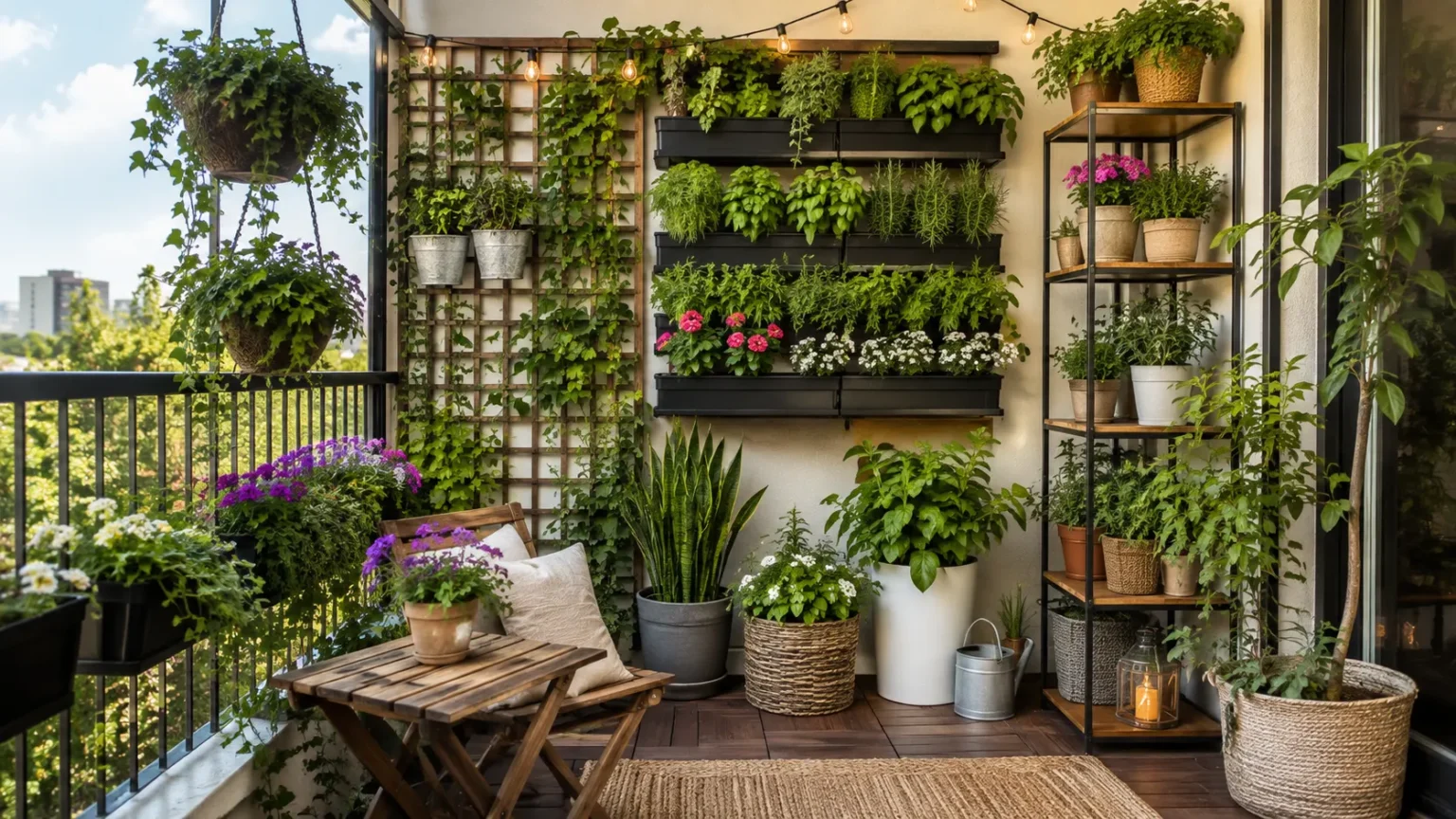

Vertical Garden Ideas for Small Outdoor Spaces
A small balcony, narrow patio, compact courtyard, or tiny backyard does not mean you have to give up on having a lush garden. When floor space is limited, the smartest solution is often to look upward. Vertical garden ideas for small outdoor spaces make walls, fences, railings, and unused corners part of your growing area without crowding valuable walking space.
Vertical gardening can be as simple as training a climbing plant up a trellis or as ambitious as creating an entire living wall filled with flowers, herbs, and foliage. Wall-mounted pots, hanging baskets, tiered planters, plant shelves, and freestanding frames can all turn previously unused surfaces into productive garden space.
The best vertical gardens are designed around the conditions of the space rather than appearance alone. Sun exposure, wind, available water, drainage, container depth, wall strength, and the mature size of plants all influence whether your garden remains attractive after the first few weeks.
You also do not need a large budget or professional installation. Many effective small-space vertical gardens can be created gradually with inexpensive planters, trellises, recycled containers, or modular systems. The following ideas will help you use every available inch while keeping your outdoor space practical, attractive, and manageable.
Why Vertical Gardening Works So Well in Small Spaces
Traditional gardens spread horizontally, which quickly consumes the limited floor space available on a small balcony or patio. Vertical gardening changes that relationship by allowing plants to grow upward, hang downward, or occupy walls instead of competing with chairs, tables, pathways, and other outdoor essentials.
Using height can also make a small garden feel larger. Plants positioned at different levels encourage the eye to travel upward rather than focusing only on the boundaries of the space. A bare fence may emphasize how narrow a patio is, while climbing foliage can transform the same surface into a visually rich backdrop.
A vertical garden for a small patio can also provide functions beyond decoration. Taller plants and climbing vines can create privacy, herbs can provide fresh ingredients close to the kitchen, and flowering plants can bring seasonal color into areas where an ordinary garden bed would never fit.
Vertical gardening is particularly flexible because it can be adapted as your needs change. Freestanding shelves and movable containers can be rearranged, seasonal plants can be replaced, and climbing structures can support different crops from year to year without permanently redesigning the entire space.
Start by Studying Your Sunlight
Before buying planters or plants, spend a day observing how sunlight moves across your outdoor space. Some walls may receive bright direct sun for several hours, while others remain shaded because of nearby buildings, fences, trees, balconies, or roof overhangs.
This matters because a beautiful plant placed in the wrong light may struggle regardless of how carefully you water it. Sun-loving herbs and flowering plants generally need brighter conditions, while many foliage plants can perform better where strong afternoon sun is limited.
Remember that vertical surfaces can create their own microclimates. A south- or west-facing wall may become considerably warmer than an open section of the garden, while a sheltered north-facing corner can remain cool and damp for longer periods.
Choose plants according to the conditions you actually have rather than trying to force your favorite plant into an unsuitable location. Matching vertical garden plants to sunlight makes maintenance easier and reduces the need to constantly replace struggling plants.
1. Cover a Bare Wall With Wall-Mounted Planters
A blank exterior wall offers some of the most valuable unused growing space in a small garden. Individual wall-mounted pots or planter boxes can create greenery without occupying much floor area, making this approach ideal for patios, courtyards, and balconies.
Arrange containers in a grid for a clean modern appearance or stagger them at different heights for something more relaxed. Leaving space between planters allows individual plants to grow naturally and can make watering and maintenance considerably easier.
Small herbs, compact flowers, trailing plants, succulents, and shallow-rooted foliage plants are often useful choices for wall planter ideas. Match the container depth to the plant rather than choosing an extremely shallow planter simply because it looks streamlined.
Before installation, consider the combined weight of containers, wet potting mix, water, and mature plants. Use suitable fixings for the wall material and avoid mounting heavy garden systems onto structures that are not designed to support them.
2. Create a Living Wall as a Green Focal Point
A living wall turns a vertical surface into a dense display of plants, making it one of the most dramatic approaches to small-space gardening. Modular pockets, stacked planting cells, or specially designed wall systems allow many plants to grow within a relatively small footprint.
Living walls work best when plant choices have similar light and moisture requirements. Combining drought-tolerant plants with species that constantly need moist soil can make watering difficult because one part of the wall may be too wet while another remains too dry.
The watering system deserves careful planning. Because vertical containers hold less growing medium than traditional garden beds, they can dry quickly during warm or windy weather. Larger installations may benefit from simple drip irrigation rather than relying entirely on hand watering.
For easier maintenance, begin with a smaller section rather than covering an entire wall immediately. A compact DIY living wall allows you to learn which plants perform best in your conditions before investing in a larger and more complicated system.
3. Add a Trellis for Climbing Plants
A trellis is one of the easiest ways to create height without filling the area with containers. It can be mounted against a wall or fence, placed inside a large pot, or used as a freestanding divider between different parts of an outdoor space.
Climbing plants naturally direct their growth upward, although different plants climb in different ways. Some twine around supports, others use tendrils, and some require regular tying and training to remain attached to the structure.
Flowering climbers can transform a plain boundary into an attractive garden feature, while climbing vegetables can turn the same structure into productive growing space. The important thing is choosing a plant whose mature size is suitable for the available support.
A vertical garden trellis should be strong enough to carry the eventual weight of stems, foliage, flowers, and fruit. A support that seems substantial when the plant is young can become inadequate once a vigorous climber reaches maturity.
4. Grow a Vertical Herb Garden Near the Kitchen
A vertical herb garden is particularly useful because herbs do not need to be hidden at the back of a large garden. Positioning them close to the kitchen makes it easy to cut fresh leaves while cooking and encourages you to use what you grow.
Wall pots, narrow shelves, railing planters, hanging containers, and tiered stands can all accommodate herbs. Basil, parsley, chives, thyme, oregano, sage, mint, and other familiar herbs can be combined according to their preferred growing conditions.
Avoid automatically planting every herb together. Mediterranean herbs such as rosemary and thyme generally appreciate good drainage and relatively dry conditions, while herbs such as parsley may prefer more consistent moisture. Separate containers make these differences easier to manage.
Mint is particularly useful but can spread aggressively when planted with other herbs in a larger container. Keeping it in its own pot gives you the convenience of an outdoor vertical herb garden without allowing its roots to overwhelm neighboring plants.
5. Use Tiered Planters to Multiply Growing Space
Tiered planters create several planting levels within the footprint of one ordinary container. They are ideal for corners, balconies, decks, and narrow patios where you want several varieties without lining every edge with separate pots.
The highest tier receives the greatest exposure to sunlight and wind, while lower levels may remain more shaded or moist. Use this variation intelligently by placing sun-loving or trailing plants where they receive suitable conditions.
Tiered designs work particularly well for herbs, strawberries, seasonal flowers, lettuce, and compact ornamental plants. Trailing varieties can spill over the edges, softening the structure and helping the planter look fuller as the growing season develops.
Make sure every level can drain freely. In a poorly designed stacked vertical planter, water from the top may saturate lower sections while leaving some roots constantly wet, so observe how water moves through the planter after each watering.
6. Hang Planters From Railings and Balcony Edges
Railings are valuable growing surfaces because they already occupy the outer edge of a balcony or terrace. Properly designed railing planters can add flowers, herbs, or trailing foliage without taking space from furniture or walkways.
Choose containers specifically designed to attach securely to your railing type. Wind, rain, and the weight of wet potting mix can place significant force on a planter, so balancing an ordinary pot loosely on a balcony edge is not a safe alternative.
Trailing flowers and foliage plants are especially attractive because they cascade outward and downward, creating greenery without blocking the usable center of the balcony. Compact herbs and leafy vegetables can also perform well in appropriately sized railing boxes.
When planning a balcony vertical garden, consider people and property below you. Secure every container carefully, prevent water from pouring onto neighboring spaces, and check building or rental rules before attaching planters to shared exterior structures.
7. Turn a Wooden Pallet Into a Vertical Planter
A wooden pallet can be repurposed into a rustic vertical planting system when the material is structurally sound and suitable for outdoor use. Small planting pockets can be created between boards to hold herbs, flowers, or compact foliage plants.
Do not assume every discarded pallet is suitable. Avoid wood that is damaged, contaminated, heavily treated with unknown chemicals, or previously used to transport questionable materials, particularly if you plan to grow edible plants.
The pallet should also be stabilized rather than simply leaned against a wall where it could fall. Secure construction, suitable lining, proper drainage, and outdoor-resistant materials help create a safer and longer-lasting DIY pallet garden.
Because planting pockets are usually relatively small, they dry faster than large pots. Choose plants suited to the available root space and check moisture frequently during warm weather rather than using the same watering schedule as your larger containers.
8. Build a Ladder-Style Plant Display
An old ladder or purpose-built ladder shelf can create an attractive vertical display without needing to drill multiple holes into a wall. Each level can hold different containers, allowing plants to be rearranged as seasons and sunlight conditions change.
Place larger or heavier containers near the bottom for stability and smaller pots toward the top. This creates a visually balanced arrangement while reducing the risk of the structure becoming top-heavy.
A ladder garden works particularly well with a mixture of upright and trailing plants. Cascading foliage from upper shelves can soften the straight lines of the frame, while colorful flowers or herbs create interest at eye level.
For balconies or exposed patios, secure the structure against strong wind. A vertical plant stand should be treated as outdoor furniture, meaning stability, weather resistance, and safe placement matter just as much as decorative appeal.
9. Use Hanging Baskets Above Your Patio
Hanging baskets allow plants to occupy overhead space that would otherwise remain completely unused. They can bring flowers and foliage closer to eye level while leaving the floor available for seating, dining, or movement.
Trailing plants naturally suit hanging baskets because their stems can spill gracefully over the edges. Flowering varieties can create strong seasonal color, while herbs or strawberries can turn hanging space into productive growing space.
Hanging containers usually dry relatively quickly because they are exposed to air on several sides. Check them frequently during warm weather and avoid choosing an extremely small basket if you want plants that require consistently moist growing conditions.
Always attach a hanging planter to a properly load-bearing support. Soil becomes much heavier when wet, and mature plants add additional weight, so lightweight hooks or decorative fixtures may not provide enough structural security.
10. Grow Climbing Vegetables Up Instead of Out
Vertical gardening is not limited to ornamental plants. Peas, pole beans, cucumbers, and other climbing or trainable crops can produce food while taking up much less ground space than sprawling plants.
A sturdy trellis, netting system, obelisk, or frame gives climbing vegetables somewhere to travel. Training growth vertically also makes fruit easier to see and can improve access when harvesting.
Cucumbers and some squash varieties can be encouraged upward, although heavier fruits may require additional support. Always match the strength of the structure to the eventual weight and vigor of the crop.
A vertical vegetable garden works especially well when sunshine is limited to one wall or edge of a small yard. Position taller plants carefully so they do not shade every shorter crop growing behind them.
11. Train Fruit Against a Wall
Certain fruit trees can be trained into relatively flat forms against walls or sturdy supports, allowing people with small gardens to grow fruit without accommodating the broad canopy of a conventional tree.
Espalier and fan-trained fruit trees are particularly useful because branches are intentionally guided along a framework. The resulting plant can become an attractive architectural feature as well as a productive part of the garden.
This approach requires more patience than hanging a few containers. Regular pruning and training are necessary to maintain the shape, and the wall’s light exposure should suit the particular fruit species.
For someone willing to invest the effort, vertical fruit growing provides an excellent example of making a small garden work harder. Instead of treating the wall as a boundary, you convert it into productive growing space.
12. Create a Green Privacy Screen
Small outdoor spaces often sit close to neighboring homes, balconies, or pathways, making privacy one of the biggest design challenges. A planted vertical screen can soften views without creating the heavy feeling of a solid wall.
A freestanding trellis with climbing plants is one option. Tall narrow planters filled with bamboo-like or columnar plants can also create screening, although species selection is important because vigorous roots and excessive mature size can become problematic in confined containers.
Evergreen plants provide year-round coverage, while deciduous or flowering climbers may offer more dramatic seasonal interest. Consider whether you need complete privacy throughout winter before choosing plants based only on their summer appearance.
A vertical privacy garden can also improve the atmosphere of a patio by replacing a direct view of fencing or neighboring structures with leaves and flowers. Keep the screen narrow enough that it does not make the already-small space feel enclosed.
13. Install Plant Shelves on a Fence
A fence can support shallow shelves designed specifically for lightweight outdoor pots. This creates a flexible vertical display because containers can be moved, replaced, or rearranged more easily than plants installed permanently into wall pockets.
Use shelf spacing that allows plants enough room to mature without immediately growing into the shelf above. Taller plants belong where they can develop freely, while compact or trailing varieties can occupy tighter spaces.
Outdoor shelving should be made from materials that can tolerate rain, sunlight, and repeated watering. Untreated indoor particleboard or MDF generally performs poorly outdoors because repeated moisture can cause swelling and structural damage.
Fence shelving is particularly useful for renters when freestanding versions are chosen instead of permanently attached systems. A vertical container garden can then move with you or be reconfigured when the layout of your outdoor space changes.
14. Make a Succulent Wall for a Sunny Spot
Succulents can work well in compact vertical displays because many species remain relatively small and do not require enormous containers. Their varied shapes and colors can create an almost living artwork when arranged thoughtfully.
Good drainage is critical. Succulents generally dislike remaining in constantly saturated potting mix, so the planting system should allow excess water to escape rather than trapping moisture around the roots.
A sunny wall may be suitable for certain succulents, but intense reflected heat can become extreme, especially in hot climates. Choose species suited to your conditions and acclimate plants gradually rather than moving tender specimens directly into harsh afternoon sun.
A vertical succulent garden can be relatively low-maintenance once established, but low-maintenance does not mean maintenance-free. Plants may still need occasional watering, trimming, replacing, and protection from unsuitable temperatures.
15. Use Pocket Planters for Instant Greenery
Fabric or rigid pocket planters contain multiple small planting spaces arranged vertically. They can quickly transform a fence or wall because a large number of plants can be installed without building separate shelves.
These systems work best for plants with relatively compact root systems. Herbs, strawberries, seasonal flowers, and small foliage plants are common choices, while large shrubs or vigorous perennials usually need greater soil volume.
The upper pockets may dry faster because they receive more sun and airflow, while water can accumulate differently lower down. Monitor each part of the system rather than assuming every pocket needs exactly the same amount of water.
For a successful vertical pocket garden, avoid overcrowding during planting. Small young plants grow surprisingly quickly, and leaving appropriate space reduces competition while helping air circulate between leaves.
16. Create a Vertical Strawberry Garden
Strawberries are well suited to small-space gardening because they can grow successfully in containers, towers, hanging baskets, and tiered planters. Their trailing habit also gives vertical displays a naturally attractive appearance.
Position plants where they receive appropriate sunlight and good air circulation. Fruit production generally improves when plants receive sufficient light, while damp, crowded foliage can create conditions favorable to certain diseases.
Keeping fruit above bare soil can also help reduce dirt splashing onto berries. Hanging or elevated systems make ripe strawberries easier to spot before birds, insects, or hidden decay claim them first.
A vertical strawberry planter should still provide adequate root volume and consistent moisture. Small pockets can dry quickly while plants are flowering and fruiting, so check them regularly instead of relying solely on rainfall.
17. Add an Obelisk to a Large Container
A garden obelisk creates instant height while requiring only the footprint of one large container. The structure can support climbing flowers, edible vines, or ornamental foliage while adding an architectural feature to a small patio.
This is particularly useful when you cannot attach anything to a rented wall or shared fence. The entire garden feature remains contained within the pot and can potentially be repositioned when necessary.
Choose a sufficiently large and heavy container so the structure remains stable once covered in foliage. A narrow lightweight pot can easily become top-heavy when a vigorous plant catches strong wind.
An obelisk planter can also act as a focal point in an otherwise simple small garden. Place it where the eye naturally lands, then keep surrounding containers lower so the vertical feature retains visual importance.
18. Use a Freestanding Vertical Garden Divider
A freestanding planter combined with a trellis can divide a small outdoor space without permanent construction. It might separate dining from lounging, hide bins or utility equipment, or create a more private seating corner.
Unlike a solid screen, planted dividers allow some light and air to pass through. This can be particularly helpful on compact patios where a completely opaque boundary might make the space feel smaller.
Choose the plant according to how quickly you need coverage. Annual climbers can provide rapid seasonal greenery, while perennial climbers may take longer to establish but return or remain from year to year.
A vertical garden divider should be especially stable because it is exposed on both sides. Wide bases, heavy containers, and appropriate anchoring can help prevent wind from turning a tall planted screen into a hazard.
19. Mix Flowers and Edibles in One Vertical Garden
You do not need to choose between a decorative garden and a productive one. Herbs, strawberries, lettuce, edible flowers, climbing vegetables, and ornamental plants can often share a vertical arrangement when their environmental requirements are compatible.
Flowers can provide color around edible crops and may also attract pollinating insects when suitable species are chosen. This makes a small garden feel abundant without requiring separate ornamental and vegetable sections.
Place plants according to accessibility. Herbs you harvest frequently should be easy to reach, while trailing ornamentals can occupy higher shelves where they are primarily enjoyed visually.
A mixed edible vertical garden is especially useful on balconies where every container needs to earn its place. Combining beauty and food production allows the space to remain attractive while still providing ingredients you can use.
20. Create a Low-Maintenance Vertical Garden
If you travel frequently or simply do not want to water dozens of tiny pots every day, design for low maintenance from the beginning. Use larger containers where possible because greater soil volume generally dries more slowly than tiny planting pockets.
Choose plants adapted to your light, climate, and watering habits rather than selecting species only because they look attractive in photographs. Drought-tolerant herbs, succulents, and resilient perennials may suit sunny sites, while shade-tolerant foliage plants can simplify darker spaces.
A basic drip-irrigation or self-watering system can reduce daily maintenance, particularly during warm weather. Grouping plants with similar moisture requirements also prevents the frustrating situation where one plant is constantly thirsty while its neighbor is being overwatered.
The easiest low-maintenance vertical garden is usually a relatively simple one. A trellis with one healthy climber and several generous containers can look far better than a complicated living wall filled with dozens of plants you cannot realistically maintain.
How to Choose the Best Plants for a Vertical Garden
Begin with mature plant size. A tiny nursery plant may eventually become several feet wide or tall, so check expected growth before positioning multiple plants close together. Vertical space is valuable, but plants still need enough room to develop naturally.
Next, consider the root system. Small wall pockets cannot support plants that eventually require deep or extensive roots. Larger climbers may need generous containers even though most of their visible growth happens vertically.
Match moisture needs carefully. Grouping thirsty plants together and drought-tolerant plants separately makes watering more efficient and prevents one universal schedule from creating problems.
Finally, consider maintenance. Vigorous climbers may need regular pruning, flowering annuals may require replacement, and edible crops need harvesting. The best plants for vertical gardens are those that suit both the environment and the amount of care you realistically want to provide.
How to Water a Vertical Garden Properly
Vertical gardens can dry faster than ordinary beds because many systems use relatively small containers exposed to sun and moving air. Hot weather and strong wind can increase moisture loss even further, especially on exposed balconies.
Check moisture with your fingers rather than watering strictly according to the calendar. The upper layer can look dry while deeper soil remains wet, or a small planter may become completely dry much sooner than a larger container nearby.
Water slowly enough for the growing medium to absorb moisture. Pouring large amounts quickly can cause water to run straight through channels in dry potting mix without evenly wetting the root zone.
For larger arrangements, vertical garden irrigation can save considerable effort. Simple drip lines or self-watering systems can deliver moisture more consistently, but they should still be monitored because blocked emitters or drainage problems can affect individual plants.
Why Drainage Is Essential in Vertical Planters
Every container needs somewhere for excess water to escape. Without adequate drainage, water can remain around roots, reduce available oxygen, and create conditions that many plants cannot tolerate.
Check drainage holes before planting. Decorative pots sometimes arrive without holes or contain only tiny openings that become blocked by compacted growing medium, roots, or debris.
Vertical installations also need to manage where drained water goes. Water dripping from the highest pot may repeatedly flood lower plants or stain walls, balconies, and paving if the system is poorly planned.
Good vertical planter drainage combines healthy root conditions with practical water management. Catch trays, controlled irrigation, appropriate spacing, and thoughtful placement can keep excess water from becoming a problem for your home or neighbors.
How to Make a Vertical Garden Look Bigger
Use plants at several heights rather than creating one dense block of foliage. A tall climber, medium-height wall pots, and trailing plants can create depth that makes the eye move through the entire space.
Lighter wall colors can also provide a clean background that helps foliage stand out. Mirrors may visually expand some enclosed outdoor areas, but position them carefully so reflected sunlight does not create unwanted heat or glare.
Repeat a limited number of planter materials or colors. Too many unrelated containers can make a small garden look busy, while visual repetition allows varied plants to feel like one intentional composition.
Keep pathways and floor areas relatively open. The whole advantage of vertical gardening in small spaces is using walls and height so you can enjoy greenery without sacrificing the ability to comfortably walk, sit, or entertain.
Common Vertical Gardening Mistakes to Avoid
One of the biggest mistakes is installing too many tiny containers. They may look impressive immediately after planting but can require constant watering and provide insufficient root space as plants mature.
Another mistake is ignoring weight. Soil, containers, mature plants, and retained water can become surprisingly heavy. Wall fixings, shelves, railings, and balcony structures must be capable of safely supporting the total load.
Choosing plants without checking light conditions also creates unnecessary failure. A shade-loving plant exposed to intense afternoon sun may scorch, while a sun-loving flowering plant may become weak and produce few blooms in deep shade.
Finally, avoid making the garden so complicated that maintenance becomes exhausting. A successful small vertical garden should improve your outdoor space rather than turn every warm day into an emergency watering session.
How to Build a Vertical Garden on a Budget
Begin with structures you already have. A fence, railing, sturdy shelf, unused ladder, or suitable wall may provide all the support needed without purchasing a specialized living-wall system.
Repurpose containers carefully. Metal tins, suitable wooden boxes, sturdy buckets, and other objects can sometimes become planters after appropriate drainage holes are added, provided the material is safe and weather-resistant.
Grow some plants from seed or inexpensive young plants rather than buying fully mature specimens. Annual flowers, herbs, peas, beans, lettuce, and many other garden plants can establish quickly from relatively inexpensive starting material.
Most importantly, build gradually. Cheap vertical garden ideas often look better when plants have time to grow into the design. You can expand the system after discovering which containers, plants, and locations perform best in your particular outdoor space.
The Bottom Line: Making a Small Garden Grow Up
The smartest vertical garden ideas for small outdoor spaces use walls, fences, railings, shelves, trellises, and overhead areas that traditional gardens often ignore. This allows you to add substantially more greenery without sacrificing valuable floor space.
Wall planters, living walls, tiered containers, trellises, hanging baskets, herb gardens, strawberry towers, plant shelves, and climbing vegetables can all work. The right approach depends on your space, budget, sunlight, structural limitations, and preferred level of maintenance.
Whatever style you choose, prioritize the basics. Give roots enough room, provide reliable drainage, match plants to sunlight, secure heavy structures properly, and remember that small containers may need frequent watering during warm weather.
You do not need a large yard to create an outdoor space filled with plants. By thinking upward instead of outward, even a narrow balcony or tiny patio can become a colorful, productive, private, and inviting garden.
Frequently Asked Questions About Vertical Gardens
What is the easiest vertical garden for beginners?
A freestanding plant shelf or trellis with container-grown plants is one of the easiest options. It requires less installation and is simpler to rearrange than a permanent living-wall system.
What plants grow best in a vertical garden?
Herbs, strawberries, compact flowers, trailing plants, succulents, peas, beans, cucumbers, and many climbers can work well. Choose plants based on available sunlight, root space, climate, and watering needs.
How do you make a vertical garden on a small balcony?
Use railing planters, hanging baskets, narrow shelves, trellises, or freestanding vertical planters. Keep heavy containers low, secure everything against wind, and avoid blocking essential walking space.
Do vertical gardens need a lot of water?
They can require frequent watering because small containers dry faster than garden beds. Larger pots, moisture-conscious plant choices, mulch, and drip or self-watering systems can reduce maintenance.
Can you grow vegetables in a vertical garden?
Yes. Peas, pole beans, cucumbers, lettuce, herbs, strawberries, and some compact vegetables work particularly well. Climbing crops save floor space when given sturdy vertical support.