
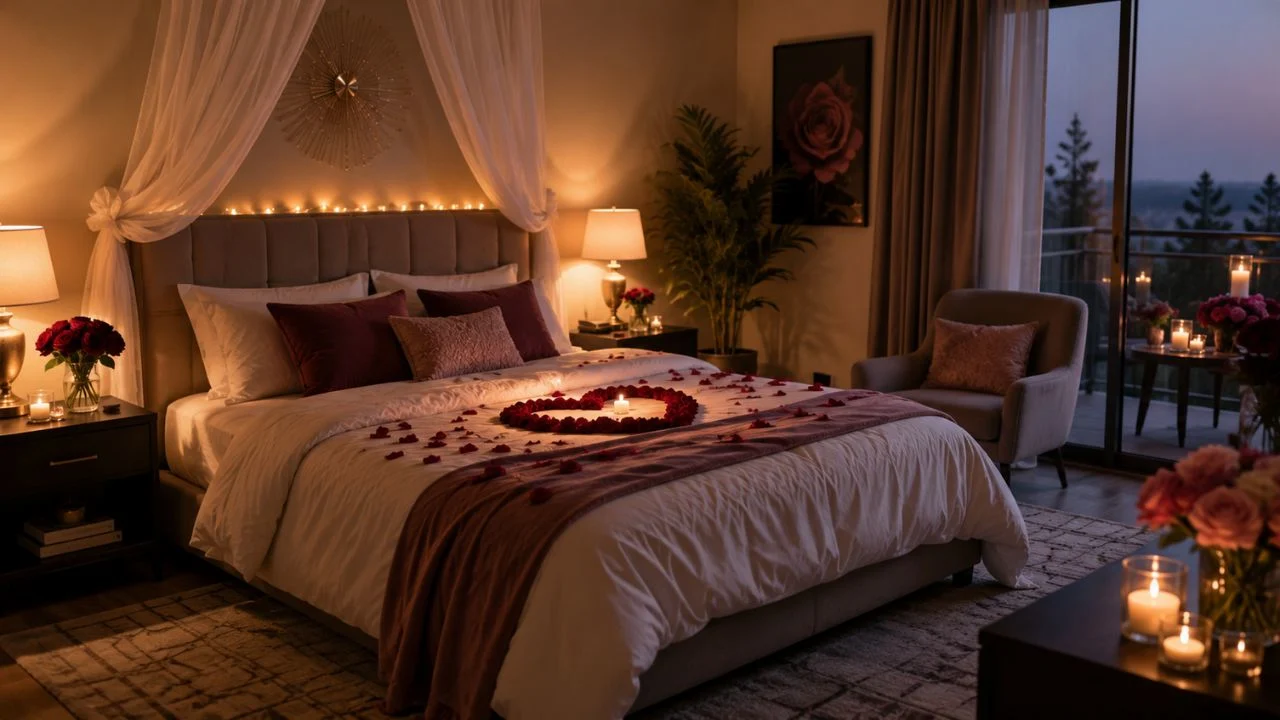

A romantic bedroom should feel comfortable, personal, and welcoming to both people who share it. Romance does not require rose petals, heart-shaped accessories, or an expensive furniture collection. It develops through soft lighting, inviting bedding, thoughtful colors, meaningful details, and a layout that helps both partners relax at the end of the day.
The most successful bedroom decor for couples combines emotional warmth with everyday practicality. Both people need sufficient storage, comfortable sleeping conditions, accessible lighting, and room for their belongings. When function is considered alongside appearance, the bedroom becomes easier to maintain and more enjoyable to use rather than looking attractive only in photographs.
Current bedroom design is moving toward cocooning spaces with statement headboards, enveloping colors, dreamy drapery, layered textiles, and tactile materials. These 2026 bedroom trends work particularly well for couples because they create intimacy without relying on predictable romantic symbols. The emphasis is increasingly on sensory comfort, individuality, and a room that feels protected from outside distractions.
Before changing the room, discuss what romance means to each of you. One partner may imagine dark colors and candlelight, while the other prefers fresh linens, natural materials, and an uncluttered space. Finding the qualities you both value will produce a more authentic couple bedroom design than copying a theme that does not reflect your shared personality.
Create a Bedroom Style That Represents Both Partners
Begin by collecting bedroom images that each partner genuinely likes. Save examples of preferred colors, bed styles, lighting, fabrics, artwork, and furniture, then compare the selections. Repeated features will reveal areas of agreement and help you develop a shared direction without allowing one person’s preferences to dominate the room.
You do not need to agree on every decorative detail. Instead, identify a common foundation, such as warm modern, contemporary classic, hotel-inspired, rustic, minimalist, or vintage romantic decor. Each partner can then introduce personality through smaller elements, including bedside objects, artwork, books, cushions, or individual storage areas.
A balanced bedroom does not have to divide every decision equally. One person may care strongly about the mattress and bedding, while the other is more interested in paint colors or lighting. Allowing each partner to lead the decisions that matter most to them can make the decorating process more cooperative and less frustrating.
Avoid creating a room so neutral that neither person feels represented. Personal belongings, travel memories, inherited objects, favorite colors, and meaningful photographs can make the space emotionally warmer. A romantic master bedroom should feel like a shared story rather than a generic display arranged for an imaginary couple.
Choose a Warm and Romantic Bedroom Color Palette
A successful romantic bedroom color scheme usually begins with one dominant color and two or three supporting shades. Warm white, cream, taupe, mushroom, dusty rose, muted blue, olive, chocolate brown, and soft terracotta can create a comfortable foundation. Choose tones that flatter the room’s natural light and make both partners feel relaxed.
Light colors can produce an airy, peaceful atmosphere, but romance does not require a pale room. Deep burgundy, aubergine, navy, forest green, charcoal, and warm brown can make a bedroom feel intimate and enveloping. Burgundy and other sophisticated jewel tones remain prominent in 2026 bedroom design, particularly when balanced with natural wood, warm neutrals, or aged metallic details.
For a subtle romantic look, use the deeper color behind the bed and keep the remaining surfaces lighter. For a more dramatic effect, continue one shade across the walls, trim, doors, or ceiling. Tonal decorating reduces abrupt visual contrast and can make even a small bedroom feel intentional rather than fragmented.
Always test paint samples before committing to a color. Observe them during the morning, afternoon, and evening because daylight and artificial lighting can alter their undertones. A shade that appears softly romantic in a showroom may look cold, overly bright, or unexpectedly intense inside your actual bedroom.
Make the Bed the Main Romantic Focal Point
The bed is normally the largest object in the room, so it should lead the design. Position it where it feels visually grounded and can be accessed comfortably from both sides whenever the room allows. A balanced placement immediately makes the bedroom appear more organized, generous, and intentionally arranged for two people.
A statement headboard can transform a plain bedroom without requiring extensive renovation. Upholstered, curved, channel-tufted, wooden, cane, or fabric-covered headboards add shape and texture behind the pillows. Statement headboards are central to the current cocooning bedroom direction because they give the sleeping area a stronger sense of enclosure and identity.
Choose the headboard according to the atmosphere you want to create. Velvet and softly padded fabrics feel luxurious, linen creates a relaxed look, and dark wood introduces warmth and structure. A curved silhouette can soften a room filled with rectangular furniture, while a tall headboard can improve the proportions of a wall with high ceilings.
When a new headboard is outside the budget, create the impression of one with paint, wallpaper, wall molding, or a fabric panel. A painted arch or wide color block can frame the bed at minimal cost. The treatment should extend far enough to relate visually to the mattress and bedside tables rather than appearing like a small decorative patch.
Layer the Bed with Comfortable and Inviting Textiles
Romantic bedding should invite both partners to rest instead of looking too perfect to touch. Begin with comfortable sheets, supportive pillows, and a duvet or comforter suited to your climate. These practical layers matter more than decorative cushions because they directly influence how the bed feels throughout the night.
Add visual depth through a coverlet, quilt, folded throw, or textured blanket at the foot of the bed. Combine a few complementary materials, such as cotton, linen, velvet, wool, or brushed fabric. Layered textiles and mixed textures remain important in 2026 bedroom styling because they create a warmer, more tactile sense of comfort.
Use decorative pillows selectively. Two sleeping pillows per person, one or two larger cushions, and a smaller accent pillow may provide enough fullness without creating a complicated nightly removal routine. Too many cushions can make the bed feel impractical, particularly when there is no nearby chair or storage bench to hold them.
Avoid purchasing every bedding item from one perfectly matched collection. A room feels more personal when the sheets, duvet, throw, and cushions relate without being identical. Repeat one color or material across the layers so the arrangement feels cohesive while maintaining enough variation to appear relaxed and collected.
Use Layered Lighting to Set a Romantic Mood
One bright ceiling fixture is rarely enough for a romantic bedroom. Use several sources at different heights, including a ceiling light, bedside lamps, wall sconces, or a floor lamp near a chair. This approach allows you to adjust the atmosphere for dressing, reading, relaxing, and preparing for sleep.
Choose warm, softly diffused light for the evening. Fabric, frosted-glass, ceramic, or paper shades can reduce harsh glare and create a gentler glow. Sleep guidance recommends keeping evening lighting dim and using warmer, lower-intensity light as bedtime approaches, while maintaining a dark environment during sleep.
Each partner should have control over a nearby light whenever possible. Separate bedside lamps allow one person to read, journal, or get ready without illuminating the entire room. Designers also recommend independent bed lighting because couples may follow different evening routines or sleeping schedules.
Dimmer switches and adjustable smart bulbs provide additional flexibility, but simple lamps can create the same layered effect. Use flame-free candles for a soft flickering appearance without introducing an open flame near bedding or curtains. Concentrate the warmest light around the bed and allow the outer edges of the room to remain quieter.
Frame the Room with Curtains and Soft Drapery
Curtains can make a bedroom feel more private, finished, and intimate. Hang the rod close to the ceiling and extend it beyond the window frame to create greater height and width. Floor-length panels also soften the architecture and help the windows feel connected to the bed rather than appearing like isolated openings.
Select fabric according to the amount of light and privacy you need. Sheer curtains gently filter daylight, while lined or blackout panels reduce outside light at night. Because a dark, quiet, and comfortable bedroom supports better sleep, practical window coverage can strengthen both the romantic atmosphere and the room’s everyday function.
Layering sheer panels behind heavier curtains provides the greatest flexibility. During the day, the sheers maintain privacy without blocking all natural light. In the evening, the outer panels create a more enclosed feeling and reduce the visual presence of windows, neighboring buildings, or streetlights.
Drapery can also be used around the bed. A canopy frame, ceiling-mounted fabric, or softly curtained bed nook creates a retreat-like effect, especially in a large room. Four-poster beds and lush drapery are among the current bedroom ideas being used to create cocooning, highly personal sleeping spaces.
Introduce Texture for a Cozy and Sensory Bedroom
Texture prevents a romantic bedroom from looking flat or overly coordinated. Combine smooth bedding with a woven rug, upholstered headboard, wooden furniture, soft curtains, and tactile cushions. The contrast between these surfaces adds depth even when the room uses a restrained neutral color palette.
Natural materials can make the bedroom feel warmer and more grounded. Wood, linen, cotton, wool, cane, rattan, leather, stone, and handmade ceramics introduce subtle variations that mass-produced glossy finishes may lack. Use a limited selection so the room feels layered rather than crowded with unrelated materials.
Walls can contribute texture through limewash, grasscloth-style wallpaper, timber paneling, fabric wallcoverings, or picture-frame molding. Tactile bedroom walls have become more visible in 2026 as designers move beyond plain paint to create softer, more atmospheric interiors.
A rug is especially useful in bedrooms with hard flooring. Place a large rug beneath the bed so both partners step onto a soft surface, or use matching runners along each side when a larger option is impractical. The rug should relate to the bed’s scale rather than floating as a small, disconnected rectangle near the foot.
Add Personal Details That Celebrate Your Relationship
Personal decor can make a couple’s bedroom romantic without making it sentimental or overly themed. Frame a favorite photograph, display artwork purchased during a trip, or place a meaningful object on a dresser. The strongest pieces are those that remind you of shared experiences while still complementing the room.
Create a small collection rather than displaying every memory at once. Two or three photographs, a framed note, and one travel keepsake may feel more intentional than a crowded arrangement. Rotating personal items throughout the year allows the display to remain fresh without requiring new decorations.
Consider commissioning or creating artwork connected to your relationship. A map of an important location, a minimal illustration, a wedding flower print, or a framed piece of handwritten text can become a subtle focal point. Keep the design consistent with the room so the meaning feels integrated rather than added as an afterthought.
Current interest in analog bedrooms also supports using tangible, personal objects instead of filling the room with screens and visible technology. Books, handwritten journals, art, textiles, and meaningful keepsakes can establish a quieter nightly routine while giving the space a stronger individual identity.
Give Both Partners Equal Comfort and Practical Space
Romantic bedroom design should support fairness as well as beauty. When possible, provide each partner with a bedside surface, reading light, charging access, and a place for personal items. The pieces do not have to match, but they should offer a similar level of convenience and visual weight.
Mismatched nightstands can look intentional when they share one characteristic. They might have the same height, wood tone, shape, or lamp style while differing in design. This approach allows each partner to choose storage that suits their needs without disrupting the bedroom’s overall balance.
Discuss mattress firmness, blanket weight, pillow types, temperature, and nighttime habits before purchasing major items. Two people can have very different comfort preferences, and decorative choices cannot compensate for poor sleep. Split duvets, separate top sheets, adjustable lamps, or individual fans may solve practical differences without making the room feel divided.
Use shared storage thoughtfully. Divide drawers, shelves, and closet sections according to actual needs rather than assuming equal dimensions will always be fair. Clearly assigned storage reduces daily clutter and prevents one person’s belongings from gradually occupying every available surface.
Create a Romantic Layout Without Overcrowding
Begin with the bed and establish clear walking paths around it. Both partners should be able to enter, leave, and reach storage without navigating around unnecessary furniture. An open, functional layout often feels more luxurious than a room filled with decorative benches, chairs, and cabinets that are rarely used.
Use symmetry when you want the bedroom to feel calm and formal. Matching lamps, similarly sized nightstands, and paired artwork can frame the bed effectively. Exact duplication is not required; balanced height, shape, and visual weight can create order even when the individual pieces are different.
Asymmetry works well in contemporary or relaxed bedrooms. One side might include a compact table and pendant light, while the other has a wider chest and lamp. Maintain balance through color, proportion, or repeated materials so the arrangement appears deliberate rather than unfinished.
Keep laundry baskets, exercise equipment, work documents, and exposed cables outside the main view whenever possible. These items may be necessary, but closed storage can prevent them from dominating the atmosphere. A romantic bedroom should remain connected to real life while providing some visual distance from daily responsibilities.
Design a Romantic Bedroom in a Small Space
Small romantic bedroom ideas should focus on atmosphere rather than the number of accessories. A limited color palette, one strong headboard, layered bedding, and warm bedside lighting may be enough. Fewer well-scaled choices usually create more impact than many tiny decorations spread around the room.
Use wall-mounted sconces or pendant lights when bedside surfaces are narrow. Floating shelves can replace bulky nightstands, while storage drawers beneath the bed can hold extra bedding and seasonal clothing. Keeping the floor visible around key areas helps the room feel easier to move through.
Do not assume that every small bedroom must be white. A rich, continuous color can blur corners and create a surprisingly intimate effect. Designers increasingly use confident color, oversized rugs, sweeping drapery, and visual continuity to make compact rooms feel purposeful rather than relying only on small furniture and pale surfaces.
Mirrors can reflect natural light and increase visual depth, but their placement should be considered carefully. Position a mirror where it reflects an attractive part of the room rather than laundry, clutter, or a bright screen. One substantial mirror often looks calmer than several small mirrored objects.
Refresh the Bedroom on a Realistic Budget
Begin with free improvements before buying anything. Remove clutter, rearrange the furniture, wash the bedding, clear the nightstands, and move suitable lamps or artwork from other rooms. These changes reveal which parts of the bedroom genuinely require investment and which problems were caused by poor arrangement.
Paint offers one of the highest-impact affordable upgrades. A warm neutral, muted color, or deeper cocooning shade can transform the mood without replacing furniture. When repainting is not possible, introduce color through a duvet cover, curtains, throw blanket, framed textile, or removable wallpaper.
Spend first on the items that affect daily comfort. A supportive mattress, comfortable pillows, quality sheets, effective window coverings, and accessible lighting usually provide more value than decorative accessories. Add artwork, candles, vases, and cushions only after the sleeping environment works well for both partners.
Shop secondhand for wooden nightstands, mirrors, dressers, lamps, frames, and benches. Focus on proportion and condition rather than the current finish because hardware, paint, shades, and surface treatments can often be changed. Combining vintage, existing, and affordable new pieces can produce a more personal result than purchasing a complete matching set.
Avoid Common Romantic Bedroom Decorating Mistakes
The first mistake is relying too heavily on obvious romantic symbols. Excessive red, heart-shaped objects, artificial petals, and scripted signs can make the room feel temporary or themed. A more enduring atmosphere comes from warmth, comfort, flattering light, personal meaning, and materials that both partners enjoy.
Another mistake is choosing style over sleep. Bright lights, uncomfortable bedding, excessive decorative pillows, noisy accessories, or curtains that fail to block unwanted light can reduce the room’s usefulness. A bedroom that looks romantic but feels inconvenient will become difficult to maintain.
Avoid allowing one person to make every decision without discussing the other partner’s preferences. Even a beautiful room can feel unwelcoming when one person has no storage, lighting control, or visible connection to the decor. Shared design does not require identical taste, but it does require consideration.
Finally, do not overcrowd the room in an attempt to make it cozy. Too much furniture, fabric, wall art, and surface decor can produce visual stress and make cleaning more difficult. Use empty space intentionally so the strongest romantic bedroom elements have room to stand out.
Final Thoughts
The best romantic bedroom decor ideas for couples are built around shared comfort and personal meaning. Begin with an honest conversation about colors, atmosphere, sleep habits, storage, and the features each partner values. This creates a stronger foundation than following a decorative formula.
Make the bed the focal point through a supportive headboard, comfortable bedding, and thoughtfully layered textiles. Frame it with warm lighting, practical nightstands, and curtains that provide privacy. These elements establish intimacy while supporting the room’s most important purpose.
Add personality gradually through artwork, meaningful photographs, natural materials, and objects connected to shared memories. The bedroom should feel collected over time rather than completed in one shopping trip. Leaving space for future discoveries can make the room more authentic and flexible.
Romance is not created by price, size, or a particular decorating style. It grows from a room that helps both people feel considered, comfortable, and able to disconnect from daily pressure. When the design supports those feelings, even a simple bedroom can become a deeply personal retreat.
Frequently Asked Questions
What colors are best for a romantic bedroom?
Warm neutrals, dusty rose, muted blue, olive, burgundy, chocolate brown, and soft terracotta can create a romantic atmosphere. Choose shades that both partners enjoy and test them under the room’s daytime and evening lighting.
How can couples make a bedroom feel more romantic?
Use warm layered lighting, comfortable bedding, floor-length curtains, meaningful artwork, and a calm color palette. Keeping clutter controlled and giving both partners equal bedside comfort also creates a more welcoming environment.
How do I decorate a romantic bedroom on a budget?
Rearrange existing furniture, paint the walls, update pillow covers, add a throw, and move suitable artwork from another room. Secondhand mirrors, lamps, nightstands, and frames can also provide character at a lower cost.
How can I make a small bedroom romantic?
Focus on one strong focal point, wall-mounted lighting, layered bedding, and a limited color scheme. Use vertical storage and remove unnecessary furniture so the bedroom remains intimate without feeling crowded.
Do bedside tables and lamps need to match?
No. Mismatched pieces can look intentional when they share a similar height, color, material, or visual weight. The most important consideration is that both partners have convenient storage and independent lighting.