

What Does It Mean to Become Flexible?
Learning how to become flexible means improving the comfortable range of motion available around your joints and muscles. Flexibility helps your body move more freely during activities such as walking, bending, reaching, and exercising. Although some people naturally have greater mobility than others, flexibility can often improve through consistent practice. The goal is comfortable, controlled movement rather than forcing your body into extreme positions.
Flexibility involves several body structures, including muscles, tendons, ligaments, and joints. Your nervous system also influences how comfortably you can move into different positions. When you stretch regularly, your body may gradually become more comfortable with a wider range of movement. However, progress depends on factors such as age, activity level, anatomy, and overall health.
Becoming more flexible does not require complicated workouts or advanced yoga poses. Simple movements performed consistently can help improve mobility for everyday activities. The most effective approach combines gentle stretching, appropriate strengthening, and gradual progression. Understanding how flexibility works can help you build a safe routine that supports long-term physical comfort.
Why Is Flexibility Important for Your Body?
Flexibility supports comfortable movement by allowing joints to move through an appropriate range of motion. Everyday activities such as reaching overhead, tying shoes, or turning your body require coordinated muscle and joint movement. Maintaining mobility can make these tasks feel easier. However, more flexibility is not always better, especially when joints already move beyond their normal range.
Improving flexibility may also help you perform certain exercises with greater comfort and control. For example, adequate ankle mobility supports squatting, while comfortable shoulder movement helps with overhead activities. Stretching can reduce feelings of muscle tightness in some situations. However, flexibility training alone does not guarantee injury prevention or eliminate all muscle soreness.
Regular movement also encourages awareness of how your body responds to different positions. This awareness can help you recognize stiffness, discomfort, or changes in mobility during daily activities. Combining flexibility exercises with strength and balance training supports overall physical function. The aim is to move confidently without placing unnecessary stress on muscles or joints.
How Does Flexibility Work in the Muscles?
Muscles contain fibers that shorten and lengthen as your body moves. During stretching, muscles and surrounding tissues experience tension as a joint approaches the available end of its range. Your nervous system monitors this sensation and helps regulate movement. With regular practice, you may gradually tolerate comfortable stretching positions more easily.
Flexibility improvements do not always mean that muscles permanently become longer. Research suggests that changes in stretch tolerance can contribute significantly to increased range of motion. Depending on the training approach, adaptations in muscle and connective tissue may also occur. These changes generally develop gradually rather than after a single stretching session.
Joint structure also influences flexibility because not everyone has identical anatomy. Hip shape, connective tissue characteristics, previous injuries, and individual movement patterns can affect available motion. This explains why two people following the same stretching routine may experience different results. Progress should therefore be measured against your own comfortable movement rather than someone else’s abilities.
How to Start Becoming Flexible as a Beginner
Beginners should start with simple movements that feel comfortable and manageable. Choose a few areas that feel stiff during daily activities, such as the hips, shoulders, calves, or upper back. Perform gentle stretches without forcing the joints beyond their natural range. A short routine practiced consistently is usually more useful than an occasional intense session.
Before stretching deeply, warm up with several minutes of comfortable movement. Walking, marching in place, or gentle joint movements can help prepare the body for activity. Warm muscles often feel more comfortable during stretching than muscles that have remained inactive. If a movement produces sharp pain, stop rather than attempting to stretch through it.
Focus on controlled breathing and relaxed positioning while learning each exercise. Hold gentle static stretches for a comfortable period, often around 15 to 30 seconds. Repeat stretches as tolerated without bouncing or applying excessive pressure. Your initial goal should be to establish a sustainable routine rather than achieve dramatic changes in a few days.
What Are the Different Types of Stretching?
Static stretching involves holding a muscle in a comfortable lengthened position without moving. Common examples include seated hamstring stretches, standing calf stretches, and gentle shoulder stretches. This approach is often used after physical activity or during dedicated flexibility sessions. Static stretches can help improve range of motion when practiced regularly and appropriately.
Dynamic stretching involves controlled movements that take joints through a comfortable range of motion. Examples include arm circles, gentle leg swings, and walking movements that gradually increase in range. Dynamic stretching is commonly included in warm-up routines before exercise. It helps prepare the body for movement without requiring prolonged stationary positions.
Other methods include active stretching and proprioceptive neuromuscular facilitation, commonly called PNF stretching. Active stretching uses muscular effort to maintain a position, while PNF methods may involve alternating contraction and relaxation. These techniques can be useful in appropriate circumstances. Beginners should prioritize simple movements and seek professional guidance before attempting more advanced stretching methods.
Best Flexibility Exercises for the Whole Body
A balanced flexibility routine should include movements for several major muscle groups. Gentle calf, hamstring, hip flexor, and quadriceps stretches can support comfortable lower-body movement. Upper-body exercises may target the chest, shoulders, and upper back. Selecting exercises based on your individual needs is more useful than trying to stretch every muscle equally.
For example, a standing calf stretch can be performed by placing one foot behind the other and gently leaning forward. Keep the rear heel comfortably positioned toward the floor without forcing the ankle. You should notice a mild stretching sensation in the back of the lower leg. Maintain steady breathing and return to the starting position slowly.
For upper-body mobility, try gentle shoulder rolls or controlled arm movements. A comfortable chest stretch can also be performed near a doorway with appropriate arm positioning. Avoid pushing into painful shoulder angles or forcing movement beyond your available range. These simple exercises can be incorporated into a regular routine without specialized equipment.
How to Improve Hip and Hamstring Flexibility
Hip flexibility is important for movements such as walking, sitting, climbing stairs, and bending. The hip joint moves in several directions, including flexion, extension, and rotation. Gentle hip mobility exercises can help maintain comfortable movement across these directions. However, hip anatomy differs between individuals, so not every position will feel suitable for everyone.
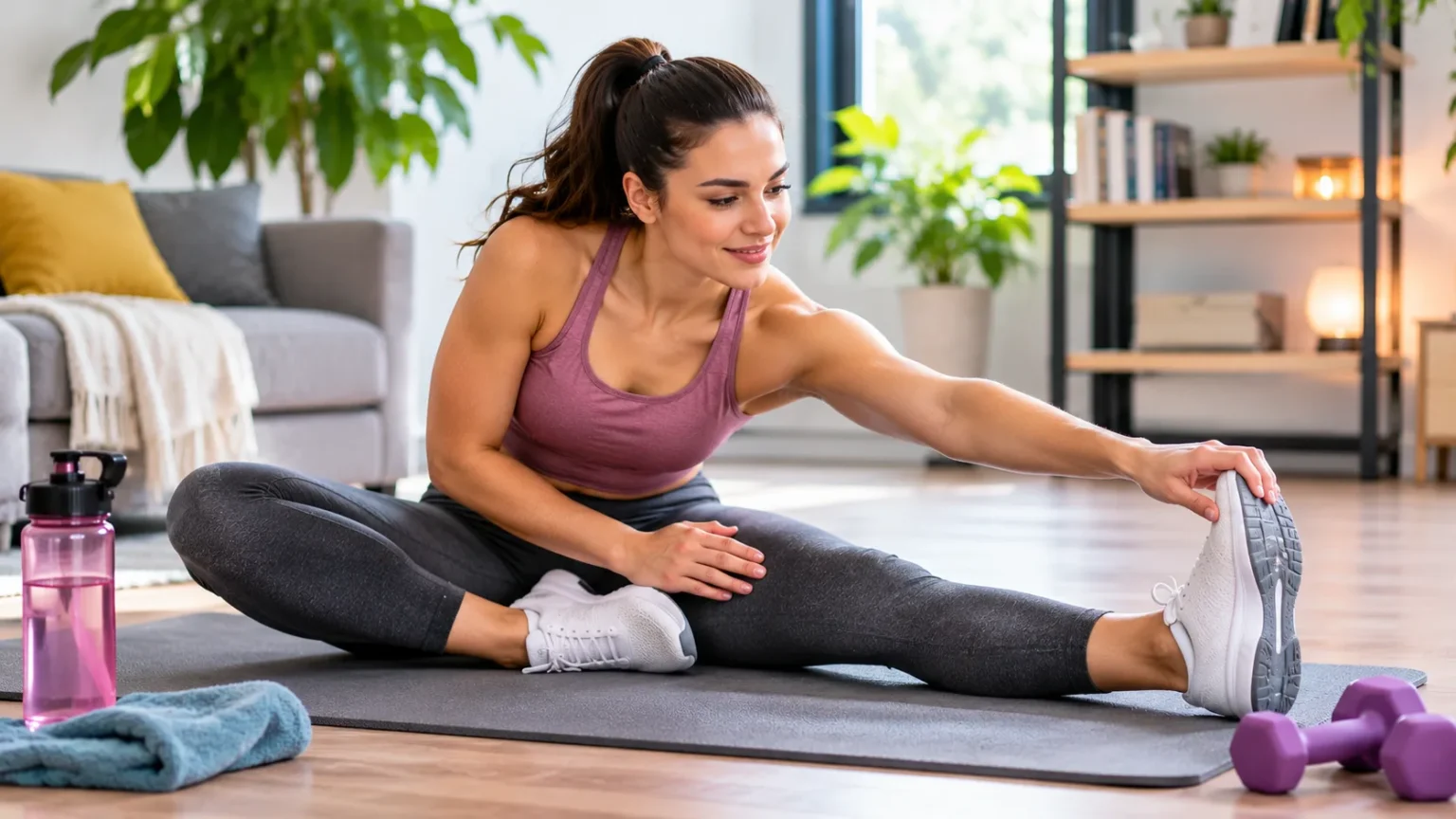
A seated hamstring stretch is one beginner-friendly way to work on the back of the thigh. Sit comfortably with one leg extended and the opposite knee bent as needed. Hinge forward slightly from the hips while keeping the movement controlled. Stop when you notice mild tension rather than pulling strongly or rounding your back excessively.
Hip flexor stretches may also be helpful for people who spend considerable time sitting. A supported half-kneeling position can provide gentle movement through the front of the hip. Keep your torso upright and shift your pelvis forward only slightly. If kneeling causes discomfort, choose a standing variation or seek guidance on an alternative.
How to Improve Shoulder and Back Flexibility
Shoulder mobility supports everyday activities such as reaching shelves, dressing, and carrying objects. The shoulder is a complex joint that relies on coordinated movement from surrounding muscles and the shoulder blade. Gentle mobility exercises can help maintain comfortable motion. However, painful clicking, repeated instability, or significant movement restriction deserves professional assessment.
One simple shoulder exercise involves slowly raising your arms within a comfortable range. Another option is moving the shoulders gently backward and forward without forcing the joints. These movements can be performed while standing or sitting upright. Focus on smooth control rather than trying to reach the highest possible position immediately.
For the back, gentle movements such as cat-cow can encourage comfortable spinal motion. Begin on your hands and knees if that position feels suitable, then slowly alternate between mild rounding and arching. Keep the movement relaxed and avoid forcing the spine. Anyone experiencing significant back pain, numbness, or radiating symptoms should obtain medical guidance before exercising.
How Often Should You Stretch to Become Flexible?
Consistency matters more than performing long or exhausting stretching sessions. Many general fitness recommendations suggest flexibility exercises at least two or three days each week. Practicing on additional days may be appropriate when the movements remain comfortable. The ideal frequency depends on your current mobility, goals, exercise routine, and recovery needs.
A beginner might start with a short routine that includes several gentle stretches for major muscle groups. Each stretch can be held for approximately 15 to 30 seconds and repeated as tolerated. Adults often use total stretching times of around 60 seconds per muscle group. These are general guidelines rather than strict requirements for every person.
It is also useful to vary your routine according to how your body feels. If a muscle is unusually sore or irritated, reduce intensity or allow additional recovery. Stretching should not become a test of pain tolerance or endurance. A manageable schedule makes it easier to maintain flexibility training over time.
How Long Does It Take to Become More Flexible?
Flexibility improvements develop at different rates depending on the individual and training approach. Some people notice that movements feel more comfortable after a few sessions. More measurable changes in range of motion may develop over several weeks of consistent practice. However, there is no universal timeline that guarantees a specific result.
Your starting mobility, joint anatomy, previous injuries, and exercise habits can all influence progress. Someone returning to stretching after a period of inactivity may experience different changes from an experienced athlete. Some movements may improve faster than others. Comparing your progress with other people can therefore create unrealistic expectations.
A practical way to monitor improvement is to notice how easily you perform everyday movements. You might find reaching, bending, or moving through exercise positions more comfortable over time. These functional changes can be meaningful even without achieving advanced stretching poses. Gradual progress supported by comfortable practice is generally more sustainable than aggressive stretching.
Can You Become Flexible Without Doing Yoga?
Yoga can support flexibility, but it is not necessary for improving range of motion. Many stretching exercises can be performed independently without attending classes or learning formal yoga sequences. Simple movements targeting the hips, legs, shoulders, and back may be sufficient. The important factors are appropriate technique, consistency, and gradual progression.
Mobility exercises, resistance training, and controlled bodyweight movements can also support flexibility. Strength training performed through a suitable range of motion may improve mobility while developing muscular control. This combination can be useful because flexibility without sufficient strength may not support stable movement. Different approaches can be combined according to personal preferences.
People who dislike traditional stretching routines can include movement breaks during everyday activities. Gentle walking, comfortable squatting variations, and controlled reaching movements may help maintain mobility. However, specific flexibility goals often benefit from targeted exercises. Choosing enjoyable activities can make it easier to continue practicing over the long term.
Common Mistakes That Slow Flexibility Progress
One common mistake is stretching too aggressively in an attempt to achieve faster results. Strong discomfort does not necessarily mean that a stretch is more effective. Forcing joints beyond their comfortable range may irritate muscles or other tissues. A gentle, controlled approach is generally more appropriate for beginners and people returning to exercise.
Another mistake is stretching without considering the body’s need for strength and stability. Flexible joints still depend on surrounding muscles to control movement safely. Developing range of motion without appropriate muscular control may not improve everyday function. Combining stretching with suitable strengthening exercises can help create more balanced movement.
Inconsistent practice can also make it difficult to establish lasting improvements. Performing a long stretching session occasionally is often less practical than maintaining shorter regular sessions. Ignoring persistent pain or repeatedly stretching an injured area can create additional problems. Adjusting exercises when necessary is part of an effective flexibility program.
How to Stay Safe While Improving Flexibility
Safe flexibility training begins with recognizing the difference between stretching tension and pain. A mild pulling sensation may be normal, but sharp, burning, or increasing discomfort is a reason to stop. Avoid bouncing forcefully or allowing another person to push your body into extreme positions. Gentle movement is usually more appropriate than aggressive manipulation.
People with recent injuries, joint instability, or certain medical conditions may require individualized exercise advice. Those with unusually mobile joints should be particularly careful about pursuing additional range without sufficient strength and control. Stretching through an injury can sometimes delay recovery. A healthcare professional or physical therapist can help identify appropriate movements and limitations.
Your routine should also account for fatigue and recovery. If flexibility exercises make you consistently sore or uncomfortable, reduce their intensity or frequency. Make adjustments based on the needs of your body rather than following a rigid schedule. Comfortable movement, stability, and gradual improvement should remain the main priorities.
Building a Simple Daily Flexibility Routine
A daily flexibility routine can begin with a few minutes of easy movement to prepare your muscles and joints. Gentle walking, marching, or controlled arm movements are practical options. Follow this with a small selection of stretches for areas that need attention. Keep the routine short enough to fit naturally into your schedule.
For example, you might include a calf stretch, seated hamstring stretch, hip flexor stretch, and gentle shoulder movements. Hold each static stretch comfortably and breathe normally throughout the movement. Avoid competing with previous sessions to achieve a deeper position. The purpose is to gradually improve comfortable movement without creating unnecessary strain.
Over time, you can adjust your routine based on changing activities and mobility goals. Someone who works at a desk may prioritize comfortable hip and upper-body movement. A person participating in sports may benefit from more activity-specific mobility exercises. The most effective routine is one that remains comfortable, relevant, and easy to maintain.
Conclusion
Learning how to become flexible is a gradual process that involves improving comfortable joint movement through regular practice. Gentle stretching, controlled mobility exercises, and appropriate strength training can all contribute to progress. Individual anatomy and lifestyle also influence how flexibility develops. The goal should be better movement quality rather than extreme ranges of motion.
Beginners can start with simple full-body stretches and increase their routine gradually as comfort improves. Consistency, proper technique, and adequate recovery are more important than forcing quick results. Flexibility improvements may become noticeable over several weeks, although progress varies. Listening to your body’s response helps keep training manageable and effective.
A balanced approach to flexibility supports comfortable movement during exercise and everyday activities. Combine stretching with strength, avoid painful positions, and seek guidance when mobility problems persist. Choose exercises that match your personal needs instead of comparing yourself with others. With regular, comfortable practice, you can develop a flexibility routine that supports long-term physical well-being.
Frequently Asked Questions
How can a beginner become flexible?
Beginners can improve flexibility by practicing gentle stretches regularly, warming up before sessions, and avoiding painful movements. Start with comfortable exercises for major muscle groups and gradually increase activity as mobility improves.
How long does it take to become flexible?
Some people notice improved comfort within a few sessions, while measurable flexibility changes may take several weeks. Progress depends on consistency, starting mobility, exercise technique, and individual anatomy. There is no guaranteed timeline.
Is stretching every day good for flexibility?
Daily gentle stretching can be appropriate when exercises remain comfortable and recovery is sufficient. However, flexibility training does not have to occur every day. Regular sessions several times weekly can also produce improvements.
Can someone who is very stiff become flexible?
Many people with limited mobility can improve their comfortable range of motion through appropriate stretching and strengthening. However, joint anatomy, medical conditions, and previous injuries can limit progress. Extreme flexibility is not necessary for good movement.
What is the fastest safe way to improve flexibility?
The safest approach is consistent, gentle stretching combined with appropriate strengthening and mobility exercises. Gradually increasing comfortable movement is generally more useful than forcing deep stretches. Avoid painful positions or rushing progress to prevent unnecessary irritation.