
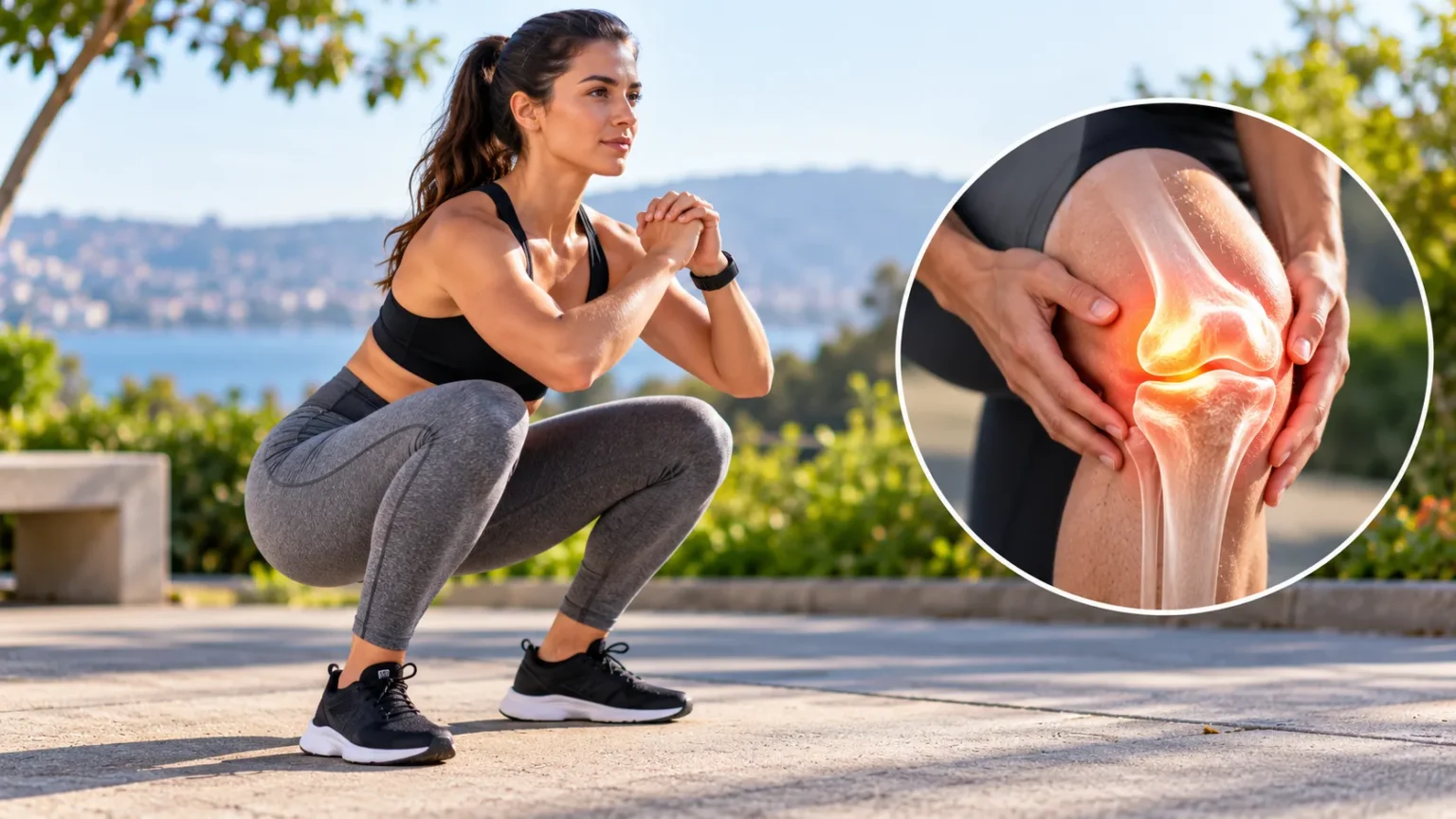

Hearing your knees crack, pop, or click when you squat can be surprising, especially when the sound happens repeatedly. Many people notice these noises during exercise, climbing stairs, or bending their knees during everyday activities. Although the sounds may seem concerning, they do not always indicate an injury or serious joint problem. Understanding why your knees crack when you squat can help you recognize normal joint noises and potential warning signs.
Knee cracking is often described using the medical term crepitus, which refers to clicking, popping, or grinding sensations associated with joint movement. These sounds can occur for several reasons, including changes in joint pressure, movement of surrounding tissues, and differences in cartilage surfaces. The significance of the noise depends largely on whether it occurs with pain, swelling, or restricted movement.
This guide explains common causes of knee cracking during squats, the difference between harmless popping and potentially concerning symptoms, and ways to support comfortable knee movement. You will also learn about squat technique, joint health, and when medical evaluation may be necessary. Understanding these factors can help you approach everyday movement with greater confidence.
Why Do My Knees Crack When I Squat?
Knee cracking during squats is commonly associated with natural changes occurring inside and around the knee joint. As the knee bends, bones, cartilage, tendons, and ligaments move in relation to one another. These movements can occasionally produce audible sounds. In many cases, painless clicking or popping is a normal occurrence that does not require medical treatment.
The knee is a complex joint connecting the thighbone, shinbone, and kneecap. Smooth cartilage covers important joint surfaces and helps reduce friction during movement. The surrounding tissues guide and stabilize the knee as it bends and straightens. Changes in pressure or tissue position may create noises during squatting without necessarily affecting joint function.
However, knee sounds deserve more attention when accompanied by discomfort, swelling, instability, or restricted movement. These symptoms may indicate an underlying joint or soft-tissue problem. The sound alone cannot reliably identify a specific diagnosis. A healthcare professional can assess associated symptoms and determine whether further investigation is appropriate.
Understanding Knee Crepitus and Joint Sounds
Crepitus is a medical term describing crackling, grinding, or popping sensations that occur around joints. In the knee, these sensations may be heard or felt during bending, straightening, or weight-bearing movements. Crepitus can occur in people without knee pain or diagnosed joint disorders. Its presence alone does not establish that cartilage is damaged.
Different types of knee noises may have different explanations. A single occasional pop may result from changes in joint pressure or movement of surrounding tissues. Repeated grinding sensations may involve interactions between joint surfaces. However, identifying the exact cause based only on the sound is difficult, even when the noise seems distinctive.
Researchers have found that knee noises are relatively common in people with and without symptoms. Therefore, crepitus should be interpreted alongside pain, swelling, movement limitations, and medical history. A painless sound during ordinary movement is often less concerning than a new noise following an injury. Evaluating the complete clinical picture helps prevent unnecessary worry or missed problems.
Gas Bubbles and Pressure Changes Inside the Knee
One possible explanation for certain joint popping sounds involves changes in pressure within the joint fluid. Synovial fluid lubricates the knee and supports smooth movement between joint surfaces. Changes in joint pressure can influence dissolved gases within this fluid. This process is often discussed in relation to joint cavitation.
Cavitation is better established as an explanation for certain cracking sounds in finger joints. It may contribute to some noises in other joints, although not every knee pop can be explained this way. Knee sounds may also arise from tendons, cartilage, or other structures. The precise mechanism cannot usually be identified without additional information.
When a joint noise occurs without pain or other symptoms, it is often not a reason for alarm. However, repeatedly forcing a joint to produce a cracking sound is unnecessary. Comfortable movement is more important than trying to create or eliminate a particular noise. Any sudden painful pop deserves a different level of attention.
Tendons and Ligaments Moving Around the Joint
Tendons and ligaments support the knee and help coordinate movement during walking, bending, and squatting. As the joint moves, some soft tissues may shift over nearby bony structures. These movements can occasionally create a snapping or clicking sensation. The sound may occur at a particular point during knee bending.
Tendons connect muscles to bones, while ligaments help stabilize the joint. Their positions change slightly as the knee moves through different angles. In some individuals, this normal movement produces noticeable sounds without causing discomfort. However, painful snapping or repeated catching may suggest irritation or another mechanical issue.
If a clicking sensation happens consistently in one location, a clinician or physical therapist may assess how the surrounding structures move. The examination may include range of motion, strength, and movement control. Treatment is not always necessary for painless tissue-related sounds. Symptoms and functional limitations guide whether further care is appropriate.
Knee Cartilage and Patellofemoral Joint Problems
Cartilage provides a smooth surface that allows bones to move against each other with reduced friction. The patellofemoral joint is where the kneecap interacts with the thighbone during knee movement. Squatting increases the forces acting through this joint as the knee bends. Some people notice crackling or grinding sensations in this region.
Patellofemoral pain syndrome is a common cause of discomfort around or behind the kneecap. It may cause pain during squatting, climbing stairs, or sitting with bent knees for long periods. Some individuals also experience clicking or grinding. However, knee cracking without pain does not automatically indicate patellofemoral pain syndrome.
Cartilage changes can also occur without producing symptoms, particularly as people age. Imaging findings do not always explain the degree of pain someone experiences. Healthcare professionals consider symptoms, physical examination, and functional ability before recommending treatment. Strengthening and movement rehabilitation may be useful when an appropriate diagnosis has been established.
Can Knee Cracking Be a Sign of Arthritis?
Arthritis is one possible cause of knee crepitus, particularly when joint noises occur alongside stiffness, swelling, or pain. Osteoarthritis involves changes affecting cartilage, bone, and other joint structures. These changes can influence how surfaces move against one another. However, painless knee cracking by itself does not establish an arthritis diagnosis.
People with knee osteoarthritis may experience discomfort during physical activity, reduced mobility, and stiffness after periods of rest. Symptoms vary widely between individuals and may develop gradually. Some people have imaging changes without significant pain, while others experience notable symptoms. Joint sounds are only one small part of the assessment.
Arthritis is more commonly diagnosed in older adults, although certain joint conditions can affect younger people. Medical history, examination, and sometimes imaging help identify the underlying problem. Appropriate activity and individualized rehabilitation are often important parts of joint care. A healthcare professional can recommend treatment based on symptoms and overall health.
Why Do Knees Crack Without Any Pain?
Painless knee cracking is common and often reflects ordinary joint movement rather than an injury. Many people hear clicking sounds while standing up, squatting, or climbing stairs without experiencing discomfort. These noises may originate from shifting tissues or other mechanical changes around the joint. If movement remains comfortable, the sound alone is usually not a major concern.
Knee noises may become more noticeable during activities that involve deeper bending or repeated movement. Squats are a common example because they move the knee through a substantial range of motion. The frequency of the sound does not always correspond with the severity of a medical problem. Some healthy knees produce noticeable crepitus regularly.
When there is no pain, swelling, instability, or loss of movement, treatment may not be necessary. There is also no need to stop comfortable physical activity solely because of a harmless sound. Monitoring for meaningful changes is generally more useful than focusing on the noise itself. New symptoms should be evaluated if they develop.
Why Do Knees Crack and Hurt During Squats?
Knee cracking accompanied by pain deserves more attention than painless clicking. Discomfort may develop from irritated tissues, patellofemoral pain, or other joint conditions. The location and timing of the pain can provide useful information about its possible cause. However, symptoms alone cannot reliably distinguish between cartilage problems, tendon irritation, and other conditions.
Pain at the front of the knee may be associated with the patellofemoral joint, while discomfort along the joint line can have several possible explanations. A sudden painful pop following a twisting movement may indicate an injury. Swelling, catching, and difficulty bearing weight are additional warning signs. These symptoms require a more careful assessment.
If squatting repeatedly causes knee pain, avoid forcing the movement through an uncomfortable range. A temporary adjustment to activity may help prevent further irritation while the cause is investigated. Physical therapy may be appropriate for certain conditions. Persistent or worsening pain should be assessed by a healthcare professional rather than managed through guesswork.
Can Poor Squat Form Cause Knee Cracking?
Squat technique influences how the knees, hips, and ankles work together during movement. Changes in foot position, available ankle mobility, and trunk control can affect joint loading. However, there is no single perfect squat technique suitable for everyone. Knee noises do not automatically mean someone is performing the movement incorrectly.
Some people experience discomfort when attempting to squat deeper than their current mobility comfortably allows. Others may find certain stances or movement patterns more suitable for their anatomy. The knees can naturally move forward over the toes during a squat. This movement is not inherently dangerous when performed within an appropriate and comfortable range.
A qualified physical therapist or exercise professional can help assess movement when squatting causes recurring discomfort. Adjustments might involve stance width, squat depth, or movement speed. These changes should improve comfort rather than force an unnatural position. Painless cracking alone is not a reason to completely change an otherwise comfortable squat technique.
How to Reduce Knee Cracking During Squats
Not every knee sound needs to be eliminated, especially when it occurs without pain. However, improving movement comfort may be helpful for individuals experiencing stiffness or mild irritation. Gradual activity, suitable movement patterns, and attention to symptoms can support joint health. The goal should be comfortable knee function rather than achieving completely silent joints.
Beginning physical activity with a few minutes of comfortable movement may help the body adjust to exercise. Walking and gentle knee bending are examples of low-intensity activities that can prepare the surrounding muscles. Avoid forcing deep movements when the knees feel painful or restricted. A gradual approach is generally more appropriate than suddenly increasing exercise demands.
Supportive footwear and a stable walking or exercise surface may also improve comfort. If a particular movement causes symptoms, adjusting its range or temporarily choosing another activity can be reasonable. Persistent pain requires professional evaluation. Attempts to stop harmless cracking should never become more important than maintaining comfortable everyday movement.
Exercises That May Support Knee Joint Health
Appropriate strengthening activities can help support the muscles surrounding the knees. The quadriceps, hamstrings, gluteal muscles, and calf muscles all contribute to lower-body movement. Strong, coordinated muscles can improve functional stability during activities such as walking and climbing stairs. However, strengthening programs should reflect individual ability and any existing knee condition.
Gentle sit-to-stand movements, comfortable walking, and selected lower-body exercises may be included in a rehabilitation program. These movements can be adjusted according to strength, mobility, and symptoms. Exercises should remain controlled and should not repeatedly cause sharp pain. A physical therapist can identify suitable activities when knee discomfort affects normal movement.
Flexibility and comfortable joint mobility are also useful components of physical activity. Limited ankle or hip movement may influence the way someone squats. However, excessive stretching is not necessary for everyone. Combining appropriate strength, mobility, and rest helps support overall knee function without placing unnecessary stress on the joints.
Common Mistakes to Avoid When Your Knees Crack
One common mistake is assuming that every cracking sound indicates serious joint damage. Painless knee noises are relatively common and may not require any medical treatment. Avoiding all physical activity because of harmless clicking can unnecessarily limit movement. A better approach is to consider whether the noise occurs alongside pain or other symptoms.
Another mistake is repeatedly forcing the knees to crack in an attempt to relieve pressure. There is usually no medical reason to deliberately create these sounds. Aggressive movements may irritate tissues, particularly when discomfort is already present. Comfortable, controlled activity is preferable to trying to produce or eliminate specific joint noises.
Ignoring persistent pain or swelling is equally important to avoid. A knee that locks, repeatedly gives way, or becomes swollen after activity may require medical attention. Continuing painful squats without understanding the cause can make symptom management more difficult. Early assessment can help determine whether rehabilitation or other treatment is needed.
When Should You See a Doctor for Knee Cracking?
Medical evaluation is appropriate when knee cracking occurs alongside persistent pain, swelling, stiffness, or reduced mobility. These symptoms may indicate a condition that requires more than basic activity adjustments. A healthcare professional can review the history of the problem and examine joint movement. The evaluation helps determine whether further testing or treatment is necessary.
Seek prompt medical attention after a significant knee injury, especially if the joint becomes swollen or difficult to move. Inability to bear weight, obvious deformity, or a locked knee also requires urgent assessment. Fever combined with a hot, swollen joint can indicate a serious medical problem. These warning signs should not be dismissed as ordinary crepitus.
A clinician may recommend physical therapy, activity modifications, or additional investigations based on examination findings. Imaging is not always necessary for painless knee sounds. When discomfort is present, treatment depends on the underlying cause rather than the noise itself. Early evaluation can help address symptoms and support a safe return to comfortable movement.
Conclusion
Knee cracking during squats is a common experience and does not always indicate a serious joint problem. The sounds may result from normal tissue movement, changes in joint pressure, or interactions between joint surfaces. Painless clicking is often harmless, particularly when the knee moves comfortably. Understanding this difference can help prevent unnecessary concern.
When knee cracking occurs with pain, swelling, instability, or restricted movement, further assessment may be necessary. Conditions involving the kneecap, surrounding tissues, or joint structures can produce similar symptoms. Appropriate exercise, comfortable movement, and individualized rehabilitation may help manage certain problems. The most effective approach depends on identifying the underlying cause.
Maintaining healthy knee function involves regular comfortable movement, suitable strengthening activities, and attention to warning signs. There is no need to force the knees to remain completely silent during everyday activities. Focus on how your joints feel and function rather than on sound alone. Seek professional guidance when symptoms persist, worsen, or interfere with normal movement.
Frequently Asked Questions
Is it normal for knees to crack when squatting?
Yes, painless knee cracking is relatively common and may result from ordinary joint movement or changes in surrounding tissues. Cracking accompanied by pain, swelling, or instability should be medically evaluated.
Why do my knees sound crunchy when I squat?
A crunchy or grinding sensation may be a form of knee crepitus involving movement around joint surfaces. It does not automatically indicate cartilage damage, particularly when there is no pain.
Should I stop squatting if my knees crack?
Not necessarily. If your knees crack without pain or other symptoms, comfortable squatting may be continued. If the movement causes discomfort, stop or modify it and seek appropriate guidance.
Can weak muscles cause knee cracking?
Muscle weakness or coordination differences can influence knee movement and joint loading, but they do not explain every cracking sound. A physical therapist can assess whether strengthening would be beneficial.
When should I worry about cracking knees?
Seek medical evaluation if cracking occurs with persistent pain, swelling, locking, or instability. Urgent care is important after a serious injury or when the knee becomes hot, severely swollen, or unable to bear weight.