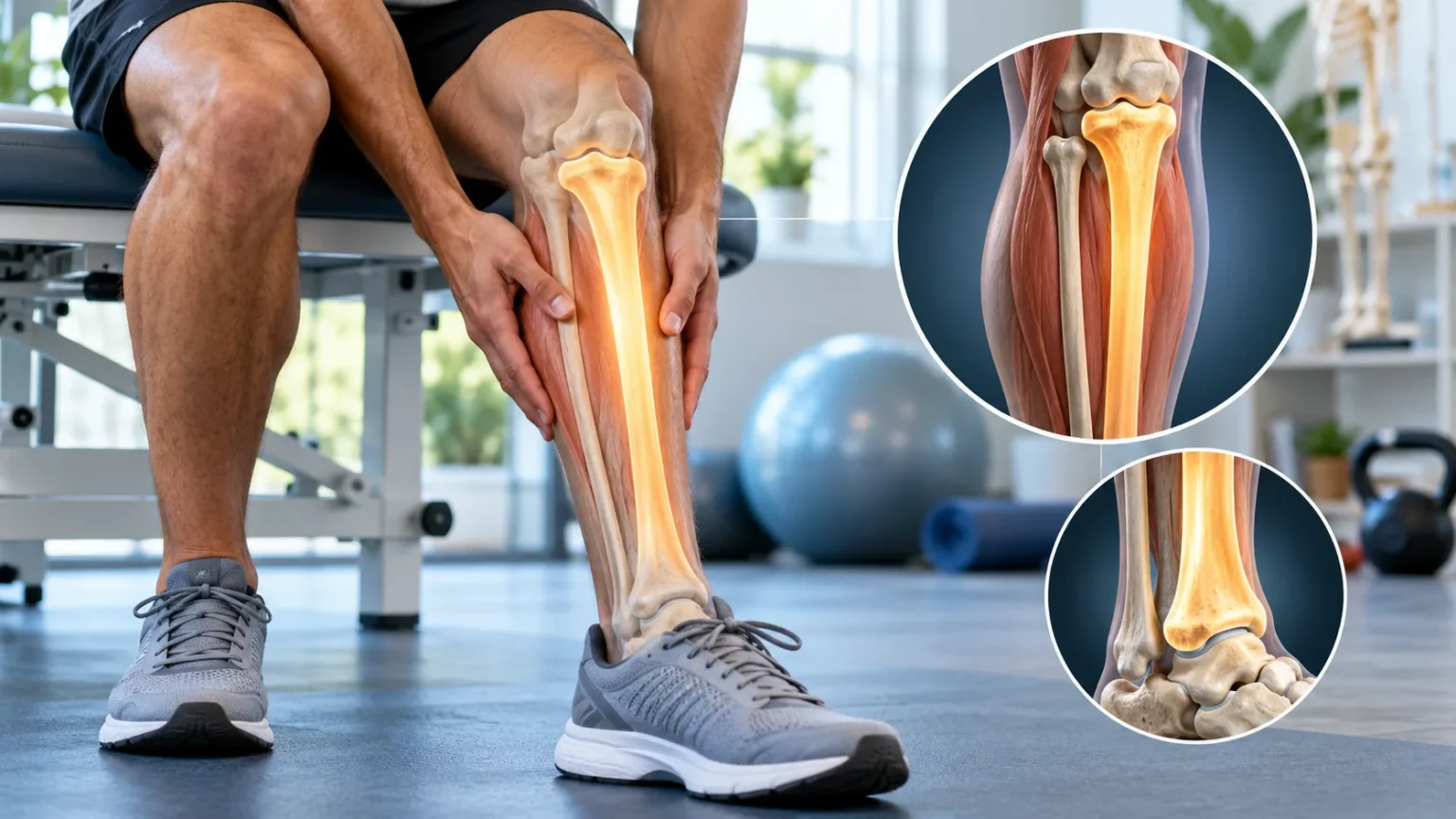

The tibia is one of the most important bones in the lower leg. Commonly known as the shinbone, it supports much of the body’s weight and helps connect the knee to the ankle. Because of its size, location, and role in movement, the tibia is involved in everyday activities such as standing, walking, running, jumping, and climbing stairs.
Understanding the tibia meaning goes beyond simply knowing the name of a bone. The tibia works closely with the fibula, knee joint, ankle joint, muscles, tendons, and ligaments to provide stability and controlled movement. Problems involving the tibia can therefore affect several areas of the lower leg and change how comfortably a person moves.
The tibia can also be affected by fractures, stress injuries, inflammation, growth-related conditions, and overuse problems. Learning where the tibia is located, what it does, and how injuries develop can make lower-leg anatomy easier to understand. This guide explains the definition, structure, functions, common conditions, and key facts about the tibia.
What Is the Tibia?
The tibia is the larger of the two bones found in the lower leg between the knee and ankle. It lies mainly along the inner side of the lower leg and forms the prominent front portion commonly called the shin. The second lower-leg bone, the fibula, runs beside it and is considerably thinner.
In anatomical terms, the tibia is classified as a long bone. Long bones have a shaft in the middle and wider ends that participate in joint formation. The upper end of the tibia contributes to the knee joint, while the lower end helps form the ankle joint together with other surrounding bones.
The tibia is particularly important because it carries a significant portion of body weight from the knee toward the foot. Its strong structure allows it to tolerate forces generated during walking and other weight-bearing activities. Despite this strength, substantial impact or repeated stress can still cause tibial injuries.
Where Is the Tibia Located?
The tibia extends from just below the knee to the inner side of the ankle. If you run your fingers down the front of your lower leg, the hard ridge you can feel beneath the skin is part of the tibia. Because little soft tissue covers this area, direct blows to the shin can feel especially painful.
At the top, the tibia meets the femur, or thigh bone, to form an important part of the knee joint. The upper surface is broad because it must support weight coming from the thigh. Structures such as cartilage, ligaments, and the menisci help distribute forces and stabilize the knee in this region.
At its lower end, the tibia joins the talus, one of the major ankle bones. The inner ankle bump, known as the medial malleolus, is actually part of the tibia. This structure contributes to ankle stability and helps prevent excessive side-to-side movement during standing and walking.
What Does the Tibia Do?
One of the main functions of the tibia is supporting body weight. Forces travel from the femur through the knee into the tibia and then continue toward the ankle and foot. This makes the tibia a major weight-bearing structure during nearly every activity performed while standing.
The tibia also provides attachment points for muscles, tendons, and ligaments involved in knee, ankle, and lower-leg movement. These attachments help control bending, straightening, rotation, and stabilization. Without a strong tibia, the lower limb would have difficulty transferring muscular forces efficiently during everyday movement.
Another important function is helping maintain alignment between the knee and ankle. Proper alignment allows forces to pass through the leg efficiently while reducing excessive stress on surrounding tissues. Changes caused by injury, fracture, or bone deformity can interfere with this alignment and potentially affect walking mechanics.
Tibia vs. Fibula: What Is the Difference?
The tibia and fibula are both located in the lower leg, but they differ considerably in size and function. The tibia is the larger bone positioned more toward the inside of the leg, while the fibula is thinner and runs along the outer side. Together, they help support and stabilize the lower leg.
The tibia carries most of the weight transmitted through the lower leg. In comparison, the fibula contributes relatively little direct weight-bearing support but provides important attachment sites for muscles and helps stabilize the ankle. The bones are connected along their length by connective tissue known as the interosseous membrane.
Both bones can be injured during accidents or sports activities, sometimes at the same time. However, tibial injuries can have a particularly significant effect on walking because of the bone’s weight-bearing role. Understanding which bone is affected helps healthcare professionals determine appropriate treatment and recovery expectations.
Important Parts of the Tibia
The upper portion of the tibia contains the medial and lateral condyles, which form the tibial plateau. These surfaces interact with the lower end of the femur at the knee joint. Cartilage and the menisci help cushion this area and distribute pressure during standing, walking, running, and other activities.
Just below the knee is the tibial tuberosity, a noticeable bump on the front of the tibia. The patellar tendon attaches here, helping transfer force from the quadriceps muscles so the knee can straighten. This region can become irritated in active adolescents during periods of rapid growth.
The long middle portion of the bone is called the tibial shaft. Near the ankle, the tibia becomes wider again and forms the medial malleolus on the inner side. These different regions allow the tibia to support body weight while participating in both knee and ankle mechanics.
Common Tibia Injuries
Tibial fractures are among the more serious injuries affecting the lower leg. They may occur after vehicle accidents, falls, contact sports, or other high-force impacts. Symptoms can include severe pain, swelling, bruising, inability to place weight on the leg, or visible deformity when the fracture is displaced.
Stress fractures can develop more gradually because of repeated loading rather than one sudden injury. Runners, military recruits, dancers, and athletes who rapidly increase training may be particularly susceptible. Pain often begins during activity and becomes increasingly noticeable if the bone continues to experience repetitive stress without enough recovery.
Pain near the tibia can also come from surrounding muscles, tendons, joints, or other parts of the lower limb. For example, changes higher in the movement chain associated with conditions such as hip tendonitis may alter walking mechanics and contribute to discomfort elsewhere. Persistent lower-leg pain should therefore be evaluated in context rather than automatically assumed to come from the bone.
What Are Shin Splints?
Shin splints is a common term for pain along the inner edge of the tibia, often associated with repetitive running or jumping. The medical term frequently used is medial tibial stress syndrome. It is thought to involve stress affecting the tibia and surrounding tissues rather than representing one simple type of injury.
People with shin splints often notice tenderness along a broader area of the inner shin. Symptoms may initially appear during or after exercise and improve with rest. If training continues without sufficient recovery, however, discomfort can become more persistent and may begin interfering with normal activity.
Rapidly increasing running distance, changing surfaces, inadequate recovery, and repeated high-impact activity may contribute to shin symptoms. Appropriate footwear, gradual progression, strength training, and temporary workload reduction can sometimes help. Localized or worsening pain may require assessment to rule out a tibial stress fracture.
Tibial Fractures and Stress Fractures
An acute tibial fracture generally results from a significant force applied to the leg. Depending on the injury, the bone may crack, break completely, shift out of alignment, or damage surrounding tissues. Some fractures remain closed beneath the skin, while open fractures involve a wound communicating with the broken bone.
Stress fractures are different because they develop from repetitive microscopic damage. Normally, bone continually remodels and adapts to physical activity, but excessive training without enough recovery can overwhelm that process. A small crack can gradually form when repeated stress occurs faster than the bone can repair itself.
Treatment varies considerably depending on the type and severity of the fracture. Some injuries can heal with activity restriction, immobilization, and gradual rehabilitation, while unstable fractures may require surgery. Returning to running or high-impact exercise too early can delay healing and increase the likelihood of further injury.
How the Tibia Supports the Knee and Ankle
The tibia forms the lower half of the main weight-bearing portion of the knee joint. Its upper surface provides a platform where the femoral condyles rest. The menisci sit between these bones and help distribute pressure while ligaments provide additional stability during bending, straightening, and rotational movements.
At the ankle, the lower tibia helps create a stable socket around the talus. The medial malleolus forms the inner side of this arrangement and contributes to ankle stability. This relationship allows the ankle to support weight while permitting movements needed for walking, climbing stairs, and pushing off the ground.
Because the tibia participates in both major joints, an injury can affect movement above and below the damaged area. Reduced ankle mobility, knee stiffness, muscle weakness, or altered walking patterns may occur during recovery. Rehabilitation often addresses the entire lower limb rather than concentrating only on the fracture site.
How to Keep the Tibia Healthy
Healthy bones depend on a combination of physical activity, nutrition, recovery, and appropriate training progression. Weight-bearing activities help stimulate bone adaptation when performed at manageable levels. However, suddenly increasing running mileage, jumping volume, or training intensity can place excessive stress on the tibia before it has time to adapt.
Adequate calcium, vitamin D, protein, and overall nutrition support normal bone health. People who consistently consume too little energy relative to their activity level may have increased difficulty maintaining strong bones. Individual nutritional needs vary, especially among athletes, older adults, and people with certain medical conditions.
Strength training can also help by improving the muscles surrounding the hips, knees, ankles, and lower legs. Stronger muscles can assist with controlling forces during movement, although they cannot prevent every injury. Balanced training, rest days, and gradual progression are usually more sustainable than repeatedly pushing through significant pain.
When Tibia Pain Needs Medical Attention
Tibia pain after a major fall, collision, or direct impact should be taken seriously, especially when standing or walking becomes difficult. Significant swelling, deformity, bruising, or severe tenderness may indicate a fracture. An open wound near a suspected fracture requires urgent medical care because of the risk of infection and additional tissue damage.
Gradually developing shin pain also deserves evaluation when it becomes highly localized or continues to worsen despite reduced activity. Stress fractures can initially resemble ordinary exercise-related soreness or shin splints. Continuing high-impact activity through persistent bone pain may allow the injury to become more severe.
Seek prompt medical attention if lower-leg pain is accompanied by major swelling, numbness, loss of circulation, increasing weakness, or severe pain that seems disproportionate to the injury. A healthcare professional may use examination and imaging to determine whether the tibia or another surrounding structure is responsible.
Conclusion
The tibia is the large shinbone extending between the knee and ankle. It carries much of the body’s weight, contributes to both major joints, and provides attachment points for muscles, tendons, and ligaments. Its strength and positioning make it essential for standing, walking, running, and many other everyday movements.
Understanding the tibia meaning also helps explain why lower-leg injuries can significantly affect mobility. Fractures, stress injuries, shin splints, and problems involving nearby tissues can all produce discomfort around the tibia. Symptoms should be considered alongside activity level, injury history, and the exact location of pain.
Maintaining healthy bones through appropriate nutrition, progressive exercise, strength training, and sufficient recovery can support long-term tibial health. Persistent or severe pain should not simply be exercised through. Early evaluation can help identify whether symptoms involve the tibia itself or another structure in the lower limb.
Frequently Asked Questions
What does tibia mean in anatomy?
The tibia is the larger of the two bones in the lower leg and is commonly known as the shinbone. It extends from the knee to the ankle and carries much of the body’s weight.
Is the tibia the same as the shinbone?
Yes. The tibia is commonly called the shinbone because its front surface forms the hard, easily felt portion of the shin between the knee and ankle.
What is the difference between the tibia and fibula?
The tibia is the larger, primary weight-bearing bone on the inner side of the lower leg. The fibula is thinner, lies toward the outside, and contributes mainly to muscle attachment and ankle stability.
Can you walk with a fractured tibia?
Some minor or stable fractures may still allow limited weight-bearing, but walking on a suspected fracture can worsen the injury. Medical evaluation is important before deciding whether it is safe to place weight on the leg.
Why does my tibia hurt after running?
Running-related tibial pain can result from shin splints, training overload, muscle irritation, or a stress injury. Localized or persistent pain that worsens with activity should be evaluated to rule out a stress fracture.