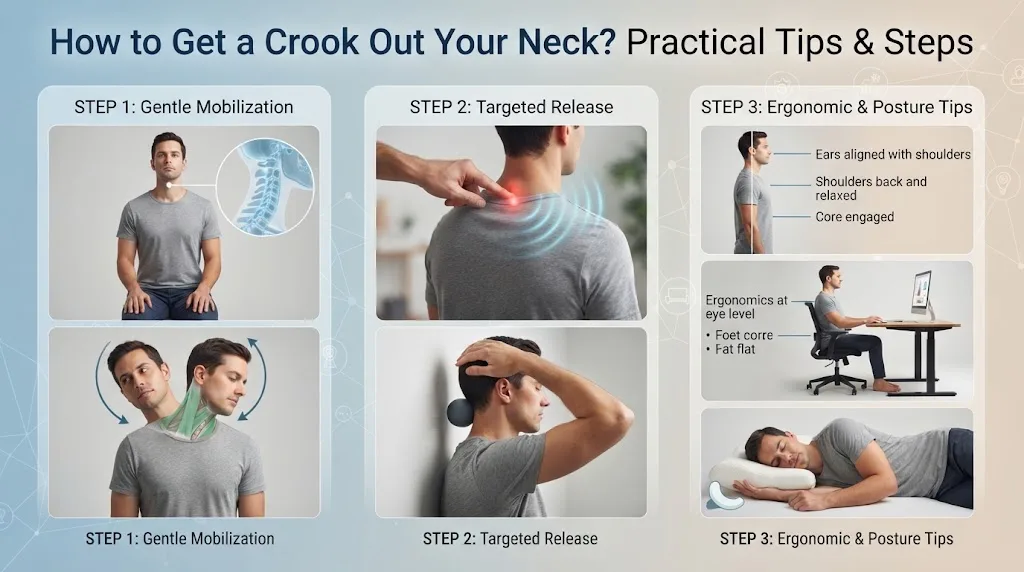

A “crook” or “crick” in the neck usually describes sudden stiffness, soreness, or difficulty turning the head comfortably. It often feels like one side of the neck is tight or temporarily stuck. The discomfort may develop after sleeping in an awkward position, sitting too long, turning suddenly, or overusing the neck and shoulder muscles.
Most mild cases involve irritated muscles, joints, or surrounding soft tissues rather than a serious injury. You may notice tightness when looking over your shoulder, bending your head sideways, or getting out of bed. The area can also feel tender to touch, especially around the upper trapezius, shoulder blade, or base of the skull.
A simple neck crick often improves gradually with gentle movement and temporary changes to activities that make it worse. However, severe pain, weakness, numbness, fever, major trauma, or symptoms that travel into the arm deserve more attention. Knowing when discomfort is ordinary muscle stiffness and when it needs evaluation can help you respond more safely.
Common Causes of a Crook in the Neck
Sleeping in an uncomfortable position is one of the most common triggers. A pillow that pushes your head too far forward, backward, or sideways can leave the neck muscles working in an awkward position for hours. You may wake up with stiffness on one side and find that turning in a particular direction feels especially limited.
Long periods at a computer or phone can also contribute. Looking down repeatedly, holding the head forward, or staying in one position for several hours may fatigue the muscles around the neck and shoulders. The problem is usually not one single posture but the lack of movement and repeated stress placed on the same tissues.
Exercise and sudden movements can cause temporary neck irritation as well. Heavy lifting, overhead training, awkward pulling, or quickly turning the head may strain muscles that were not prepared for the load. Stress can add to the problem because many people unconsciously raise their shoulders and tense the neck when they feel pressured or tired.
Step 1: Start With Gentle Neck Movement
The first step is usually to move the neck gently rather than trying to force it back into place. Slowly turn your head toward the comfortable side and then toward the stiff side within an easy range. Repeat a few times while keeping your shoulders relaxed and stopping before the movement becomes sharply painful.
You can also try small up-and-down movements. Bring your chin slightly toward your chest and then return to a neutral position without throwing your head backward. The goal is to remind the neck that movement is safe and available, not to achieve the largest possible range during the first few repetitions.
Avoid aggressively twisting or cracking the neck in an attempt to make the stiffness disappear instantly. Forceful movement may irritate already-sensitive joints or muscles and can sometimes make the area feel worse. Gentle repetition is usually more useful than trying to produce a dramatic pop or stretch.
Step 2: Use Heat or Cold for Comfort
Warmth can be helpful when the neck mainly feels stiff, tense, or achy. A warm shower, heating pad, or warm towel may help relax surrounding muscles before you begin gentle mobility exercises. Use comfortable temperatures and short sessions rather than intense heat that could irritate or burn the skin.
Cold can feel better if the discomfort followed a recent strain or if the area feels irritated after activity. Wrap an ice pack or cold pack in a thin cloth and apply it briefly rather than placing it directly on the skin. Some people prefer heat, while others respond better to cold, so use the option that provides the most comfort.
Neither heat nor cold actually “puts” the neck back into place. These methods are mainly for temporary symptom relief while the irritated area settles. They work best when combined with gentle movement, reasonable activity changes, and avoiding positions that repeatedly trigger the same pain.
Step 3: Try a Gentle Upper Trap Stretch
The upper trapezius often becomes tight when you have a crook in the neck. Sit or stand tall, allow your shoulders to relax, and slowly tilt one ear toward the same-side shoulder. Stop when you feel a mild stretch along the opposite side of the neck and upper shoulder.
If the stretch feels comfortable, you can lightly place your hand over your head for gentle guidance. Do not pull hard or force the head farther than it naturally wants to move. Hold the stretch briefly while breathing slowly, then return to the center and repeat on the other side if needed.
Stretching should create mild tension rather than sharp pain, burning, tingling, or numbness. If symptoms travel into your arm or hand, stop the stretch and return to a neutral position. Those sensations may suggest nerve irritation rather than simple muscle tightness and may require a different approach.
Step 4: Stretch the Levator Scapulae
The levator scapulae connects the neck to the upper shoulder blade and can become tight during prolonged sitting or sleeping awkwardly. To stretch it, turn your head slightly to one side and gently angle your chin downward as if looking toward your pocket. You should feel a mild stretch along the back and side of the neck.
Keep the opposite shoulder relaxed rather than letting it rise toward your ear. You may lightly guide the head with your hand, but strong pulling is unnecessary. Slow breathing can make it easier to reduce tension through the upper back and neck while holding the position.
This stretch can be particularly useful when the discomfort feels closer to the shoulder blade than directly along the side of the neck. However, no stretch should be forced if it makes symptoms worse. A few comfortable repetitions are usually better than one intense stretch that leaves the area more irritated afterward.
Step 5: Improve Your Sitting and Screen Setup
If your neck becomes stiff after desk work, small adjustments can reduce repeated strain. Position your screen so you are not constantly looking far downward or turning your head to one side. Keep your keyboard and mouse close enough that you can work without reaching or holding your shoulders tense.
Avoid trying to sit perfectly upright for the entire day. Even a technically good posture can become uncomfortable when held too long without movement. Change positions regularly, stand up, walk briefly, and roll your shoulders every so often to prevent the same muscles from remaining active for hours.
Phone use can be another source of repetitive neck bending. Bring the screen closer to eye level when practical instead of holding it near your lap for extended periods. Small changes in how often you move usually matter more than trying to find one flawless neck position and maintaining it continuously.
Step 6: Keep the Shoulders and Upper Back Moving
Neck stiffness often occurs alongside tension in the shoulders and upper back. Gentle shoulder rolls can restore movement without directly stressing the painful area. Slowly circle the shoulders backward several times, then relax them rather than repeatedly shrugging them toward your ears.
Shoulder blade squeezes can also help. Sit or stand tall and gently bring your shoulder blades toward each other without arching the lower back. Hold briefly, release, and repeat while keeping the neck relaxed instead of jutting the chin forward during the movement.
Regular full-body movement can support recovery as well. Walking, light mobility, and lower-body exercise may help you avoid becoming overly inactive while the neck settles. For example, simple strength exercises such as calf raises can keep you moving without placing heavy demands on a sore neck when performed comfortably.
What Not to Do With a Stiff Neck
Avoid repeatedly cracking your neck in search of temporary relief. A gentle natural pop during normal movement is usually different from forcefully twisting the neck with your hands. Repeated aggressive manipulation can irritate sensitive tissues and may encourage you to keep chasing a sensation instead of allowing the area to recover.
Do not spend the entire day lying still unless a healthcare professional has specifically advised it. Too much rest can increase stiffness and make normal movement feel more difficult when you eventually start moving again. Light daily activity is usually more useful when symptoms are mild and there are no concerning neurological signs.
You should also avoid heavy lifting or demanding upper-body exercise if those activities clearly increase the pain. Temporary modifications can prevent repeated irritation while the neck settles. Once movement becomes comfortable, gradually return to normal training instead of jumping immediately back into your heaviest lifts.
How to Sleep With a Crook in Your Neck
Your sleep position can influence how your neck feels the next morning. Back sleepers generally benefit from a pillow that supports the natural curve of the neck without pushing the head too far forward. A pillow that is excessively thick or thin can leave the neck in an uncomfortable position for several hours.
Side sleepers usually need enough pillow height to keep the head roughly aligned with the rest of the spine. If the pillow is too low, the head may drop toward the mattress, while an overly thick pillow can push it in the opposite direction. Comfort is more important than following one exact pillow measurement.
Stomach sleeping can be uncomfortable when your neck is already sore because it usually requires turning your head to one side for a long period. If possible, temporarily use a back or side position while symptoms are active. Choose the setup that allows your neck and shoulders to feel relaxed rather than forcing yourself into a position that increases pain.
How Long Does a Crook in the Neck Last?
A mild crook in the neck often starts improving within a few days, although stiffness can last longer depending on the cause. Recovery may take more time when the muscles were strained during exercise or when the same aggravating activity continues every day. Improvement should generally be gradual rather than the pain becoming progressively worse.
You may notice that movement returns before all soreness disappears. For example, turning the head might become easier even though one spot still feels tender. These small improvements are useful signs that the area is settling, and they can guide you as you gradually return to normal work and exercise.
If symptoms remain unchanged for several weeks, repeatedly return, or become more intense, professional evaluation can help identify another cause. A physical therapist or other qualified clinician can assess neck motion, strength, shoulder function, and nerve-related symptoms to determine whether simple muscle stiffness fully explains the problem.
When to See a Healthcare Professional
Seek medical attention if neck pain follows a significant fall, collision, sports impact, or other trauma. Severe pain, visible deformity, or major difficulty moving the neck after an accident should not be treated only with stretching. A clinician can determine whether imaging or additional assessment is needed before you resume normal activity.
Numbness, tingling, weakness, or pain traveling into the arm or hand are also important symptoms. These may indicate irritation of a nerve rather than simple muscle tightness. Progressive weakness, loss of coordination, or difficulty using the hand normally should be evaluated rather than managed with repeated home stretching.
Fever, severe headache, confusion, unexplained weight loss, or a stiff neck accompanied by feeling seriously unwell also requires medical attention. Sudden severe neck pain that feels very different from your usual muscle tension deserves prompt evaluation. These symptoms are not typical of an ordinary neck crook and should not be ignored.
Conclusion
A crook in your neck is usually a temporary episode of stiffness or soreness caused by irritated muscles, joints, prolonged positioning, or awkward movement. Gentle neck motion, light stretching, heat or cold, and regular movement can often help. The goal is to restore comfortable motion gradually rather than trying to force the neck into place.
Pay attention to the activities that make symptoms worse and modify them temporarily. Improve your desk setup, take movement breaks, relax your shoulders, and use a comfortable sleeping position while the area settles. Avoid aggressive neck cracking and intense stretching, because more force does not necessarily lead to faster relief.
Most mild cases improve with time and sensible self-care. However, severe pain, major trauma, progressive weakness, numbness, fever, or symptoms traveling into the arm deserve professional evaluation. When warning signs are absent, patience, gentle movement, and a gradual return to normal activity are usually the most practical approach.
FAQs
How do you get rid of a crook in your neck quickly?
Gentle movement, light stretching, heat or cold, and avoiding aggravating positions may help reduce stiffness. Do not forcefully twist or crack your neck in an attempt to make symptoms disappear immediately.
Should I stretch a stiff neck?
Gentle stretching can help when the discomfort is muscular. Stop if a stretch causes sharp pain, tingling, numbness, weakness, or pain that travels into your arm or hand.
Is heat or ice better for a crook in the neck?
Either may provide temporary relief. Heat often feels better for stiffness and muscle tension, while cold may help after a recent strain. Choose whichever feels more comfortable.
How long does a crook in the neck normally last?
Mild cases often improve within several days, although some stiffness may last longer. Persistent, worsening, or frequently recurring symptoms should be assessed by a qualified healthcare professional.
When should neck stiffness be considered serious?
Seek medical care for major trauma, progressive weakness, numbness, severe headache, fever, loss of coordination, or significant arm symptoms. These signs are not typical of a simple neck crook.