
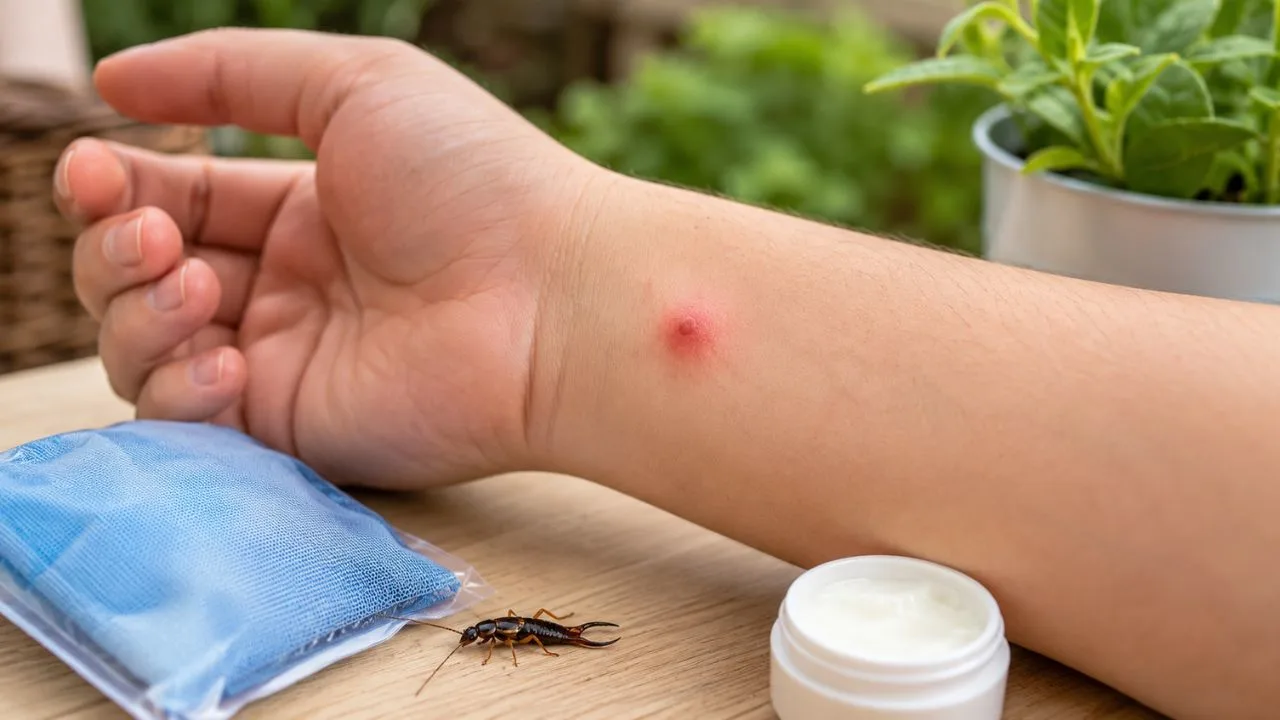

An earwig bite can sound alarming, especially when you notice the insect’s curved pincers and long, narrow body. The good news is that earwigs do not normally attack people, feed on blood or search for exposed skin. Most incidents described as bites are actually defensive pinches made with the forceps at the back of the insect. These encounters are usually harmless and cause no lasting skin damage.
Earwigs are small nocturnal insects that prefer cool, dark and damp environments rather than human contact. They often hide under flowerpots, stones, leaves, mulch, garden furniture and other objects during daylight hours. An accidental pinch may happen when someone picks up an earwig, traps it against the skin or reaches into its hiding place. Even then, many earwigs are too small to produce more than momentary discomfort.
A typical earwig pinch may leave mild redness, tenderness or two tiny pressure marks on the skin. Unlike bees, wasps and some other insects, earwigs do not inject venom through their pincers. The affected area normally improves with gentle washing, a cold compress and time. However, broken skin should be kept clean because any small wound can become infected if bacteria enter it.
This guide explains whether earwigs truly bite, what an earwig bite looks like and how to care for the affected skin. It also covers symptoms that may indicate infection, an allergic reaction or a different type of insect bite. You will learn practical ways to prevent earwig contact and make your home less attractive to these moisture-loving insects. The goal is to replace frightening myths with useful, people-first information.
Do Earwigs Bite Humans or Simply Pinch?
Earwigs have chewing mouthparts, but they are not adapted to feeding on human blood or living skin. They normally eat decaying plant material, tender vegetation and small insects found in gardens and outdoor spaces. Because of this feeding behavior, an earwig has no reason to seek out a person as a food source. A true earwig bite involving its mouthparts is therefore extremely unusual.
The more likely event is an earwig pinch caused by the forceps-like structures at the end of its abdomen. These structures are called cerci, although many people simply refer to them as pincers. Earwigs use them for defense, handling prey, protecting themselves and interacting with other earwigs. When the insect feels trapped, it may bend its flexible abdomen and attempt to grip whatever is touching it.
Most earwig pincers are not strong enough to seriously injure human skin. A larger earwig may create a noticeable pressure sensation, and a firm pinch could occasionally leave a superficial mark. It is possible for delicate skin to become slightly scratched or broken, particularly in children or people with sensitive skin. However, deep puncture wounds and serious tissue injuries would be highly unusual.
The phrase “earwig bite” remains popular because people naturally assume that any insect-related skin mark is a bite. It is also easier to search for that phrase than to describe a pinch from the insect’s rear forceps. From a practical perspective, the name matters less than the condition of the skin afterward. A mild mark can usually be managed at home, while unusual or worsening symptoms deserve medical attention.
What Does an Earwig Bite Look Like?
An earwig bite mark does not have one guaranteed appearance because the pressure applied by the insect can vary. A mild pinch may leave no visible mark once the insect has been removed. Another person may notice temporary redness, a small raised area or slight indentation in the skin. These changes are usually limited to the exact place where the pincers made contact.
Because an earwig has two rear forceps, the skin may sometimes show two closely positioned pressure points. These marks can resemble tiny red dots, although they may not be perfectly symmetrical or clearly separated. If the skin was squeezed rather than punctured, the area may look like a small red patch instead. Appearance alone cannot prove that an earwig caused the mark.
An earwig pinch is generally not expected to create a rapidly spreading rash, a large blister or an expanding area of tissue damage. Such symptoms could point to another insect, an allergic reaction, an unrelated skin condition or a developing infection. People often blame the insect they happen to see nearby, even when it did not cause the skin problem. This is why monitoring the symptoms can be more useful than focusing only on the original mark.
Taking a clear photograph can help you compare the area over the next day or two. Place a ruler or another familiar object beside the mark if you are concerned that the redness is expanding. Avoid repeatedly pressing, scratching or squeezing the affected skin while checking it. Changes such as increasing warmth, swelling, pain or discharge are more important than the precise shape of the initial mark.
Common Earwig Bite Symptoms
The most common symptom of an earwig pinch is a brief sensation of pressure or mild pain. Some people describe it as a small nip, prick or momentary squeeze rather than a sharp bite. The discomfort should usually decrease soon after the earwig releases the skin. Persistent or severe pain would be unusual and should not automatically be attributed to an earwig.
Mild redness can appear because the mechanical pressure temporarily irritates the skin. A small amount of swelling or tenderness may also develop, especially if the person has sensitive skin. These symptoms are generally local, meaning they remain close to the contact area rather than spreading across the body. They should gradually improve rather than becoming more intense with time.
Itching is possible, but it is not necessarily caused by venom because earwigs do not inject venom through their forceps. The skin may itch because of minor irritation, dryness, scratching or contact with material carried on the insect’s body. Intense itching could also mean that a mosquito, flea, bed bug or another insect caused the mark. Multiple itchy bumps are less typical of a single defensive earwig pinch.
A small amount of bleeding can occur if the skin is scratched or broken during the encounter. Bleeding should normally stop with gentle pressure from clean gauze or a clean cloth. Once it stops, the area may form a tiny scab while healing. Continued bleeding, significant bruising or a wound that appears deeper than expected requires a more cautious medical assessment.
Earwig Bite vs Other Insect Bites
A mosquito bite commonly produces a raised, itchy bump that may appear shortly after exposure. Mosquitoes seek blood and can bite more than once, whereas earwigs do not deliberately feed on people. An earwig pinch is more likely to happen while gardening, moving a damp object or accidentally pressing the insect against the body. The person may also see or feel the earwig at the moment of contact.
Flea bites often appear as several small, intensely itchy bumps, particularly around the ankles and lower legs. Bed bug bites may also occur in groups or lines after a person has been resting or sleeping. A single mild pressure mark accompanied by an identified earwig does not follow those common patterns. However, skin reactions vary, so pattern recognition cannot provide a definite diagnosis on its own.
Bee and wasp stings are generally more painful because these insects can inject venom into the skin. Their stings may lead to immediate burning, swelling and a stronger inflammatory response around the site. An earwig has no stinger and does not deliver venom through its rear pincers. Severe swelling after a supposed earwig bite should therefore encourage consideration of another cause.
Spider bites are frequently suspected but are difficult to confirm unless the spider is seen causing the injury. Many infections, rashes and irritated hair follicles are mistakenly labelled as spider or insect bites. The same problem can occur with an assumed pincher bug bite. Seek professional advice when a mark develops significant pain, blistering, spreading discoloration or other symptoms that do not match a minor pinch.
How to Treat an Earwig Bite at Home
Begin earwig bite treatment by washing the affected area gently with soap and clean running water. Washing helps remove dirt, plant material and bacteria that may have reached the skin during outdoor activity. Pat the area dry with a clean towel instead of rubbing it vigorously. This simple step is especially important when the skin has been scratched or broken.
Apply a cold compress wrapped in a thin cloth if the area feels sore or swollen. Hold it against the skin for approximately 10 to 15 minutes, then remove it to allow the skin to rest. Do not place ice directly on bare skin because prolonged cold contact can cause additional irritation. The compress can be repeated later if mild swelling remains.
If the skin is broken, cover it with a small clean bandage after washing and drying it. Replace the covering whenever it becomes wet, dirty or loose, and continue until the surface has closed. Avoid picking at the wound or scratching itchy skin because this may introduce bacteria. Minor earwig bite marks usually need protection and observation rather than complicated treatment.
An over-the-counter anti-itch product may help if the area becomes uncomfortable, but it should be used according to its label. A pharmacist can suggest an appropriate option based on age, pregnancy, allergies and existing health conditions. Pain medicine may also be considered when suitable for the individual, although significant pain is not typical. Avoid using harsh chemicals or unverified home remedies that could further irritate the skin.
How Long Does an Earwig Bite Last?
A mild earwig pinch may stop hurting within minutes and leave little or no visible evidence. Slight redness or tenderness can remain for several hours, particularly when the skin was firmly compressed. Most uncomplicated marks should show clear improvement within a day or two. The exact healing time depends on whether the skin was broken and how sensitive the person’s skin is.
A superficial scratch may take several days to close completely. During this period, the area should become less red, less sore and less noticeable with each passing day. A small scab can be a normal part of healing when there was minor bleeding. Do not remove the scab prematurely because it protects the new skin forming underneath.
Symptoms that remain unchanged for several days may not necessarily indicate danger, but they deserve closer observation. A mark that grows, becomes hotter or starts producing discharge is not following the expected healing pattern. It may have become infected or may have been caused by something other than an earwig. Medical advice can help clarify the cause and determine whether treatment is needed.
People with diabetes, reduced circulation or a weakened immune system may experience slower wound healing. Even a small break in the skin can require more careful monitoring in these situations. Following an existing wound-care plan provided by a healthcare professional is important. Contact a clinician earlier when you have a condition that makes skin infections more likely or harder to treat.
Can an Earwig Bite Become Infected?
Earwigs are not known for injecting disease-causing organisms through a venomous bite. However, any wound that breaks the protective surface of the skin can potentially become contaminated. Bacteria may enter from unwashed hands, soil, fingernails or repeated scratching. The risk remains low when the area is minor and cleaned promptly.
Early infection signs can include redness that continues to expand instead of fading. The skin may become warmer, more swollen or increasingly painful around the original mark. Yellow or cloudy fluid, pus and an unpleasant smell are additional warning signs. These symptoms should not be dismissed as a normal reaction to an earwig pinch.
Red streaks moving away from the wound, swollen lymph nodes or fever can suggest that an infection is spreading. A person may also feel unusually tired, chilled or generally unwell. These symptoms require prompt medical attention rather than continued home observation. Treatment may be necessary to stop the infection from becoming more serious.
The best preventive steps are gentle washing, clean wound coverage and avoiding unnecessary touching. Do not repeatedly apply rubbing alcohol, bleach or strong disinfectants to the skin, as they can cause irritation. Avoid sharing towels or wound-care products with another person. Clean hands before checking or replacing a bandage so that healing skin is not exposed to additional bacteria.
When Should You See a Doctor?
Contact a healthcare professional if redness, swelling or pain continues to increase after the first day. Medical advice is also appropriate when the wound is deep, will not stop bleeding or contains a visible foreign object. A clinician can examine the area and determine whether the injury was likely caused by an earwig. They can also check for infection or another skin condition with a similar appearance.
Seek urgent help if you develop difficulty breathing, throat tightness or swelling of the lips, tongue or face. Widespread hives, dizziness, fainting or confusion may also signal a serious allergic reaction. Although such a reaction would be very unusual after an earwig pinch, the cause may be another insect or substance. Emergency symptoms should always be treated according to their severity rather than the presumed insect.
Children may struggle to explain what happened or how much pain they feel. Look for persistent crying, rapidly increasing swelling, unusual sleepiness or repeated touching of the injured area. A healthcare professional should assess the child when symptoms are significant or the insect was not clearly identified. Extra caution is reasonable for injuries near the eye, mouth or another sensitive location.
People with previous severe allergic reactions should follow the emergency plan provided by their doctor. Those with diabetes, circulation problems, immune disorders or medicines that suppress immunity may need earlier medical advice for broken skin. Tell the clinician when the incident occurred and how the symptoms have changed. A photograph of the insect or skin mark may also provide useful context without guaranteeing identification.
What to Do If an Earwig Gets in Your Ear
The name earwig comes with a frightening myth that these insects deliberately crawl into ears and burrow toward the brain. Earwigs do not seek human ears for nesting, feeding or egg laying. Like many small insects, one could occasionally enter an ear by accident while a person is outdoors or sleeping. This is rare, but the movement can feel loud, painful and distressing.
Remain calm and avoid inserting fingers, cotton swabs, hairpins or tweezers into the ear canal. These objects may push the insect deeper or damage the sensitive canal and eardrum. Tilt the affected ear upward briefly to see whether the insect crawls toward the opening. Then turn the ear downward and allow gravity to help without striking or shaking the head forcefully.
Do not attempt complicated removal techniques when you have ear tubes, a known eardrum perforation, previous ear surgery or active bleeding. Medical professionals have suitable lighting and instruments for safely examining the ear canal. They can remove the entire insect and check for scratches or remaining fragments. Attempting blind removal at home may cause more harm than the insect itself.
Seek medical care when the insect does not come out quickly or the person experiences severe pain. Hearing changes, dizziness, bleeding and fluid discharge also require professional assessment. Children should be evaluated promptly because they may move suddenly during an attempted removal. Once the insect has been removed, continuing discomfort may indicate irritation that needs examination.
How to Prevent Earwig Pinches Outdoors
Wear gardening gloves when moving mulch, stones, logs, pots or damp plant material. Earwigs commonly hide beneath these objects during the day because they provide moisture and protection from sunlight. Gloves reduce the chance of trapping an insect directly against your fingers. Closed shoes and long sleeves can provide additional protection during heavy garden work.
Lift outdoor objects carefully and look underneath before placing your hands into dark spaces. Shake out gloves, boots, folded tarps and garden cushions that have been stored in sheds or on the ground. Earwigs may shelter inside these items without causing visible damage. A brief inspection can prevent a surprising encounter and an accidental earwig bite.
Teach children to observe earwigs rather than picking them up or squeezing them. These insects are not naturally aggressive, but they may use their forceps when they cannot escape. Move an earwig with a container and a piece of stiff paper instead of bare fingers. Releasing it away from busy household areas is usually enough.
Use outdoor lighting thoughtfully because many insects gather around bright entryways at night. Keep doors closed when lights are attracting insects near the home. Repair damaged screens and check items brought indoors from damp garden areas. These simple habits reduce contact without requiring routine pesticide use.
How to Keep Earwigs Out of Your Home
Moisture control is one of the most effective ways to make a building less attractive to earwigs. Repair leaking taps, pipes and outdoor drainage problems that create constantly damp areas. Improve ventilation in basements, bathrooms and utility rooms when humidity remains high. A dehumidifier may help in spaces that stay moist despite ordinary ventilation.
Seal cracks and gaps around doors, windows, foundations and utility openings. Install or replace door sweeps where there is visible space beneath exterior doors. Repair torn window screens and loose weather stripping before peak insect activity. Earwigs usually wander indoors through accessible openings rather than establishing dangerous infestations.
Remove piles of wet leaves, boards, stones and garden debris from directly beside the building. Keep mulch from touching the foundation and avoid applying it more deeply than plants require. Trim dense vegetation that traps moisture against exterior walls. These changes reduce the cool hiding places earwigs use during daylight hours.
Vacuum individual earwigs found indoors and empty the vacuum container outside. Avoid crushing them on fabric, bedding or furniture when they can be removed easily. Large or persistent numbers may indicate an unresolved moisture problem or an accessible entry point. A qualified pest-control professional can inspect the property when prevention and moisture reduction do not solve the issue.
Common Myths About Earwig Bites
One long-standing myth claims that earwigs enter a sleeping person’s ear and tunnel into the brain. There is no scientific basis for this frightening story. An insect can accidentally enter an ear canal, but this is not unique to earwigs and does not mean it intends to burrow. Prompt, safe removal prevents injury and resolves most accidental cases.
Another myth is that the pincers contain dangerous poison. Earwig forceps are mechanical structures and do not inject venom into human skin. A pinch may feel unpleasant, but it does not have the venom-related effects associated with a bee or wasp sting. Significant symptoms should encourage medical evaluation for another cause rather than assumptions about earwig poison.
Some people believe an earwig bite always leaves two perfectly shaped puncture marks. The pincers may produce paired pressure points, but the pattern depends on the insect’s size and position. A pinch can also leave one red patch, an uneven scratch or no mark at all. Two dots on the skin are not sufficient evidence that an earwig was responsible.
It is also incorrect to assume that seeing earwigs means a home is dirty. These insects are usually attracted by moisture, shelter and seasonal weather conditions rather than poor hygiene. They may enter clean homes during hot, dry or wet periods while looking for a suitable hiding place. Addressing dampness and entry gaps is more useful than repeatedly cleaning already clean surfaces.
Final Thoughts on Earwig Bites
An earwig bite is almost always better described as a defensive pinch from the insect’s rear forceps. Earwigs do not hunt people, drink human blood or inject venom into the skin. Most contact causes little more than brief discomfort, mild redness or a superficial mark. The insect’s appearance is generally more frightening than the actual risk it presents.
Basic first aid is usually enough for a minor earwig pinch. Wash the skin gently, apply a wrapped cold compress and protect any small break with a clean bandage. Monitor the area to ensure that redness, swelling and pain gradually improve. Avoid scratching or applying harsh substances that may delay healing.
Seek medical attention when symptoms become stronger, spread beyond the affected area or suggest an infection. Breathing difficulty, facial swelling, widespread hives or fainting require urgent emergency help regardless of the suspected insect. A severe reaction is unlikely to result from an earwig, but another insect or allergen may have been involved. Treat the symptoms seriously instead of waiting for definite insect identification.
Prevention mainly involves avoiding direct handling and reducing damp hiding places around the home. Gloves, moisture control, sealed entry points and simple garden maintenance can greatly reduce accidental contact. There is no need to panic when an earwig appears indoors. Calm removal and practical prevention are usually all that is required.
Frequently Asked Questions
Do earwigs bite people while they sleep?
Earwigs do not seek sleeping people for blood and are not known to attack them deliberately. Accidental contact is possible, but a defensive pinch usually occurs only when the insect becomes trapped against the skin.
Is an earwig bite poisonous?
No, earwigs are not poisonous and their rear pincers do not inject venom. A pinch may cause temporary redness or tenderness, but serious toxic effects are not expected.
What should I put on an earwig bite?
Wash the area with soap and water, then apply a wrapped cold compress for mild swelling. Cover broken skin with a clean bandage and ask a pharmacist about suitable itch relief when necessary.
How can I tell whether an earwig bite is infected?
Increasing redness, warmth, swelling, pain, pus or red streaks can indicate infection. Contact a healthcare professional if the area worsens instead of gradually healing.
Can earwigs crawl inside your ear?
An earwig can accidentally enter an ear, just as other small insects can, but it does not burrow into the brain. Do not insert objects into the ear; seek medical care if the insect does not come out promptly.