
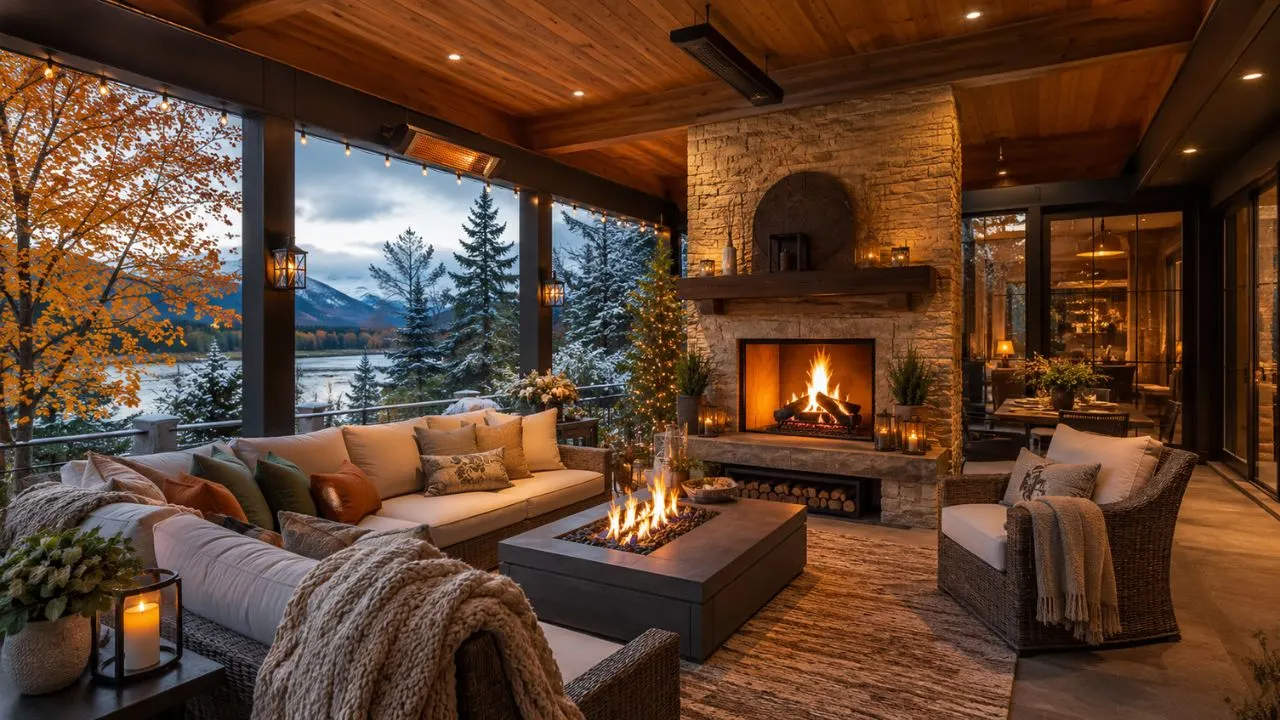

A well-designed outdoor area should not become unusable as soon as summer ends. With thoughtful planning, a patio, deck, porch, or backyard can remain welcoming through spring rain, summer heat, autumn wind, and cold winter evenings. The goal is to create a comfortable extension of your home rather than a space reserved for perfect weather.
A four-season outdoor living space combines shelter, temperature control, durable materials, practical lighting, and flexible furniture. It must provide shade when the sun is intense, warmth when temperatures fall, and protection when wind or rain arrives. Every feature should respond to the local climate instead of copying a design created for somewhere else.
Year-round outdoor living does not necessarily require building a fully enclosed room. A covered patio, pergola, screened porch, sheltered deck, or partially enclosed outdoor room can work effectively when the right elements are combined. The most successful design balances openness and fresh air with enough protection to make the area usable in changing conditions.
This guide explains how to create a four-season outdoor living space from the ground up. It covers site planning, drainage, outdoor heating, cooling, weather-resistant furniture, lighting, kitchens, landscaping, storage, safety, and seasonal maintenance. Whether you are planning a major renovation or improving an existing patio gradually, these principles will help you create lasting comfort.
What Makes an Outdoor Space Suitable for All Four Seasons?
A four-season outdoor space is one that remains functional during most normal weather conditions throughout the year. It does not need to feel exactly the same in January and July, but it should adapt easily. Retractable shade, portable furniture, removable screens, outdoor heaters, fans, blankets, and adjustable lighting make seasonal transitions much simpler.
Comfort depends on more than air temperature. Direct sunlight, wind speed, humidity, precipitation, surface temperature, and surrounding vegetation all influence how the space feels. A sheltered seating area may remain comfortable on a cool afternoon, while an exposed patio at the same temperature may feel unpleasant because of strong wind and damp conditions.
A successful design also supports the activities that matter to the household. Some families want an outdoor dining room, while others need a quiet reading area, cooking station, children’s zone, or entertainment space. Defining these priorities early prevents the finished area from becoming attractive but inconvenient, crowded, or difficult to maintain.
Four-season design should be flexible rather than overloaded with permanent features. A space that can shift between open-air summer use and sheltered winter use will usually perform better than a rigid layout. Modular furnishings, movable planters, retractable enclosures, layered lighting, and multipurpose storage help the outdoor room respond to changing needs.
Begin With Your Climate and a Full Site Assessment
Before selecting furniture or decorative finishes, observe the outdoor area in different weather conditions. Note where the sun rises and sets, which areas receive afternoon heat, and where shadows fall during winter. Seasonal sun angles change, so a location that feels shaded in July may receive strong direct sunlight during colder months.
Watch how wind moves through the property, particularly around building corners, fences, and narrow side yards. Structures can block wind, but they can also accelerate it through certain openings. Identifying the prevailing wind direction helps you position screens, walls, hedges, heating equipment, dining tables, and seating more effectively.
Study what happens during heavy rain or melting snow. Look for standing water, overflowing gutters, soil erosion, slippery surfaces, and runoff moving toward the house. Drainage problems should be corrected before adding flooring, furniture, or an outdoor kitchen because water can damage materials and make the space unsafe or uncomfortable.
Consider your region’s summer heat, winter lows, rainfall, snowfall, humidity, wildfire exposure, and storm frequency. A four-season patio in Arizona requires different solutions from one in Minnesota or coastal Oregon. Climate-responsive outdoor design reduces energy use, maintenance demands, and replacement costs while making the space more pleasant throughout the year.
Plan Functional Zones Before Buying Outdoor Furniture
Divide the area according to the activities you expect to enjoy most often. Common zones include lounging, dining, cooking, entertaining, gardening, and storage. Even a compact patio can support several purposes when each area has a clear function and furniture is selected according to the available space.
Place the outdoor kitchen or grill where smoke and heat will not drift toward doors, windows, seating, or overhead materials. Position dining nearby so food can be served conveniently, but maintain enough separation for safe circulation. Lounge seating can occupy a quieter edge with a better view or stronger protection from prevailing wind.
Allow comfortable walking paths between the house, yard, seating, cooking area, and garden. Furniture should not block doors, stairs, gates, or access to utilities. Well-planned circulation becomes especially important when guests are carrying food, children are moving through the space, or surfaces become wet during rain or snow.
Use outdoor rugs, lighting, planters, ceiling changes, or furniture arrangements to define zones without constructing permanent walls. These visual boundaries help an open patio feel organized and intentional. They also allow the layout to change as the seasons shift, household needs evolve, or larger gatherings require additional seating and open floor area.
Build a Durable Foundation With Effective Drainage
The floor is one of the most important parts of a year-round outdoor living area. It must tolerate moisture, temperature changes, sunlight, furniture movement, and regular foot traffic. Popular options include concrete, natural stone, porcelain pavers, brick, composite decking, properly treated wood, and permeable interlocking pavers.
Choose materials suited to your climate and maintenance preferences. Freeze-thaw cycles can damage unsuitable masonry, while intense sunlight may fade or heat certain surfaces. In wet regions, slip resistance is particularly important. Ask suppliers whether the selected flooring is rated for outdoor exposure, local temperatures, and the expected installation method.
Drainage should move water safely away from the home and occupied areas. Patios generally require an appropriate slope, while decks need open drainage and properly detailed connections. Gutters, downspouts, channel drains, gravel borders, and landscape grading may all contribute to a complete water-management strategy.
Permeable paving can help rain and snowmelt move into underlying soil and gravel instead of immediately becoming surface runoff. However, suitability depends on soil, climate, site conditions, installation, and maintenance. A contractor or landscape professional can determine whether permeable pavers, a rain garden, or conventional drainage provides the most reliable solution.
Add Overhead Protection for Sun, Rain, and Snow
An overhead structure immediately increases the number of days an outdoor area can be used. Options include a permanent roof, covered porch, pergola, pavilion, canopy, awning, or retractable shade system. The best choice depends on budget, architectural style, climate, snow load, wind exposure, and the desired amount of sunlight.
A solid roof provides the strongest rain and snow protection, making it easier to install lighting, fans, televisions, and comfortable furniture. However, it may reduce natural light entering nearby rooms. Skylights, translucent roofing panels, higher ceilings, or carefully positioned openings can help maintain brightness without sacrificing weather protection.
A pergola creates architectural definition while preserving airflow and partial sunlight. It can be enhanced with adjustable louvers, retractable fabric, climbing plants, or removable seasonal panels. Homeowners in rainy or snowy climates should verify that every component is engineered for expected loads and secured according to local requirements.
Retractable awnings and shade sails offer flexible summer protection without permanently darkening the area. They should be closed or removed during wind, storms, or snow when required by the manufacturer. Whatever structure you choose, confirm permit rules, property setbacks, attachment details, drainage requirements, and structural capacity before construction begins.
Control Wind, Rain, and Privacy Without Closing the Space
Wind protection can make a dramatic difference during spring, autumn, and winter. Glass panels, privacy screens, outdoor curtains, lattice, fencing, movable partitions, and dense planting can reduce uncomfortable drafts. The objective is to soften wind while preserving enough airflow for comfort and safe equipment operation.
Avoid creating a completely sealed enclosure around appliances or heaters designed only for outdoor use. Closing every side may restrict ventilation and change how the space is classified under building or fire rules. Use professionally designed systems and follow equipment instructions rather than improvising an enclosed room around an open patio.
Retractable screens are useful because they can be adjusted according to weather. Clear vinyl panels may block cold wind and rain, while mesh screens reduce insects and glare during warmer months. Track systems, roll-down shades, and sliding panels allow protection to be added without permanently sacrificing views or openness.
Privacy should be designed with the same flexibility. Evergreen hedges provide year-round screening, while ornamental grasses and deciduous plants create softer seasonal separation. Built structures offer faster results but may require approval. Combining planting with partial screens often feels more natural than surrounding the patio with one tall, solid barrier.
Create Safe and Efficient Outdoor Heating
Heating can extend patio use significantly, but the equipment must match the space. Common options include electric infrared heaters, gas patio heaters, built-in radiant systems, fireplaces, and fire pits. Each choice has different installation, ventilation, clearance, operating cost, maintenance, and weather-exposure requirements.
Electric infrared heaters warm people and surfaces directly rather than attempting to heat all the surrounding air. They can work well in covered outdoor areas when specifically rated for the location and installed correctly. Gas heaters may provide strong warmth but require proper fuel handling, stability, ventilation, and clearance from combustible materials.
Fireplaces and fire pits create atmosphere as well as heat, yet they demand careful planning. Keep flames away from roofs, furniture, branches, curtains, and busy walking routes. Use only approved fuel, maintain fire-extinguishing equipment nearby, and observe local burn restrictions, wildfire warnings, and manufacturer instructions.
Never use an outdoor heater, grill, generator, or outdoor-rated fuel-burning appliance inside a house or enclosed room. Avoid liquid-fuel tabletop fire products that require pouring alcohol or similar fuel into an open reservoir, particularly when the appliance is hot. Professional installation is strongly recommended for permanent gas, electrical, or built-in heating systems.
Keep the Space Comfortable During Hot Weather
Summer comfort begins with effective shade. A roof, pergola, mature tree, retractable awning, umbrella, or shade sail can reduce direct solar exposure before mechanical cooling is considered. Afternoon sun is often the most difficult to control, so west-facing patios may require vertical shades or carefully positioned planting.
Air movement can make warm conditions feel more comfortable when humidity and climate allow. Outdoor-rated ceiling fans work well beneath suitable covered structures, while portable fans provide flexibility. Choose equipment rated for damp or wet locations according to its exposure and have permanent electrical connections installed by a qualified professional.
Plants can also support passive cooling. Deciduous trees provide summer shade while allowing more winter sunlight after their leaves fall. Vines, shrubs, and planted borders can soften reflected heat from walls and paving. Plant placement should preserve useful breezes rather than creating a dense barrier that traps hot, stagnant air.
In extremely hot or humid climates, design the area around the most comfortable times of day. Morning dining, evening entertaining, lighter-colored materials, shaded cooking zones, and accessible cold-water storage may be more effective than trying to make an exposed patio comfortable at midday. Climate-aware habits are part of successful four-season use.
Select Weather-Resistant Furniture and All-Season Textiles
Outdoor furniture should tolerate the conditions it will actually face, not merely match the desired style. Powder-coated aluminum, high-quality synthetic woven materials, teak, durable hardwoods, stainless steel, composite products, and properly finished metals are common choices. Every material has different cleaning, weathering, weight, and storage requirements.
Consider wind as well as rain and sunlight. Lightweight chairs may be convenient to move but can become unstable during storms. Heavy furniture is more secure, although it may be difficult to rearrange. Modular seating offers a useful balance because individual sections can be moved while the completed arrangement remains substantial.
Choose cushions made with quick-drying foam and outdoor-performance fabric. Materials should resist moisture, fading, mildew, and staining, but no textile remains maintenance-free forever. Cushions last longer when they can drain, receive airflow, and be stored during severe weather or extended periods of nonuse.
Layer comfort seasonally rather than expecting one setup to work all year. Breathable cushions and light throws suit warm weather, while insulated seat pads, heavier blankets, and wind-resistant textiles improve colder evenings. A nearby storage bench or weatherproof cabinet makes these seasonal changes convenient instead of burdensome.
Design Outdoor Lighting for Safety and Atmosphere
Four-season outdoor spaces are frequently used after sunset, especially during shorter autumn and winter days. A layered lighting plan should include ambient illumination, task lighting, and pathway lighting. This creates a welcoming atmosphere while allowing people to cook, dine, walk, and use stairs safely.
Use brighter task lighting around grills, countertops, sinks, and serving areas. Softer fixtures can illuminate seating and dining spaces without producing harsh glare. Step lights, low pathway fixtures, and carefully placed wall lights help define level changes, doors, and circulation routes during wet, icy, or dark conditions.
Select fixtures, bulbs, controls, cords, and connections specifically rated for their outdoor exposure. Damp-rated products may suit protected locations, while fully exposed areas generally require wet-location equipment. Outdoor electrical circuits should include appropriate ground-fault protection and weather-resistant covers in accordance with applicable codes.
Dimmers, timers, motion sensors, and smart controls make outdoor lighting more adaptable. Warm, lower-level light supports relaxation, while brighter settings assist cooking and cleanup. Avoid directing excessive light toward neighboring properties or the night sky, and use only outdoor-rated decorative light strings and extension equipment.
Add an Outdoor Kitchen That Works Beyond Summer
A four-season outdoor kitchen can range from a compact grill station to a complete cooking area with storage, refrigeration, plumbing, and seating. Begin with the meals you actually prepare rather than copying an oversized showroom design. A reliable grill, useful counter, task light, and protected storage may be sufficient.
Place appliances where they have the ventilation and clearances required by the manufacturer. Smoke should not enter the home or gather under an unsuitable roof. Combustible walls, low ceilings, curtains, and furniture can create hazards when cooking equipment is placed without careful planning or professional review.
Choose cabinets, counters, and appliances made for exterior conditions. Indoor cabinetry and standard household appliances may deteriorate when exposed to moisture, temperature swings, insects, or freezing. In cold climates, plumbing may require shutoff valves, drainage, insulation, and seasonal winterization to prevent damaged pipes or fixtures.
Design the kitchen for convenient cleanup and storage. Include accessible waste containers, washable surfaces, covered outlets, weatherproof drawers, and sufficient landing space beside hot appliances. A nearby dining area improves service, while thoughtful circulation prevents guests from standing in the cook’s work zone.
Use Plants to Improve Comfort and Seasonal Interest
Plants help an outdoor living space feel connected to the landscape rather than placed on top of it. Trees can provide shade, shrubs can reduce wind, and layered planting can soften walls and screens. Flowers, foliage, bark, seed heads, and evergreen structure create visual interest across different seasons.
Choose perennial plants according to the current hardiness information for your location, local soil, sun exposure, drainage, and water availability. Hardiness zones describe winter-temperature tolerance but do not account for every growing condition. Heat, humidity, wind, drought, salt exposure, and microclimates also influence plant success.
Native and regionally appropriate plants can support birds, pollinators, and local biodiversity when selected thoughtfully. They may also require less intervention after becoming established, although native does not automatically mean maintenance-free. Group plants with similar water and light needs to simplify care and improve long-term performance.
Keep mature plant size in mind when planting near structures, pathways, fire features, and cooking areas. Small nursery plants may eventually block airflow, damage paving, or crowd seating. Avoid highly flammable vegetation near open flames and maintain safe clearances according to regional fire guidance.
Incorporate Storage and Flexible Seasonal Features
Convenient storage is essential for a space that changes throughout the year. Cushions, blankets, tableware, grill tools, games, covers, and cleaning supplies should have assigned locations. Without nearby storage, homeowners often stop using seasonal accessories because carrying everything from inside becomes inconvenient.
Choose cabinets, deck boxes, and benches designed for outdoor use. Water-resistant does not always mean fully waterproof, so check drainage, seals, ventilation, and placement. Sensitive textiles may still require breathable bags or indoor winter storage, particularly in regions with prolonged humidity, deep freezing, or heavy snowfall.
Flexible features make seasonal conversion faster. Removable curtains, modular sofas, folding tables, rolling planters, portable lamps, and adjustable shade systems allow the layout to change without renovation. The space can feel open and airy in summer, then become more intimate and sheltered as temperatures decline.
Plan where bulky seasonal equipment will go when it is not needed. Patio heaters, fans, umbrellas, screens, and furniture covers can occupy considerable space. Designing storage before purchasing these items prevents garages, walkways, and utility areas from becoming crowded with equipment during the off-season.
Introduce Smart Technology Without Making It Complicated
Smart controls can improve comfort by managing lights, heaters, fans, irrigation, music, and screens from a phone or wall control. Automation is especially helpful when weather changes quickly or when equipment needs to shut off at a scheduled time. However, every connected device should still have simple manual controls.
Use products specifically rated for outdoor temperatures, moisture, dust, and sunlight. Indoor smart plugs and speakers should not be left in exposed locations. Wi-Fi coverage may also be weaker outside, so test the signal before installing connected lighting, televisions, cameras, or entertainment equipment permanently.
Weather sensors can help manage retractable awnings, irrigation, lighting, or motorized screens, but they should not replace supervision or manufacturer instructions. A wind sensor may close an awning automatically, yet homeowners should still retract equipment before severe storms and inspect systems regularly for wear or obstruction.
Keep technology focused on usefulness. A timer that shuts off patio lighting or heating may provide greater value than a complicated collection of devices requiring separate apps. Choose systems that work together, protect accounts with strong passwords, install updates, and maintain a practical nonconnected backup for essential functions.
Build the Project in Phases to Control Costs
A four-season outdoor living space does not need to be completed all at once. Begin with infrastructure that would be expensive to change later, such as grading, drainage, foundations, roofing, structural supports, electrical service, gas lines, and plumbing. Correct planning at this stage protects future flexibility.
The next phase can establish comfort through shade, heating, screens, fans, and lighting. These elements determine how often the space can actually be used. Furniture, rugs, planters, accessories, televisions, and decorative finishes can then be added gradually as the budget allows and usage patterns become clearer.
Create separate budgets for construction, professional services, permits, furnishings, appliances, landscaping, and annual maintenance. Include a contingency for hidden drainage problems, utility upgrades, structural reinforcement, or material price changes. Comparing complete installed costs is more useful than comparing the purchase price of individual products.
Spend more on elements exposed to weather or difficult to replace. Durable flooring, safe electrical work, strong structural connections, reliable drainage, and high-quality overhead protection usually deserve priority. Decorative cushions, portable accessories, and seasonal styling can be updated more economically in later years.
Maintain the Space Through a Seasonal Care Routine
Spring is a good time to inspect winter damage, clean surfaces, test lighting, reconnect equipment, and examine drainage. Check roofs, awnings, gutters, fasteners, furniture joints, screens, outlets, and cooking appliances. Addressing small problems early prevents moisture and movement from causing more expensive damage.
During summer, clean cushions, remove food debris, maintain grills, trim planting, and monitor irrigation. Inspect shade equipment after storms and secure lightweight objects when high winds are expected. Clean fan blades and light fixtures carefully so they continue operating efficiently during the busiest outdoor season.
Autumn preparation should focus on leaves, drainage, heating, and cold-weather comfort. Clear gutters and surface drains, inspect heaters, organize blankets, and confirm that screens or wind barriers operate correctly. Winterize exterior plumbing and appliances according to climate, product instructions, and professional recommendations.
In winter, remove snow before excessive weight accumulates on surfaces or structures not designed to hold it. Avoid damaging finishes with inappropriate tools or deicing chemicals. Continue checking for standing water, ice, blocked vents, and storm damage, particularly after freeze-thaw cycles or severe weather.
Avoid the Most Common Four-Season Design Mistakes
The first mistake is designing for appearance while ignoring the site. Beautiful furniture cannot correct poor drainage, strong afternoon sun, constant wind, or a roof that sends water into the seating area. Observe the property carefully and solve environmental problems before selecting finishes and accessories.
Another mistake is attempting to heat a completely exposed area. Outdoor heaters work best when warmth is directed toward occupied zones and protected from strong wind. Instead of adding more powerful equipment, improve shelter, seating placement, and heat retention while preserving required ventilation and clearances.
Homeowners also underestimate storage and maintenance. Cushions, covers, firewood, utensils, screens, and seasonal decorations need practical places to go. Selecting too many delicate finishes can turn the patio into a constant cleaning project, making the space less enjoyable despite its attractive initial appearance.
The most serious mistake is ignoring codes and product instructions. Roofs, decks, fireplaces, kitchens, wiring, plumbing, heaters, and gas lines may require permits or licensed work. Verify requirements before construction and never assume that an appliance is safe beneath a roof or behind screens without explicit approval.
Bring Your Four-Season Outdoor Living Plan Together
Begin with the site rather than the shopping list. Record sun, shade, wind, rain, drainage, views, privacy, and access during different seasons. Define the activities the space should support, then create zones and circulation paths that fit the available area without feeling cramped.
Prioritize weather protection and infrastructure next. A durable foundation, effective drainage, appropriate overhead shelter, safe power, and carefully planned utilities create the framework for year-round use. Heating, fans, screens, and shade can then be selected to solve specific comfort problems rather than added randomly.
Choose materials, furniture, lighting, planting, and technology that can tolerate local conditions. Look beyond the first season and consider cleaning, storage, repairs, winterization, and eventual replacement. Features that are easy to maintain are more likely to remain useful and attractive over many years.
The best four-season outdoor living space feels natural to use. It offers shade on bright afternoons, shelter during light rain, warmth on cold evenings, and enough flexibility for everyday relaxation or entertaining. With climate-responsive planning and safe construction, your backyard can become a true year-round extension of your home.
Frequently Asked Questions
How do I make my patio usable during winter?
Add wind protection, weather-resistant seating, warm textiles, suitable lighting, and an approved outdoor heating source. A roof or covered structure will also help protect the patio from rain and snow.
What is the best heat source for a covered patio?
Electric infrared heaters are often practical because they direct heat toward people and surfaces. The unit must be rated for its location and installed with the manufacturer’s required clearances.
Do I need a permit for a four-season outdoor living space?
Permits may be required for roofs, decks, electrical work, gas lines, plumbing, fireplaces, or permanent enclosures. Requirements differ locally, so contact your building department before beginning construction.
What outdoor furniture can stay outside all year?
Powder-coated aluminum, teak, quality synthetic woven furniture, and some composite materials can handle year-round exposure. Cushions and textiles usually last longer when covered or stored during severe weather.
How much does a four-season outdoor living space cost?
Costs vary widely according to size, materials, utilities, roofing, heating, kitchens, and professional labor. Phasing the work lets you complete essential infrastructure first and add comfort features gradually.