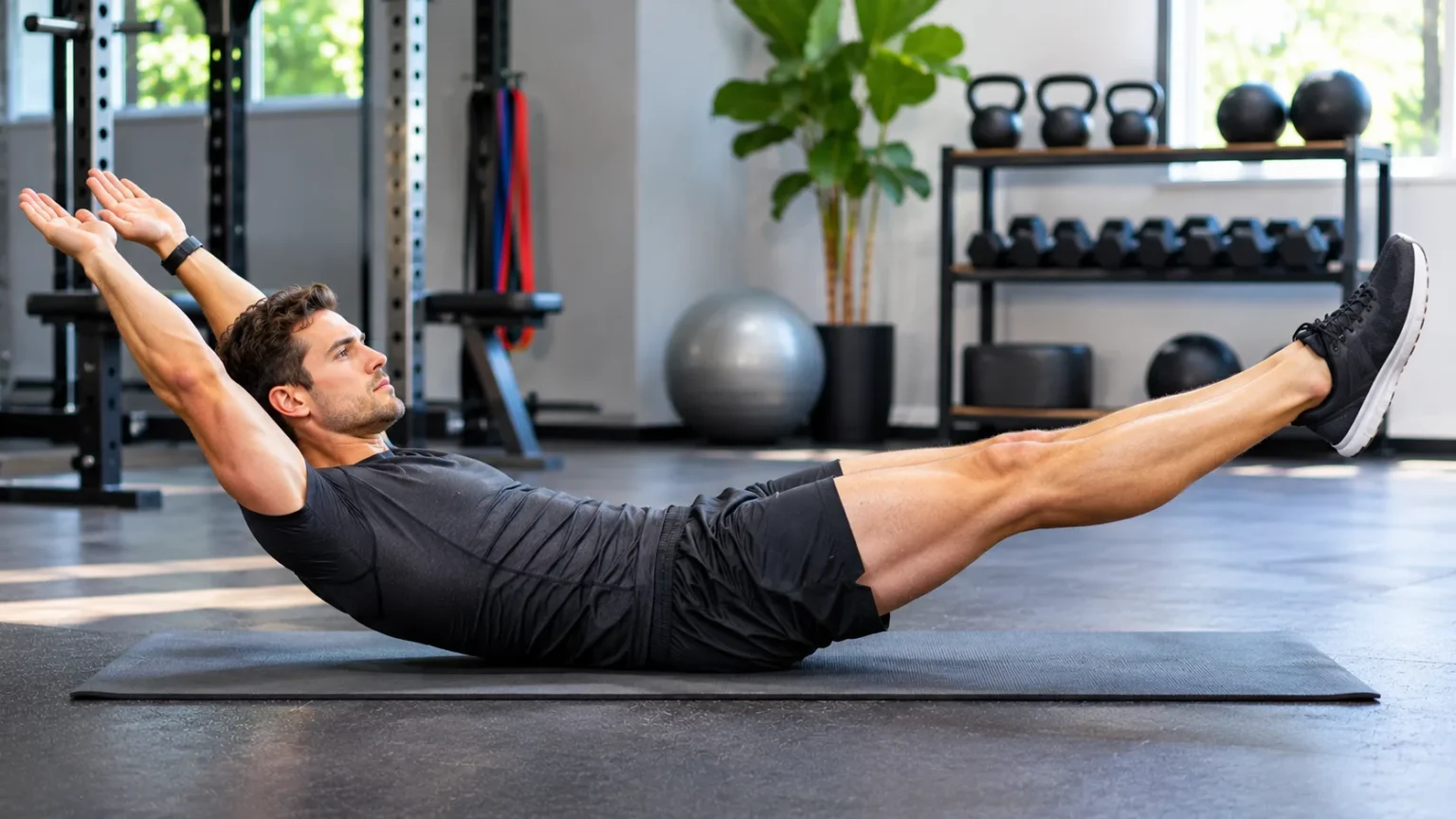

The hollow body exercise is a popular core-strengthening movement used in gymnastics, Pilates-inspired workouts, and general fitness training. It may look simple because you perform it while lying on the floor, but maintaining the correct position requires considerable abdominal control. This exercise challenges your ability to keep the trunk stable while supporting the weight of your arms and legs.
Understanding how the hollow body position works can help you develop better movement control and improve your core training routine. Whether you are a beginner learning basic abdominal exercises or an experienced athlete exploring advanced movements, the exercise offers several useful variations. This guide explains proper hollow body form, muscles worked, benefits, mistakes to avoid, and practical training tips.
What Is a Hollow Body Exercise?
The hollow body exercise is an isometric core movement performed while lying on your back and maintaining a slightly curved body position. The arms and legs are usually raised above the floor while the abdominal muscles stabilize the trunk. This creates a challenging position that requires muscular tension without repeated spinal movement.
The exercise is often called a hollow body hold because the goal is to maintain the position for a controlled period. Unlike crunches, which involve repeated bending of the upper body, hollow holds emphasize sustained abdominal activation. The muscles work to prevent excessive lower-back arching as the limbs extend away from the torso.
Hollow body training is commonly associated with gymnastics because it helps athletes maintain controlled positions during different skills. However, the movement is not limited to gymnasts or advanced exercisers. Beginners can perform modified versions with bent knees or supported arms to develop strength gradually.
Understanding the Hollow Body Position
The hollow body position involves keeping the trunk controlled while extending the arms and legs away from the center of the body. The pelvis is gently tilted backward to reduce excessive lower-back arching. The abdominal muscles remain active throughout the hold to maintain a stable position.
In the traditional version, the shoulders and legs are lifted slightly above the floor. The arms may extend overhead, creating a longer body position that increases the challenge. The head and neck should remain comfortable rather than being pulled forward through unnecessary tension.
The distance between the limbs and the floor influences the exercise difficulty. Lowering the legs usually increases the demand on the abdominal muscles because the body must resist a greater extension force. Beginners can reduce this challenge by keeping their knees bent or positioning the arms closer to the torso.
What Muscles Does the Hollow Body Work?
The hollow body exercise primarily challenges the rectus abdominis, transverse abdominis, and abdominal obliques. These muscles help stabilize the trunk and control pelvic positioning throughout the hold. Their combined activity prevents the lower back from arching excessively as the arms and legs move away from the body.
The rectus abdominis contributes to maintaining the slightly curved trunk position. The transverse abdominis and obliques support abdominal tension and help control unwanted movement. Although these muscles have different anatomical functions, they work together during the exercise rather than operating independently.
Hip flexors also contribute because they help maintain the raised leg position. Depending on the arm position, shoulder muscles may become involved as well. The hollow body is therefore a coordinated exercise that challenges several muscles while placing particular emphasis on abdominal stability.
How to Do a Hollow Body Hold Correctly
Begin by lying on your back on a comfortable exercise mat with your knees bent and feet resting on the floor. Gently engage your abdominal muscles and tilt your pelvis backward until your lower back feels comfortably supported. Keep your breathing steady as you prepare to lift your limbs.
Raise your shoulders slightly from the floor while maintaining a comfortable head and neck position. Lift your legs and gradually extend them only as far as you can maintain trunk control. Your arms can remain beside your body initially or extend overhead when the movement becomes more manageable.
Hold the position briefly while breathing naturally and keeping your lower back from arching excessively. If your trunk begins to lose control, bend your knees or raise your legs higher. Return to the floor slowly and rest before attempting another controlled repetition.
Why Proper Hollow Body Form Matters
Proper technique helps ensure that the abdominal muscles provide the intended stabilization during the exercise. When the legs extend too far, the lower back may begin arching away from the floor. This can make the hold uncomfortable and reduce your ability to maintain a controlled position.
The hollow body position should feel challenging in the abdominal muscles without causing sharp pain. Neck tension may occur when the head is lifted too aggressively or the chin is forced toward the chest. Keeping the neck comfortable and adjusting the shoulder position can help reduce unnecessary strain.
Maintaining steady breathing is another important part of correct technique. Some people hold their breath when the exercise becomes difficult, but this is not necessary for effective training. A manageable variation allows you to keep the abdominal muscles active while breathing and maintaining control.
Key Benefits of Hollow Body Exercises
One important benefit of hollow body exercises is improved abdominal strength and endurance. The sustained hold challenges the core muscles to maintain tension over time. With consistent practice and suitable progression, this can improve your ability to control the trunk during other exercises and physical activities.
Hollow body holds also develop awareness of pelvic and spinal positioning. Learning to resist excessive extension helps build coordination between the abdominal muscles and moving limbs. This skill is useful in many fitness movements that require a stable trunk while the arms or legs generate force.
Another advantage is that the exercise requires minimal equipment and can be adapted to different abilities. A basic mat is usually enough to begin practicing. Modified variations allow beginners to develop control, while advanced versions provide additional challenges without requiring heavy weights or complicated exercise machines.
How Hollow Body Holds Improve Core Stability
Core stability involves controlling the position and movement of the trunk when internal or external forces act on the body. The hollow body hold challenges this ability by positioning the arms and legs away from the torso. Abdominal muscles must resist the tendency of the lower back to arch.
This type of movement is commonly described as anti-extension training. Instead of repeatedly moving the spine through flexion and extension, the muscles work to maintain a chosen position. The challenge increases as the limbs extend farther away, provided comfortable trunk control can be maintained.
Improved trunk control may support performance in other strength exercises and athletic activities. However, hollow holds train one specific movement pattern rather than every aspect of core stability. A balanced program should also include exercises that challenge rotation, side bending, and movement in different positions.
Hollow Body Exercise for Beginners
Beginners can start with a modified hollow body hold that keeps the knees bent and feet close to the floor. This reduces the leverage created by extended legs and makes the position easier to control. The goal is to learn gentle abdominal activation before attempting the full exercise.
Another beginner variation involves keeping the feet on the floor while lifting the shoulders slightly. You can practice maintaining a comfortable pelvic position and steady breathing. Once this feels manageable, lift one leg at a time or bring both knees into a tabletop position.
Short holds are often more useful than attempting an advanced position immediately. Begin with a manageable duration that allows good technique throughout the exercise. As your strength improves, gradually extend the legs or move the arms overhead to increase the challenge without losing control.
Hollow Body Hold vs. Plank
The hollow body hold and plank both challenge the abdominal muscles through sustained contractions. However, their body positions and mechanical demands differ. Hollow holds are performed on the back, while traditional planks involve supporting body weight through the forearms or hands and feet.
During a plank, the shoulders and other upper-body muscles contribute significantly to maintaining the position. The hollow body exercise places greater emphasis on controlling the relationship between the trunk and extended limbs. Both movements challenge the abdominal muscles to resist excessive spinal extension.
Neither exercise is automatically better for everyone because training goals and physical abilities differ. Some people find modified hollow holds easier to perform, while others prefer supported planks. Including both exercises can provide useful variety within a core routine that emphasizes strength and controlled movement.
Hollow Body Hold vs. Dead Bug Exercise
Hollow body holds and dead bugs are both floor-based abdominal exercises that challenge trunk stability. However, the dead bug involves controlled movement of the arms and legs while the torso remains relatively stable. The hollow body hold emphasizes maintaining a more demanding stationary position.
Dead bugs are often easier to modify because the limbs can move through a smaller range. Beginners may start with heel taps or alternating arm movements before progressing to full dead bugs. Hollow holds can create a stronger sustained challenge when both legs are extended away from the body.
Both exercises can support abdominal control and coordination when performed correctly. Dead bugs provide practice stabilizing the trunk during limb movement, while hollow holds emphasize sustained muscular tension. Combining suitable variations may help develop a broader range of core training abilities.
Hollow Body Rocks: An Advanced Variation
Hollow body rocks are a progression of the traditional hollow body hold. Instead of remaining stationary, the exerciser gently rocks forward and backward while maintaining the curved body position. The movement increases the coordination challenge and requires consistent abdominal control.
To perform hollow rocks, begin by establishing a comfortable hollow hold with the trunk stable. Small controlled rocking movements are then introduced without allowing the lower back to arch excessively. The movement should come from shifting the body as a unit rather than repeatedly bending at the hips.
This variation is more demanding than a stationary hold and may not be appropriate for beginners. People should first develop sufficient strength and confidence with basic hollow positions. If rocking causes discomfort in the back or neck, returning to a controlled stationary variation is a sensible choice.
Hollow Body Hold Variations to Try
A tuck hollow hold is one of the easiest variations because both knees remain bent toward the torso. Keeping the legs close reduces the demand on the abdominal muscles. This version can help beginners focus on breathing, pelvic control, and maintaining a comfortable position.
A single-leg hollow hold provides an intermediate challenge by extending one leg while keeping the other knee bent. The position increases the load gradually without requiring both legs to remain straight. Alternating legs between controlled holds can also introduce useful variety.
The full hollow body hold involves extending both legs while the arms reach overhead. This longer position creates greater demands on abdominal strength and control. It should only be attempted when easier variations can be performed comfortably without excessive back arching or unnecessary neck tension.
How Long Should You Hold a Hollow Body Position?
The ideal duration of a hollow body hold depends on your strength, technique, and chosen variation. Beginners may find that brief holds of around five to ten seconds provide enough challenge. Maintaining a controlled position is more important than reaching a specific time target.
As the exercise becomes easier, hold duration can increase gradually according to your ability. Some experienced exercisers may maintain the position for longer periods, but additional time is not always necessary. Increasing difficulty through limb positioning can provide another progression option.
Rest between holds allows the abdominal muscles to recover and helps maintain movement quality. If the lower back begins arching or breathing becomes difficult, end the hold and choose an easier version. Consistent, controlled practice usually provides a more useful training stimulus than repeatedly attempting maximum-duration holds.
How Often Should You Practice Hollow Body Holds?
Hollow body holds can be included in regular core training routines without requiring a separate workout session. Some people perform them during warm-ups, while others use them as part of dedicated abdominal training. The appropriate frequency depends on exercise intensity and overall training demands.
Beginners may benefit from practicing manageable variations several times each week to improve familiarity with the position. Short sessions can help develop coordination without creating unnecessary fatigue. More challenging holds may require additional recovery, particularly when combined with demanding strength exercises.
Training consistency is generally more useful than performing the same difficult exercise every day. Alternating between different core movements can provide varied challenges and support recovery. Adjust your schedule according to comfort, progress, and the other physical activities included in your routine.
Common Hollow Body Mistakes to Avoid
One common mistake is extending the legs too low before developing enough abdominal control. This often causes the lower back to arch and makes the position difficult to maintain. Keeping the knees bent or raising the legs higher can help restore a comfortable, stable position.
Another mistake involves pulling the head forward or creating excessive tension in the neck. The upper body should remain controlled without forcing the chin tightly toward the chest. If the neck becomes uncomfortable, modify the shoulder position or practice a beginner variation with the head supported.
Some people also hold their breath while attempting longer hollow body holds. This can create unnecessary strain and make the exercise harder to sustain comfortably. Choose a level of difficulty that allows steady breathing and controlled muscular effort throughout each repetition.
Can Hollow Body Holds Help With Lower Back Strength?
Hollow body holds primarily challenge the abdominal muscles rather than directly strengthening the lower-back extensors. However, they develop trunk control that may complement other exercises supporting the spine. Their anti-extension emphasis trains the abdominal muscles to resist unwanted arching during selected movements.
This type of training may be useful within a broader core strengthening program. Exercises targeting the back, hips, and abdominal muscles can work together to support general movement capacity. No single exercise is necessary for everyone, and stronger abdominal muscles do not guarantee freedom from back pain.
People with persistent lower-back discomfort should avoid assuming hollow holds are automatically appropriate. Some conditions may become more uncomfortable during sustained abdominal positions. A physical therapist can help determine whether the movement should be modified, replaced, or included in an individualized rehabilitation program.
Can Hollow Body Exercises Improve Gymnastics Performance?
The hollow body position is commonly taught in gymnastics because it encourages coordinated tension through the trunk and limbs. Athletes use related body positions during floor skills, hanging exercises, and certain apparatus movements. Learning to maintain a controlled trunk can support the development of more complex movement patterns.
Gymnastics skills require precise coordination between the shoulders, hips, and abdominal muscles. Hollow body training provides one way to practice maintaining body alignment under muscular tension. However, successful performance also depends on technique, flexibility, strength, and sport-specific instruction.
Athletes may progress from stationary hollow holds to carefully supervised movements that use similar body positions. These progressions should match their training level and skill development. Advanced gymnastics exercises involve additional risks and should be learned with qualified coaching rather than attempted solely after mastering a basic hollow hold.
Can Hollow Body Holds Build Abdominal Muscles?
Hollow body holds can contribute to abdominal muscle development because they create sustained muscular tension. The rectus abdominis, obliques, and other core muscles respond to appropriately challenging resistance over time. However, results depend on training consistency, intensity, recovery, and individual physical characteristics.
Isometric exercises can support strength and muscular endurance, but they do not challenge the muscles through every possible range of motion. Dynamic abdominal movements may provide additional training benefits. A balanced program can include both static holds and controlled movement exercises.
The benefits of hollow body training are not limited to visible muscle changes. Improved coordination, strength, and movement control are valuable outcomes regardless of appearance. Focusing on comfortable progression and exercise performance provides a practical way to evaluate improvements over time.
Who Should Modify or Avoid Hollow Body Exercises?
Hollow body exercises may require modification for people experiencing lower-back, hip, or neck discomfort. The extended limb position creates substantial demands on abdominal and hip flexor muscles. A shortened range or supported variation may be more comfortable when the full exercise feels difficult.
People recovering from surgery, significant injury, or certain medical conditions should follow appropriate professional guidance before performing demanding abdominal holds. Pregnancy and postpartum recovery may also require individualized exercise choices. The most suitable version depends on current abilities, symptoms, and any medical restrictions.
Stop the exercise if you experience sharp pain, dizziness, or unusual symptoms. Persistent discomfort should be evaluated rather than repeatedly ignored. Choosing a manageable position and progressing gradually helps make hollow body training safer and more useful within a regular fitness routine.
Tips to Improve Your Hollow Body Hold
Improving your hollow body hold begins with mastering the easiest variation that challenges your abdominal muscles comfortably. Focus on keeping the trunk stable while maintaining steady breathing. Practicing a consistent starting position creates a foundation for gradually extending the limbs.
Another useful tip is to increase difficulty through small adjustments rather than changing several things at once. For example, extend one leg before attempting both, or move the arms overhead while keeping the knees bent. These progressions help identify which positions you can control confidently.
Include hollow body exercises alongside other suitable core and strength movements. Planks, dead bugs, and controlled resistance exercises challenge the trunk in different ways. This variety supports balanced development while preventing excessive reliance on one movement pattern.
Conclusion
The hollow body exercise is a practical core-strengthening movement that emphasizes abdominal stability and controlled body positioning. It challenges the rectus abdominis, obliques, transverse abdominis, and supporting muscles through a sustained hold. Its connection to gymnastics and general fitness makes it useful for developing trunk control and muscular endurance.
Learning proper technique is essential because the exercise becomes more demanding as the arms and legs extend away from the body. Beginners can start with tucked positions and gradually progress toward the full hollow hold. Comfortable spinal positioning, steady breathing, and appropriate difficulty are more important than maintaining the longest possible hold.
When included in a balanced training program, hollow body exercises can contribute to abdominal strength and movement coordination. Choosing suitable variations helps make the exercise accessible to different fitness levels. With consistent practice and gradual progression, the hollow body hold can become a useful addition to regular core workouts.
Frequently Asked Questions
What is a hollow body exercise?
A hollow body exercise is an isometric core movement performed while lying on your back. It involves raising the shoulders and legs while maintaining abdominal tension and controlling the position of the lower back.
What muscles does the hollow body hold work?
The hollow body hold primarily works the rectus abdominis, transverse abdominis, and obliques. Hip flexors and certain shoulder muscles also contribute to maintaining the position.
How long should beginners hold a hollow body position?
Beginners can start with approximately five to ten seconds using a comfortable modified position. Hold duration can increase gradually as abdominal strength and movement control improve.
Are hollow body holds better than planks?
Neither exercise is universally better. Hollow holds challenge abdominal control in a supine position, while planks involve supporting body weight. Both can contribute to a balanced core training routine.
Can I do hollow body exercises every day?
Easy variations may be practiced frequently, but demanding holds require appropriate recovery. Training frequency should reflect your fitness level, exercise intensity, and overall workout schedule rather than following a fixed daily requirement.