
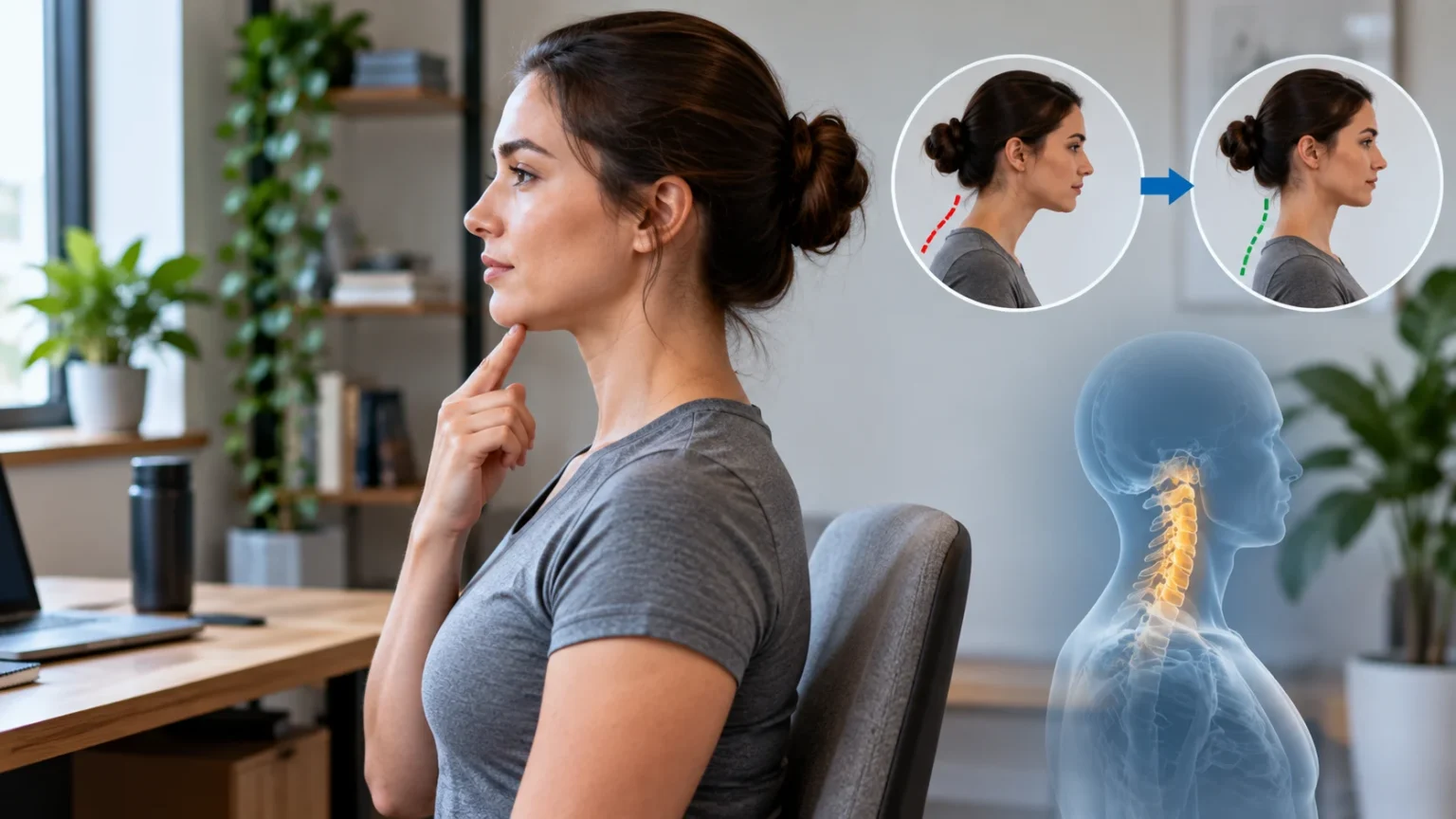

The chin tuck is a simple neck exercise commonly used to improve cervical posture, encourage better head alignment, and strengthen the deep muscles at the front of the neck. It requires no special equipment and can be performed while sitting, standing, or lying down. Because the movement is small, correct technique matters more than how far you move your head.
Many people use chin tucks to counter forward-head posture caused by long periods at a computer, phone, or desk. The exercise may also be included in rehabilitation programs for certain types of neck discomfort, although it is not appropriate for every condition. Understanding proper form, benefits, mistakes, and safety considerations can help you perform the movement more effectively.
What Is a Chin Tuck?
A chin tuck is a controlled movement that gently draws the head backward while keeping the eyes level. Instead of tilting the chin downward toward the chest, you slide the head straight back as though trying to create a temporary double chin. This action encourages a more neutral position between the head and cervical spine.
The exercise primarily targets the deep neck flexor muscles, which help stabilize the cervical spine and support proper head positioning. These muscles can become less active when people repeatedly hold their head forward for long periods. Chin tucks provide a simple way to practice bringing the head back over the shoulders without aggressive stretching.
The movement is sometimes called cervical retraction because the head moves backward relative to the body. It is often used in posture training, physical therapy, and home exercise routines. However, it should remain gentle and controlled, particularly if you already have neck pain, nerve symptoms, dizziness, or a recent injury.
How to Do a Chin Tuck Correctly
Begin in a comfortable seated or standing position with your shoulders relaxed and your eyes looking straight ahead. Keep your mouth closed naturally and avoid lifting or dropping your chin. Imagine that the top of your head is moving upward while your head stays balanced over your spine.
Slowly draw your head straight backward without tipping it forward or looking down. You should feel a mild lengthening sensation at the back of the neck and gentle activation at the front. Hold the position briefly, then return to your normal starting posture without pushing the head forward.
The movement should be small, usually only enough to create a subtle double-chin appearance. Avoid forcing the head backward as far as possible because excessive pressure can increase discomfort. If the exercise causes sharp pain, significant dizziness, new numbness, or radiating symptoms, stop and consider seeking professional guidance before continuing.
What Muscles Do Chin Tucks Work?
Chin tucks mainly activate the deep cervical flexor muscles located toward the front of the neck. These include muscles such as the longus colli and longus capitis, which contribute to stability and control of the cervical spine. They work differently from larger superficial neck muscles that may dominate when posture becomes inefficient.
The exercise can also influence how the muscles at the back of the neck behave. When the head stays far forward, upper cervical muscles may remain shortened or overworked for long periods. Bringing the head gently backward can reduce that exaggerated position and encourage a more balanced relationship between the front and back of the neck.
Chin tucks do not directly strengthen every neck, shoulder, or upper-back muscle. They work best as one part of a broader program that may include thoracic mobility, shoulder strengthening, regular movement, and workstation adjustments. Relying on a single exercise is usually less effective than addressing the overall movement and posture habits contributing to discomfort.
Benefits of Chin Tucks
One potential benefit of chin tucks is improved awareness of head position. Many people do not notice when their head gradually moves forward during computer work, driving, or phone use. Practicing cervical retraction can help you recognize a more neutral position and make small postural corrections throughout the day.
Chin tucks may also help strengthen and retrain the deep neck flexors. Better control of these muscles can support cervical stability and reduce excessive reliance on larger superficial muscles. This may be useful in rehabilitation programs where posture, muscle endurance, and movement control are contributing factors in mechanical neck discomfort.
Another benefit is convenience. The exercise requires no equipment and can be performed almost anywhere, making it easy to include during short work breaks or a rehabilitation routine. However, benefits depend on correct technique and the underlying cause of symptoms, so chin tucks should not be treated as a universal solution for every type of neck pain.
Chin Tucks for Forward-Head Posture
Forward-head posture occurs when the head sits farther in front of the shoulders than a neutral position would typically require. This can happen during prolonged computer work, phone use, reading, or other activities where the head gradually moves forward. The position itself is not always painful, but holding it for long periods may contribute to muscle fatigue.
Chin tucks can help people practice moving the head backward without excessively extending or flexing the neck. Over time, this can improve awareness of cervical alignment and make a neutral position feel more familiar. The goal is not to hold a rigid posture all day but to reduce prolonged strain by varying positions more frequently.
Posture correction should also include changes to the environment. Raise screens closer to eye level, support the forearms, and avoid leaning toward the monitor for extended periods. Regular movement breaks often matter more than trying to maintain a single “perfect” posture, because even good alignment can become uncomfortable when held continuously.
Chin Tucks for Neck and Shoulder Discomfort
Some people use chin tucks when experiencing mild muscular neck or upper-shoulder discomfort related to prolonged sitting and poor movement habits. The exercise may help by reducing an exaggerated forward-head position and encouraging more balanced neck muscle activity. Gentle movement can sometimes feel more comfortable than remaining completely still for long periods.
However, shoulder and arm symptoms are not always caused by posture or tight muscles. Tingling, burning, numbness, or weakness may indicate nerve involvement, and these symptoms deserve more caution. If you are experiencing possible pinched nerve symptoms, avoid assuming that chin tucks alone will correct the underlying problem.
A physical therapist or other qualified clinician can determine whether cervical retraction is appropriate for your specific symptoms. Some people improve with the movement, while others may find that certain neck positions worsen radiating pain. Pay attention to how your symptoms respond rather than forcing an exercise simply because it is commonly recommended online.
Common Chin Tuck Mistakes to Avoid
One of the most common mistakes is looking downward instead of moving the head backward. Dropping the chin toward the chest creates neck flexion rather than true cervical retraction. Keep your eyes level and imagine your head sliding horizontally backward while the rest of your body remains relaxed and still.
Another mistake is forcing the movement too aggressively. A chin tuck should feel controlled and relatively gentle, not like you are trying to push your skull as far backward as possible. Excessive force can tighten the jaw, strain superficial neck muscles, or create discomfort that defeats the purpose of the exercise.
People also sometimes raise their shoulders, hold their breath, or stiffen the upper body during the movement. Try to keep your shoulders relaxed and breathe normally throughout each repetition. If you need to tense your whole body to perform a chin tuck, reduce the range and focus on a smaller, smoother movement.
How Many Chin Tucks Should You Do?
There is no single perfect repetition number for everyone because exercise volume depends on your symptoms, goals, and overall rehabilitation plan. Beginners often benefit from starting with a small number of comfortable repetitions rather than performing large sets immediately. Quality of movement matters more than accumulating as many repetitions as possible.
You might begin with several gentle repetitions and hold each position for a few seconds if it feels comfortable. The movement should remain smooth and should not produce increasing pain, dizziness, tingling, or weakness. If symptoms become stronger as repetitions continue, stop rather than assuming discomfort means the exercise is working.
People using chin tucks as part of physical therapy should follow the dosage recommended by their clinician. A therapist may adjust repetitions, hold times, or exercise variations according to strength and symptom response. More exercise is not automatically better, particularly when the neck is already irritated or recovering from an injury.
Chin Tuck Variations You Can Try
The seated chin tuck is usually the easiest variation because you can perform it almost anywhere. Sit upright with your feet supported, relax your shoulders, and slide your head gently backward. A wall or chair back can provide a useful reference, although you should not force the head aggressively against the surface.
A lying chin tuck can make it easier to focus on deep neck muscle activation without worrying about upper-body posture. Lie comfortably on your back with your head supported if needed, then gently nod or retract the chin according to the exercise you have been given. Keep the movement small and avoid lifting your entire head unless specifically instructed.
More advanced rehabilitation programs may combine chin tucks with resistance, arm movements, or postural exercises. These variations should generally be introduced only after the basic movement feels comfortable and controlled. Adding difficulty too early can encourage compensation from larger muscles and reduce the benefit of practicing precise cervical control.
When Should You Avoid Chin Tucks?
Avoid pushing through the exercise if it causes sharp pain, significant dizziness, worsening headaches, or new neurological symptoms. Increasing numbness, tingling, weakness, or pain traveling farther down the arm can indicate that the movement is aggravating sensitive structures. Stop and seek appropriate assessment rather than repeatedly testing the painful position.
Extra caution is also appropriate after a recent accident, neck trauma, surgery, or known cervical spine condition. The safest exercise choice depends on the structures involved and the stage of recovery. Generic online exercises cannot account for fractures, significant disc problems, instability, or other conditions that may require individualized medical guidance.
Seek prompt medical attention for rapidly worsening weakness, balance problems, difficulty walking, loss of coordination, or neurological symptoms affecting multiple limbs. Sudden severe headache, facial weakness, speech changes, or other emergency symptoms should also be evaluated immediately. These are not situations where a home posture exercise should be used as the main response.
Tips for Getting Better Results From Chin Tucks
Focus on consistency and technique instead of force. A few well-controlled repetitions performed regularly are usually more useful than aggressive movements completed only occasionally. Use a mirror at first if needed to confirm that your head is sliding backward rather than tilting down toward your chest.
Combine the exercise with better movement habits throughout the day. Change positions regularly, avoid staying hunched over a phone for long periods, and take short breaks from computer work. Chin tucks may reinforce better alignment, but they cannot fully compensate for hours of uninterrupted sitting in the same position.
Finally, treat your symptoms as feedback. If the exercise gradually feels easier and does not aggravate discomfort, it may be appropriate to continue as part of your routine. If pain consistently worsens or neurological symptoms appear, stop and seek professional advice so the underlying problem can be assessed before you continue exercising.
Conclusion
Chin tucks are a simple exercise designed to encourage cervical retraction, activate the deep neck flexors, and improve awareness of head positioning. They can be useful for people who spend long periods at desks, computers, or phones and want to practice more balanced neck alignment. Correct form is more important than performing a large movement.
To perform a chin tuck properly, keep your eyes level and slide your head straight backward without dropping your chin toward your chest. Keep your shoulders relaxed and avoid forcing the range. Combining the exercise with regular movement, workstation adjustments, and broader neck and upper-back strengthening may provide better results than relying on chin tucks alone.
Chin tucks are not appropriate for every type of neck, shoulder, or nerve problem. Stop if the movement causes sharp pain, worsening radiating symptoms, weakness, or significant dizziness. Persistent or neurological symptoms should be evaluated by a qualified healthcare professional so you can determine whether the exercise fits your specific condition.
FAQs About Chin Tucks
What are chin tucks good for?
Chin tucks can help improve awareness of head alignment and activate the deep neck flexor muscles. They are commonly used in posture training and some rehabilitation programs for mechanical neck discomfort.
How do I know if I am doing a chin tuck correctly?
Your head should slide straight backward while your eyes remain level. You may notice a temporary double chin and mild stretching at the back of your neck without forceful pain.
How often should I do chin tucks?
Frequency depends on your goals and symptoms. Begin with a small number of comfortable repetitions and focus on technique; if you are in rehabilitation, follow the specific guidance provided by your clinician.
Can chin tucks help forward-head posture?
Chin tucks can help you practice bringing the head back toward a neutral position and strengthen deep neck muscles. They work best alongside movement breaks, workstation improvements, and broader postural exercises.
Can chin tucks make neck pain worse?
Yes, certain neck or nerve conditions may be irritated by cervical retraction. Stop if chin tucks increase radiating pain, numbness, tingling, weakness, dizziness, or other concerning symptoms, and seek professional guidance.