
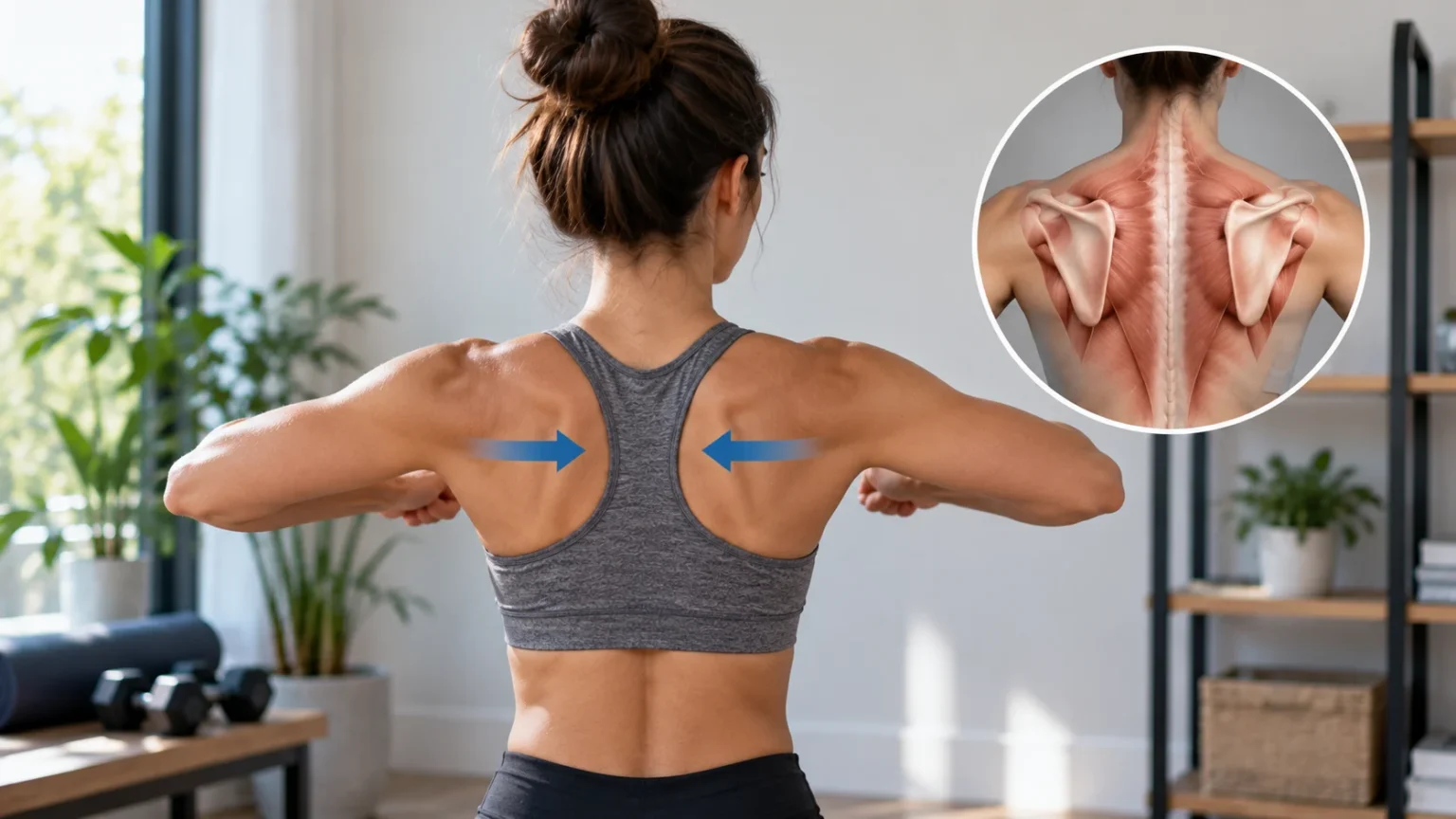

Scapular squeezes are simple exercises designed to improve shoulder blade control, upper-back strength, and posture awareness. They involve gently drawing the shoulder blades toward each other without shrugging the shoulders or arching the lower back. The movement may look easy, but performing it correctly can help activate muscles that support the shoulders, neck, and upper spine.
These exercises are commonly included in posture routines, rehabilitation programs, warm-ups, and desk-break exercises. Scapular squeezes can be useful for people who spend long periods sitting or working at a computer, but they are not a cure for every type of shoulder or upper-back discomfort. Understanding proper technique and purpose makes the exercise much more effective.
What Are Scapular Squeezes?
Scapular squeezes are controlled movements that bring the shoulder blades, or scapulae, gently toward each other. The movement is also known as scapular retraction because the shoulder blades move backward toward the spine. Unlike a rowing exercise, the arms do not need to move significantly, so the focus remains on controlling the shoulder blades.
During a proper scapular squeeze, the shoulders should stay relaxed and away from the ears. You should feel mild muscular work between the shoulder blades rather than strong tension through the neck. The movement should be smooth and controlled, with no forceful pinching or exaggerated arching through the upper or lower back.
The exercise can be performed while standing, sitting, or lying down depending on the situation. It requires no equipment for the basic version, making it easy to include throughout the day. Resistance bands can later be added when someone needs a greater strengthening challenge rather than simply practicing shoulder blade awareness and control.
What Muscles Do Scapular Squeezes Work?
Scapular squeezes mainly activate muscles that help retract and stabilize the shoulder blades. The rhomboid muscles, located between the spine and shoulder blades, play an important role in this movement. The middle fibers of the trapezius also help draw the scapulae backward while supporting controlled positioning of the upper back.
Other muscles contribute to shoulder stability even if they are not the primary movers. The lower trapezius, rotator cuff muscles, and muscles around the chest and upper back all influence how the shoulder blades move. Good scapular control depends on several muscle groups working together rather than one isolated muscle becoming extremely strong.
The exercise should not feel dominated by the upper trapezius near the neck. If your shoulders rise toward your ears during each repetition, you may be shrugging instead of retracting the scapulae. Using less effort and slowing the movement can help shift the focus toward the muscles between the shoulder blades.
How to Do Scapular Squeezes Correctly
Begin by sitting or standing tall with your arms relaxed by your sides. Keep your chest comfortable rather than forcing it upward, and allow your shoulders to settle naturally. Gently draw your shoulder blades backward as if you were trying to bring them slightly closer together behind your upper back.
Hold the squeezed position for about three to five seconds while breathing normally. Avoid pulling the shoulders downward aggressively or arching your lower back to create more movement. The contraction should feel moderate rather than maximal, because the purpose is controlled activation rather than squeezing as hard as possible.
Slowly release the shoulder blades to the starting position and repeat. Beginners can try 8 to 15 repetitions while focusing on smooth movement and relaxed breathing. If the neck begins to tighten or your posture changes noticeably, reduce the effort and make each movement smaller until you can maintain good form.
What Are the Benefits of Scapular Squeezes?
One benefit of scapular squeezes is improved awareness of shoulder blade position. People who spend many hours sitting may gradually lose awareness of how their shoulders are positioned. Practicing controlled retraction can help them recognize the difference between relaxed alignment, rounded shoulders, and excessive tension around the neck.
Scapular squeezes can also strengthen upper-back muscles when performed consistently and progressed appropriately. Better muscular endurance may make it easier to maintain comfortable positions during desk work, lifting, or exercise. However, scapular squeezes alone are usually not enough to build substantial upper-body strength without other pulling and resistance exercises.
The exercise may also serve as a useful warm-up before rows, presses, or other upper-body movements. Practicing shoulder blade control first can help some people understand how the scapulae should move during larger exercises. This improved coordination can support more efficient movement and reduce unnecessary compensation through the neck or lower back.
Can Scapular Squeezes Improve Posture?
Scapular squeezes can support posture by strengthening muscles that help control the shoulder blades. People who frequently sit with rounded shoulders may find that these muscles fatigue easily. Regular practice can improve endurance and make it easier to return to a more comfortable upright position throughout the day.
However, posture is not about holding one perfect position continuously. Even a technically good position can become uncomfortable if maintained for several hours without movement. Changing positions, standing regularly, walking, adjusting your desk, and moving your shoulders are usually more helpful than trying to remain rigidly upright all day.
Scapular squeezes work best as one part of a broader posture routine. Chest mobility, thoracic movement, back strengthening, and workstation changes may also be important. If the same habits continue placing the upper back under prolonged stress, performing a few shoulder blade squeezes may provide temporary relief without addressing the complete problem.
How Often Should You Do Scapular Squeezes?
Scapular squeezes can usually be performed several times throughout the day because the basic version uses very little resistance. For example, people working at desks may perform a short set every few hours. The goal is to encourage movement and muscle activation without creating excessive fatigue or soreness.
A simple starting routine is one or two sets of 10 to 15 repetitions. Hold each squeeze briefly and keep the movement controlled. If you are using resistance bands or combining scapular squeezes with other upper-back exercises, you may need more recovery time because the muscles are working against greater resistance.
Doing more repetitions is not automatically better. Excessive squeezing can create unnecessary tension, especially if you begin shrugging or forcing the shoulder blades together. Quality matters more than volume, so stop when your technique changes and gradually increase exercise difficulty only when the basic movement feels easy and comfortable.
Common Scapular Squeeze Mistakes
One common mistake is shrugging the shoulders upward while trying to squeeze the shoulder blades together. This often causes tension through the neck and upper trapezius instead of effectively targeting the middle back. Think about keeping the shoulders relaxed while the shoulder blades move gently backward rather than upward.
Another mistake is pushing the chest forward aggressively and arching the lower back. This can make the movement appear larger without actually improving scapular control. Keep your ribs and pelvis comfortably aligned so the movement comes from the shoulder blades rather than from exaggerating the curve of the spine.
Some people also squeeze as hard as possible on every repetition. Stronger is not always better, particularly when learning coordination. A moderate contraction with normal breathing is usually more useful than a maximal squeeze that causes stiffness, facial tension, or discomfort around the neck and shoulders.
Scapular Squeezes for Shoulder and Upper-Back Discomfort
Scapular squeezes may provide relief when discomfort is related to prolonged sitting, mild muscle fatigue, or reduced upper-back movement. Gentle activation can interrupt long periods of inactivity and encourage the shoulder blades to move through a different position. Some people notice temporary improvements in stiffness after performing several controlled repetitions.
However, not all pain around the shoulder blade comes from weak or tight muscles. Joint problems, nerve irritation, injuries, or other medical conditions can also cause pain in this region. Exercises should not be used to repeatedly push through sharp, worsening, or unexplained symptoms without understanding what is causing them.
It is also worth distinguishing muscle discomfort from skin-related irritation. Redness, itching, swelling, or a visible skin mark may suggest something other than muscular tension, including an earwig bite or another skin reaction. In those cases, shoulder blade exercises would not address the actual source of the discomfort.
Scapular Squeezes vs Rows
Scapular squeezes and rows both involve shoulder blade retraction, but they are not the same exercise. A basic scapular squeeze uses minimal resistance and focuses mainly on learning shoulder blade movement. Rows require pulling resistance toward the body, which places considerably greater demand on the upper-back and arm muscles.
Rows are generally more effective when the goal is building strength and muscle. Resistance bands, dumbbells, cable machines, or other equipment can progressively challenge the rhomboids, trapezius, rear shoulders, and arm muscles. Scapular squeezes may serve as an introduction before progressing to these more demanding movements.
The two exercises can therefore complement each other. Someone learning shoulder control may begin with scapular squeezes and later include rows as strength improves. Even experienced lifters can use squeezes during warm-ups or movement practice while relying on resistance exercises for the majority of their upper-back strengthening work.
How to Progress Scapular Squeezes
Once bodyweight scapular squeezes become easy, resistance bands can provide a simple progression. Hold a light band in front of you and gently pull outward while controlling the shoulder blades. Another option is performing band rows while focusing on finishing each repetition with controlled scapular retraction rather than excessive pulling.
Wall exercises can also increase the challenge. Stand with your back near a wall and practice shoulder blade movement while maintaining comfortable alignment. Wall slides can then be introduced to combine scapular control with overhead arm movement, which requires greater coordination between the shoulder blades, upper back, and shoulder joints.
Progress should depend on control rather than how forcefully you can squeeze. If added resistance makes you shrug, arch the back, or develop pain, return to an easier version. Gradual progression helps the shoulder muscles adapt while reinforcing movement patterns that can transfer more effectively to everyday activities and strength training.
When Should You Avoid Scapular Squeezes?
Avoid or modify scapular squeezes if the exercise produces sharp pain, worsening symptoms, numbness, or tingling. Mild muscular effort between the shoulder blades is normal, but pain spreading into the arm or hand deserves more attention. Continuing to exercise through neurological symptoms may aggravate an underlying problem rather than improve it.
People recovering from shoulder, neck, chest, or upper-back surgery should follow their rehabilitation instructions before beginning these exercises. Movement restrictions can vary considerably depending on the procedure. A physical therapist or surgeon can determine when scapular exercises are appropriate and how much movement or resistance should initially be used.
You should also seek professional guidance if shoulder blade discomfort follows a significant fall, accident, or lifting injury. Persistent weakness, restricted shoulder movement, unexplained swelling, fever, or severe pain are additional reasons for assessment. Scapular squeezes are simple exercises, but they should not replace diagnosis when symptoms suggest something more serious.
Conclusion
Scapular squeezes are simple shoulder blade exercises that focus on controlled scapular retraction. They mainly activate the rhomboids and middle trapezius while helping improve awareness of upper-back and shoulder positioning. Because they require little or no equipment, they can easily be included in desk breaks, warm-ups, and beginner exercise routines.
The key is to perform the movement gently and accurately. Keep your shoulders away from your ears, avoid arching your lower back, breathe normally, and focus on movement between the shoulder blades. As control improves, resistance bands, rows, and other upper-back exercises can provide additional strengthening.
Scapular squeezes can support posture and upper-back endurance, but they are not a solution for every type of shoulder discomfort. Persistent pain, weakness, numbness, or symptoms after an injury should be professionally assessed. Used appropriately, the exercise can be a practical part of a balanced approach to shoulder health and upper-body movement.
FAQs
What are scapular squeezes good for?
Scapular squeezes help improve shoulder blade control and activate the upper-back muscles involved in retraction. They may support posture awareness, warm-ups, rehabilitation exercises, and better upper-back muscular endurance.
How long should you hold a scapular squeeze?
A hold of around three to five seconds works well for many beginners. Keep breathing normally during the hold and release if you develop neck tension, pain, or difficulty maintaining good posture.
How many scapular squeezes should I do?
A common starting point is 8 to 15 repetitions for one or two sets. Focus on smooth, controlled movement instead of performing large numbers of repetitions with poor technique.
Can scapular squeezes fix rounded shoulders?
They may help strengthen muscles involved in shoulder blade positioning, but rounded posture has multiple causes. Movement breaks, chest mobility, upper-back strengthening, and workstation changes may also be needed.
Should scapular squeezes hurt?
No. You may feel gentle muscular effort between the shoulder blades, but sharp pain, numbness, tingling, or worsening symptoms are not normal and should be evaluated before continuing.