
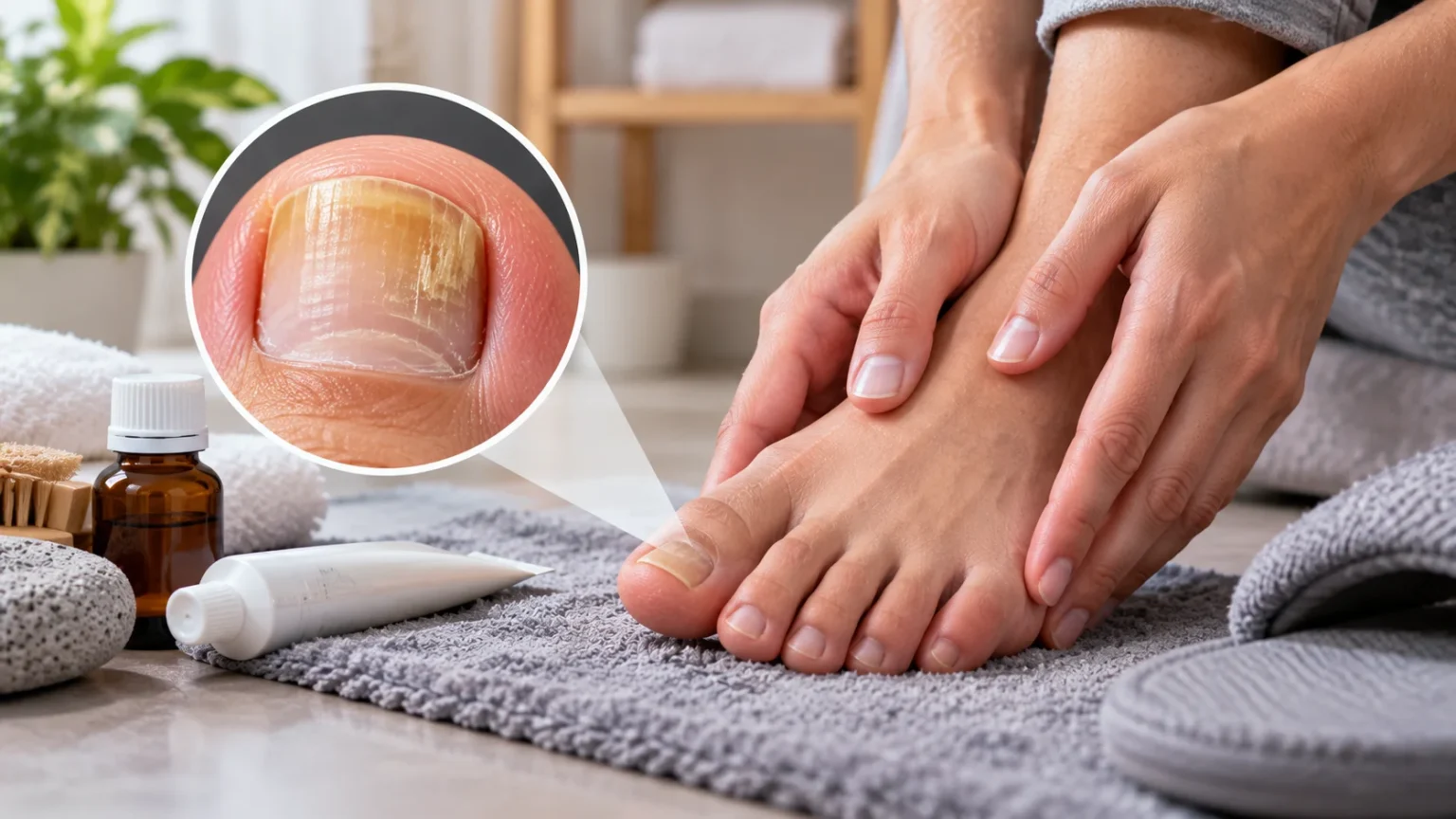

Early-Stage Toenail Fungus: Signs, Pictures & Treatment
Early-stage toenail fungus can be easy to miss because the first changes are often subtle and may affect only a small corner of one nail. You might notice a faint white or yellow spot, slight dullness, mild thickening, or a tiny area where the nail begins separating from the nail bed. Toenail fungus, medically called onychomycosis, usually develops gradually rather than changing the entire nail overnight. Recognizing these early signs matters because smaller infections are generally easier to manage than advanced fungal nail disease. However, nail appearance alone cannot confirm that fungus is responsible. Injuries, psoriasis, bacterial infections, and other nail disorders can create surprisingly similar changes.
Fungal nail infections are common and are especially likely to affect toenails because feet spend long periods inside warm, enclosed footwear where moisture can accumulate. Treatment can take patience because even after the fungus is controlled, the damaged portion of the nail must grow out before the toenail looks normal again. Over-the-counter antifungal products may help certain mild cases, while established or deeper infections often require professional evaluation and prescription treatment. People with diabetes, circulation problems, reduced immunity, or significant foot complications should be more cautious about self-treatment. Understanding the early appearance, possible causes, treatment options, and warning signs can help you make safer decisions.
What Is Early-Stage Toenail Fungus?
Early-stage toenail fungus refers to a fungal infection that has begun affecting part of the nail but has not yet produced the extensive thickening, crumbling, or distortion commonly seen in advanced cases. The infection may begin near the tip, side, or surface of the toenail depending on the organism and type of fungal nail infection involved. At first, the nail may remain mostly normal in shape and thickness. A small discolored patch may be the only visible clue that something has changed. Because early onychomycosis can progress slowly, people sometimes ignore it for months. Recognizing mild changes early can make it easier to seek appropriate treatment before a larger portion of the nail becomes involved.
Most fungal toenail infections are caused by organisms called dermatophytes, although yeasts and other fungi can occasionally be responsible. Dermatophytes also commonly cause athlete’s foot, which is why fungal skin and nail infections may appear together. These organisms feed on keratin, the structural protein found in nails and the outer layer of skin. Once fungus gets beneath or inside the nail, the nail plate can gradually become discolored, thickened, brittle, or separated from the underlying skin. Toenails are more frequently affected than fingernails because shoes can create a dark, warm, and moist environment. Slow toenail growth also means an infection has more time to persist.
Early toenail fungus is usually not severely painful, which is another reason it can go unnoticed. Someone may discover a small yellowish patch while trimming their nails or notice that one toenail no longer looks as clear as the others. Mild texture changes can also appear, including a slightly rough or chalky surface. As the infection progresses, debris may collect beneath the nail and the nail plate may become noticeably thicker. Shoes can eventually press against the enlarged nail and make walking uncomfortable. Addressing suspicious changes while the infection remains limited may reduce the chance that the nail becomes significantly damaged or difficult to manage.
Not every early nail change means fungal infection, so self-diagnosis can be unreliable. Repeated shoe pressure, running injuries, dropping something on a toe, nail polish staining, eczema, psoriasis, and aging can all alter nail color or texture. Some people begin applying antifungal products for months without knowing whether fungus is actually present. This can delay more appropriate care when another condition is causing the abnormal nail. A clinician can examine the pattern and may collect nail material for testing when the diagnosis is uncertain. Confirming the cause becomes especially useful before beginning long courses of prescription treatment or when several nails are involved.
Toenail fungus is rarely an emergency in an otherwise healthy person, but ignoring it can allow infection to spread through more of the affected nail or into neighboring nails. The fungus may also coexist with athlete’s foot, allowing organisms on the surrounding skin to repeatedly reach the nails. Advanced nails can become thick enough to make trimming difficult and may create pressure inside shoes. Cracks or damaged skin around affected toes can be more concerning for people with diabetes or poor circulation. Early recognition is therefore about more than cosmetic appearance. It provides an opportunity to address both the nail infection and the environmental conditions that may be helping fungus survive.
Early Signs of Toenail Fungus and What It Looks Like in Pictures
One of the earliest signs of toenail fungus is a small area of white, yellow, tan, or slightly brown discoloration. In pictures of early fungal nail infections, this may appear as a tiny patch near one edge or underneath the tip of the toenail rather than discoloration of the entire nail. The affected area can look duller or more opaque than healthy surrounding nail tissue. Healthy toenails are generally smooth and relatively uniform, making a new irregular patch easier to notice when comparing neighboring toes. Color alone cannot confirm fungus because nail trauma can produce similar changes. Persistent discoloration that gradually expands deserves more attention than a temporary mark that grows out normally.
Another early visual clue is a subtle change in nail texture. The surface may start looking slightly rough, flaky, powdery, or uneven compared with the same nail on the opposite foot. Certain superficial fungal infections can produce whitish areas on the top of the nail that look almost chalky. In other forms, the visible surface remains fairly smooth while changes develop underneath the outer edge. Photographs taken several weeks apart can sometimes make gradual progression easier to recognize than looking at the nail every day. If the abnormal area continues spreading toward the base of the nail, professional evaluation may be worthwhile. Rapid or dramatic changes are less typical of simple early fungal infection.
Mild thickening can develop as the fungal infection progresses, although early-stage toenail fungus may initially cause very little change in nail thickness. You may notice that nail clippers require slightly more pressure or that one toenail feels firmer and less flexible than before. Keratin and debris can begin accumulating under the nail, giving the edge a cloudy or uneven appearance. Pictures of more established onychomycosis often show dramatic thickening, but an early infection can look considerably less obvious. Comparing the affected nail with your other toenails can help reveal subtle differences. Thickening caused by age, repeated trauma, or skin conditions should still remain part of the possible explanation.
A small amount of nail separation, called onycholysis, can also occur with fungal nail infections. The tip or side of the toenail may begin lifting away from the nail bed, creating a pale, whitish, or yellow area because air enters beneath the nail. Debris may later collect in this space and make the separation more noticeable. Early photographs may show only a narrow area of lifting rather than the extensive separation seen in advanced cases. Avoid aggressively digging underneath the loosened portion because this can damage tissue and potentially introduce additional infection. Nail separation has many causes, so a clinician may need to determine whether fungus, trauma, medication effects, or another condition is responsible.
Pain is usually not the first visible or physical symptom of mild toenail fungus. Early infections may cause no discomfort at all, even when discoloration or texture changes are clearly present. Tenderness becomes more likely as the nail thickens, surrounding tissue becomes irritated, or footwear presses against the altered nail. Redness, warmth, drainage, or rapidly increasing pain around the toe should not automatically be blamed on ordinary toenail fungus because these findings may indicate another problem. Pictures can help people recognize suspicious changes, but photographs cannot identify the organism or reliably distinguish every fungal infection from similar nail disorders. Diagnosis should therefore combine appearance with medical history and, when appropriate, laboratory testing.
What Can Look Like Toenail Fungus?
Toenail trauma is one of the most common problems mistaken for fungal infection. Tight shoes, long-distance running, repeated pressure, or accidentally striking the toe can damage the nail and create discoloration, thickening, or separation. A bruised toenail may develop a red, purple, brown, or black area caused by blood beneath the nail. As the nail grows, the damaged portion often moves toward the tip over time. Fungal discoloration may instead gradually spread or become associated with thickening and debris. However, the two conditions can occur together because repeated trauma can weaken the nail and potentially make fungal infection easier to establish. When the cause is unclear, testing can prevent unnecessary treatment.
Nail psoriasis can also resemble onychomycosis because it may cause thickening, discoloration, crumbling, separation, or buildup beneath the nail. Some people develop tiny pits in the nail surface or yellowish areas sometimes described as oil-drop changes. Psoriasis affecting other parts of the body can provide an important clue, although nail psoriasis may occasionally appear without obvious skin plaques. Fungal infection and psoriasis can also coexist, making appearance alone even less reliable. Treating presumed fungus without recognizing underlying psoriasis may produce disappointing results. A dermatologist or other qualified clinician can evaluate the entire nail pattern and decide whether fungal testing or additional assessment is appropriate.
Normal aging can change toenail appearance without an active infection being present. Toenails may gradually grow more slowly, become thicker, develop ridges, or appear slightly more yellow as people get older. Years of pressure from footwear and repeated minor injuries can contribute to these changes. Because fungal infections also become more common with age, distinguishing normal nail aging from onychomycosis can be difficult. A single mildly thickened nail that has remained unchanged for years may represent something different from a discoloration that is steadily spreading. New or progressive changes deserve more attention, particularly when several nails begin developing similar abnormalities over a relatively short period.
Certain bacterial infections and other microorganisms can alter nail color as well. Greenish nail discoloration, for example, may sometimes be associated with bacterial growth in a space where the nail has separated from the nail bed. This is different from typical dermatophyte toenail fungus and may require a different management approach. Moist environments can encourage multiple types of microorganisms, so keeping affected feet dry remains useful even before a definitive diagnosis is made. Strong odor, drainage, surrounding redness, or significant tenderness may suggest more than a straightforward fungal nail problem. Applying random combinations of antifungal and antibacterial products without knowing the cause can irritate skin and complicate the clinical picture.
Rarely, dark pigmentation under a toenail can represent something much more important than fungus or bruising. A dark streak, irregular brown or black area, pigment extending onto surrounding skin, or unexplained discoloration that does not grow out normally should be medically evaluated. Most dark toenails are not caused by skin cancer, but suspicious pigmentation should not be ignored simply because fungal nail infections are common. This is particularly important when there is no clear history of trauma. Similar caution applies to persistent bleeding, a new nail mass, or progressive destruction of one nail without an obvious explanation. When a nail does not behave like a typical fungal infection, professional examination is safer than continued self-treatment.
Causes, Risk Factors, and How Toenail Fungus Spreads
Toenail fungus develops when fungal organisms reach the nail and find conditions that allow them to survive and multiply. Tiny cracks in the nail, separation from the nail bed, or microscopic skin injuries may provide entry points. Feet are particularly vulnerable because socks and closed shoes can trap heat and moisture for many hours. Public changing rooms, communal showers, swimming areas, and other damp environments may also expose bare feet to fungi. Exposure does not guarantee that someone will develop onychomycosis, because individual susceptibility differs. However, repeated moisture combined with nail damage can create conditions that make infection easier to establish and harder to eliminate.
Athlete’s foot is an important risk factor because the same general group of fungi that infects foot skin can spread toward the toenails. Itchy, peeling, cracked, or scaly skin between the toes may act as an ongoing reservoir of fungal organisms. Treating the nail while ignoring fungal skin infection can therefore make recurrence more likely. People who frequently experience athlete’s foot should pay attention to both their skin and nails. Drying carefully between the toes, changing damp socks, and using appropriate treatment for active athlete’s foot can help reduce fungal burden. Foot hygiene alone cannot cure an established nail infection, but it plays an important supporting role in prevention and treatment.
Age can increase susceptibility to toenail fungus for several reasons. Nails generally grow more slowly with age, and years of minor trauma can produce thicker or less resilient nail plates. Circulation to the feet may also become less efficient in some older adults, while chronic health conditions become more common. Men appear to develop fungal nail infections more often in many populations, although anyone can be affected. Having a family history of frequent fungal nail problems may also suggest increased susceptibility. None of these factors means infection is unavoidable. They simply help explain why two people exposed to similar environments may have very different outcomes.
Certain medical conditions deserve extra attention because they can increase either the likelihood of infection or the consequences of foot problems. Diabetes can affect circulation, sensation, wound healing, and infection risk, making apparently minor foot changes more important. Peripheral vascular disease and immune-suppressing conditions or medications can also affect how the body responds to infection. People with reduced sensation may not notice pressure, cuts, or painful changes as quickly as someone with normal feeling in the feet. This is why aggressive home trimming or scraping can be particularly risky for some individuals. Professional foot or medical care may be more appropriate when underlying health conditions increase the chance of complications.
Toenail fungus can potentially spread from one nail to another and may also pass between people through contaminated personal items or shared environments. Sharing nail clippers, footwear, towels, or socks can therefore create avoidable opportunities for fungal transmission. Nail tools used on an infected nail should be cleaned appropriately before being used elsewhere. Wearing breathable shoes, alternating footwear so it can dry, and changing sweaty socks can make the environment less favorable for fungal growth. In communal wet spaces, protective footwear can reduce direct contact with contaminated floors. These habits cannot guarantee prevention, but they address several practical factors that allow fungal organisms to persist around the feet.
How Toenail Fungus Is Diagnosed
A clinician usually begins by examining the affected toenail and asking how long the changes have been present. They may want to know whether discoloration began after an injury, whether athlete’s foot is present, and whether other family members have similar problems. The number of affected nails and the pattern of discoloration can also provide useful clues. Medical history matters because diabetes, immune suppression, psoriasis, circulation problems, and certain medications can change both the diagnosis and treatment plan. Clinicians may also ask about previous antifungal treatments and whether they produced any improvement. Visual examination can suggest onychomycosis, but appearance alone does not always provide enough certainty.
Laboratory testing may be recommended when confirmation is important, particularly before systemic antifungal treatment. A healthcare professional can collect nail clippings, debris from beneath the nail, or scrapings from an affected area. Different testing methods may look for fungal structures, grow organisms in culture, or identify fungal genetic material. Each method has advantages and limitations, and false-negative results can occasionally occur if the sample does not contain enough affected material. Proper sampling therefore matters. Testing can also help distinguish fungal infection from trauma, psoriasis, or other nail disorders. Confirming the diagnosis prevents people from spending months treating a condition that was never fungal in the first place.
The location from which the nail sample is taken can influence whether fungus is detected. The most visibly damaged tip is not always the area containing the most active fungal growth. In certain common infections, viable organisms are more likely to be found closer to where abnormal nail meets relatively healthy nail. Clinicians familiar with nail disorders can choose a useful sampling site after examining the pattern. Patients are generally advised not to aggressively cut away every abnormal area immediately before an appointment if diagnostic testing may be performed. Providing a good sample can make the investigation more informative. The exact testing approach may vary according to available laboratory services and clinical circumstances.
Diagnosis also involves deciding how severe the infection appears to be. A mild case affecting a small portion of one or two nails may be approached differently from disease involving most of several toenails. Nail thickness, involvement near the nail matrix, degree of separation, and presence of athlete’s foot can all affect management decisions. Clinicians also consider whether the person experiences pain, difficulty wearing shoes, or problems trimming the nail. Cosmetic concern is valid, but treatment decisions should balance the likely benefits with the time, cost, and possible side effects involved. Nail fungus often requires months of patience even when appropriate therapy is used consistently.
Someone who has repeatedly treated presumed fungus without improvement should consider whether the diagnosis needs to be revisited. Failure to respond does not always mean the fungal infection is unusually resistant. The original problem may be psoriasis, repeated trauma, another nail disorder, poor medication penetration, inconsistent treatment, or reinfection from untreated skin fungus. Even genuine toenail fungus can take a long time to look better because damaged nail does not instantly become healthy after organisms are controlled. Improvement is often seen as clearer new nail slowly growing from the base. Understanding this timeline can prevent premature switching between products and unnecessary frustration during treatment.
Early-Stage Toenail Fungus Treatment Options
Treatment for early-stage toenail fungus depends on how much of the nail is involved, which nails are affected, medical history, and whether the diagnosis has been confirmed. Mild superficial or limited infections may sometimes be treated with topical antifungal medications designed specifically for the nail. These products are applied repeatedly over many months because medication must reach fungal organisms through or around the nail plate. Regular use matters because occasional application is unlikely to provide the same effect as the prescribed schedule. Some clinicians may also recommend careful thinning or trimming to improve access to the affected area. Home remedies should not replace proven antifungal treatment when the infection is progressing or diagnosis is uncertain.
Prescription topical options may include antifungal solutions or lacquers formulated to penetrate the nail better than ordinary skin creams. Creams used successfully for athlete’s foot generally do not penetrate an intact toenail deeply enough to treat many established nail infections by themselves. However, treating fungal skin around the nail remains important when athlete’s foot is present. Topical nail treatment tends to work best when disease is relatively limited and the nail matrix is not extensively involved. Because toenails grow slowly, treatment commonly continues for many months. People should judge progress by healthy nail growth near the base rather than expecting the discolored portion to immediately become clear.
Oral antifungal medication may be considered when several nails are affected, infection is extensive, the nail is significantly thickened, or topical therapy is unlikely to succeed. Oral medications reach the nail through the bloodstream and generally produce higher cure rates than topical treatment for many common fungal nail infections. They are not appropriate for everyone, however, because health conditions, pregnancy considerations, liver disease, and medication interactions can affect whether systemic treatment is suitable. A healthcare professional can review these factors before prescribing therapy. Some patients may require laboratory assessment depending on the medication and individual health circumstances. Prescription antifungals should always be taken according to professional instructions rather than borrowed or purchased without appropriate medical oversight.
Nail trimming and gentle debridement can support treatment by reducing excessively thickened or loose material. Keeping the nail reasonably short may decrease pressure inside footwear and allow certain topical medications to reach affected areas more effectively. However, cutting deeply beneath the nail or aggressively scraping infected tissue can cause injury. This is particularly risky for people with diabetes, reduced sensation, or poor circulation. A podiatrist or other trained professional can safely thin difficult nails when self-trimming is uncomfortable or unsafe. Removing the entire nail is not routinely necessary for most early fungal infections. Treatment should focus on controlling the organism while allowing healthier nail to gradually replace damaged tissue.
Patience is essential because a toenail grows slowly and may take a year or longer to completely replace itself. Even when antifungal treatment works, the damaged yellow or thickened portion remains visible until it grows far enough to be trimmed away. A narrow band of clearer nail appearing near the cuticle can be an encouraging early sign of successful treatment. Recurrence is also possible because exposure to fungi continues after treatment ends. Managing athlete’s foot, drying footwear, changing socks regularly, and avoiding repeated nail trauma can therefore be as important as the antifungal medication itself. The best treatment plan combines appropriate therapy with practical habits that reduce reinfection.
Prevention, Home Care, and When to See a Doctor
Keeping feet dry is one of the simplest ways to reduce conditions that favor fungal growth. Wash feet regularly and dry them carefully, paying particular attention to the spaces between the toes. Socks should be changed when they become damp from sweat, exercise, or wet weather. Shoes can be rotated so each pair has time to dry before being worn again. Breathable footwear may also reduce prolonged moisture compared with tight shoes that trap heat throughout the day. These habits do not guarantee that toenail fungus will never develop, but they reduce one of the environmental factors that supports both athlete’s foot and fungal nail infection.
Good nail care can reduce trauma that may make toenails more vulnerable. Trim toenails straight across and avoid cutting them excessively short or digging deeply into the corners. Use clean nail clippers and avoid sharing them with other people, particularly when someone in the household has a known fungal infection. If you receive professional pedicures, choose facilities that follow appropriate instrument-cleaning practices. Repeatedly covering an abnormal nail with polish can also make progression harder to notice. Allowing yourself to periodically inspect the nail makes it easier to recognize changes in color, thickness, or separation. Protecting the nail from repeated pressure is especially useful for runners and people who wear safety footwear.
Treating athlete’s foot promptly can help reduce a common source of fungal organisms near the toenails. Symptoms may include itching, peeling, cracking, burning, or scaling between the toes or across the soles. Over-the-counter antifungal skin products can often manage uncomplicated athlete’s foot when used correctly, but persistent or unusual rashes may require medical evaluation. Keeping shared bathroom areas clean and avoiding bare feet in communal changing or shower facilities may further reduce exposure. Household members do not need to become fearful of ordinary contact, but personal foot-care items should not be casually shared. Prevention works best when it addresses both fungal exposure and the warm, moist conditions that encourage growth.
Medical evaluation becomes more important when the nail is painful, increasingly thick, rapidly worsening, or difficult to trim safely. You should also seek professional advice when multiple nails become affected or when repeated treatment produces no improvement. Redness, warmth, swelling, drainage, or worsening tenderness around the toe may indicate an additional infection that requires attention. Unusual dark pigmentation, bleeding, or a persistent abnormal area that does not fit the typical pattern of fungal disease should also be examined. A clinician can determine whether fungal testing or another type of evaluation is needed. Early professional assessment can be particularly useful when the diagnosis remains uncertain after several weeks of observation.
People with diabetes, significant circulation problems, peripheral neuropathy, or weakened immune systems should take toenail and foot changes more seriously. These conditions can increase the consequences of seemingly minor cuts, infections, or pressure injuries. Self-treating with aggressive filing, sharp instruments, or chemicals may create unnecessary damage when sensation or healing is impaired. Regular foot inspection and appropriate professional care can help identify problems before they become difficult to manage. For otherwise healthy people, early toenail fungus is usually manageable rather than dangerous, but successful treatment still requires consistency and patience. Acting on progressive changes early gives you the best opportunity to protect nail health and prevent widespread infection.
Frequently Asked Questions About Early-Stage Toenail Fungus
What does toenail fungus look like in the early stages?
Early toenail fungus may appear as a small white, yellow, tan, or slightly brown patch near the tip or side of the nail. Mild roughness, thickening, dullness, or slight separation from the nail bed may also develop.
Can early toenail fungus go away on its own?
Established fungal nail infections usually do not reliably disappear without addressing the infection and contributing conditions. Because several other nail problems can resemble fungus, persistent changes should be properly identified before long-term treatment.
What is the fastest way to treat early toenail fungus?
There is no instant treatment because toenails grow very slowly. Appropriate topical or oral antifungal therapy depends on the extent of infection, and even successful treatment may take months before healthy new nail replaces the damaged portion.
Can I cut off the part of the toenail with fungus?
Trimming loose or damaged nail can help with comfort and hygiene, but cutting away visible fungus does not necessarily remove organisms living deeper in the nail. Avoid aggressive cutting, especially if you have diabetes, poor circulation, or reduced sensation in your feet.
When should I see a doctor for toenail fungus?
Consider medical evaluation if the nail becomes painful, very thick, increasingly discolored, or difficult to trim, or if several nails are affected. Earlier professional care is especially important for people with diabetes, circulation problems, weakened immunity, or suspicious dark nail changes.