

Decidual Cast: Causes, Symptoms & What It Looks Like
Passing an unusual piece of tissue during a period can be alarming, especially when it is larger, thicker, or more solid than an ordinary blood clot. One possible explanation is a decidual cast, a relatively uncommon event in which the uterine lining is shed in a large piece rather than gradually breaking down during menstruation. Because the tissue may resemble the shape of the uterine cavity, it can look very different from a typical menstrual clot. The experience may also involve intense cramping, pelvic pressure, vaginal bleeding, nausea, or other symptoms that can understandably cause concern. Although many decidual casts pass without causing lasting problems, similar symptoms can occur with pregnancy complications. Understanding the differences can help you know when medical evaluation is important.
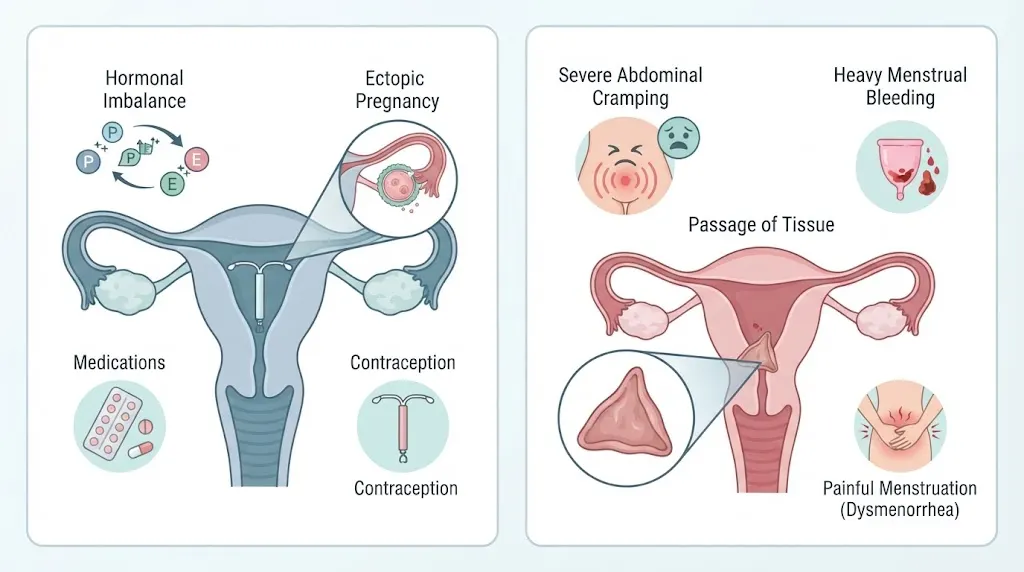
A decidual cast is sometimes called membranous dysmenorrhea, and the condition is still not completely understood. Hormonal changes, progesterone exposure, certain contraceptive methods, pregnancy-related changes, and other factors have been reported in people who experience it. However, having one does not automatically mean that something is seriously wrong or that a particular medication caused it. Diagnosis can be challenging because a decidual cast may resemble a large blood clot, pregnancy tissue, or other material passed from the uterus. Healthcare professionals may use symptoms, pregnancy testing, examination, ultrasound, and sometimes tissue analysis to determine what happened. This guide explains decidual cast meaning, appearance, causes, symptoms, diagnosis, treatment, and warning signs in clear and practical terms.
What Is a Decidual Cast?
A decidual cast occurs when a substantial portion of the endometrial lining separates and leaves the uterus in one piece or several large connected pieces. During an ordinary menstrual period, the endometrium typically breaks down gradually and exits the body mixed with blood and mucus over several days. With a decidual cast, the lining may remain relatively intact as it passes through the cervix and vagina. Because it can preserve the approximate shape of the uterine cavity, the tissue may look triangular, pear-shaped, or membrane-like. This unusual appearance is where the word “cast” comes from. Essentially, the tissue forms something similar to a temporary mold of the inside of the uterus.
The uterine lining, also called the endometrium, changes throughout the menstrual cycle in response to reproductive hormones. It normally thickens in preparation for the possibility that a fertilized egg could implant and develop into a pregnancy. When pregnancy does not occur, hormonal levels change and the lining is usually shed during menstruation. Most people never see an intact representation of this lining because it normally fragments while leaving the uterus. In membranous dysmenorrhea, however, the tissue separates differently and can remain together. This creates a noticeably thicker and more structured piece of tissue than the small clots that many people occasionally see during a normal period.
A decidual cast can occur in someone who is not pregnant, so passing one should not automatically be interpreted as a miscarriage. Pregnancy-related conditions can produce similar bleeding, cramping, and tissue passage, however, which makes the distinction important. A person may not always know whether pregnancy is possible, particularly if bleeding is mistaken for a regular menstrual period. For that reason, healthcare providers often consider pregnancy status when evaluating unusual vaginal tissue. A home pregnancy test may provide useful initial information, although testing alone may not answer every question. Severe pain, unusual bleeding, dizziness, or pregnancy symptoms should be discussed with a medical professional rather than diagnosed solely by looking at the tissue.
The medical term commonly associated with passing a decidual cast is membranous dysmenorrhea. “Dysmenorrhea” refers to painful menstruation, while “membranous” describes the membrane-like endometrial tissue that may be expelled. The event is considered uncommon, and researchers still have limited large-scale data explaining exactly how frequently it occurs. Many published descriptions historically involved individual patients or small groups, making it difficult to identify one universal cause. More recent medical discussion continues to describe several possible hormonal and reproductive associations rather than one proven mechanism. This uncertainty is important because people sometimes assume that a single birth control method or health condition must be responsible when the relationship may be more complicated.
For many people, the experience happens suddenly and may be frightening because the tissue looks unfamiliar. Someone may initially think an internal organ, pregnancy tissue, or another abnormal structure has passed from the body. In reality, a decidual cast consists primarily of uterine lining that has undergone hormonal changes and separated from the uterus. Symptoms can sometimes improve significantly once the tissue has completely passed, particularly when intense cramping was caused by the uterus trying to expel it. Even so, photographs alone cannot reliably confirm every case. If you are uncertain about what you passed, especially when pregnancy is possible, contacting a healthcare professional provides a safer way to determine whether further testing is needed.
What Does a Decidual Cast Look Like?
A decidual cast typically looks more like a piece of fleshy tissue than an ordinary menstrual blood clot. Its color can vary from pink or reddish to dark red or brown depending on how much blood is mixed with the tissue and how long it has been present. The texture may appear thick, rubbery, membrane-like, spongy, or somewhat firm rather than jelly-like. Some casts appear as one recognizable piece, while others may break into several fragments during passage. Because the tissue can reflect the internal shape of the uterus, it may have a triangular or pear-like outline. Appearance varies significantly, however, and visual inspection alone cannot reliably determine whether tissue is a decidual cast.
One of the most noticeable differences between a decidual cast and a typical period clot is structure. Menstrual blood clots are often soft, gelatinous, irregularly shaped collections of blood that form when menstrual flow is relatively heavy. A decidual cast contains actual endometrial tissue, which can make it appear more solid and organized. It may hold its shape when placed on a surface rather than immediately collapsing like a soft blood clot. Small areas of blood or mucus may remain attached, giving it an uneven appearance. Because many people have never seen endometrial tissue in this form, the unusual consistency can make the experience seem much more serious than a normal menstrual clot.
Size can vary considerably from one person to another, partly because the cast may remain intact or break before leaving the vagina. Some reported casts are several centimeters across and can appear surprisingly large compared with ordinary menstrual clots. An intact cast may approximate the dimensions of the uterine cavity, although the tissue can fold or compress while moving through the cervix. Smaller pieces may be more difficult to distinguish from other menstrual tissue. The appearance can also change after the tissue sits in blood, water, a sanitary pad, or a toilet. Therefore, attempting to identify a decidual cast only by comparing its exact size with pictures online can easily lead to incorrect conclusions.
People frequently search for decidual cast pictures because they want reassurance after seeing something unfamiliar during menstruation. Images can show the general range of appearances, but photographs should not be treated as a diagnostic test. Tissue from a miscarriage, an unusually large endometrial fragment, or certain other gynecological conditions may appear visually similar. Lighting, blood saturation, fragmentation, and image quality can also make two different types of tissue look almost identical. If medical evaluation is needed, taking a clear photograph before disposing of the tissue may help a healthcare professional understand what occurred. In some cases, a clinician may advise bringing the tissue in a clean container for examination or laboratory assessment.
The shape of a decidual cast is often described as one of its most distinctive characteristics, but not every cast emerges as a perfect uterine mold. The uterus itself is roughly pear-shaped, and the uterine cavity has a somewhat triangular configuration when viewed from the front. A relatively intact cast may therefore show a broad upper region that narrows toward the lower portion. Yet contractions, passage through the cervix, and handling can fold, tear, or distort the tissue before it is seen. Some people may pass only portions of the lining rather than one complete structure. For practical purposes, symptoms, pregnancy status, medical history, and clinical testing matter much more than whether tissue precisely matches an online picture.
Decidual Cast Symptoms You May Notice
Severe menstrual-like cramping is one of the symptoms commonly associated with passing a decidual cast. The uterus contracts to move the tissue through the cervix, and a relatively large intact piece can potentially create stronger pressure than ordinary menstrual material. People may describe sharp cramps, waves of pelvic pain, lower abdominal discomfort, or intense pressure that becomes stronger shortly before the tissue passes. The pain can sometimes feel considerably different from a person’s usual period cramps. Once the cast has completely left the uterus, discomfort may decrease fairly quickly in some cases. However, severe or persistent abdominal pain should never automatically be assumed to be caused by a harmless decidual cast.
Vaginal bleeding or spotting may occur before, during, or after passage of the tissue. The amount of bleeding can vary, and it may resemble a regular period for some people while appearing heavier or more irregular for others. Blood may be bright red, dark red, or brown depending on the timing and rate of bleeding. Since heavy vaginal bleeding can have many different causes, the amount and pattern deserve attention. Keeping track of how quickly pads or other menstrual products become saturated can provide useful information if medical care is needed. Bleeding accompanied by severe weakness, fainting, worsening pain, or possible pregnancy requires more urgent evaluation than ordinary menstrual bleeding.
Nausea, lightheadedness, sweating, or a general feeling of being unwell can sometimes accompany severe uterine cramping. These symptoms may develop partly because intense pain can activate the body’s stress response. However, dizziness and fainting can also occur with significant blood loss or pregnancy complications, so they should not automatically be dismissed. Anyone who feels close to fainting, has severe weakness, or develops worsening abdominal pain should seek timely medical attention. Symptoms need to be evaluated as a complete picture rather than attributed to a decidual cast based on tissue appearance alone. This is particularly important if bleeding occurs after a missed period or if there is any possibility of pregnancy.
Pelvic pressure is another sensation some people may notice while the cast is moving through the uterus and cervix. The cervix must allow the tissue to pass, which can create an unusual sensation of fullness, pressure, or the urge to bear down. Some people may initially assume they are passing an especially large menstrual clot because the sensations occur during expected menstruation. Others may experience unexpected bleeding at a time when they were not expecting their period. Symptoms can be more confusing for people who recently started, stopped, or changed hormonal contraception because their menstrual bleeding pattern may already be irregular. Recording recent medication changes can therefore be useful when discussing the event with a healthcare provider.
Symptoms vary enough that there is no single experience that confirms a decidual cast. One person may have severe cramps followed by a large piece of tissue, while another may notice only moderate discomfort and unusual menstrual material. Some casts may fragment, making the event less dramatic and harder to recognize. Importantly, pregnancy loss and ectopic pregnancy can produce overlapping symptoms such as bleeding, pelvic pain, cramping, and passage of tissue. That overlap is why a pregnancy test and appropriate medical assessment can be valuable when pregnancy is possible. A decidual cast diagnosis should be based on the overall clinical situation rather than assuming that a particular symptom or visual feature proves what happened.
What Causes a Decidual Cast?
The exact cause of decidual cast formation is not fully established, and researchers continue to investigate why the endometrium occasionally sheds as a relatively intact structure. Hormones appear to play an important role because the uterine lining responds directly to estrogen and progesterone throughout the menstrual cycle. A strong progesterone effect can cause the endometrium to undergo a process called decidualization, in which the tissue changes in preparation for potential pregnancy. When hormonal support changes, this thickened lining may separate from the uterine wall. In most menstrual cycles it breaks down gradually, but in membranous dysmenorrhea it may remain unusually cohesive. Why this happens in one person and not another remains uncertain.
Hormonal contraceptives have been reported in some cases of decidual cast expulsion, particularly methods that involve progestins. These can include certain birth control pills, injections, implants, and other hormone-based methods, although experiencing a cast is not a common or expected outcome for most contraceptive users. Episodes have sometimes occurred after beginning, stopping, changing, or inconsistently using hormonal contraception. Nevertheless, an association does not prove that the contraceptive directly caused the event. Millions of people use hormonal birth control without ever passing a decidual cast. Someone who experiences one should therefore discuss their individual history with a healthcare professional instead of abruptly discontinuing prescribed contraception without medical advice.
Pregnancy-related hormonal changes are another reason clinicians take unusual tissue passage seriously. The endometrium undergoes substantial decidual changes during pregnancy, and decidual tissue can sometimes be passed even when pregnancy tissue itself is located elsewhere. In particular, ectopic pregnancy is important to rule out when a person has a positive pregnancy test, pelvic pain, unusual bleeding, or other concerning symptoms. An ectopic pregnancy occurs when a fertilized egg implants outside the main uterine cavity, most commonly in a fallopian tube. Passing uterine tissue does not necessarily mean that an ectopic pregnancy has ended. Because rupture can cause dangerous internal bleeding, pregnancy status should be considered carefully whenever unusual tissue passage occurs.
Some cases of decidual cast passage appear to occur without an obvious medication change, pregnancy, or identifiable trigger. This suggests that natural variations in menstrual hormone activity may sometimes be sufficient to produce the condition. Researchers have also explored whether inflammatory changes, altered tissue breakdown, or differences in enzymes involved in separating the uterine lining could contribute. The evidence remains incomplete, so these mechanisms should be considered possibilities rather than confirmed explanations for every case. A person’s age, menstrual history, reproductive health, and medications can all provide useful context. Even after appropriate evaluation, a clinician may not be able to identify a definite reason why a particular decidual cast formed.
A first decidual cast does not necessarily mean that future periods will produce the same problem. Many reported episodes appear to be isolated rather than becoming a regular monthly occurrence. Recurrence is possible, however, particularly when underlying hormonal circumstances remain similar. If tissue passage happens repeatedly, medical assessment may help identify other causes of abnormal uterine bleeding or painful periods. Conditions such as fibroids, adenomyosis, endometriosis, pregnancy complications, or hormonal disorders can produce symptoms that overlap with heavy or painful menstruation, even though they are not the same as a decidual cast. Repeated unusual bleeding should therefore be evaluated on its own merits rather than automatically attributed to a previous cast.
Decidual Cast vs Miscarriage, Blood Clot, and Ectopic Pregnancy
A decidual cast and a miscarriage can look similar because both may involve bleeding, cramping, and the passage of visible tissue. The major difference is that a decidual cast consists primarily of transformed uterine lining, whereas a miscarriage involves the loss of an intrauterine pregnancy. Appearance alone cannot always distinguish them, especially during a very early pregnancy when pregnancy tissue may be difficult to recognize. Timing is also unreliable because early pregnancy bleeding can occur around the time someone expects a period. If pregnancy is possible, taking a pregnancy test and contacting a healthcare professional can help clarify the situation. Depending on the circumstances, additional blood testing or ultrasound may be needed.
A menstrual blood clot is generally different from a decidual cast because a clot is primarily coagulated blood rather than a large organized section of endometrial tissue. Period clots tend to be soft, slippery, jelly-like, and irregular in shape. They may break apart easily and vary from very small fragments to larger pieces during heavier menstrual flow. A decidual cast generally appears more fleshy, membrane-like, or structured and may retain a recognizable shape. However, menstrual blood can coat the tissue and make the distinction less obvious. Someone experiencing repeated large clots, unusually heavy periods, severe pain, fatigue, or symptoms of anemia should discuss these changes with a healthcare provider even if no decidual cast is suspected.
An ectopic pregnancy deserves particular attention because it can initially resemble several less dangerous causes of vaginal bleeding. The pregnancy develops outside the normal uterine cavity, meaning the uterus can still respond to pregnancy hormones even though the embryo is implanted elsewhere. Bleeding, pelvic pain, or passage of decidual tissue can therefore occur without proving that the pregnancy has safely passed. One-sided lower abdominal pain, shoulder-tip pain, dizziness, fainting, or sudden severe pelvic pain can indicate internal bleeding and require emergency medical assessment. Anyone with a positive pregnancy test and significant pain or unusual bleeding should seek professional guidance. Waiting for additional tissue to pass is not an appropriate way to rule out ectopic pregnancy.
Timing and pregnancy testing can provide clues, but neither should be interpreted without considering the full clinical picture. A negative home pregnancy test makes an ongoing pregnancy less likely, yet very early testing, testing errors, or changing pregnancy hormone levels can sometimes complicate interpretation. Similarly, a positive result after tissue passage does not by itself establish whether a pregnancy is developing normally. Clinicians may repeat quantitative pregnancy hormone tests and perform pelvic ultrasound when pregnancy location or viability is uncertain. These tools help distinguish pregnancy-related conditions from nonpregnancy causes of tissue passage. The safest approach is to avoid making major conclusions based solely on the color, shape, or size of material seen in a toilet or menstrual pad.
Other gynecological conditions may also contribute to abnormal bleeding, pain, or tissue passage. Endometrial polyps, fibroids, hormonal irregularities, infections, and other disorders can produce menstrual changes that people might mistake for a decidual cast. Some conditions are relatively minor, while others need investigation or treatment depending on severity and individual circumstances. A detailed menstrual and medical history often provides valuable information for narrowing the possibilities. Important details include the date of the last normal period, contraception use, pregnancy possibility, recent medication changes, pain location, bleeding amount, and whether similar episodes have happened before. Sharing this information with a clinician can make evaluation more accurate than relying on internet images alone.
How Is a Decidual Cast Diagnosed?
Diagnosing a decidual cast usually begins with a discussion of symptoms and reproductive history. A healthcare professional may ask when the bleeding started, how severe the cramps were, whether the tissue passed in one piece, and whether symptoms improved afterward. They may also ask about the date of your last period, sexual activity, pregnancy possibility, and contraceptive medications. Recent changes in hormonal birth control can be relevant because hormonal exposure has been reported in association with some cases. Information about previous miscarriages, ectopic pregnancies, irregular periods, or pelvic conditions may also be useful. These questions help determine whether the event appears consistent with a decidual cast or requires investigation for another condition.
Pregnancy testing is often an important part of evaluating unexpected tissue passage in someone who could potentially be pregnant. A urine pregnancy test may be performed at home or in a medical setting, while blood tests can measure pregnancy hormone levels more precisely when necessary. If pregnancy is confirmed or strongly suspected, determining where the pregnancy is located becomes important. Tissue passage alone cannot safely prove that a pregnancy was inside the uterus or that an ectopic pregnancy is no longer present. Depending on symptoms and pregnancy timing, clinicians may recommend follow-up blood tests or ultrasound. The goal is not merely to label the tissue but to make sure potentially serious pregnancy complications are not overlooked.
Pelvic ultrasound may be used when symptoms are severe, pregnancy is possible, bleeding continues, or the diagnosis remains uncertain. Ultrasound allows clinicians to examine the uterus, endometrial cavity, ovaries, and surrounding pelvic structures. In pregnancy-related situations, it may also help determine whether a gestational sac is visible in the uterus or whether findings raise concern for ectopic pregnancy. An ultrasound performed after the entire cast has passed may sometimes appear relatively normal. That does not mean the symptoms were imagined; it simply reflects that the expelled material is no longer inside the uterus. Imaging decisions depend on the individual situation and are not necessarily required for every uncomplicated episode.
If you still have the tissue, a healthcare professional may be able to inspect it or arrange laboratory examination when clarification is important. Histological analysis looks at tissue under a microscope and can identify characteristic endometrial changes. This may be particularly valuable when there is uncertainty about pregnancy tissue or another diagnosis. In many straightforward situations, extensive laboratory testing may not be necessary if symptoms have resolved and pregnancy has been appropriately excluded. Taking a photograph can still be useful when bringing the actual tissue is impractical. A picture does not replace medical testing, but it may help show the shape, size, and overall appearance more accurately than a verbal description alone.
Diagnosis ultimately depends on combining several pieces of information rather than relying on one characteristic. A triangular piece of tissue may suggest a decidual cast, but shape alone is not definitive. Severe cramping is common in many gynecological conditions, and bleeding patterns can overlap significantly between ordinary menstruation, pregnancy complications, and other disorders. Healthcare professionals therefore consider symptoms, test results, examination findings, medications, pregnancy status, and sometimes imaging or pathology together. This approach helps prevent both unnecessary alarm and missed diagnoses. If the event occurs only once and all concerning causes have been excluded, a decidual cast may require little additional investigation beyond appropriate follow-up and guidance about what symptoms would justify returning for care.
Treatment and What to Do If You Pass a Decidual Cast
There is usually no specific treatment needed to remove a decidual cast after it has completely passed on its own. The most intense discomfort often occurs while the uterus is contracting and the tissue is moving through the cervix. Once expulsion is complete, cramping may begin to decrease, although mild pain or bleeding can continue temporarily. Rest, warmth from a heating pad, hydration, and appropriate over-the-counter pain relief may help with uncomplicated menstrual-type discomfort. Medication suitability depends on pregnancy possibility, allergies, medical conditions, and other medicines you take. If you are unsure which pain reliever is appropriate, a pharmacist or healthcare professional can provide individualized guidance rather than relying on a general recommendation.
If you unexpectedly pass a large piece of tissue, one practical step is to consider whether pregnancy is possible. Taking a home pregnancy test can provide useful initial information, especially when your period was late, unusually light, unusually heavy, or different from normal. A positive test combined with bleeding or pain warrants medical advice because several pregnancy-related conditions need to be considered. A negative test may be reassuring, but severe symptoms still deserve evaluation regardless of pregnancy status. If possible, take a photograph of the tissue before discarding it. You may also want to note the approximate size, bleeding level, pain severity, and timing so you can describe the episode accurately.
Do not automatically stop prescribed hormonal contraception simply because you suspect you passed a decidual cast. Hormonal contraceptive use has been reported in some cases, but that does not mean the method is dangerous for you or that discontinuing it will prevent another episode. Suddenly changing contraception may also create additional bleeding irregularity or increase the chance of unintended pregnancy. Instead, discuss the event with the clinician who prescribed or manages your birth control. They can consider the specific medication, when you started it, whether doses were missed, and any other symptoms. Depending on your history, continuing the current method may be appropriate, or your clinician may discuss alternative options.
Medical treatment becomes more important when bleeding or pain does not settle after the tissue passes. Persistent heavy bleeding may need evaluation for anemia, retained tissue, pregnancy-related problems, or another source of abnormal uterine bleeding. Ongoing fever, foul-smelling discharge, increasing pelvic tenderness, or worsening illness can raise concern for infection and should not be ignored. Similarly, recurrent episodes may justify investigating menstrual disorders, structural uterine conditions, or hormonal factors. Treatment would then be aimed at the underlying problem rather than the appearance of the cast itself. Because several conditions can produce similar symptoms, self-treatment should not replace evaluation when symptoms are severe, prolonged, recurrent, or clearly different from your normal periods.
Emotional reassurance can also be an important part of managing the experience because seeing a large piece of tissue can be frightening. People frequently worry that they have miscarried, damaged their uterus, or passed something that should still be inside their body. A confirmed decidual cast generally represents shed endometrial tissue rather than loss of the uterus or another organ. Experiencing one is not generally considered evidence that a person will become infertile. Still, reassurance should come after pregnancy complications and other important causes have been considered when relevant. If anxiety continues after the event, discussing exactly what happened with a healthcare professional can provide more useful reassurance than repeatedly comparing the tissue with graphic images found online.
When Should You Seek Medical Care?
Seek prompt medical advice if you pass unusual tissue and there is any reasonable possibility that you could be pregnant. Pregnancy-related bleeding can range from relatively minor causes to conditions requiring urgent treatment, and visual appearance cannot reliably tell them apart. A missed period, positive pregnancy test, breast tenderness, nausea, or recent unprotected intercourse may increase the possibility of pregnancy. Even someone using contraception can become pregnant because no reversible contraceptive method is completely effective in every circumstance. If pain and bleeding occur together, tell the healthcare professional both symptoms rather than focusing only on the tissue. Pregnancy testing and appropriate examination can help determine whether additional monitoring or treatment is necessary.
Sudden severe abdominal or pelvic pain requires particular attention, especially when it is concentrated on one side. Shoulder-tip pain, marked dizziness, weakness, fainting, or feeling unusually pale can be warning signs of internal bleeding associated with a ruptured ectopic pregnancy. These symptoms should be treated as an emergency rather than watched at home to see whether they improve. A person does not need to have every warning sign before seeking urgent care. If pregnancy is possible and severe pain develops, it is safer to obtain immediate medical assessment. Emergency evaluation can determine whether bleeding is occurring internally and whether urgent treatment is necessary.
Heavy vaginal bleeding is another reason to seek medical attention, particularly if it is much heavier than your normal period or continues without slowing. The practical meaning of “heavy” can differ between people, so pay attention to rapid saturation of menstrual products, repeated large clots, weakness, shortness of breath, or lightheadedness. Significant blood loss can lead to anemia and, in extreme situations, circulatory problems. Persistent bleeding can also indicate that something other than an uncomplicated decidual cast is occurring. If you feel faint, confused, extremely weak, or unable to safely stand, emergency care may be appropriate. Do not drive yourself if symptoms make it unsafe to do so.
Fever, chills, foul-smelling vaginal discharge, or worsening pelvic pain after tissue passage may suggest infection or another condition requiring assessment. Mild cramping associated with menstruation should generally improve rather than steadily become more severe over time. Persistent vomiting, inability to keep fluids down, or feeling progressively more unwell also deserves medical attention. The same applies if tissue passage occurs repeatedly over several menstrual cycles. Recurrent abnormal bleeding is worth discussing even when every individual episode eventually resolves. A clinician can evaluate whether hormone changes, medication effects, uterine conditions, or other gynecological problems may be contributing and can recommend appropriate treatment based on the underlying cause.
If symptoms are mild, pregnancy has been reasonably excluded, and the pain decreases after the tissue passes, the situation may not require emergency treatment. It is still reasonable to contact your regular healthcare provider, particularly if this is the first time the event has happened. Bring information about contraception, recent medication changes, menstrual timing, and the appearance of the tissue. A photo can be useful if available, although you should never delay emergency care just to document what happened. Most importantly, trust significant changes from your normal pattern. A decidual cast itself may resolve without lasting complications, but severe pain, pregnancy-related symptoms, heavy bleeding, fainting, or ongoing illness should always receive appropriate medical attention.
Can a Decidual Cast Happen Again, and Can It Be Prevented?
For many people, a decidual cast appears to be a one-time event rather than something that happens during every period. Because the condition is uncommon and research remains limited, it is difficult to predict precisely who will experience another episode. Some people have reported recurrence, while others never see similar tissue again. The likelihood may depend partly on individual hormonal circumstances, contraceptive use, and other reproductive factors. Having one previous cast does not guarantee that the next menstrual period will be abnormal. If your following cycles return to their usual pattern and you have no ongoing symptoms, your healthcare professional may simply recommend observation rather than extensive treatment.
There is no established method that reliably prevents every decidual cast because the exact mechanism is not fully understood. Avoiding all hormonal contraception solely out of fear of a cast is generally not a sensible preventive strategy, particularly when the contraception provides important pregnancy prevention or medical benefits. If an episode closely followed a medication change, discuss the timing with your prescribing clinician. They can weigh the advantages of the medication against your symptoms and consider whether an adjustment makes sense. Do not change or stop hormonal treatment based entirely on online reports. Individual circumstances, including pregnancy risk and the reason the medication was prescribed, should guide decisions about continuing or changing treatment.
Tracking your menstrual cycle can be useful after an unusual episode because it creates a clearer record if symptoms happen again. Note the dates of bleeding, pain intensity, amount of flow, unusual tissue, contraception use, and any missed medications. If you experience another suspected cast, compare the symptoms without assuming that the cause must be identical. Repeated severe menstrual pain may have other explanations that deserve investigation, including endometriosis, adenomyosis, fibroids, or other gynecological conditions. A menstrual diary can help a clinician identify patterns that are difficult to remember months later. Tracking should provide useful information rather than become a source of constant worry about normal variations in menstrual flow.
A decidual cast itself is not generally considered a cause of infertility. The endometrium normally grows, changes, and sheds repeatedly throughout reproductive life, so losing an unusually intact portion does not mean the uterus has permanently lost its lining. After menstruation, the endometrium normally rebuilds during subsequent cycles under hormonal influence. Fertility concerns would be evaluated based on a person’s broader reproductive history rather than the cast alone. If a decidual cast occurred in connection with an ectopic pregnancy or another pregnancy complication, fertility discussions may instead focus on that underlying condition. Anyone actively trying to conceive can discuss future pregnancy planning with a gynecologist after the immediate medical issue has been resolved.
The overall outlook after an uncomplicated decidual cast is generally reassuring, particularly when symptoms settle and pregnancy complications have been excluded. The event may be painful and visually disturbing, but many people recover without needing an invasive procedure or long-term treatment. Understanding what happened can make future menstrual changes feel less frightening while still allowing you to recognize warning signs. The most useful approach is balanced rather than dismissive or alarmist: unusual tissue can be benign, but it deserves greater attention when paired with pregnancy possibility, heavy bleeding, or severe pain. If the episode is recurrent or your periods remain significantly different afterward, schedule a medical evaluation to identify whether another gynecological condition needs treatment.
Frequently Asked Questions About Decidual Casts
What is a decidual cast?
A decidual cast is a relatively intact piece of thickened uterine lining that passes through the vagina instead of breaking down gradually during menstruation. It may retain a shape resembling the inside of the uterus and is also associated with the term membranous dysmenorrhea.
What does a decidual cast look like?
It may look pink, red, dark red, or brown and often has a fleshy, thick, rubbery, or membrane-like texture. An intact cast can appear triangular or pear-shaped, although it may also break into irregular pieces before being seen.
Is passing a decidual cast dangerous?
A decidual cast itself often passes without causing long-term problems. However, similar bleeding and tissue passage can occur with pregnancy complications, so severe symptoms or possible pregnancy should be medically evaluated.
Is a decidual cast the same as a miscarriage?
No. A decidual cast primarily consists of transformed endometrial lining, while a miscarriage involves the loss of an intrauterine pregnancy. Because both can involve pain, bleeding, and tissue passage, pregnancy testing and medical evaluation may be needed to distinguish them.
Can birth control cause a decidual cast?
Hormonal contraception, particularly methods involving progestins, has been reported in association with some decidual casts. The relationship is not completely understood, and most people using hormonal birth control never experience one.
Can a decidual cast occur without birth control?
Yes. Decidual casts have also been reported in people who were not using hormonal contraception. Natural hormonal changes and pregnancy-related circumstances are among the other possible associations that clinicians consider.
How painful is passing a decidual cast?
Pain varies, but some people experience intense menstrual cramps or pelvic pressure while the uterus pushes the tissue through the cervix. Discomfort may decrease once the tissue has passed, although persistent or severe pain should be evaluated.
Can a decidual cast come out in pieces?
Yes. Although a decidual cast is commonly described as an intact mold of the uterine cavity, it can tear or fragment while passing through the cervix and vagina. This can make it more difficult to distinguish from other endometrial tissue.
Should I take a pregnancy test after passing unusual tissue?
If pregnancy is possible, taking a pregnancy test is a sensible first step. A positive test combined with bleeding or pelvic pain requires medical guidance because miscarriage and ectopic pregnancy need to be considered.
When is passing tissue an emergency?
Seek urgent medical care for sudden severe abdominal or pelvic pain, shoulder-tip pain, fainting, marked dizziness, extreme weakness, or heavy bleeding. These symptoms can indicate serious blood loss or an ectopic pregnancy complication and should not be assumed to be caused by a simple decidual cast.